World Heritage Identification Number: 1708
World Heritage since: 2024
Category: Cultural Heritage
WHE Type: Archaeological Sites
Transboundary Heritage: No
Endangered Heritage: No
Country: 🇮🇹 Italy
Continent: Europe
UNESCO World Region: Europe and North America
Map
The Appian Way: A Journey Through Time - Regina Viarum
The Appian Way, officially known as the Via Appia, holds a significant place in history as one of the earliest and most important of the great roads constructed by the Ancient Romans. Inscribed on the UNESCO World Heritage List in 2024 as Via Appia. Regina Viarum, this remarkable network extends for more than 800 kilometers across Italy, connecting Rome to the strategic port of Brindisi in the southeast.
Originally conceived as a strategic military road, the Via Appia played a crucial role in Rome’s expansion into southern Italy during the Samnite Wars and later facilitated connections to the eastern Mediterranean. Its importance is reflected in its celebrated title regina viarum, or “queen of the roads,” a designation recorded by the poet Statius.
The construction of the Via Appia commenced in 312 BCE under the leadership of Appius Claudius Caecus, a Roman censor during the Samnite Wars. The initial stretch connected Rome to Capua, establishing a durable model of Roman road engineering that would endure for centuries.
Over time, the Via Appia facilitated not only military movement but also trade, communication, and urban development. Settlements, villas, and agricultural estates flourished along its course, strengthening economic exchange between regions and integrating newly conquered territories into the Roman state.
While the primary route covered approximately 540 to 580 kilometers, over the centuries, the Via Appia evolved beyond its original route. Under Emperor Trajan in the 2nd century CE, the road was extended southward to Brindisi along what is now known as the Via Appia Traiana, strengthening Rome’s connections with the eastern Mediterranean. This extension made the Appian Way a vital artery for trade, travel, and communication, linking the heart of the Roman Empire with distant regions and underscoring its lasting strategic and cultural importance.
One of the most striking aspects of the Via Appia is the series of monumental funerary complexes and engineering works that line its route. These include tombs, catacombs, bridges, milestones, and impressive sections of original basalt paving. Such structures testify to the advanced technical skill of Roman engineers and to the cultural practice of commemorating the dead along major roads leading out of Rome.
Walking along the Via Appia, visitors can also encounter the monumental tombs and catacombs that were later used by early Christian communities. Pilgrims once traveled here to honor saints and martyrs, giving the road a spiritual significance that complements its historical and architectural value.
The road also crossed challenging terrain, including the Pontine Marshes, where drainage and land management projects were undertaken to improve passage and agricultural potential. These ambitious projects transformed barren landscapes into fertile farmland, demonstrating the Romans’ capacity to reshape landscapes in support of infrastructure and economic development.
In addition to its historical and architectural significance, the Via Appia offers a unique insight into the culture, society, and daily life of the Roman Empire. Walking along surviving stretches of the ancient pavement, one can imagine the movement of soldiers, merchants, pilgrims, and officials who once traversed this vital artery of the Roman world.
Today, the Via Appia remains a compelling destination for visitors and scholars alike. Comprising 22 component parts, this UNESCO World Heritage Site includes landmarks such as the Arch of Drusus, the Tomb of Cecilia Metella, and the Catacombs of Saint Callixtus, offering a powerful journey through more than two millennia of history. Protected within areas such as the Appia Antica Regional Park, these roads, monuments, and landscapes allow visitors to experience the rich layers of Roman life and heritage firsthand.
Overall, the Appian Way stands as a symbol of the ingenuity, ambition, and cultural achievements of the Ancient Roman civilization. It is more than just a road—it is a living record of centuries of history, where the layers of military strategy, civic planning, trade, funerary customs, and early Christian devotion intersect. As a UNESCO World Heritage Site, the Via Appia allows visitors to walk in the footsteps of soldiers, merchants, pilgrims, and ordinary Romans, experiencing firsthand the scale and ambition of the empire that built it.
UNESCO Description of the World Heritage Site
More than 800 kilometres long, the Via Appia is the oldest and most important of the great roads built by the Ancient Romans. Constructed and developed from 312 BCE to the 4th century CE, it was originally conceived as a strategic road for military conquest, advancing towards the East and Asia Minor. The Via Appia later enabled the cities it connected to grow and new settlements emerged, facilitating agricultural production and trade. This property, composed of 19 component parts, is a fully developed ensemble of engineering works, illustrating the advanced technical skill of Roman engineers in the construction of roads, civil engineering projects, infrastructure and sweeping land reclamation works, as well as a vast series of monumental structures including, for example, triumphal arches, baths, amphitheatres and basilicas, aqueducts, canals, bridges, and public fountains.
UNESCO Justification of the World Heritage Site
Criterion (iii): The Via Appia. Regina Viarum is among the most enduring testimonies that Roman civilisation has bequeathed to posterity. Its construction was a feat of engineering and technical design which had an influence over much of the Mediterranean for more than a thousand years. The route is lined with all the structural and urban typologies that are characteristic of Roman civilisation.
Criterion (iv): The Via Appia. Regina Viarum bears witness to the outstanding organisational capabilities and administrative efficiency of Roman civilisation. The Via Appia is an example of the innovative technical prowess developed by Rome, the construction of which, in addition to the infrastructures directly associated with it, served as a point of reference for the division of land assigned to army veterans and promoted the regulation and aggregation of new urban residential areas along its course as it was often chosen as a decumanus. The Via Appia thus shaped the development of the ancient cities it connected or which were associated with it. The Via Appia is also accompanied by a monumental ensemble of temples, funerary monuments, aqueducts and villas, and at city entrances, triumphal arches, gates or such amenities as theatres, amphitheatres or baths which all bear witness to an age-old civilisation.
Criterion (vi): The Via Appia. Regina Viarum was a major vector for the spread of ideas and beliefs. It played a key role in the spread of the Christian religion and provided passage to the Holy Land for the Crusaders and huge numbers of pilgrims. Representative of Rome’s power, the Via Appia was symbolically used from the 16th century onwards by numerous victorious generals or monarchs to celebrate their power or their victories. The Via Appia was celebrated by artists of the Renaissance. An object of study for archaeologists, architects and academics, it has fascinated generations of visitors embarking on their Grand Tour.
Encyclopedia Record: Appian Way
The Appian Way is one of the earliest and strategically most important Roman roads of the ancient republic. It connected Rome to Brindisi, in southeast Italy. Its importance is indicated by its common name, recorded by Statius, of Appia longarum... regina viarum. The road is named after Appius Claudius Caecus, the Roman censor who, during the Samnite Wars, began and completed the first section as a military road to the south in 312 BC.Additional Site Details
Area: 4,639.92 hectares
Number of Components: 21
(iv) — Outstanding example of a type of building or landscape
(vi) — Directly associated with events or living traditions
Coordinates: 41.2927222222 , 13.2627222222
Image
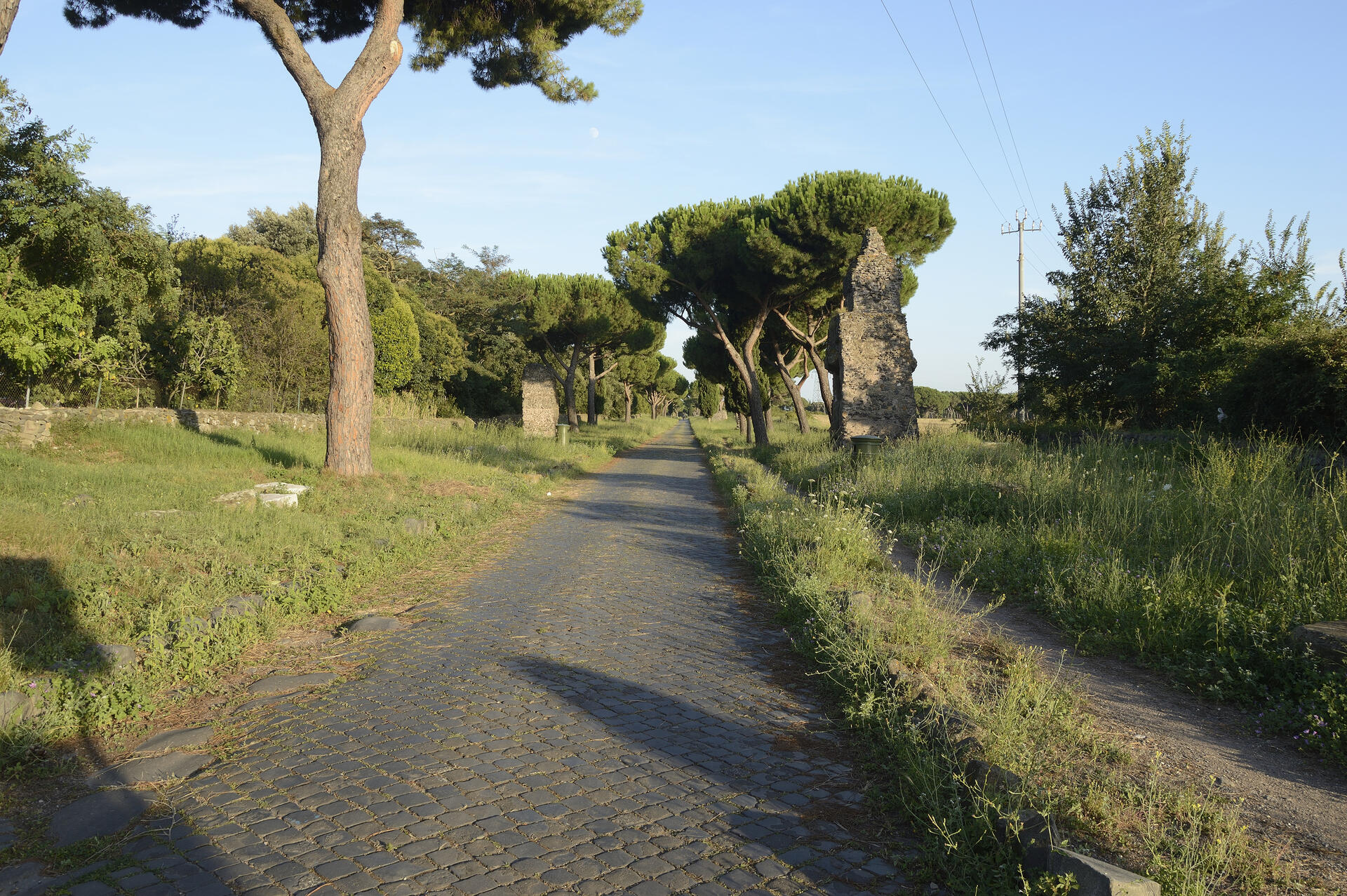
© Livioandronico2013, CC BY-SA 4.0 Resized from original. (This derivative is under the same CC BY-SA license.)
World Heritage Research
Discover scientific research and academic studies that deepen our understanding of Via Appia. Regina Viarum from its history and significance to its conservation, management, and contemporary challenges.
-
Heritage Sites, Devotion, and Quality Enhancement in Tourism: The Promotion and Management of Ancient Marian Places of Worship along the Appian Way in Puglia and Basilicata
Religious tourism, particularly Marian pilgrimage along the Appian Way in Puglia and Basilicata, emerges as a powerful driver for cultural and economic revitalization. This study reveals that integrating devotional practices with sustainable tourism strategies can enhance the quality of life for local communities while preserving spiritual values. The research identifies Marian shrines as pivotal cultural and economic poles, often overlooked by mass tourism, which hold significant potential for experiential and high-quality tourism. By analyzing pilgrimage flows and the diachronic evolution of these sites, the study proposes a serial itinerary that combines material and immaterial heritage, offering a sustainable rediscovery approach aligned with European and local guidelines. The findings underscore the importance of partnerships, local engagement, and quality assessment in managing such heritage routes effectively.
Oliva, L., & Trono, A. (2023). Heritage Sites, Devotion, and Quality Enhancement in Tourism: The Promotion and Management of Ancient Marian Places of Worship along the Appian Way in Puglia and Basilicata. Religions, 14(12), 1548. https://doi.org/10.3390/rel14121548
View Publication Record | Read Publication -
Immersive Appian Way Health Infrastructure: Human Centric Digital Twin (The PAAA Archeological Park of the Appian Way 12km State-Own Section, UNESCO Candidature)
A groundbreaking digital twin of the Appian Way, a UNESCO World Heritage candidate, has been developed to enhance knowledge, preservation, and user experience. This immersive health infrastructure leverages mass digitization and extended reality technologies to create a virtual space that supports contemporary Vitruvian humanistic missions. The 12km state-owned section, initially conceived as an outdoor museum by Luigi Canina in the 19th century, is now being transformed into a dynamic resource for education, communication, and public engagement. This initiative aims to unlock the Appian Way's potential as a source of wealth and healthiness for all users and visitors.
Brumana, R., Quilici, S., Oliva, L., Previtali, M., Attico, D., Roncoroni, F., & Stanga, C. (2023). IMMERSIVE APPIAN WAY HEALTH INFRASTRUCTURE: HUMAN CENTRIC DIGITAL TWIN (THE PAAA ARCHEOLOGICAL PARK OF THE APPIAN WAY 12KM STATE-OWN SECTION, UNESCO CANDIDATURE). The International Archives of the Photogrammetry, Remote Sensing and Spatial Information Sciences, XLVIII-M-2-2023, 311–318. https://doi.org/10.5194/isprs-archives-xlviii-m-2-2023-311-2023
View Publication Record | Read Publication -
Mobile Mapping for Digital Documentation of Ancient Roman Roads Within a Multi-Sensor Framework: The Appian Way in Rome
A groundbreaking digitization project of the Appian Way in Rome, spanning 12 km from Capo di Bove to Frattocchie, demonstrates how multi-sensor mobile mapping can revolutionize the documentation of complex cultural heritage sites. By integrating lidar-based Mobile Mapping Systems with spheric (360°) and digital calibrated cameras, researchers achieved high-speed data acquisition without compromising accuracy. The resulting point clouds were transformed into a GIS system, providing a powerful tool for public administration decision-making. This approach sets a new standard for precision in documenting ancient Roman roads, balancing speed and accuracy while offering scalable solutions for similar heritage preservation efforts.
Brumana, R., Previtali, M., Roncoroni, F., Stanga, C., Gabriele, M., & Quilici, S. (2023). MOBILE MAPPING FOR DIGITAL DOCUMENTATION OF ANCIENT ROMAN ROADS WITHIN A MULTI-SENSOR FRAMEWORK: THE APPIAN WAY IN ROME. The International Archives of the Photogrammetry, Remote Sensing and Spatial Information Sciences, XLVIII-1/W1-2023, 63–69. https://doi.org/10.5194/isprs-archives-xlviii-1-w1-2023-63-2023
View Publication Record | Read Publication -
Multi-Sensor HR Mass Data Models toward Multi-Temporal-Layered Digital Twins: Maintenance, Design and XR Informed Tour of the Multi-Stratified Appian Way (PAAA)
Advanced multi-sensor data models enable the creation of highly accurate, three-dimensional representations of the Appian Way, a UNESCO World Heritage Site candidate. This innovative approach integrates Mobile Mapping Systems (MMS), 360° cameras, Terrestrial Laser Scanners (TLS), digital cameras, and drones to generate detailed, textured 3D models that outperform traditional CAD methods in maintenance, management, and design processes. The project introduces multi-temporal Digital Twins, combining historical documentation with modern data to offer immersive, XR-informed tours. These models serve as nodes within a geographic hub, enhancing public awareness and supporting conservation efforts through an interactive experience that bridges physical and virtual realms.
Brumana, R., Quilici, S., Oliva, L., Previtali, M., Gabriele, M., & Stanga, C. (2023). Multi-Sensor HR Mass Data Models toward Multi-Temporal-Layered Digital Twins: Maintenance, Design and XR Informed Tour of the Multi-Stratified Appian Way (PAAA). Sensors, 23(20), 8556. https://doi.org/10.3390/s23208556
View Publication Record | Read Publication -
Archaeomorphological and Geological Studies on the Ancient Appian Way at the Aurunci Pass: Multidisciplinary Approaches for the Investigation of Ancient Quarries Siting and Exploitation.
A study on the ancient Appian Way between Itri and Fondi, central Italy, reveals that three previously unknown quarries were strategically located along carbonatic slopes. These quarries, identified through aerial photography and photogrammetric analysis, show distinct anthropogenic features such as squared or rectangular morphological edges and regular tool-marks, confirming their use during the Roman Age. The research demonstrates that the geometric characteristics of rock masses, including bedding, joint system spacing, and brittle deformation intensity, significantly influenced the type of material extracted and the exploitation techniques employed. Quarries A and B yielded cubic and pseudo-cubic rock blocks, while Quarry C produced centimeter-sized debris from a cataclastic rock volume associated with a normal fault. This investigation lays the groundwork for further analysis of local quarry systems, potentially including minor quarries used for road maintenance and other construction projects.
Carfora, P., & Di Luzio, E. (2016). Archaeomorphological and Geological Studies on the Ancient Appian Way at the Aurunci Pass: Multidisciplinary Approaches for the Investigation of Ancient Quarries Siting and Exploitation. Multi-, Inter- and Transdisciplinary Research in Landscape Archaeology. https://doi.org/10.5463/lac.2014.22
View Publication Record | Read Publication -
The Sacred Almone River of the Appian Way Regional Park in Rome: ancient myths, a ritual link between Rome and Asia Minor and water uses in the modern age
The Almone River, though small, holds significant historical and cultural importance as it played a pivotal role in ancient Roman rituals, particularly the lavatio ceremony for the Great Mother-Cybele goddess. This study reveals its dual significance—both sacred in antiquity and practical in later periods, shaping local settlements and economies through water mills and wool-fulling mills ('valche'). The research combines historical analysis with modern observations to highlight the river's enduring legacy, from its ritual use to its role in artisanal activities during the Middle Ages, Renaissance, and beyond. One restored mill now serves as a visitor center for the Appian Way Regional Park, underscoring the river's continued cultural and tourist value.
Tallini, M., Di Leo, A., Rossetti, C., & Berardi, F. (2013). The Sacred Almone River of the Appian Way Regional Park in Rome: ancient myths, a ritual link between Rome and Asia Minor and water uses in the modern age. Water Supply, 13(3), 727–734. https://doi.org/10.2166/ws.2013.098
View Publication Record | Read Publication