World Heritage Identification Number: 286
World Heritage since: 1984
Category: Cultural Heritage
WHE Type: Religious Sites & Sacred Architecture
Transboundary Heritage: No
Endangered Heritage: No
Country: 🇻🇦 Holy See
Continent: Europe
UNESCO World Region: Europe and North America
Map
The Vatican City: A Spiritual and Cultural Haven
Vatican City, officially known as the Vatican City State, stands as a testament to the rich history and profound spiritual significance of Christianity. This unique microstate, entirely enclosed within the city of Rome, serves as the territorial seat of the Holy See, the central governing authority of the Roman Catholic Church.
Vatican City was established in 1929 through the Lateran Treaty between the Holy See and the Kingdom of Italy. This agreement brought an end to the “Roman Question” and recognized Vatican City as a sovereign state, distinct from but governed by the Holy See. The treaty ensured the Holy See’s independence, neutrality, and freedom to conduct spiritual, administrative, and diplomatic affairs, following the loss of the Papal States in 1870.
At the very core of Vatican City stands St. Peter’s Basilica, the largest church in the world and one of the most important sites in Christianity. Built over the traditional burial place of St. Peter the Apostle, the basilica represents a masterpiece of Renaissance and Baroque architecture. Its design reflects the contributions of renowned artists and architects, including Bramante, Michelangelo, Raphael, Bernini, and Carlo Maderno.
In front of the basilica lies St. Peter’s Square (Piazza San Pietro), designed by Gian Lorenzo Bernini. The square’s monumental elliptical colonnade symbolically embraces visitors and provides a space for major papal ceremonies, blessings, and public audiences attended by pilgrims from around the world.
Beyond the basilica, Vatican City is home to the Vatican Museums, which contain one of the most extensive art collections on Earth. Among their most famous treasures are the Sistine Chapel, with Michelangelo’s celebrated ceiling and Last Judgment, the Raphael Rooms, the Gallery of Maps, and the Pio-Clementine Museum.
The Vatican Apostolic Library, one of the oldest and most significant libraries in the Western world, preserves a vast collection of manuscripts, rare books, and historical documents related to the history of Christianity and the Catholic Church. Its holdings include the Codex Vaticanus, one of the oldest surviving manuscripts of the Bible in Greek, making the library an invaluable resource for scholars of history, theology, and classical studies.
In addition to its cultural and religious institutions, Vatican City includes chapels, administrative buildings, and gardens that support the daily governance of the Catholic Church.
While several major basilicas in Rome—such as Santa Maria Maggiore and San Paolo Fuori le Mura—are extraterritorial properties of the Holy See, they are not located within Vatican City itself. These sites form part of a separate UNESCO World Heritage listing titled: Historic Centre of Rome, the Properties of the Holy See in that City Enjoying Extraterritorial Rights and San Paolo Fuori le Mura.
The Vatican City's status as a sovereign state has granted it certain privileges and immunities, allowing it to maintain its independence and autonomy in the midst of modern Rome while preserving a concentration of religious, artistic, and historical heritage unmatched anywhere in the world. Despite its small size, this spiritual and cultural haven continues to captivate visitors from around the world, offering a glimpse into the rich tapestry of Christian history and the enduring influence of the Catholic Church.
UNESCO Description of the World Heritage Site
The Vatican City, one of the most sacred places in Christendom, attests to a great history and a formidable spiritual venture. A unique collection of artistic and architectural masterpieces lie within the boundaries of this small state. At its centre is St Peter's Basilica, with its double colonnade and a circular piazza in front and bordered by palaces and gardens. The basilica, erected over the tomb of St Peter the Apostle, is the largest religious building in the world, the fruit of the combined genius of Bramante, Raphael, Michelangelo, Bernini and Maderno.
UNESCO Justification of the World Heritage Site
Criterion (i): The Vatican, a continuous artistic creation whose progress spreads over centuries, represents a unique masterpiece of the modelling of a space, integrating creations which are among the most renowned of mankind: not only the world famous icon of sacred architecture, the basilica of Saint Peter, but also the chapel of Nicholas V decorated by Fra Angelico, the Borgia apartment with frescoes by Pinturicchio, the Stanze of Raphael and his students, the Sistine Chapel, whose mural decoration, begun by Perugino, Botticelli and other painters, was completed in the 16th century with the frescoes of the ceiling and the monumental Last Judgement by Michelangelo, who left his last murals in the Pauline Chapel.
Criterion (ii): The Vatican exerted a deep influence on the development of art from the 16th century. Architects have visited it to study the constructions of Bramante (the Basilica of Saint Peter, the Belvedere Court), of Michelangelo (the cupola of Saint Peter), of Bernini (Saint Peter's colonnade, the Baldacchino of the Basilica). Both within and outside Europe, the Vatican buildings have been abundantly copied and imitated, the paintings (the frescoes of Raphael and Michelangelo) and the antiquities of the Museums no less so.
Criterion (iv): The Vatican is both an ideal and exemplary religious and palatial creation of the Renaissance and of Baroque art.
Criterion (vi): Site of the tomb of Saint Peter and pilgrimage centre, the Vatican is directly and materially linked with the history of Christianity. For more than a thousand years, mankind has accumulated, in this privileged site, the treasures of its collective memory (manuscripts and books of the Library) and of its universal genius.
Encyclopedia Record: Vatican City
Vatican City, officially the Vatican City State, often shortened as the Vatican, is a landlocked sovereign city-state. Ruled by the pope, it is an enclave within Rome and serves as the administrative centre of the Catholic Church. Vatican City is governed by the See of Rome, commonly known as the Holy See, itself a sovereign entity under international law, which maintains its temporal power, governance, diplomacy, and spiritual independence. Vatican is also used as a metonym for the Holy See, which is the central governing body of the Catholic Church and Vatican City, comprising the pope and the Roman Curia. The independent state of Vatican City came into existence in 1929 via the Lateran Treaty between the Holy See and the Kingdom of Italy, which spoke of it as a new creation, not as a vestige of the much larger Papal States (756–1870), which had previously encompassed much of Central Italy.Additional Site Details
Area: 44 hectares
Number of Components: 1
(ii) — Significant interchange of human values
(iv) — Outstanding example of a type of building or landscape
(vi) — Directly associated with events or living traditions
Coordinates: 41.90216 , 12.45736
Image
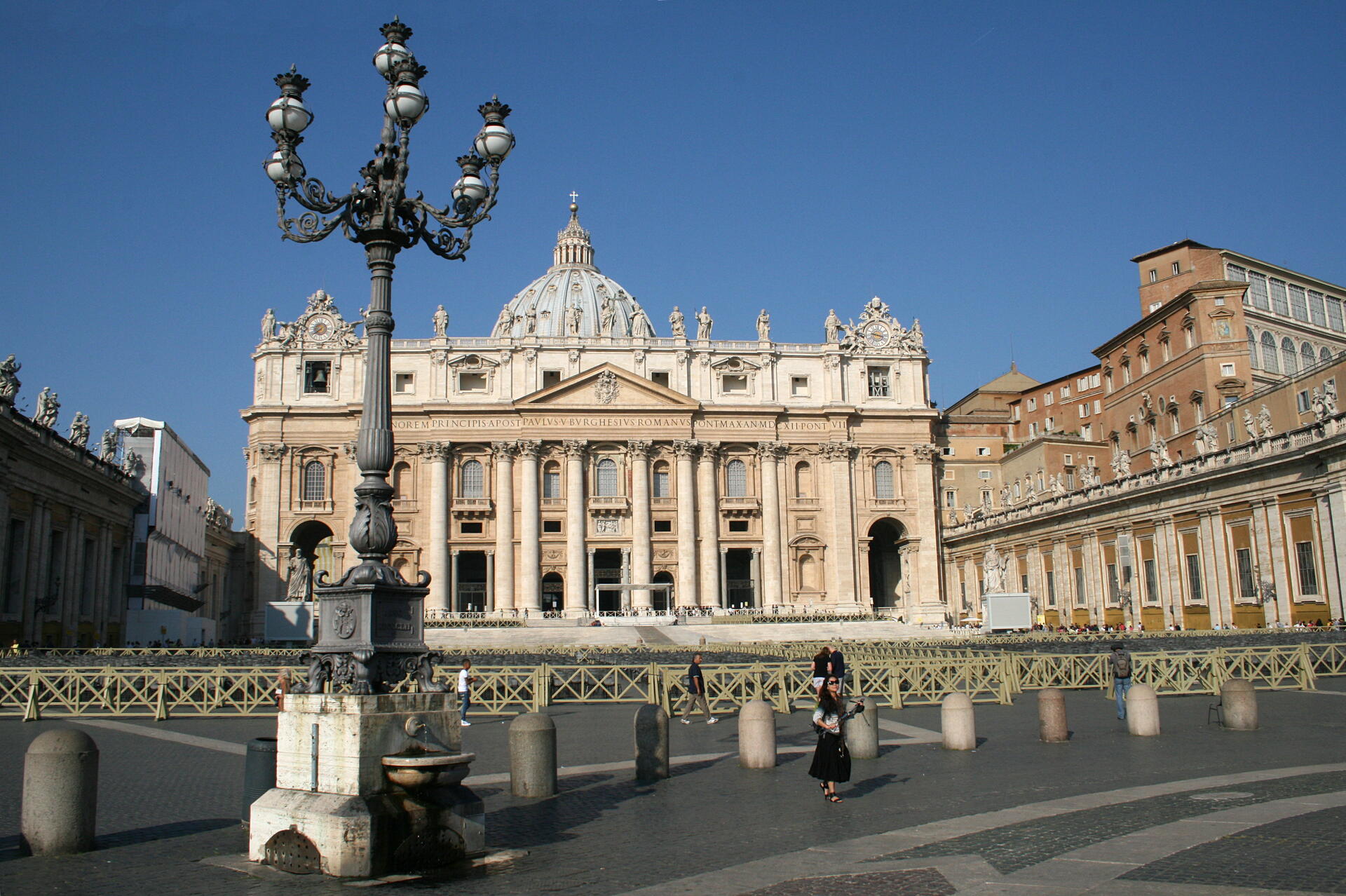
© Jean-Pol GRANDMONT, CC BY-SA 3.0 Resized from original. (This derivative is under the same CC BY-SA license.)
World Heritage Research
Discover scientific research and academic studies that deepen our understanding of Vatican City from its history and significance to its conservation, management, and contemporary challenges.
-
An updated checklist of the bryophytes of Italy, including the Republic of San Marino and Vatican City State
Italy's bryophyte diversity has expanded by 29 taxa in the last three years, bringing the total to 1273 species (including subspecies and varieties), with the Alpine regions showing the highest biodiversity. This updated checklist, compiled from literature, herbarium data, and recent observations, reveals that hornworts and liverworts account for 301 species across 55 families, while mosses dominate with 919 species in 77 families. The study also highlights regional variations, noting Tuscany's richness among Apennine regions and the medium biodiversity of Sardinia and Sicily due to their geomorphological diversity. Critical taxonomic notes and synonyms are included for clarity. The research underscores the importance of continued exploration, as some regions' low bryophyte records may reflect insufficient study.
Aleffi, M., Cogoni, A., & Poponessi, S. (2023). An updated checklist of the bryophytes of Italy, including the Republic of San Marino and Vatican City State. Plant Biosystems - an International Journal Dealing with All Aspects of Plant Biology, 157(6), 1259–1307. https://doi.org/10.1080/11263504.2023.2284136
View Publication Record | Read Publication -
Impact of COVID‐19 pandemic on the medical activities of the Directorate of Health and Hygiene, Vatican City State
During the COVID-19 pandemic, medical activities in Vatican City State experienced significant disruption, with a 22.4% decline in procedures from 2019 to 2020. The most pronounced reductions occurred during the lockdown period (March–May 2020), where general/emergency activities dropped by 61.1%, specialty consultations by 85.3%, radiology examinations by 95.8%, and diagnostic procedures by 96.5%. While nearly all specialties saw a decrease, legal medicine, psychiatry, and angiology experienced increases. Despite the challenges, rapid organizational adaptations enabled near-normal recovery of medical services post-lockdown.
Ralli, M., Arcangeli, A., Soave, P. M., Carbone, L., Ercoli, L., & De‐Giorgio, F. (2021). Impact of COVID‐19 pandemic on the medical activities of the Directorate of Health and Hygiene, Vatican City State. Journal of Internal Medicine, 290(1), 213–219. Portico. https://doi.org/10.1111/joim.13251
View Publication Record | Read Publication -
Hierarchical value map of religious tourists visiting the Vatican City/Rome
Researchers identified three prominent sets of values that drive religious tourism to Vatican City: religious and pious, spiritual, and tourism-related responsibility. The most significant connection found was between exploring the traditions and history of religious sites, leading to a genuine religious experience, which ultimately enhanced faith and spirituality. This insight was derived using means-end chain theory, analyzing foreign tourists' perceptions of Catholic religious sites when their primary purpose was religious tourism.
Kim, B., & Kim, S. (. (2018). Hierarchical value map of religious tourists visiting the Vatican City/Rome. Tourism Geographies, 21(3), 529–550. https://doi.org/10.1080/14616688.2018.1449237
View Publication Record | Read Publication -
The Bryophyte Flora of the Vatican City State
A comprehensive bryological survey of Vatican City State reveals 121 taxa of bryophytes, including 14 liverworts and 107 mosses, with significant biogeographical implications. Notably, one liverwort and nine moss species are newly recorded for the Lazio Region, with Tortula bolanderi marking the first report for the Italian peninsula. The study, conducted primarily in the Vatican Gardens, fills a critical gap in the unexplored bryological landscape of this territory, contributing valuable data to regional flora knowledge.
Aleffi, M. (2015). The Bryophyte Flora of the Vatican City State. Cryptogamie, Bryologie, 36(2), 155–169. https://doi.org/10.7872/cryb.v36.iss2.2015.155
View Publication Record | Read Publication -
The Integrated Security System of the Vatican City State
A highly integrated, efficient, and reliable security system has been successfully designed and implemented for the Vatican City State. This system addresses critical vulnerabilities by combining advanced technologies to ensure robust state protection. The approach involved a comprehensive analysis of security needs, followed by the development and deployment of an interconnected framework that enhances operational effectiveness and resilience.
Garzia, F., Sammarco, E., & Cusani, R. (2011). The Integrated Security System of the Vatican City State. International Journal of Safety and Security Engineering, 1(1), 1–17. https://doi.org/10.2495/safe-v1-n1-1-17
View Publication Record | Read Publication -
Small state soft power strategies: virtual enlargement in the cases of the Vatican City State and Singapore
Small states can effectively expand their global influence through 'virtual enlargement' by leveraging soft power strategies, which include political economy potential, governance models, and diplomatic mediation. This study demonstrates that such approaches enable small states to transcend territorial limitations, as illustrated by the cases of Vatican City State and Singapore. The research employs a comparative analysis of these two distinct entities, highlighting their unique soft power dynamics and the mechanisms through which they project influence on an international scale.
Chong, A. (2010). Small state soft power strategies: virtual enlargement in the cases of the Vatican City State and Singapore. Cambridge Review of International Affairs, 23(3), 383–405. https://doi.org/10.1080/09557571.2010.484048
View Publication Record | Read Publication -
The security telecommunication system of the Vatican City State
A highly integrated, efficient, and reliable telecommunication system is critical to the security of a modern state. This study demonstrates how such a system was designed and implemented for Vatican City State, ensuring robust security infrastructure through advanced technological solutions.
Garzia, F., Cusani, R., & Sammarco, E. (2010). The security telecommunication system of the Vatican City State. 44th Annual 2010 IEEE International Carnahan Conference on Security Technology, 17–22. https://doi.org/10.1109/ccst.2010.5678677
View Publication Record | Read Publication