World Heritage Identification Number: 1557
World Heritage since: 2018
Category: Cultural Heritage
WHE Type: Cultural Landscapes
Transboundary Heritage: No
Endangered Heritage: No
Country: 🇩🇰 Denmark
Continent: Europe
UNESCO World Region: Europe and North America
Map
Between Ice and Sea: The 4,200-Year Story of Aasivissuit – Nipisat
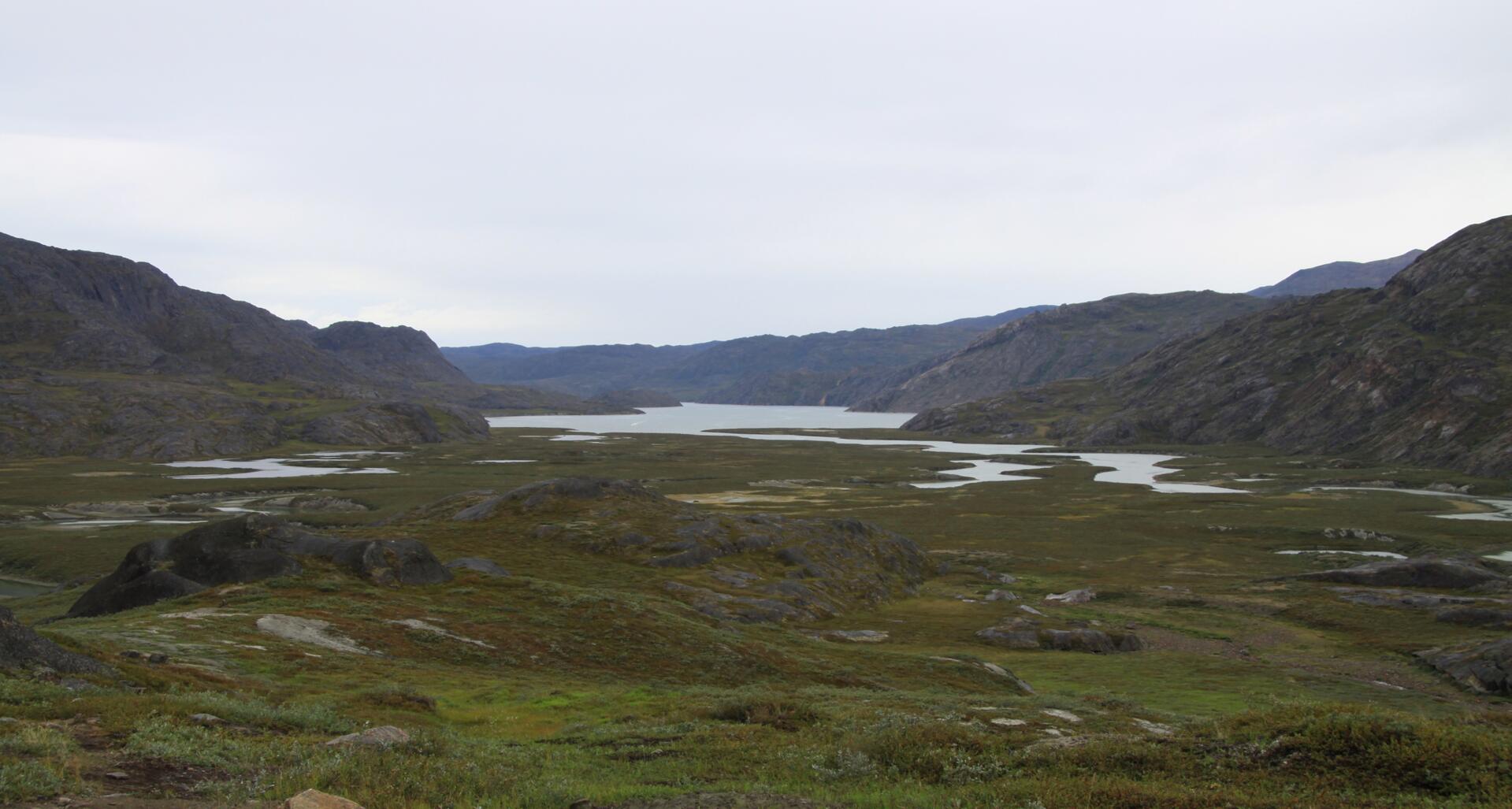
Aasivissuit – Nipisat, inscribed as a UNESCO World Heritage Site in 2018, is a unique cultural landscape that offers a glimpse into more than 4,200 years of human history, encompassing successive Paleo-Inuit and Inuit cultures in the central part of West Greenland. Covering approximately 4,178 square kilometres within the Arctic Circle, this expansive area encompasses seven key localities, stretching from Nipisat on the coast in the west to Aasivissuit, near the Greenland Ice Sheet in the east.
The property's significance lies in its extraordinary preservation of over 4,200 years of human history, providing insights into successive Paleo-Inuit and Inuit cultures that adapted to one of the world's most challenging environments. It bears witness to the resilience of these communities and their enduring traditions of seasonal migration between the coast and the inland hunting grounds.
The landscape illustrates a remarkable annual cycle of movement between the coast and the interior that sustained Arctic communities for more than four millennia. During summer and early autumn, families travelled inland to hunt migratory caribou, while in winter they returned to coastal settlements to take advantage of abundant marine resources, including seals, fish, and whales. Rivers, lakes, and valleys served as natural travel corridors, linking these seasonal camps into a single cultural landscape shaped by both the rhythms of nature and human ingenuity.
One of the most striking features of Aasivissuit – Nipisat is the presence of large winter houses, which provide a tangible connection to the past. These substantial dwellings sheltered families during the long Arctic winters. Evidence of caribou hunting can also be found throughout the landscape, reflecting the central role of this animal in the subsistence and culture of Inuit communities.
Archaeological sites representing the Saqqaq, Dorset, and Thule Inuit cultures, as well as later historical periods, are protected within the property. Together, these cultures occupied the region over thousands of years and left behind tools, weapons, ornaments, dwellings, and other remains that provide valuable insights into their ways of life. The Thule Inuit, who arrived in Greenland during the 13th century, are regarded as the direct ancestors of modern Inuit.
Rather than representing a single archaeological site, Aasivissuit – Nipisat comprises seven interconnected localities that together tell the story of this seasonal way of life. These include coastal settlements, inland hunting camps, gathering places, and travel routes extending towards the Greenland Ice Sheet. Collectively, they preserve the complete sequence of activities that enabled generations of Arctic peoples to thrive in an environment of extreme seasonal contrasts.
Beyond its physical remains, Aasivissuit – Nipisat also holds immense intangible cultural value. Traditional knowledge relating to navigation, weather, food resources, medicines, and seasonal patterns is still passed down through generations, helping to preserve ancient practices and a deep understanding of the Arctic environment. The property remains a living cultural landscape, where hunting, fishing, and seasonal travel continue to reflect deep-rooted Inuit traditions.
The archaeological remains also demonstrate a remarkable continuity across successive cultures. Although technologies and cultural traditions evolved over time—from the Saqqaq and Dorset peoples to the Thule Inuit and their descendants—the seasonal use of the landscape remained fundamentally the same. This enduring relationship between people, wildlife, and the Arctic environment makes Aasivissuit – Nipisat one of the world's most complete and best-preserved examples of a living Arctic cultural landscape.
Aasivissuit – Nipisat is not merely a historical relic but a vibrant cultural landscape that demonstrates the enduring relationship between people and the Arctic environment. Its inscription on the UNESCO World Heritage List recognizes both its outstanding historical significance and its continuing cultural importance, helping to ensure its preservation for future generations. Visitors to the region can gain a deeper appreciation of the remarkable ability of Inuit communities to adapt and thrive in one of Earth's harshest environments.
UNESCO Description of the World Heritage Site
Located inside the Arctic Circle in the central part of West Greenland, the property contains the remains of 4,200 years of human history. It is a cultural landscape which bears witness to its creators’ hunting of land and sea animals, seasonal migrations and a rich and well-preserved tangible and intangible cultural heritage linked to climate, navigation and medicine. The features of the property include large winter houses and evidence of caribou hunting, as well as archaeological sites from Paleo-Inuit and Inuit cultures. The cultural landscape includes seven key localities, from Nipisat in the west to Aasivissuit, near the ice cap in the east. It bears testimony to the resilience of the human cultures of the region and their traditions of seasonal migration.
UNESCO Justification of the World Heritage Site
Criterion (v): Aasivisuit-Nipisat and the transect of environments it contains demonstrates the resilience of the human cultures of this region and their traditions of seasonal migration. The abundant evidence of culture-nature interactions over several millennia, intact and dynamic natural landscape, intangible cultural heritage and continuing hunting and seasonal movements by Inuit people and other attributes combine in this distinctive cultural landscape. This is demonstrated through the continuing uses of the west/east routes, the rich archaeological record of Palaeo-Inuit and Inuit cultures, and the camps and hunting elements that enabled hunting-fishing-gathering peoples to live in the Arctic region.
Encyclopedia Record: Aasivissuit – Nipisat: Inuit Hunting Ground between Ice and Sea
Aasivissuit – Nipisat: Inuit Hunting Ground between Ice and Sea is a cultural landscape and UNESCO World Heritage Site located in the central part of Western Greenland. Added to the World Heritage List in 2018, the site preserves the archeological remains of over 4000 years of occupation and contains well-preserved evidence of seasonal hunting and gathering. Remains from the Saqqaq, Dorset, and Thule cultures and sites from the later Inuit and colonial era are protected within the site.Additional Site Details
Area: 417,800 hectares
Number of Components: 1
Coordinates: 67.0639305556 , -51.4332055556