World Heritage Identification Number: 185
World Heritage since: 1982
Category: Natural Heritage
WHE Type: Natural Landscapes & Geographic Features
Transboundary Heritage: No
Endangered Heritage: No
Country: 🇸🇨 Seychelles
Continent: Africa
UNESCO World Region: Africa
Map
Aldabra Atoll: A Unique Coral Atoll in the Indian Ocean
The Aldabra Atoll, located approximately 1,120 kilometers (700 miles) southwest of the capital city of Victoria on Mahé Island, is a remarkable natural wonder situated in the heart of the Indian Ocean. This coral atoll, which forms part of the Aldabra Group of islands within the Outer Islands of the Seychelles, was inscribed as a UNESCO World Heritage Site in 1982 due to its exceptional biodiversity and pristine condition, largely untouched by human influence.
More to come…UNESCO Description of the World Heritage Site
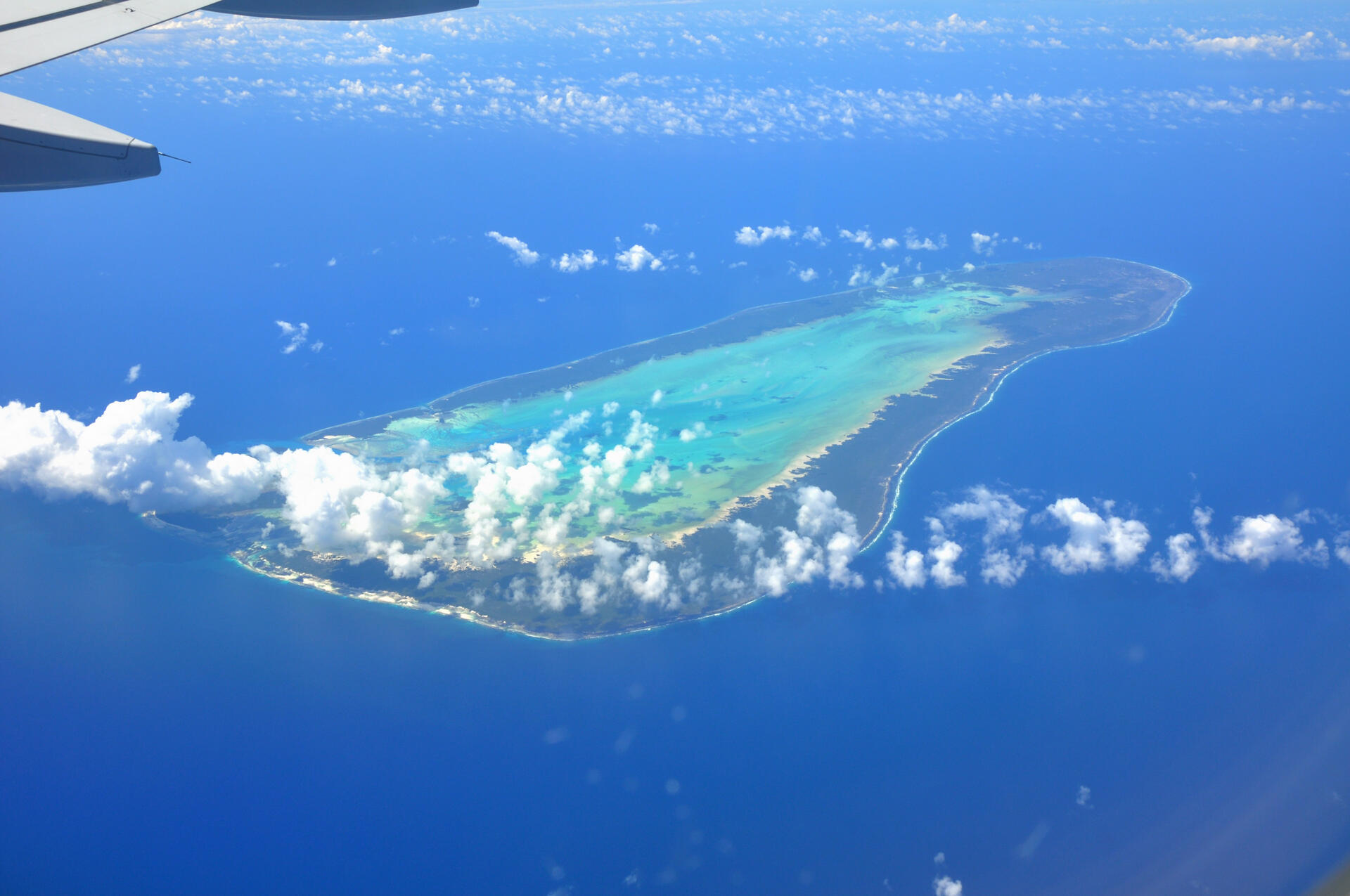
The atoll is comprised of four large coral islands which enclose a shallow lagoon; the group of islands is itself surrounded by a coral reef. Due to difficulties of access and the atoll's isolation, Aldabra has been protected from human influence and thus retains some 152,000 giant tortoises, the world's largest population of this reptile.
UNESCO Justification of the World Heritage Site
Criterion (vii): Aldabra Atoll consists of four main islands of coral limestone separated by narrow passes and enclosing a large shallow lagoon, providing a superlative spectacle of natural phenomena. The lagoon contains many smaller islands and the entire atoll is surrounded by an outer fringing reef. Geomorphologic processes have produced a rugged topography, which supports a variety of habitats with a relatively rich biota for an oceanic island and a high degree of endemism. Marine habitats range from coral reefs to seagrass beds and mangrove mudflats with minimal human impact.
Criterion (ix): The property is an outstanding example of an oceanic island ecosystem in which evolutionary processes are active within a rich biota. Most of the land surface comprises ancient coral reef (~125,000 years old) which has been repeatedly raised above sea level. The size and morphological diversity of the atoll has permitted the development of a variety of discrete insular communities with a high incidence of endemicity among the constituent species. The top of the terrestrial food chain is, unusually, occupied by an herbivore: the giant tortoise. The tortoises feed on grasses and shrubbery, including plants which have evolved in response to its grazing patterns. The atoll's isolation has also allowed the evolution of endemic flora and fauna. Due to minimal human interference, these ecological processes can be clearly observed in their full complexity.
Criterion (x): Aldabra provides an outstanding natural laboratory for scientific research and discovery. The atoll constitutes a refuge for over 400 endemic species and subspecies (including vertebrates, invertebrates and plants). These include a population of over 100,000 Aldabra Giant Tortoise. The tortoises are the last survivors of a life form once found on other Indian Ocean islands and Aldabra is now their only remaining habitat. The tortoise population is the largest in the world and is entirely self-sustaining: all the elements of its intricate interrelationship with the natural environment are evident. There are also globally important breeding populations of endangered green turtles, and critically endangered hawksbill turtles are also present. The property is a significant natural habitat for birds, with two recorded endemic species (Aldabra Brush Warbler and Aldabra Drongo), and another eleven birds which have distinct subspecies, amongst which is the White-throated Rail, the last remaining flightless bird of the Western Indian Ocean. There are vast waterbird colonies including the second largest frigatebird colonies in the world and one of the world's only two oceanic flamingo populations. The pristine fringing reef system and coral habitat are in excellent health and distinguished by their intactness and the sheer abundance and size of species contained within them.
Encyclopedia Record: Aldabra
Aldabra, the world's second-largest coral atoll, is located east of the continent of Africa. It is part of the Aldabra Group of islands in the Indian Ocean that are part of the Outer Islands of the Seychelles, with a distance of 1,120 km (700 mi) southwest of the capital, Victoria on Mahé Island. Initially named by Arab seafarers for its harsh environment, Aldabra became a French colony dependency in the 18th century, leading to the exploitation of its natural resources, particularly giant tortoises. After passing through British hands, Aldabra faced potential military use in the 1960s, but international protests resulted in its protection. The atoll boasts unique geography, featuring the world's largest raised coral reef and a large shallow lagoon. Aldabra's history involves human impact, including failed agricultural ventures.Additional Site Details
Area: 35,000 hectares
Number of Components: 1
(ix) — Outstanding example representing ecological and biological processes
(x) — Contains most important habitats for biodiversity
Coordinates: -9.416666667 , 46.41666667
IUCN World Heritage Outlook
The 2025 Conservation Outlook on Aldabra Atoll reports the following assessment:
Source: International Union for Conservation of Nature (IUCN) · View assessment
Image
© Simisa, CC BY-SA 3.0 Resized from original. (This derivative is under the same CC BY-SA license.)
World Heritage Research
Discover scientific research and academic studies that deepen our understanding of Aldabra Atoll from its history and significance to its conservation, management, and contemporary challenges.
-
Spatial organisation and functional composition of benthic reef assemblages across a depth gradient in western Aldabra Atoll
Aldabra Atoll's western seaward reefs exhibit a resilient, post-disturbance state dominated by stress-tolerant massive corals, with spatial organization shifting deterministically from shallow aggregated frameworks to deeper fragmented nucleated patches. This study, using 300 high-resolution video-still quadrats across two depth contours (8 m and 15 m), revealed that environmental filtering, rather than stochastic neutral drift, drives post-bleaching recovery. Multivariate dispersion analysis highlighted increased patchiness with depth, while statistical niche modeling confirmed substrate stability as a physical bottleneck, with Isopora spp. thriving on rock pavement and Goniopora spp. dominating mobile rubble. These findings underscore the role of niche-driven processes in shaping benthic community structure following climate-induced disturbances.
Landers, D., Head, C., Koester, A., Burt, A., Koldewey, H., & Bonsall, M. B. (2026). Spatial organisation and functional composition of benthic reef assemblages across a depth gradient in western Aldabra Atoll. Frontiers in Marine Science, 13. https://doi.org/10.3389/fmars.2026.1758580
View Publication Record | Read Publication -
Assessing blue carbon in mangrove ecosystems of Seychelles
Seychelles' mangrove ecosystems store approximately 2.5 million tonnes of carbon dioxide equivalent (CO₂e), with Aldabra Atoll, a UNESCO World Heritage and Ramsar site, holding the highest carbon stocks at 67% of the country's total. This first blue carbon assessment for Seychelles reveals that soils account for 70% of these stocks, despite a shallow organic layer due to limestone dominance. The study highlights the critical role of mangroves in climate mitigation and adaptation, particularly for Small Island Developing States vulnerable to climate change impacts like sea level rise and cyclones. Field data underscores their potential to support Seychelles' Nationally Determined Contributions (NDCs) commitments, with 85% of its 2195 hectares of mangroves already protected.
Wartman, M., Palacios, M. M., Nourice, B., Macreadie, P. I., Constance, A., Waryszak, P., & Duarte de Paula Costa, M. (2025). Assessing blue carbon in mangrove ecosystems of Seychelles. Journal of Environmental Management, 374, 123967. https://doi.org/10.1016/j.jenvman.2024.123967
View Publication Record | Read Publication -
Centipedes (Myriapoda, Chilopoda) of Aldabra Atoll (Seychelles)
Aldabra Atoll hosts a unique centipede fauna comprising 12 species, with affinities primarily traced to East Africa and the Western Indian Ocean. This is the first comprehensive checklist of Aldabran centipedes, including newly identified species such as Lamyctes tristani and Scolopendra morsitans, alongside revisions to taxonomic classifications. Notably, the study designates Hovanyx and Mixophilus as junior synonyms of Tuoba, while questioning the validity of Cryptops daszaki based on type material examination. The research leverages historical Royal Society survey data (1968–1975) to document morphological variation and infer biogeographical origins, contributing critical insights into the island's myriapod diversity.
Popovici, G., & Edgecombe, G. D. (2025). Centipedes (Myriapoda, Chilopoda) of Aldabra Atoll (Seychelles). ZooKeys, 1228, 225–273. https://doi.org/10.3897/zookeys.1228.143007
View Publication Record | Read Publication -
Disentangling the gut microbiota of Aldabra giant tortoises of different ages and environments
The gut microbiota of Aldabra giant tortoises is primarily shaped by environment rather than age, with wild tortoises exhibiting greater microbial diversity due to varied diets. A study analyzing 52 fecal samples from Seychelles and Italy revealed that geolocation significantly influences microbiota composition, while age had a lesser impact. Certain bacterial families, such as Spirochaetota and Fibrobacterota, were more prevalent in environments with higher fiber intake, reflecting dietary differences. Additionally, some bacteria were specific to individuals on Curieuse Island but not elsewhere. Centenarian tortoises showed reduced microbial complexity compared to younger adults. These findings highlight the importance of environmental factors in gut microbiota diversity and can inform conservation strategies for this long-lived species.
Zakaria, D., Sandri, C., Modesto, M., Spiezio, C., Scarafile, D., Cedras, A., Borruso, L., Manghi, P., Trevisi, P., Segata, N., Mattarelli, P., & Arita, M. (2025). Disentangling the gut microbiota of Aldabra giant tortoises of different ages and environments. PeerJ, 13, e19566. Portico. https://doi.org/10.7717/peerj.19566
View Publication Record | Read Publication -
Supporting resilience-based coral reef management using broadscale threshold approaches
Aldabra Atoll, a remote marine protected area (MPA) in the western Indian Ocean, demonstrates high coral reef resilience comparable to well-managed MPAs. A study assessing reef condition against broadscale ecological thresholds—including structural complexity, fish biomass, and juvenile coral density—found that seven of eight seaward reefs met or exceeded expected resilience levels even after the 2016 mass bleaching event, with minimal impact from nearby research activities. The findings support the use of broadscale thresholds for resilience-based management, particularly in data-limited regions, while also highlighting the need to expand threshold categories and incorporate site-specific factors for more nuanced assessments.
Burt, A. J., Koester, A., Bunbury, N., Haupt, P., Walton, R., Fleischer-Dogley, F., & Chong-Seng, K. M. (2025). Supporting resilience-based coral reef management using broadscale threshold approaches. Scientific Reports, 15(1). https://doi.org/10.1038/s41598-025-09531-9
View Publication Record | Read Publication -
Red-footed booby population thriving at globally significant Aldabra Atoll: insights from unmanned aerial vehicle surveys
Aldabra Atoll hosts the world's most significant red-footed booby colony, with populations surging to at least 45,817 breeding pairs by 2023—a dramatic increase from previous estimates. Traditional boat surveys revealed 36,720 pairs, but unmanned aerial vehicle (UAV) surveys uncovered an additional 5,574 inland breeding pairs, previously undocumented. This breakthrough highlights the atoll's global importance for seabird conservation and demonstrates UAVs as a powerful tool for monitoring low-lying mangrove colonies. The study suggests earlier population counts may have been underestimated, underscoring Aldabra’s critical role in sustaining this threatened species in the Indian Ocean.
Risi, M. M., Jones, C. W., Oppel, S., Bristol, C. A., O’Brien, M., Fleischer-Dogley, F., & Bunbury, N. (2025). Red-footed booby population thriving at globally significant Aldabra Atoll: insights from unmanned aerial vehicle surveys. Oryx, 59(5), 554–564. https://doi.org/10.1017/s0030605325000201
View Publication Record | Read Publication -
Blueprint for Blue Carbon: Lessons from Seychelles for Small Island States
Seychelles' blue carbon ecosystems, including mangroves and seagrasses, hold significant potential for climate change mitigation as small island developing states (SIDS) seek to leverage nature-based solutions. Dominated by mangroves (2195 ha, 80% in Aldabra Atoll) and extensive seagrass beds (142,065 ha), these ecosystems could contribute substantially to national climate commitments while providing multiple ecosystem services. However, threats such as rising sea levels, coastal squeeze, erosion, severe storms, and human activities pose risks to their stability. The study highlights the need for robust carbon inventories, continuous monitoring, and policy frameworks to ensure accurate accounting, sustainable financing, and long-term protection. Insights from Seychelles offer a blueprint for SIDS to integrate blue carbon into climate strategies while addressing challenges related to ownership rights, certification, and market dynamics post-COP27.
Bennett, M., March, A., Raguain, J., & Failler, P. (2024). Blueprint for Blue Carbon: Lessons from Seychelles for Small Island States. Oceans, 5(1), 81–108. https://doi.org/10.3390/oceans5010006
View Publication Record | Read Publication