World Heritage Identification Number: 733
World Heritage since: 1995
Category: Cultural Heritage
WHE Type: Historic Cities & Urban Areas
Transboundary Heritage: No
Endangered Heritage: No
Country: 🇮🇹 Italy
Continent: Europe
UNESCO World Region: Europe and North America
Map
Ferrara, City of the Renaissance, and Its Po Delta: A Cultural and Architectural Gem
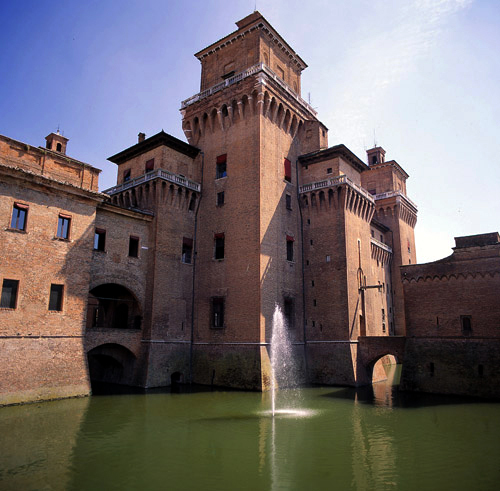
Ferrara, City of the Renaissance, and its Po Delta, located in the Emilia-Romagna region of northern Italy, is a testament to the intellectual and artistic prowess of the Italian Renaissance. Inscribed as a UNESCO World Heritage Site in 1995, this city offers a unique blend of history, culture, and natural beauty that attracts visitors from around the globe.
More to come…UNESCO Description of the World Heritage Site
Ferrara, which grew up around a ford over the River Po, became an intellectual and artistic centre that attracted the greatest minds of the Italian Renaissance in the 15th and 16th centuries. Here, Piero della Francesca, Jacopo Bellini and Andrea Mantegna decorated the palaces of the House of Este. The humanist concept of the 'ideal city' came to life here in the neighbourhoods built from 1492 onwards by Biagio Rossetti according to the new principles of perspective. The completion of this project marked the birth of modern town planning and influenced its subsequent development.
UNESCO Justification of the World Heritage Site
Criterion (ii): Developments in town planning expressed in Renaissance Ferrara had a profound influence on town design practice and planned preservation throughout the succeeding centuries. The Ferrarese architectural school (Biagio Rosetti, Girolamo da Carpi, Giambattista Aleotti, etc.) exported urban design views and elements such as walls and fortresses into the planning of other Italian and European cities.
Criterion (iii): The Este ducal residences in the Po Delta illustrate the influence of Renaissance culture on the natural landscape in an exceptional manner.
Criterion (iv): The historical town of Ferrara is an exceptional example of Renaissance period urban planning in which the layout and built forms from this period are still visible and where the urban fabric is virtually intact.
Criterion (v): The Po Delta is an outstanding planned cultural landscape that retains its original form to a remarkable extent.
Criterion (vi): During the two seminal centuries of the Renaissance, the brilliant court of the Este family attracted leading artists, poets and philosophers and became a major centre for the development and practical application of ‘new humanism’ in Italy.
Encyclopedia Record: Ferrara
Ferrara is a city and comune (municipality) in Emilia-Romagna, Northern Italy, capital of the province of Ferrara. As of 2016, it had 132,009 inhabitants. It is situated 44 kilometres northeast of Bologna, on the Po di Volano, a branch channel of the main stream of the Po River, located 5 km north. The town has broad streets and numerous palaces dating from the Renaissance, when it hosted the court of the House of Este. For its beauty and cultural importance, it has been designated by UNESCO as a World Heritage Site.Additional Site Details
Area: 46,712 hectares
Number of Components: 2
(iii) — Unique or exceptional testimony to a cultural tradition
(iv) — Outstanding example of a type of building or landscape
(v) — Outstanding example of traditional human settlement
(vi) — Directly associated with events or living traditions
Coordinates: 44.83777778 , 11.61944444
World Heritage Research
Discover scientific research and academic studies that deepen our understanding of Ferrara, City of the Renaissance, and its Po Delta from its history and significance to its conservation, management, and contemporary challenges.
-
TERRÆ NUOVÆ : transformative Raumidentitäten einer Lagunenstadt : Museo culturale del Delta : ein Kulturzentrum für Comacchio
The unique cultural landscape of Comacchio, nestled within the Po Delta's lagoon, reflects a transformative interplay between human adaptation and environmental influence. This study reveals how political instability during late antiquity prompted the settlement in such demanding landscapes, fostering distinct architectural forms and cultural identities tied to water-based living. Historical analysis of urban development shows significant morphological changes from the 19th century onward, driven by technical advancements and economic pressures like unemployment, which led to extensive land reclamation. Today, the Valli's extensified use supports critical bird habitats within a Natura-2000 Biosphärenreservat, underscoring its ecological significance. Comacchio's evolution, alongside Ferrara, exemplifies how cultural landscapes adapt while retaining intrinsic identities, contributing to their 1995 UNESCO World Heritage designation.
Wäsler, P. (2026). TERRÆ NUOVÆ : transformative Raumidentitäten einer Lagunenstadt : Museo culturale del Delta : ein Kulturzentrum für Comacchio. TU Wien. https://doi.org/10.34726/HSS.2026.137923
View Publication Record | Read Publication -
Nuove tecnologie e sostenibilità: dal rilievo alla comunicazione per il Museo di Casa Romei di Ferrara, città Patrimonio UNESCO
New digital technologies, including multi-scale surveying and interactive data storage, significantly enhance the sustainability of cultural heritage by improving accessibility and inclusivity. A case study at the Museum of Casa Romei in Ferrara demonstrates how these tools can redirect tourist flows from major monuments to more peripheral historical areas, thereby supporting the preservation and dissemination of cultural assets. The research integrates 3D processing, 2D drawing, and digital communication to create comprehensive documentation and archiving systems that benefit both academic analysis and public engagement.
Mei, G., Boscaro, C., Costantini, S., & Incerti, M. (2023). Nuove tecnologie e sostenibilità: dal rilievo alla comunicazione per il Museo di Casa Romei di Ferrara, città Patrimonio UNESCO. Restauro Archeologico, 30(1). https://doi.org/10.36253/rar-14329
View Publication Record | Read Publication -
İklim Değişikliği Bağlamında Kültürel Mirasın Sürdürülebilirliği ve Enerji Korunumunun Değerlendirilmesi
Climate change poses significant risks to the sustainability of cultural heritage and energy conservation in traditional settlements, particularly those listed as UNESCO World Heritage Sites. A study analyzing sites such as Sassi di Matera (Italy), Ferrara (Italy), Siena (Italy), Safranbolu (Turkey), Cumalıkızık (Turkey), and Mardin (Turkey) found that while these areas historically excelled in energy efficiency due to their adaptive construction using local materials, they are now vulnerable to degradation. The research highlights the need for proactive conservation strategies to mitigate adverse effects and preserve their energy-saving properties. A proposed model aims to address these challenges by integrating sustainable practices with historical preservation efforts.
DENİZ, M., & YAMAÇLI, R. (2023). Evaluation of The Sustainability of Culturel heritage and Energy Conservation in the Context of Climate Change. Düzce Üniversitesi Bilim Ve Teknoloji Dergisi, 11(3), 1446–1462. https://doi.org/10.29130/dubited.1047571
View Publication Record | Read Publication -
Adaptive urban design to cope with heavy rainfall in the Historic Centre: a masterplan for Ferrara (Italy)
A masterplan for Ferrara, Italyoffers adaptive urban design solutions to mitigate flooding and heatwaves in its historic center. The study identifies site-specific interventions across 400 hectares, balancing preservation of fragile architectural and ecological materials with climate resilience. It synthesizes best practices from global case studies and applies a multi-level analytical methodology to protect public spaces, ancient fabrics, and historical gardens while ensuring liveability for inhabitants and visitors. The approach prioritizes time-sensitive actions tailored to Ferrara's unique cultural heritage challenges.
Fior, M. (2022). Adaptive urban design to cope with heavy rainfall in the Historic Centre: a masterplan for Ferrara (Italy). Journal of Urbanism: International Research on Placemaking and Urban Sustainability, 18(1), 132–152. https://doi.org/10.1080/17549175.2022.2108113
View Publication Record | Read Publication -
Chemical Characterization of Particulate Matter in the Renaissance City of Ferrara
A study on particulate matter in Ferrara, Italy, reveals significant environmental concerns due to industrial activities. Researchers analyzed aerosols from urban and industrial areas using scanning electron microscopy (SEM), finding that smaller particles aggregate into larger polycrystalline forms, often up to 10 micrometers in diameter. The chemical composition was diverse, with silicate being the most abundant, followed by carbonate, chlorine, sulfate, carbon, and organic matter. These findings suggest that Ferrara faces air pollution challenges similar to some of the world's most polluted cities, necessitating further investigation to protect its cultural heritage.
Marrocchino, E., Telloli, C., & Rizzo, A. (2021). Chemical Characterization of Particulate Matter in the Renaissance City of Ferrara. Geosciences, 11(6), 227. https://doi.org/10.3390/geosciences11060227
View Publication Record | Read Publication -
Numerical Investigation of the Retrofitting Interventions of the San Benedetto Church Complex in Ferrara (Italy) from a Seismic Vulnerability Perspective
Advanced numerical simulations reveal critical seismic vulnerabilities in the San Benedetto Church Complex, a UNESCO-listed site in Ferrara, Italy. The study, focusing on the 15th-century church and its inclined bell tower, demonstrates that structural stiffening combined with non-uniform distribution of resisting capacities can significantly enhance seismic resilience. Two retrofitting interventions—repointing techniques with composites for the church and steel hooping bars for the bell tower—were analyzed using non-linear dynamic analysis, highlighting their effectiveness in mitigating earthquake-induced damage. The research underscores the necessity of such simulations to ensure structural safety, particularly in light of recent seismic events that have compromised occupancy and safety in the region.
Shehu, R. (2021). Numerical Investigation of the Retrofitting Interventions of the San Benedetto Church Complex in Ferrara (Italy) from a Seismic Vulnerability Perspective. 12th International Conference on Structural Analysis of Historical Constructions. https://doi.org/10.23967/sahc.2021.172
View Publication Record | Read Publication -
Design for Cultural Heritage at the University of Ferrara
A collaborative effort between the University of Ferrara's Industrial Product Design students, teachers, and librarians resulted in the 'Natura Naturata' exhibition, showcasing the university's tangible and intangible cultural heritage. This exhibition, held in April 2019 at the Chemistry and Life Sciences Library Santa Maria delle Grazie, integrated taught courses and research to create a unique blend of curatorial concepts, graphic-communicative design, and educational tools. The project aimed to convey the significance of library collections and the university's historical architecture to students, scholars, and citizens, while also providing students with specific skills for preparing bibliographic exhibitions.
Contarini, M., Bernabè, A., Manfra, M., & Turrini, D. (2020). Design for Cultural Heritage at the University of Ferrara. 6th International Conference on Higher Education Advances (HEAd′20), 1–8. https://doi.org/10.4995/head20.2020.11085
View Publication Record | Read Publication