World Heritage Identification Number: 768
World Heritage since: 1998
Category: Natural Heritage
WHE Type: Natural Landscapes & Geographic Features
Transboundary Heritage: No
Endangered Heritage: No
Country: 🇷🇺 Russian Federation
Continent: Europe
UNESCO World Region: Europe and North America
Map
Exploring the Golden Mountains of Altai: A Biodiverse Haven in Central Siberia
The Golden Mountains of Altai, located in southern Siberia, stand as a testament to the rich biodiversity and breathtaking landscapes that define this vast region. Inscribed as a UNESCO World Heritage Site in 1998, the Golden Mountains of Altai encompasses three distinct areas: Altaisky Zapovednik and a buffer zone around Lake Teletskoye; Katunsky Zapovednik and a buffer zone around Mount Belukha; and the Ukok Quiet Zone on the Ukok Plateau. Together, these regions span an impressive 1,611,457 hectares, making it one of the largest protected areas in Russia.
More to come…UNESCO Description of the World Heritage Site
The Altai mountains in southern Siberia form the major mountain range in the western Siberia biogeographic region and provide the source of its greatest rivers – the Ob and the Irtysh. Three separate areas are inscribed: Altaisky Zapovednik and a buffer zone around Lake Teletskoye; Katunsky Zapovednik and a buffer zone around Mount Belukha; and the Ukok Quiet Zone on the Ukok plateau. The total area covers 1,611,457 ha. The region represents the most complete sequence of altitudinal vegetation zones in central Siberia, from steppe, forest-steppe, mixed forest, subalpine vegetation to alpine vegetation. The site is also an important habitat for endangered animal species such as the snow leopard.
UNESCO Justification of the World Heritage Site
Criteria (x): The Altai region represents an important and original centre of biodiversity of montane plant and animal species in northern Asia, a number of which are rare and endemic.
Encyclopedia Record: Golden Mountains of Altai
Golden Mountains of Altai is the name of an UNESCO World Heritage Site consisting of the Altai and Katun Natural Reserves, Lake Teletskoye, Belukha Mountain, and the Ukok Plateau. As stated in the UNESCO description of the site, "the region represents the most complete sequence of altitudinal vegetation zones in central Siberia, from steppe, forest-steppe, mixed forest, subalpine vegetation to alpine vegetation". While making its decision, UNESCO also cited Russian Altai's importance for preservation of the globally endangered mammals, such as the snow leopard, Altai argali, and Siberian ibex. The site covers a vast area of 16,178 km2 (6,246 sq mi).Additional Site Details
Area: 1,611,457 hectares
Number of Components: 3
Coordinates: 50.46666667 , 86
IUCN World Heritage Outlook
The 2025 Conservation Outlook on Golden Mountains of Altai reports the following assessment:
Source: International Union for Conservation of Nature (IUCN) · View assessment
Image
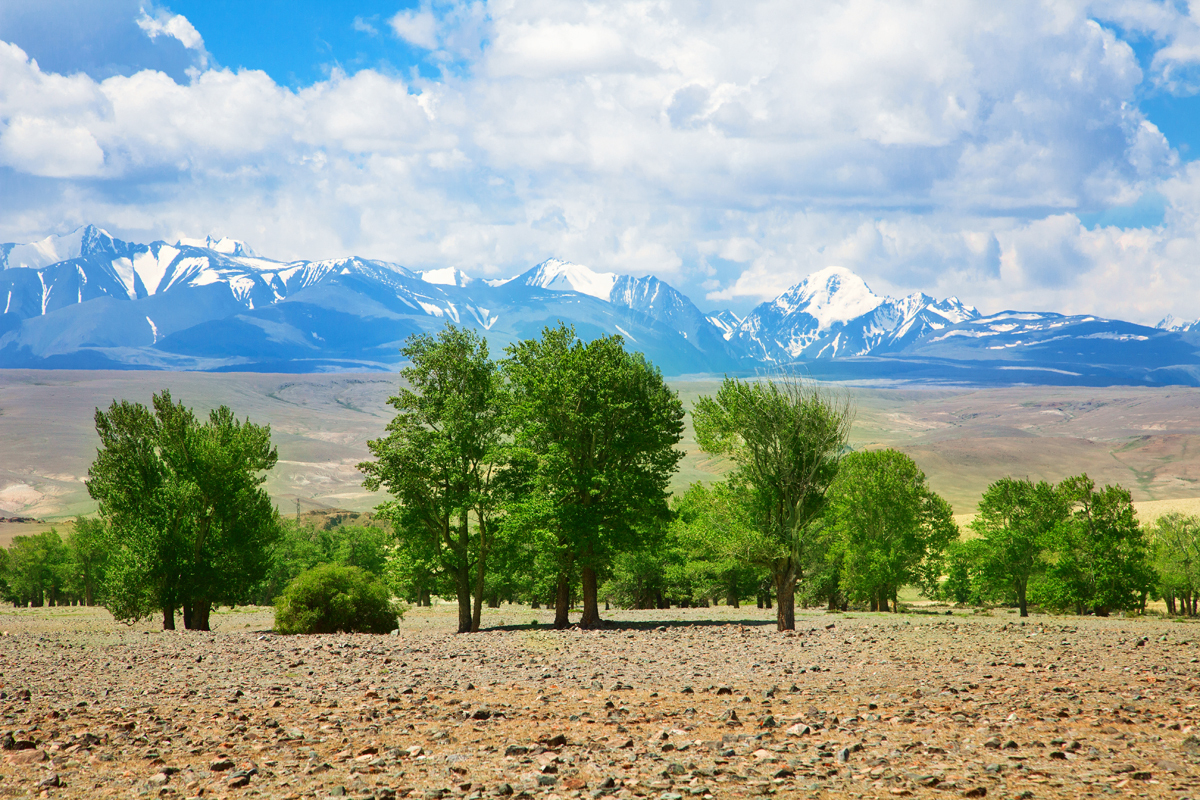
© Alexandr frolov, CC BY-SA 3.0 Resized from original. (This derivative is under the same CC BY-SA license.)