World Heritage Identification Number: 174
World Heritage since: 1982
Category: Cultural Heritage
WHE Type: Historic Cities & Urban Areas
Transboundary Heritage: No
Endangered Heritage: No
Country: 🇮🇹 Italy
Continent: Europe
UNESCO World Region: Europe and North America
Map
The Historic Centre of Florence: A Cultural Treasure Trove of the Renaissance
The Historic Centre of Florence, located within the Italian city's Quartiere 1, is a testament to the enduring legacy of the Renaissance era. Inscribed as a UNESCO World Heritage Site in 1982, this vibrant urban centre has been the cradle of several centuries of unparalleled artistic activity, particularly during the late medieval and Renaissance periods. Its protected area and buffer zone were further refined in 2021, including key viewpoints such as San Miniato al Monte and Piazzale Michelangelo, offering a complete historical panorama of the city.
Florence's rich history dates back to antiquity. While the area was inhabited in Etruscan times, the city itself was founded as a Roman settlement in 59 BCE. It was during the medieval period, however, that the city truly began to flourish. By the 15th century, Florence had risen to become a leading political and economic power, thanks in large part to the influence of the powerful Medici family. Under their patronage, the city became a hub for some of the most renowned artists of the time, including Giotto di Bondone, Filippo Brunelleschi, Sandro Botticelli, and Michelangelo.
One of the most iconic landmarks in the Historic Centre of Florence is the Florence Cathedral (Cathedral of Santa Maria del Fiore). Construction on this grand structure began in 1296, and major work continued for over a century, culminating in the completion of its dome in 1436. The cathedral is a masterpiece of Gothic architecture, featuring a stunning dome designed by Filippo Brunelleschi. The cathedral's bell tower, known as Giotto's Campanile, was begun in 1334 by Giotto di Bondone and completed after his death by Andrea Pisano and Francesco Talenti. However, the cathedral’s famous polychrome marble façade remained unfinished for centuries and was only completed in 1887 in the Neo-Gothic style.
Another must-visit site in the Historic Centre of Florence is the Basilica of Santa Croce. Founded in the 14th century, this Franciscan church is home to the tombs and memorials of many famous Italians, including Michelangelo, Galileo Galilei, and Niccolò Machiavelli. The church's interior boasts an impressive collection of frescoes, sculptures, and other works of art.
For those interested in the visual arts, a visit to the Uffizi Gallery is essential. Housed within the Uffizi Palace, built in the 16th century under the Medici family, the gallery contains an extensive collection of paintings dating from the 13th through the 18th centuries. Some of the highlights include Botticelli's "Birth of Venus" and Caravaggio's “Medusa.”
No trip to the Historic Centre of Florence would be complete without visiting the Pitti Palace. Originally built in 1458 for the banker Luca Pitti, the palace was later acquired by the Medici family and now serves as a museum, housing an array of artwork, furniture, and other historical artifacts. The palace's Boboli Gardens offer a tranquil escape from the bustling city streets, with their terraced lawns, fountains, and statues.
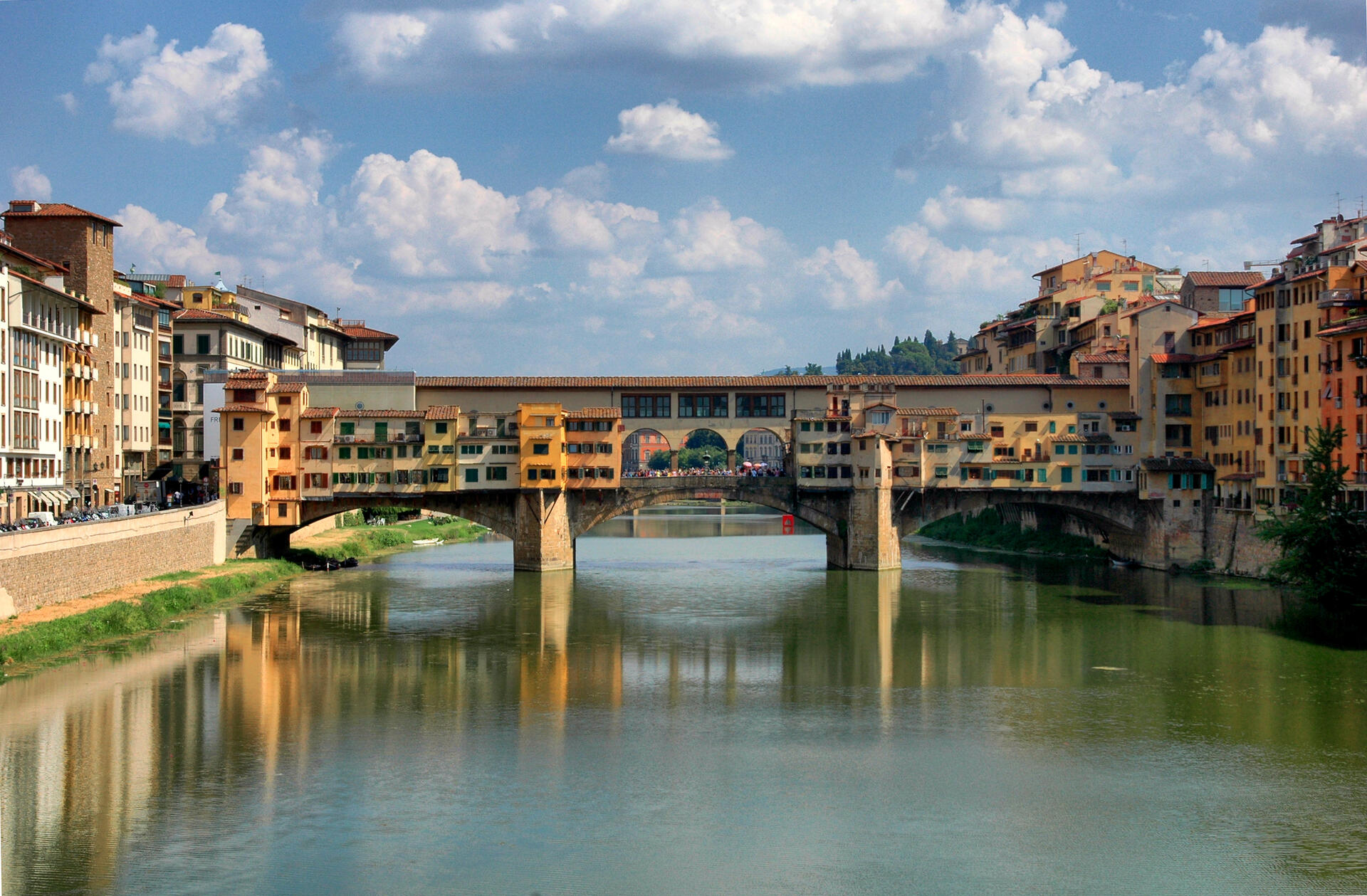
Beyond its churches and palaces, the urban fabric of Florence itself reveals the civic and political life that shaped the city’s identity. The Piazza della Signoria has long served as the heart of public life, a space where political power and artistic expression intersect. Dominated by the imposing Palazzo Vecchio, the square reflects Florence’s history as a republic before the rise of Medici dominance. Nearby, the Ponte Vecchio, lined with shops and spanning the Arno River, stands as a symbol of the city’s enduring commercial vitality and medieval heritage.
Equally significant is Florence’s role in shaping the intellectual movement known as Humanism, which placed renewed emphasis on classical antiquity, individual potential, and the pursuit of knowledge. This cultural shift not only influenced the works of artists such as Leonardo da Vinci and Michelangelo, but also transformed architecture and engineering, most notably in Filippo Brunelleschi’s self-supporting dome—a feat of engineering achieved without traditional wooden centering. Today, Florence continues to balance its rich historical legacy with the demands of modern life, preserving its artistic treasures while remaining a vibrant cultural centre that attracts visitors from around the world.
In summary, the Historic Centre of Florence is a veritable treasure trove of Renaissance art and culture. With its wealth of iconic landmarks, world-class museums, and beautiful gardens, this UNESCO World Heritage Site offers visitors a glimpse into the rich history and artistic legacy of one of Italy's most beloved cities. Whether you're a history buff, an art enthusiast, or simply someone looking to immerse yourself in the beauty and charm of Florence, the Historic Centre of Florence should not be missed.
UNESCO Description of the World Heritage Site
Built on the site of an Etruscan settlement, Florence, the symbol of the Renaissance, rose to economic and cultural pre-eminence under the Medici in the 15th and 16th centuries. Its 600 years of extraordinary artistic activity can be seen above all in the 13th-century cathedral (Santa Maria del Fiore), the Church of Santa Croce, the Uffizi and the Pitti Palace, the work of great masters such as Giotto, Brunelleschi, Botticelli and Michelangelo.
UNESCO Justification of the World Heritage Site
Criterion (i): The urban complex of Florence is in itself a unique artistic realization, an absolute chef-d’œuvre, the fruit of continuous creation over more than six centuries. In addition to its museums (the Archaeological Museum, Uffizi, Bargello, Pitti, Galleria dell’Accademia), the greatest concentration of universally renowned works of art in the world is found here – the Cathedral of Santa Maria del Fiore, the Baptistery and the Campanile of Giotto, Piazza della Signoria dominated by Palazzo Vecchio and the Palazzo Uffizi, San Lorenzo, Santa Maria Novella, Santa Croce and the Pazzi chapel, Santo Spirito, San Miniato, and the Convent of San Marco which houses paintings of Fra Angelico.
Criterion (ii): Since the Quattrocento, Florence has exerted a predominant influence on the development of architecture and the monumental arts – first in Italy, and throughout Europe: the artistic principles of the Renaissance were defined there from the beginning of the 15th century by Brunelleschi, Donatello and Masaccio. It was in the Florentine milieu that two universal geniuses of the arts – Leonardo da Vinci and Michelangelo – were formed and asserted.
Criterion (iii): The Historic Centre of Florence attests in an exceptional manner, and by its unique coherence, to its power as a merchant-city of the Middle Ages and of the Renaissance. From its past, Florence had preserved entire streets, fortified palaces (Palazzo Spini, Palazzo del Podestà, Palazzo della Signoria), lodges (Loggia del Bigallo, Loggia dei Lanzi, Loggia degli Innocenti and del Mercato Nuovo), fountains, a marvellous 14th-century bridge lined with shops, the Ponte Vecchio. Various trades, organized into prosperous arts have left several monuments such as the Or San Michele.
Criterion (iv): Florence, a first-rate economic and political power in Europe from the 14th to the 17th century, was covered during that period with prestigious buildings which translated the munificence of the bankers and the princes: Palazzo Rucellai, Palazzo Strozzi, Palazzo Gondi, Palazzo Riccardi-Medici, Palazzo Pandolfini, Palazzo Pitti and the Boboli Gardens – as well as the sacristy of San Lorenzo, the funerary chapel of the Medicis, and the Biblioteca Laurenziana and others.
Criterion (vi): Florence is materially associated with events of universal importance. It was in the milieu of the Neo-Platonic Academia that the concept of the Renaissance was forged. Florence is the birthplace of modern humanism inspired by Landino, Marsilio Ficino, Pico della Mirandola and others.
Encyclopedia Record: Historic Centre of Florence
The historic centre of Florence is part of quartiere 1 of the Italian city of Florence. This quarter was named a World Heritage Site by UNESCO in 1982.Additional Site Details
Area: 532 hectares
Number of Components: 1
(ii) — Significant interchange of human values
(iii) — Unique or exceptional testimony to a cultural tradition
(iv) — Outstanding example of a type of building or landscape
(vi) — Directly associated with events or living traditions
Coordinates: 43.77306 , 11.25611
World Heritage Research
Discover scientific research and academic studies that deepen our understanding of Historic Centre of Florence from its history and significance to its conservation, management, and contemporary challenges.
-
Cultural tourism pressure on historic centres: Its impact on public space and intervention strategies for its mitigation. Florence, Italy, as a case study
Mass cultural tourism, while driving economic growth, has led to unsustainable pressures on historic centres, including congestion, pollution, and the loss of public space diversity. A study focusing on Florence, Italy, reveals that these issues persist despite temporary reductions in tourist flows, such as those seen during the COVID-19 pandemic. The research proposes sustainable urban design strategies for public spaces to mitigate overtourism's impact, balancing the needs of both tourists and residents. By analyzing theoretical frameworks of overtourism and applying them to Florence, the study offers actionable solutions to preserve cultural heritage while supporting economic recovery in tourist-dependent cities.
Bianco, C. D., & Montedoro, L. (2023). Cultural tourism pressure on historic centres: Its impact on public space and intervention strategies for its mitigation. Florence, Italy, as a case study. Środowisko Mieszkaniowe/Housing Environment, 42(1), 80–86. https://doi.org/10.4467/25438700sm.23.006.17807
View Publication Record | Read Publication -
The safeguarding and enhancement of the Historic and Traditional businesses of the Historical Centre of Florence
Traditional businesses in Florence's historic center are more than commercial entities; they embody the city's cultural and urban evolution, with their intangible heritage intricately linked to the authenticity of the environment. A study by Bertocci and Cioli (2023) reveals that integrating physical documentation with the recording of intangible features—such as skills, practices, and social dynamics—is crucial for preserving the city's identity. The research highlights how the disappearance of these elements can irreversibly alter Florence's urban landscape, underscoring the need for comprehensive safeguarding protocols. By leveraging UNESCO's 2003 convention on intangible cultural heritage, the study introduces tools to assess their impact on the city's evolving image over time.
Bertocci, S., & Cioli, F. (2023). The safeguarding and enhancement of the Historic and Traditional businesses of the Historical Centre of Florence. Restauro Archeologico, 30(1). https://doi.org/10.36253/rar-14292
View Publication Record | Read Publication -
Towards a nature-culture relationship in historic centres. Evidence of public spaces beyond tourism in Florence (Italy)
Historic centres worldwide face unprecedented challenges from climate change and mass tourism, disrupting the balance between nature and culture. This study highlights two successful conservation projects in Florence's UNESCO-listed Historic Centre that addressed these issues by regenerating public spaces using nature-based solutions. These projects demonstrate how historic urban landscapes can contribute to sustainable development while preserving cultural heritage. The research builds on existing literature about tourism impacts and nature-culture relationships, offering practical examples of adaptive strategies for similar contexts.
Del Bianco, C. (2023). W kierunku relacji natura – kultura w historycznych centrach. Przykłady przestrzeni publicznych poza obszarami turystycznymi we Florencji (Włochy). Protection of Cultural Heritage, (16), 21–34. https://doi.org/10.35784/odk.3568
View Publication Record | Read Publication -
Dealing with uncertainty, from overtourism to overcapacity: a decision support model for art cities: the case of UNESCO WHCC of Florence
A decision support model for art cities, exemplified by the UNESCO World Heritage Historic Centre of Florence, reveals critical insights into managing tourist flows and balancing heritage preservation with economic and social needs. The study identifies key indicators to measure carrying capacity, assessing risks posed by overtourism both before and after the COVID-19 pandemic. It highlights how the Municipality of Florence's sustainable tourism strategy addresses these challenges, offering a framework for other historic cities to monitor tourism impacts and implement effective policies. This model provides a nuanced understanding of the evolving tourism phenomenon, its implications, and strategies for long-term preservation.
Liberatore, G., Biagioni, P., Ciappei, C., & Francini, C. (2022). Dealing with uncertainty, from overtourism to overcapacity: a decision support model for art cities: the case of UNESCO WHCC of Florence. Current Issues in Tourism, 26(7), 1067–1081. https://doi.org/10.1080/13683500.2022.2046712
View Publication Record | Read Publication -
Virtual models for the valorisation and promotion of the business heritage in the historic centre of Florence
A new platform leveraging virtual models, including 3D reconstructions and 360° tours, has been developed to promote and valorize Florence's historic business heritage. This 'diffuse museum' integrates diverse content—such as images, information, and thematic itineraries—to enhance accessibility, knowledge dissemination, and cultural tourism experiences both on-site and remotely. The initiative emphasizes the intangible value of craftsmanship and local traditions, offering a novel approach to preserving and showcasing Florence's historical commercial legacy while fostering sustainable cultural engagement.
Bertocci, S., Cioli, F., & Bordini, E. (2018). Virtual models for the valorisation and promotion of the business heritage in the historic centre of Florence. DISEGNARECON. https://doi.org/10.20365/DISEGNARECON.21.2018.2
View Publication Record | Read Publication -
Revitalization of the Penitentiary Complexes in the Historic Centre of Florence
A revitalization project has transformed the historic Murate Prison complex, formerly part of Santa Croce in Florence, into a new multifunctional social center. This initiative builds upon the 15th-century monastic foundations that originally housed these penitentiary institutions, which have occupied a significant portion of the site for over a century. The study analyzes the project's outcomes and its broader significance for the city, highlighting how repurposing such heritage structures can foster community engagement while preserving architectural history. By integrating modern social functions into a preserved historic framework, this approach offers a model for sustainable urban revitalization in UNESCO World Heritage Sites.
Tribelskaya, E. (2020). Revitalization of the Penitentiary Complexes in the Historic Centre of Florence. Proceedings of the 2nd International Conference on Architecture: Heritage, Traditions and Innovations (AHTI 2020). https://doi.org/10.2991/assehr.k.200923.033
View Publication Record | Read Publication -
Joining Historic Cities to the Global World: Feasibility or Fantasy?
Historic cities, including Florence, face challenges and opportunities in the era of globalization. While Florence's unique environmental qualities have made it a top tourist destination, its long-term sustainability depends on strategic urban planning to attract global economic investment and skilled labor. A study involving 384 randomly selected participants in Florence's historic center revealed that creating a precise and distinctive city image is crucial for historic cities to thrive globally. The research used descriptive statistics and logistic regression analysis to assess the feasibility of this transition, highlighting the need for balanced urban development to maintain cultural heritage while embracing global integration.
Shirvani Dastgerdi, A., & De Luca, G. (2019). Joining Historic Cities to the Global World: Feasibility or Fantasy? Sustainability, 11(9), 2662. https://doi.org/10.3390/su11092662
View Publication Record | Read Publication -
Pressione turistica sul Centro Storico di Firenze - sito UNESCO
Tourist pressure on Florence's historic center, a UNESCO World Heritage Site since 1982, can be effectively managed through participatory mapping and stakeholder engagement. This study introduces an innovative decision-making model that integrates local community perceptions with data on tourist pressure, site status, and impacts. By using web-based mapping tools, the research aims to support controlled and shared management strategies, enhance dialogue among stakeholders, and mitigate negative effects of tourism. The approach is designed to be incorporated into Florence's existing Management Plan, offering a practical solution for decentralizing tourist flows and preserving the site's integrity.
Romano, I. M. (2019). Pressione turistica sul Centro Storico di Firenze - sito UNESCO. Premio Tesi Di Dottorato. https://doi.org/10.36253/978-88-6453-785-6
View Publication Record | Read Publication -
Fashion and city branding: An analysis of the perception of Florence as a fashion city
Florence's fashion industry significantly enhances the city's global attractiveness, shaping its image as a premier fashion destination. A 2015 study revealed that tourists and fashion consumers perceive Florence not just as a historic site but as a hub for luxury shopping, with its reputation influencing travel decisions. The research, conducted via surveys along Via Tornabuoni—a renowned luxury street—highlighted how fashion branding strengthens local businesses while boosting the city's competitive edge. Findings suggest that leveraging Florence's fashion identity could further propel its economic and cultural standing, offering strategic insights for both city marketers and fashion brands.
Capone, F., & Lazzeretti, L. (2016). Fashion and city branding: An analysis of the perception of Florence as a fashion city. Journal of Global Fashion Marketing, 7(3), 166–180. https://doi.org/10.1080/20932685.2016.1166715
View Publication Record | Read Publication