World Heritage Identification Number: 585
World Heritage since: 1991
Category: Cultural Heritage
WHE Type: Historic Cities & Urban Areas
Transboundary Heritage: No
Endangered Heritage: No
Country: 🇲🇽 Mexico
Continent: Americas
UNESCO World Region: Latin America and the Caribbean
Map
A Journey Through Time: The Historic Centre of Morelia, Mexico
The Historic Centre of Morelia, located in the heart of the Mexican state of Michoacán, stands as a testament to the rich cultural heritage that intertwines the Spanish Renaissance with the indigenous Mesoamerican experience. This city, serving as the capital and most populous urban center of the state, boasts a unique blend of architectural styles, making it a significant UNESCO World Heritage Site since 1991.
More to come…UNESCO Description of the World Heritage Site
Built in the 16th century, Morelia is an outstanding example of urban planning which combines the ideas of the Spanish Renaissance with the Mesoamerican experience. Well-adapted to the slopes of the hill site, its streets still follow the original layout. More than 200 historic buildings, all in the region's characteristic pink stone, reflect the town's architectural history, revealing a masterly and eclectic blend of the medieval spirit with Renaissance, Baroque and neoclassical elements. Morelia was the birthplace of several important personalities of independent Mexico and has played a major role in the country's history.
UNESCO Justification of the World Heritage Site
Criterion (ii): The historic centre of Morelia is an outstanding example of urban planning which associates the ideas of the Spanish Renaissance with the Mesoamerican experience.
Criterion (iv): More than two hundred historical buildings reflect the architectural history of the city. In these masterpieces built of pink stone characteristic of the region, the medieval spirit blends with the style of the Renaissance, Baroque, Neoclassical and eclectic elements with exceptional mastery and talent.
Criterion (vi): Morelia was the birthplace of several important personalities of independent Mexico and played an important role in the country's history.
Encyclopedia Record: Morelia
Morelia is the capital and most populous city of the Mexican state of Michoacán. Situated in the Guayangareo Valley in the north-central part of the state, it is the municipal seat of the municipality of Morelia. The main pre-Hispanic cultures here were the Purépecha and the Matlatzinca, but no major cities were founded in the valley during this time. The Spanish took control of the area in the 1520s. The Spanish under Viceroy Antonio de Mendoza founded a settlement here in 1541 with the name of Valladolid, which became rival to the nearby city of Pátzcuaro for dominance in Michoacán. In 1580, this rivalry ended in Valladolid's favor, and it became the capital of the viceregal province. After the Mexican War of Independence, the city was renamed Morelia in honor of José María Morelos, who hailed from the city. In 1991, the city was declared a UNESCO World Heritage Site for its well-preserved historical buildings and layout of the historic center. It is tradition to name people born on September 30 after the city.Additional Site Details
Area: 390 hectares
Number of Components: 1
(iv) — Outstanding example of a type of building or landscape
(vi) — Directly associated with events or living traditions
Coordinates: 19.700927 , -101.190376
Image
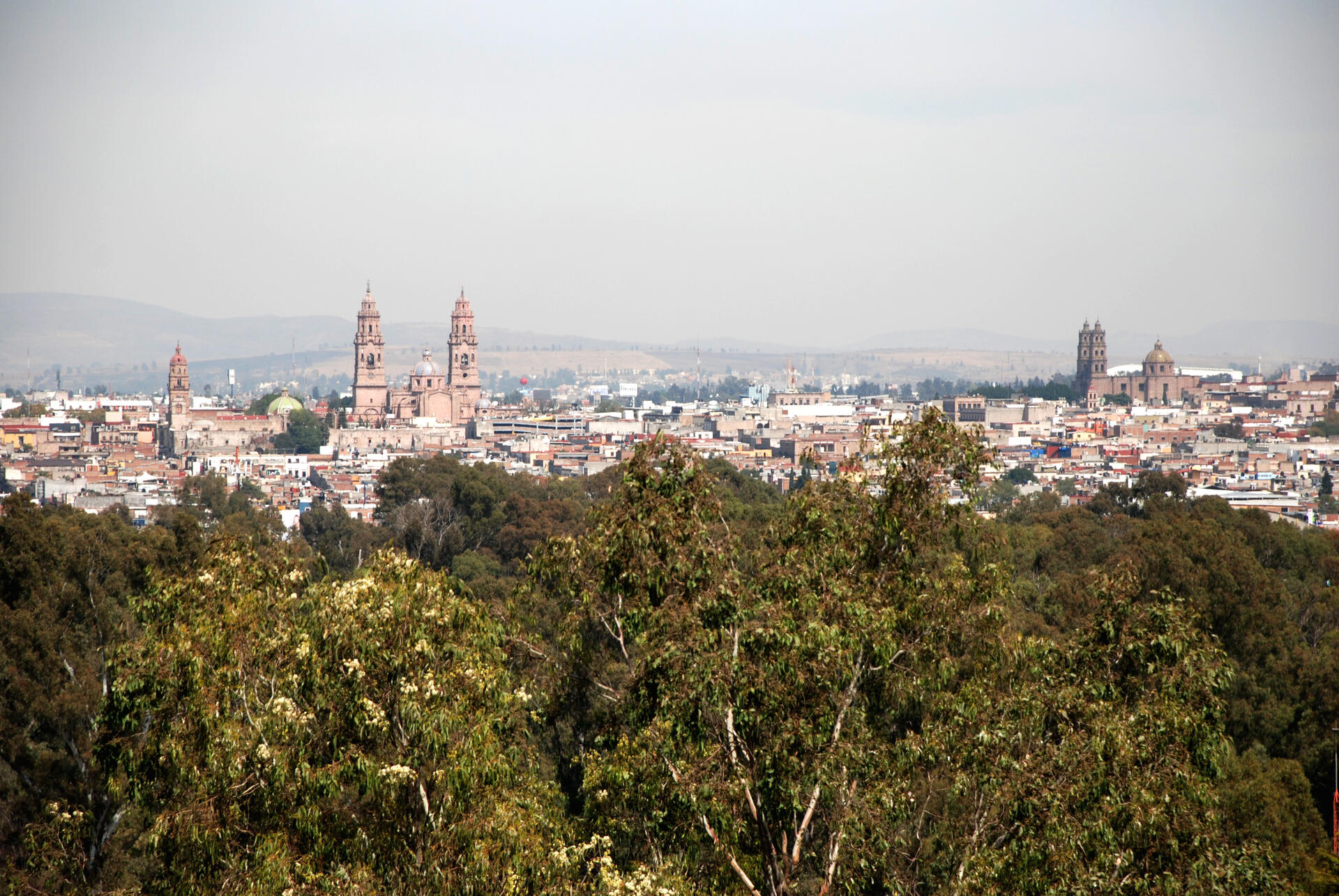
© Adavyd, CC BY-SA 3.0 Resized from original. (This derivative is under the same CC BY-SA license.)