World Heritage Identification Number: 412
World Heritage since: 1987
Category: Cultural Heritage
WHE Type: Historic Cities & Urban Areas
Transboundary Heritage: No
Endangered Heritage: No
Country: 🇲🇽 Mexico
Continent: Americas
UNESCO World Region: Latin America and the Caribbean
Map
Exploring the Rich History and Cultural Landscape of the Historic Centre of Mexico City and Xochimilco
The Historic Centre of Mexico City and Xochimilco, inscribed as a UNESCO World Heritage Site in 1987, offers a unique blend of ancient Aztec heritage, Spanish colonial architecture, and modern urban development. This article aims to delve into the historical significance, architectural wonders, and cultural richness of these two distinct yet interconnected regions.
More to come…UNESCO Description of the World Heritage Site
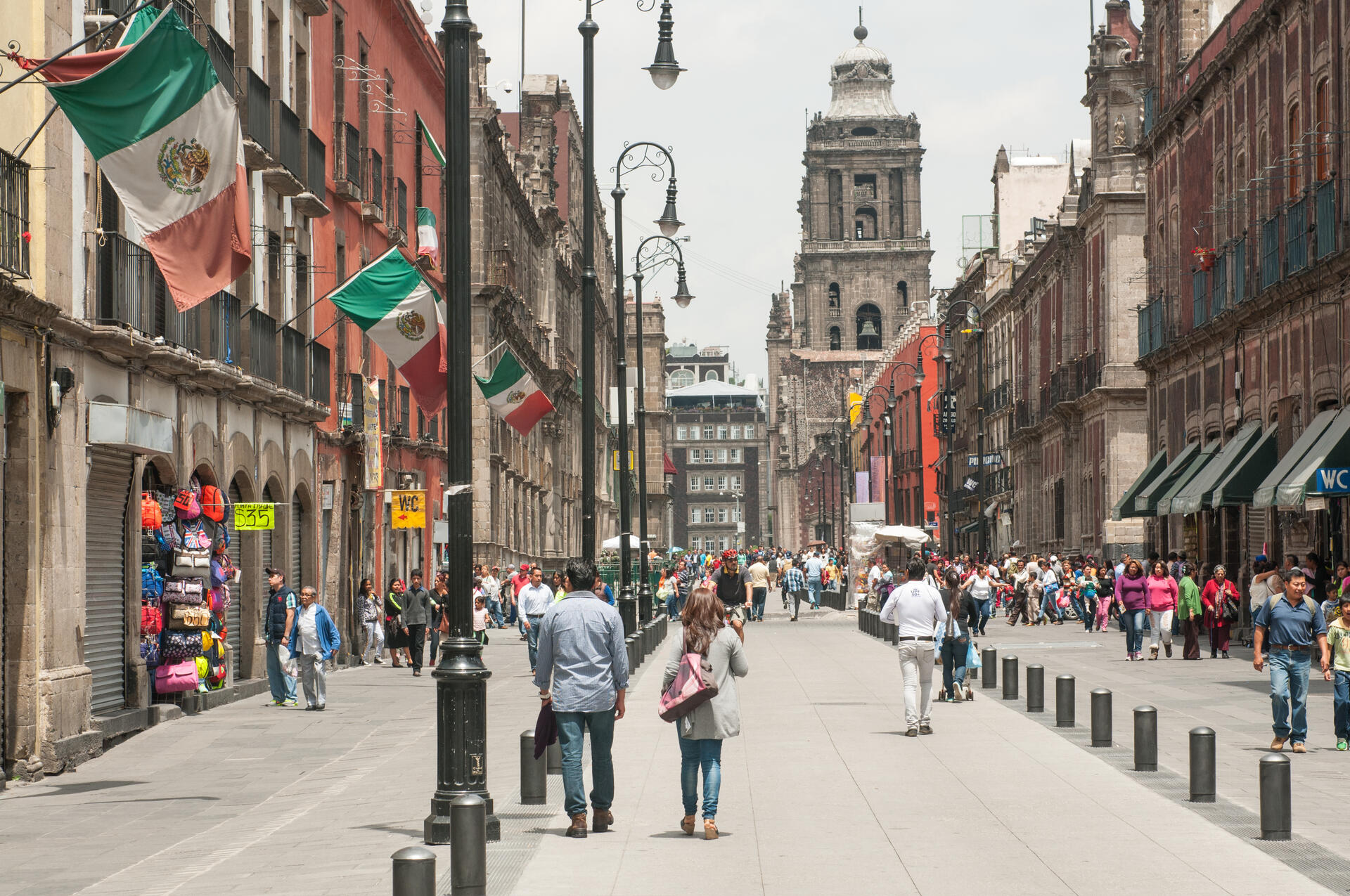
Built in the 16th century by the Spanish on the ruins of Tenochtitlan, the old Aztec capital, Mexico City is now one of the world's largest and most densely populated cities. It has five Aztec temples, the ruins of which have been identified, a cathedral (the largest on the continent) and some fine 19th- and 20th-century public buildings such as the Palacio de las Bellas Artes. Xochimilco lies 28 km south of Mexico City. With its network of canals and artificial islands, it testifies to the efforts of the Aztec people to build a habitat in the midst of an unfavourable environment. Its characteristic urban and rural structures, built since the 16th century and during the colonial period; have been preserved in an exceptional manner.
UNESCO Justification of the World Heritage Site
Criterion (ii) : From the 14th to the 19th century, Tenochtitlan, and subsequently, Mexico City, exerted decisive influence on the development of architecture, the monumental arts and the use of space first in the Aztec kingdom and later in New Spain.
Criterion (iii) : With its ruins of five temples erected before the Great Pyramid, and in particular the enormous monolith of Coyolxauhqui, which symbolized the end of the old cosmogony and the advent of Huitzilopochtli, the tribal god of the Aztecs, the monumental complex of the Templo Mayor bears exceptional witness to the cults of an extinct civilization.
Criterion (iv): The capital of New Spain, characterized by its checkerboard layout, the regular spacing of its plazas and streets, and the splendor of its religious architecture (Cathedral, Santo Domingo, San Francisco, San Jeronimo, etc.) and civil architecture (palace of the Marqués de Jaral de Berrio), is a prime example of Spanish settlements in the New World.
Criterion (v: Having become vulnerable under the impact of environmental changes, the lacustrine landscape of Xochimilco constitutes the only reminder of traditional ground occupation in the lagoons of the Mexico City basin before the Spanish conquest.
Encyclopedia Record: Historic center of Mexico City
The historic center of Mexico City, also known as the Centro or Centro Histórico, is the central neighborhood in Mexico City, Mexico, focused on the Zócalo and extending in all directions for a number of blocks, with its farthest extent being west to the Alameda Central. The Zocalo is the largest plaza in Latin America; it can hold up to nearly 100,000 people.Additional Site Details
Area: 3,010.86 hectares
Number of Components: 4
(iii) — Unique or exceptional testimony to a cultural tradition
(iv) — Outstanding example of a type of building or landscape
(v) — Outstanding example of traditional human settlement
Coordinates: 19.41833 , -99.13278