World Heritage Identification Number: 1463
World Heritage since: 2015
Category: Cultural Heritage
WHE Type: Infrastructure & Industry
Transboundary Heritage: No
Endangered Heritage: No
Country: 🇲🇽 Mexico
Continent: Americas
UNESCO World Region: Latin America and the Caribbean
Map
The Aqueduct of Padre Tembleque Hydraulic System: A Unique Blend of Cultures
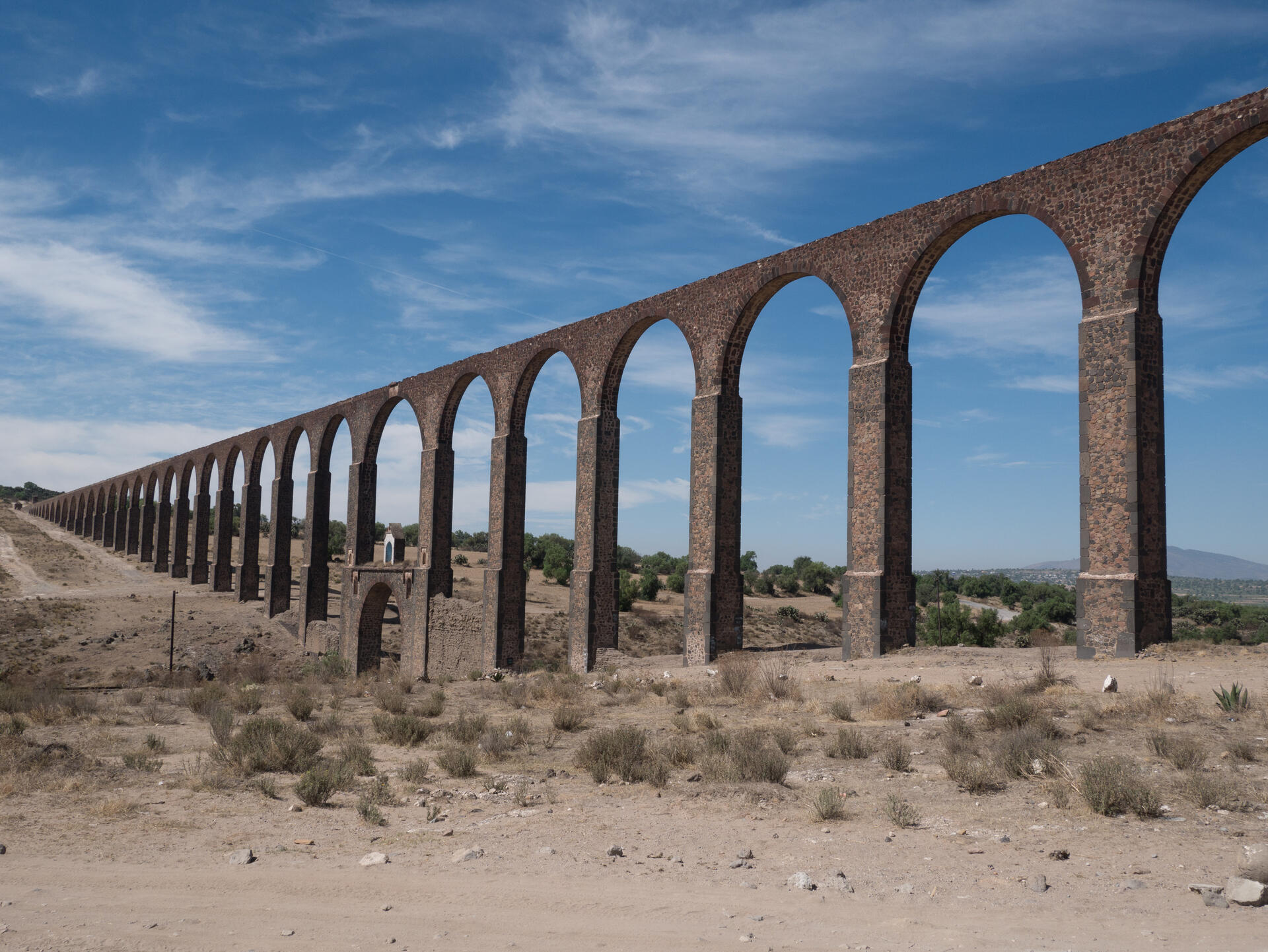
The Aqueduct of Padre Tembleque Hydraulic System, inscribed as a UNESCO World Heritage Site in 2015, stands as a remarkable testament to the harmonious fusion of European and Mesoamerican architectural traditions. Situated between the states of Mexico and Hidalgo, on the Central Mexican Plateau, this 16th-century engineering marvel spans across various towns, most notably Zempoala, Hidalgo, and Otumba in the State of Mexico.
More to come…UNESCO Description of the World Heritage Site
This 16th century aqueduct is located between the states of Mexico and Hidalgo, on the Central Mexican Plateau. This heritage canal system encompasses a water catchment area, springs, canals, distribution tanks and arcaded aqueduct bridges. The site incorporates the highest single-level arcade ever built in an aqueduct. Initiated by the Franciscan friar, Padre Tembleque, and built with support from the local indigenous communities, this hydraulic system is an example of the exchange of influences between the European tradition of Roman hydraulics and traditional Mesoamerican construction techniques, including the use of adobe.
UNESCO Justification of the World Heritage Site
Criterion (i): The aqueduct bridge of Tepeyahualco is an architectural masterpiece integrating the highest single-level arcade ever built in aqueducts from Roman times until the middle of the 16th century, achieved as a result of the ingenious use of an adobe formwork as an alternative to scaffolding. Although the use of adobe brick instead of wood was applied elsewhere in Mexico, it was not often and certainly not with the same dramatic effect as in the aqueduct, which bridges the Tepeyahualco Ravine and the Papalote River.
Criterion (ii): The hydraulic system of Padre Tembleque exhibits an important interchange of European tradition in terms of the conjunction of the Roman heritage of masonry aqueducts, hydraulic management techniques inspired by Arab-Andalusian know-how, and pre-Hispanic indigenous tradition as well as Mesoamerican culture, represented by the use of the traditional social organization of collective working, the utilization and adaptation of local methods of adobe construction as well as the presence of glyphs illustrating symbols and cosmology in several arcade structures. It is a monument fusing the humanist ideals of the Franciscan order with the local collective traditions, aimed at promoting common wellbeing through an impressive construction achievement over 17 years.
Criterion (iv): The aqueduct of Padre Tembleque represents an outstanding example of hydraulic water architecture, based on in-depth knowledge of Roman and Renaissance hydraulic engineering which was integrated with local Mesoamerican construction knowledge. The specific techniques and regional materials used in the construction created a unique type of hydraulic system at the time of Mesoamerican-European encounters.
Encyclopedia Record: Aqueduct of Padre Tembleque
The Aqueduct of Padre Tembleque, or Tembleque Aqueduct, is a Mexican aqueduct located between the towns of Zempoala, Hidalgo, and Otumba in the State of Mexico.Additional Site Details
Area: 6,540 hectares
Number of Components: 1
(ii) — Significant interchange of human values
(iv) — Outstanding example of a type of building or landscape
Coordinates: 19.8352777778 , -98.6625666667