World Heritage Identification Number: 416
World Heritage since: 1987
Category: Cultural Heritage
WHE Type: Historic Cities & Urban Areas
Transboundary Heritage: No
Endangered Heritage: No
Country: 🇲🇽 Mexico
Continent: Americas
UNESCO World Region: Latin America and the Caribbean
Map
Exploring the Rich History and Architectural Wonders of the Historic Centre of Puebla
The Historic Centre of Puebla, located approximately 100 kilometers east of Mexico City, stands as a testament to the harmonious blend of European and American architectural styles that characterizes this vibrant city. Founded in 1531, Puebla was built from scratch, offering visitors a unique opportunity to immerse themselves in the rich history and cultural heritage of Mexico. In 1987, the city center was designated a UNESCO World Heritage Site, recognizing its significant historical, artistic, and cultural value.
More to come…UNESCO Description of the World Heritage Site
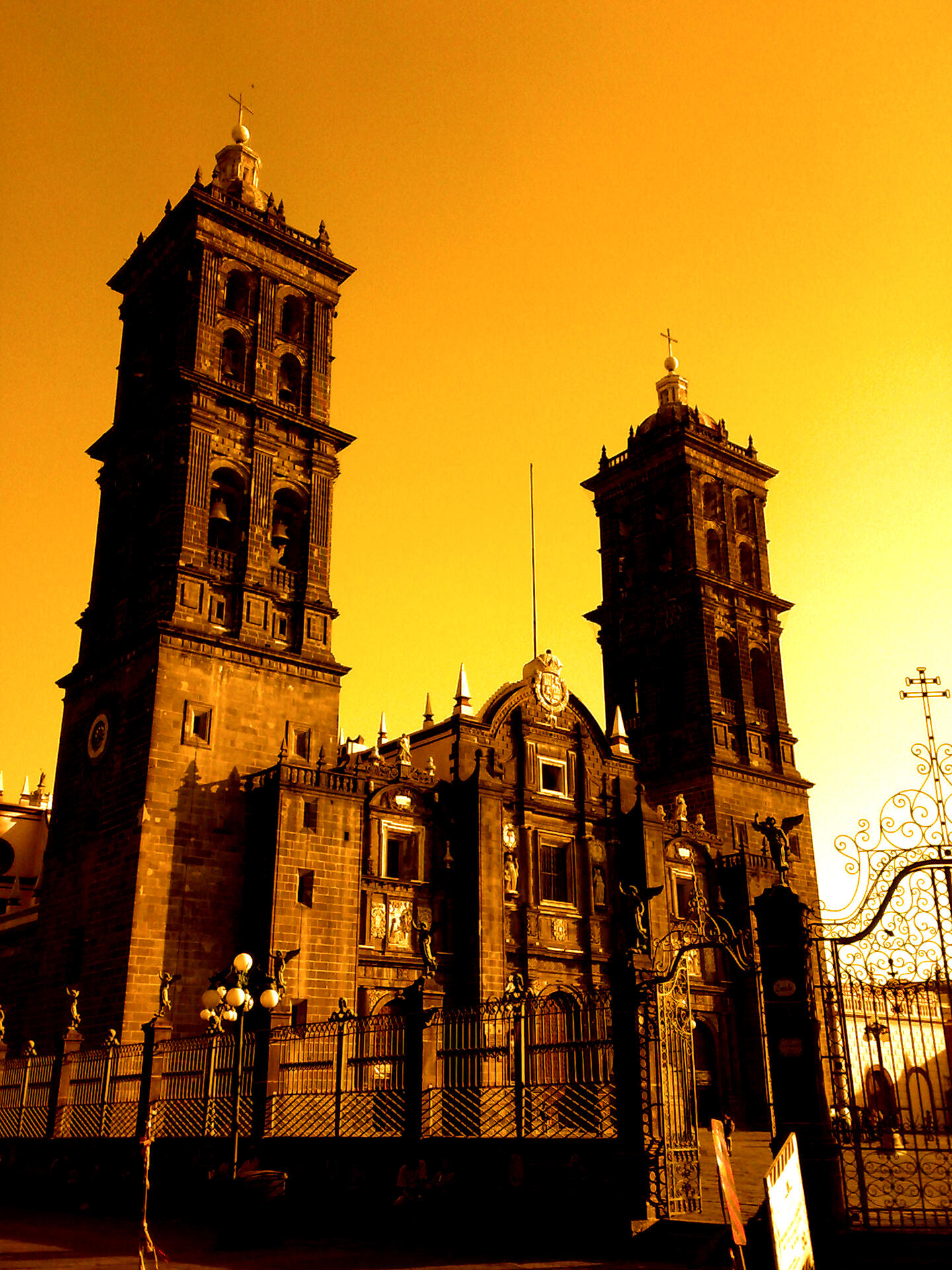
Puebla, which was founded ex nihilo in 1531, is situated about 100 km east of Mexico City, at the foot of the Popocatepetl volcano. It has preserved its great religious structures such as the 16th–17th-century cathedral and fine buildings like the old archbishop's palace, as well as a host of houses with walls covered in tiles (azulejos). The new aesthetic concepts resulting from the fusion of European and American styles were adopted locally and are peculiar to the Baroque district of Puebla.
UNESCO Justification of the World Heritage Site
Criterion (ii): Puebla’s strategic location on a major transportation corridor permitted the exportation of its regional style of Baroque architecture, a fusion of European and indigenous styles, after the 16th century. The urban design of the historic centre based on a Renaissance grid plan has exerted a considerable influence on the creation of colonial cities across the country.
Criterion (iv): As an untouched urban network, the Historic Centre of Puebla is composed of major religious buildings such as the Cathedral, the churches of Santo Domingo, San Francisco, and the Jesuit Church, superb palaces including the old archbishop’s palace the location of the Palafox Library, the university, and many houses whose walls are covered with gaily coloured tiles (azulejos).
Encyclopedia Record: Historic centre of Puebla
The historic centre of Puebla was declared a World Heritage Site by UNESCO in 1987.Additional Site Details
Area: 690 hectares
Number of Components: 1
(iv) — Outstanding example of a type of building or landscape
Coordinates: 19.045967 , -98.197769
Image
© Israel Espinosa López: Zeisseon, CC BY-SA 4.0 Resized from original. (This derivative is under the same CC BY-SA license.)
World Heritage Research
Discover scientific research and academic studies that deepen our understanding of Historic Centre of Puebla from its history and significance to its conservation, management, and contemporary challenges.
-
Day and Night. Activities by and for the Children from El Refugio in Ancient Neighbourhoods of the Historic Centre of Puebla
Children from the historic district El Refugio in Puebla, Mexico, demonstrate remarkable autonomy and spatial appropriation by transforming streets into their own safe spaces. This study reveals that they navigate neighborhoods like San Antonio and Santa Anita with deep local knowledge, creating informal safety networks independent of adult supervision. The research combines ethnographic observation with participatory activities led by Re Genera Espacio (RGE) and BUAP, focusing on how children's daily routines—both day and night—reflect cultural practices and environmental interactions. Findings highlight the importance of understanding these dynamics to foster autonomous attitudes in urban settings.
Hernández Sánchez, A., & De La Torre Sánchez, C. E. (2023). Day and Night. Activities by and for the Children from El Refugio in Ancient Neighbourhoods of the Historic Centre of Puebla. Acta Universitatis Lodziensis. Folia Philosophica. Ethica-Aesthetica-Practica, (41), 83–106. https://doi.org/10.18778/0208-6107.41.05
View Publication Record | Read Publication -
El refugio cultural festival, graffiti and urban art in the historic centre of Puebla in Mexico
The 'El Refugio Cultural Festival' in Puebla, Mexico, has transformed the historic Barrio el Refugio into a dynamic space for urban art, producing over 1,000 pieces of graffiti and murals—including Wild Style graffiti, bombs, stickers, stencils—in ten years. Despite its UNESCO-listed heritage, the neighborhood faced stigma as a 'den of thieves.' The festival, driven by local artists without government support, challenges this narrative while contributing to Puebla's broader 'Puebla Ciudad Mural' initiative, though its impact remains more tourist-oriented than community-driven.
Jiménez, G. V., Hernández Sánchez, A., & De La Torre Sánchez, C. E. (2021). El refugio cultural festival, graffiti and urban art in the historic centre of Puebla in Mexico. Acta Universitatis Lodziensis. Folia Philosophica. Ethica-Aesthetica-Practica, (39), 91–111. https://doi.org/10.18778/0208-6107.39.07
View Publication Record | Read Publication -
The Cinco de Mayo: Death, Democracy, and Resistance in Mexican Museums
Government-led efforts to commemorate the Battle of Puebla on Cinco de Mayo have successfully framed historic suffering as a narrative of civic democracy and inclusion, reinforcing state authority while shaping national memory. The study examines how Puebla's investment in new museums and tourist infrastructure over five years transformed key heritage precincts into symbols of resistance and unity. By analyzing six central museums, the research reveals a strategic co-optation of multiple historical narratives to bolster government legitimacy, highlighting both the power and risks of state-curated memory in UNESCO World Heritage Sites.
Mason, R. (2019). The Cinco de Mayo: Death, Democracy, and Resistance in Mexican Museums. Museum and Society, 17(1), 37–51. https://doi.org/10.29311/mas.v17i1.2786
View Publication Record | Read Publication -
Gentrification, neoliberalism and loss in Puebla, Mexico
Gentrification in Puebla, Mexico, has been accelerated by neoliberal policies, transforming the historic center into a corporate-driven cultural and tourist hub while displacing local communities. The study highlights how state-backed real estate speculation, exemplified by the Paseo project, prioritizes corporate interests over preserving ethnic identity and heritage. This shift reflects broader trends of urban transformation under neoliberalism, where economic growth is pursued at the expense of social equity.
Jones, G. (2015). Gentrification, neoliberalism and loss in Puebla, Mexico. Global Gentrifications, 265–284. https://doi.org/10.1332/policypress/9781447313472.003.0014
View Publication Record | Read Publication