World Heritage Identification Number: 852
World Heritage since: 1997
Category: Cultural Heritage
WHE Type: Historic Cities & Urban Areas
Transboundary Heritage: No
Endangered Heritage: No
Country: 🇱🇻 Latvia
Continent: Europe
UNESCO World Region: Europe and North America
Map
The Historic Centre of Riga: A Blend of Medieval Charm and Art Nouveau Elegance
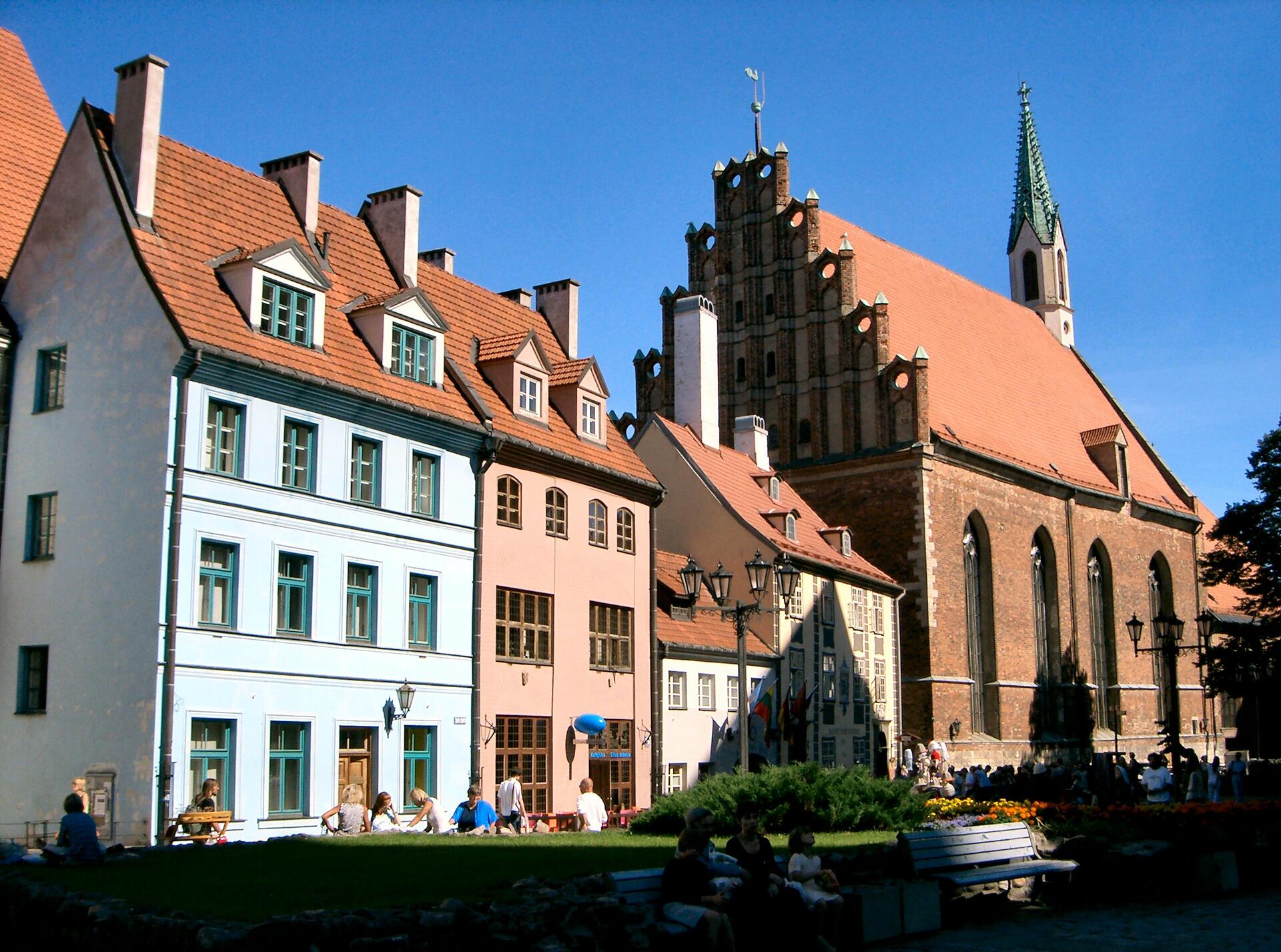
The Historic Centre of Riga, inscribed as a UNESCO World Heritage Site in 1997, offers a unique blend of medieval charm and art nouveau elegance, making it one of the most captivating cities in Europe. Situated in the Central District on the east bank of the Daugava River, Vecrīga (the historical center) is renowned for its old churches and cathedrals, architectural diversity, and rich history.
More to come…UNESCO Description of the World Heritage Site
Riga was a major centre of the Hanseatic League, deriving its prosperity in the 13th–15th centuries from the trade with central and eastern Europe. The urban fabric of its medieval centre reflects this prosperity, though most of the earliest buildings were destroyed by fire or war. Riga became an important economic centre in the 19th century, when the suburbs surrounding the medieval town were laid out, first with imposing wooden buildings in neoclassical style and then in Jugendstil . It is generally recognized that Riga has the finest collection of art nouveau buildings in Europe.
UNESCO Justification of the World Heritage Site
Criterion (i): The medieval and later-period urban planning structure of the Historic Centre of Riga, as well as the quantity and quality of Art Nouveau architecture, which is unparalleled anywhere in the world, and the 19th century wooden architecture make it of Outstanding Universal Value. The Historic Centre of Riga has the finest concentration of Art Nouveau architecture in the world.
Criterion (ii): Riga has exerted considerable influence within the cultural area of the Baltic Sea on the developments in architecture, monumental sculpture and garden design.
Encyclopedia Record: Vecrīga
Vecrīga is the historical center and a neighbourhood of Riga, Latvia, located in the Central District on the east side of Daugava River. Vecrīga is famous for its old churches and cathedrals, such as Riga Cathedral, St. James's Cathedral and St. Peter's Church.Additional Site Details
Area: 438.3 hectares
Number of Components: 1
(ii) — Significant interchange of human values
Coordinates: 56.95417 , 24.11667
World Heritage Research
Discover scientific research and academic studies that deepen our understanding of Historic Centre of Riga from its history and significance to its conservation, management, and contemporary challenges.
-
Archaeological Heritage in the Historic Centre of Riga: Status, Management, Development
Riga's Historic Centre faces significant economic pressure that challenges the preservation of its archaeological heritage. Despite legal protections, development interests often conflict with the need to safeguard the city's oldest layers, dating back to the 11th–12th centuries. This study evaluates the status, management, and potential for sustainable development while maintaining archaeological integrity. It highlights the tension between modernization and heritage conservation, emphasizing the importance of balancing economic growth with the preservation of Riga's cultural and historical environment.
Zirne, S., Lūsēna, E.,. (2025). Archaeological Heritage in the Historic Centre of Riga: Status, Management, Development. Internet Archaeology, (70). https://doi.org/10.11141/ia.70.4
View Publication Record | Read Publication -
Framework for assessing streetscape in historic city centre
Historic streets in city centers, once primarily traffic corridors, are increasingly recognized as multifunctional outdoor spaces that must adapt to modern societal needs while preserving their historical character. A key finding from a study on Riga's historic center reveals that successful streetscape development hinges on identifying elements that can be transformed for contemporary use—such as mobility and green infrastructure—while strictly protecting those essential to maintaining the area’s identity, like architectural heritage. The research introduces a methodological framework combining public needs analysis with historical, ecological, and socioeconomic criteria, tested in Riga's Terbatas Street. This approach emphasizes the importance of an overarching urban development strategy that integrates mobility, green spaces, tourism, and functional-ecological links to other city areas, ensuring balanced progress without compromising heritage integrity.
Skujāne, D., Ņitavska, N., Markova, M.,. (2024). Framework for assessing streetscape in historic city centre. Landscape Architecture and Art, 25(25), 15–24. https://doi.org/10.22616/j.landarchart.2024.25.02
View Publication Record | Read Publication -
Streetscape planning methodology and development scenarios. Terbatas street example in Riga
Urban streetscapes, particularly in historic centers with narrow, heavily trafficked streets, require innovative planning to balance safety, environmental accessibility, and cultural heritage while enhancing public comfort. A study on Terbatas Street in Riga's Historic Centre introduces a scenario-based methodology for evaluating design options that address these challenges. By engaging with city residents and non-governmental organizations, the approach allows for the assessment of multiple action plans, ensuring decisions align with both immediate needs and long-term urban development goals. The research validates key streetscape planning principles, offering practical guidance for landscape architecture in constrained outdoor spaces. This methodology was developed as part of a broader project aimed at improving public outdoor spaces and accessibility in Riga's historic center.
Nitavska, N., Skujane, D., Markova, M.,. (2024). Streetscape planning methodology and development scenarios. Terbatas street example in Riga. Landscape Architecture and Art, 24(24), 9–15. https://doi.org/10.22616/j.landarchart.2024.24.01
View Publication Record | Read Publication -
Soviet Serial Apartment Buildings in Riga Historical Centre Streetscape. 1945–1990
Post-war Soviet-era apartment buildings in Riga's historic center, though often overlooked, contribute distinct architectural and urban qualities to the streetscape. Unlike historical mixed streetscapes, those dominated by Modern Movement serial housing exhibit notable differences, including similarities to large-scale housing block shortcomings. This study identifies these traits using the Maryland Inventory method, providing evaluation criteria for heritage specialists and cultural insights for the public. It challenges existing perceptions of post-war housing in UNESCO-listed sites, offering a nuanced understanding of its historical value.
Garkāje, L. (2019). Soviet Serial Apartment Buildings in Riga Historical Centre Streetscape. 1945–1990. Architecture and Urban Planning, 15(1), 122–130. https://doi.org/10.2478/aup-2019-0017
View Publication Record | Read Publication -
Urban Densification of Large Housing Estates in the Context of Privatisation of Public Open Space: the Case of Imanta, Riga
Urban densification in large housing estates, particularly those built post-World War II outside historic city centers, presents both opportunities and challenges. A study analyzing infill developments in the Imanta district of Riga identified four distinct approaches to densification, some of which enhance public space for residents while others risk isolating new developments from their surroundings. This research highlights the complexities of urban regeneration strategies aimed at promoting compact city models and curbing urban sprawl, offering insights into the potential social and spatial impacts of privatization on public open spaces.
Treija, S., Bratuškins, U., & Koroļova, A. (2018). Urban Densification of Large Housing Estates in the Context of Privatisation of Public Open Space: the Case of Imanta, Riga. Architecture and Urban Planning, 14(1), 105–110. https://doi.org/10.2478/aup-2018-0014
View Publication Record | Read Publication -
Challenges in the Preservation of Riga’s Architectural Cultural Heritage / Iššūkiai, Su Kuriais Susiduria Rygos Architektūrinio Kultūros Paveldo Apsauga
Riga's architectural heritage, a UNESCO World Heritage site, faces significant challenges in balancing cultural value with economic potential. The study reveals that while historical buildings are integral to Latvia's cultural landscape and often listed as protected heritage, practical preservation mechanisms—such as ownership, maintenance, and renewal opportunities—remain underevaluated. Market dynamics and urban planning factors, including UNESCO designation, interact with these challenges. The research highlights the need for a comprehensive assessment of how cultural value influences market value and urban development in Riga's historic center. It identifies key obstacles to preserving architectural heritage while suggesting potential pathways for sustainable conservation.
Barvika, S., Treija, S., & Berzins, E. (2015). CHALLENGES IN THE PRESERVATION OF RIGA’S ARCHITECTURAL CULTURAL HERITAGE / IŠŠŪKIAI, SU KURIAIS SUSIDURIA RYGOS ARCHITEKTŪRINIO KULTŪROS PAVELDO APSAUGA. Mokslas – Lietuvos Ateitis, 7(1), 55–68. https://doi.org/10.3846/mla.2015.779
View Publication Record | Read Publication