World Heritage Identification Number: 1661
World Heritage since: 2023
Category: Cultural Heritage
WHE Type: Buildings & Architectural Ensembles
Transboundary Heritage: No
Endangered Heritage: No
Country: 🇱🇹 Lithuania
Continent: Europe
UNESCO World Region: Europe and North America
Map
Modernist Kaunas: Architecture of Optimism, 1919-1939
The city of Kaunas, Lithuania, experienced a significant transformation during the interwar period, resulting in the emergence of a unique architectural style known as Modernist Kaunas or Kaunas modernism. This architectural movement, which lasted from 1919 to 1939, played a crucial role in shaping the urban landscape of Kaunas, making it a prominent example of modernist architecture in Eastern Europe.
More to come…UNESCO Description of the World Heritage Site
This property testifies to the rapid urbanization that transformed the provincial town of Kaunas into a modern city that became Lithuania’s provisional capital between the First and Second World Wars. Its community-driven transformation of an urban landscape was adapted from an earlier town layout. The quality of modern Kaunas was manifested through the spatial organization of the Naujamiestis (New Town) and Žaliakalnis (Green Hill) areas, and in public buildings, urban spaces and residences constructed during the interwar period that demonstrate a variety of styles in which the Modern Movement found architectural expression in the city.UNESCO Justification of the World Heritage Site
Criterion (iv): Modernist Kaunas is an outstanding example of a historic city centre, subject to rapid urbanisation and modernisation while serving as a provisional capital (1919-1939), that encapsulates diverse expressions of the values and aspirations of the local population to create a modern city driven by post-war optimistic belief in an independent future amid the turbulence of the early 20th-century in Europe, when national borders were changing. As a result of civic initiative, the gradual urban development of Kaunas, carried out with respect to the pre-existing urban context and natural environment, produced a distinctive urban landscape and local modern architectural language that served the needs of a growing population and reflected the modernisation of urban life in the 20th century. It is an exceptional testament to people’s faith in the future and their ability to be creative under difficult political and economic conditions.
Encyclopedia Record: Modernist architecture of Kaunas
Modernist architecture of Kaunas, also known as interwar architecture of Kaunas or Kaunas modernism, is an architectural style that emerged in the interwar period of the Republic of Lithuania. It represents a Lithuanian branch of modernist architecture, which was widespread in many Western countries during the interwar era. The style was formed in Kaunas, the temporary capital of Lithuania at the time, and later spread to other cities of the First Republic of Lithuania. Buildings in this style can also be found in Klaipėda, Palanga, Šiauliai, Birštonas, Jonava, Pasvalys, and Ukmergė, where Kaunas architectural projects were often copied in full. Between 1919 and 1940, approximately 12,000 buildings in this style were constructed in Kaunas.Additional Site Details
Area: 455.3 hectares
Number of Components: 1
Coordinates: 54.8969444444 , 23.9291666667
Image
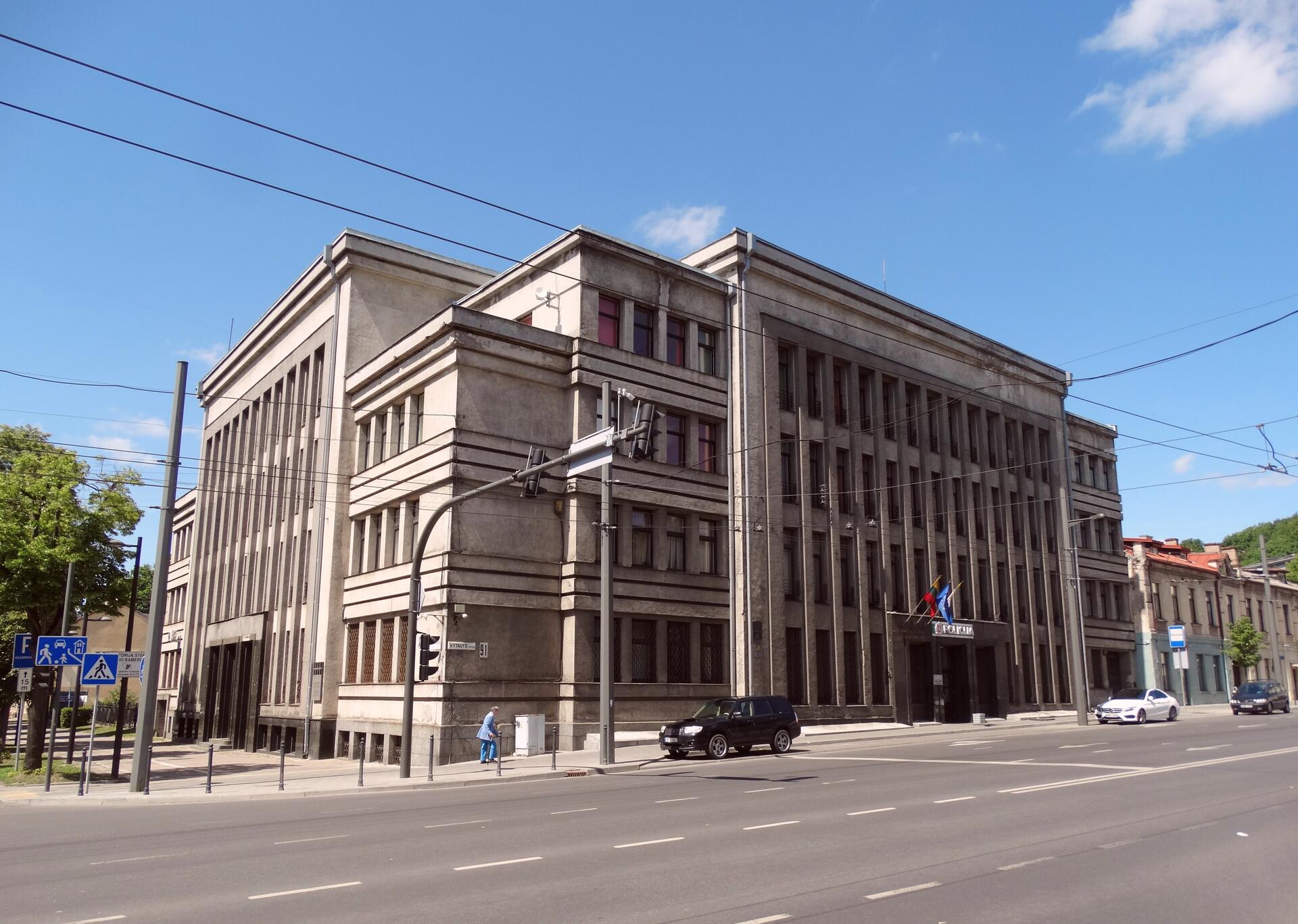
© Vilensija, CC BY-SA 3.0 Resized from original. (This derivative is under the same CC BY-SA license.)
World Heritage Research
Discover scientific research and academic studies that deepen our understanding of Modernist Kaunas: Architecture of Optimism, 1919-1939 from its history and significance to its conservation, management, and contemporary challenges.
-
Integrating Space Syntax and Emotional Mapping to Assess Visual Pollution in Urban Environments
Urban environments with high accessibility and connectivity, such as parks and public spaces, exhibit low visual pollution index (VPI) scores and positive emotional responses, while fragmented areas show high VPI ratings due to visual clutter and poor maintenance. This study reveals a significant link between urban spatial configurations—measured through space syntax analysis—and visual pollution, which negatively impacts aesthetic quality and emotional well-being. By integrating spatial metrics like integration, connectivity, and visibility with emotional mapping, the research provides a genotype-based framework that assesses VPI in modernist neighborhoods, such as Kaunas' Dainava district. The findings underscore the need for targeted urban planning interventions to reduce visual clutter and enhance visual harmony, offering a predictive tool for creating inclusive and legible urban spaces.
Mihyawi, R. S. Z., Kamičaitytė, J., & Zaleckis, K. (2026). Integrating Space Syntax and Emotional Mapping to Assess Visual Pollution in Urban Environments. Buildings, 16(5), 988. https://doi.org/10.3390/buildings16050988
View Publication Record | Read Publication -
Residents’ Sense of the Place in the Central Part of Kaunas City in Relation to Tangible Cultural Heritage
Residents of Kaunas, Lithuania, exhibit a strong sense of place tied to tangible cultural heritage, particularly modernist architecture, which significantly influences their urban identity and attachment. This study reveals that demographic and sociocultural factors—such as age, education, and occupation—play a pivotal role in how residents perceive and value heritage, shaping their preferences for preservation. By analyzing survey data and public contributions to the Cultural Heritage Inventory, researchers identified key heritage objects prioritized by locals, offering actionable insights for urban planners and conservationists. The findings underscore the necessity for heritage policies that balance modernization with cultural retention, ensuring Kaunas's unique character is preserved while addressing broader challenges faced by cities with similar historical legacies.
Povilaitienė, I., Zaleckis, K., Mlinkauskienė, A., Ivaškevičius, M., & Džiaugys, A. (2025). Residents’ Sense of the Place in the Central Part of Kaunas City in Relation to Tangible Cultural Heritage. Architecture and Urban Planning, 21(1), 22–36. https://doi.org/10.2478/aup-2025-0003
View Publication Record | Read Publication -
Monitoring intelligibility changes of Kaunas interwar modernism buildings
A novel methodology for assessing the legibility of immovable cultural heritage in urban environments has been proposed and validated, offering predictive capabilities without requiring physical alteration or destruction of heritage properties. This approach leverages space syntax or mathematical graph-based intelligibility models to monitor changes in architectural legibility due to urban transformations, even in the absence of visible damage. The study focuses on Kaunas' interwar modernist architecture, which was recently nominated for UNESCO World Heritage status under 'Modernist Kaunas: Architecture of Optimism, 1919-1939.' By analyzing these buildings, researchers aim to better understand their role in shaping urban landscape identity and provide a framework for preserving cultural heritage amid evolving urban landscapes. This methodology could be applied globally to monitor and protect significant architectural heritage.
Mlinkauskienė, A., Zaleckis, K., Ivaškevičius, M., & Povilaitienė, I. (2025). Monitoring intelligibility changes of Kaunas interwar modernism buildings. Landscape Architecture and Art, 26(26), 37. https://doi.org/10.22616/j.landarchart.2025.26.05
View Publication Record | Read Publication -
Using Geophysics to Locate Holocaust Era Mass Graves in Jewish Cemeteries: Examples from Latvia and Lithuania
Geophysical surveys have identified potential mass graves in three Jewish cemeteries in Latvia and Lithuania, used during the Holocaust for burials of victims from ghettos and mass killings. Ground-penetrating radar (GPR) and electrical resistivity tomography (ERT) detected trench anomalies in Riga's Old Jewish Cemetery, corroborating survivor testimonies. In Kaunas' Zaliakalnis Cemetery, anomalies were found in a stone-less area, while preliminary GPR analysis suggested possible graves in Liepaja's Livas Cemetery. These findings align with historical accounts and suggest a high probability of mass burials at all sites. Future research aims to expand survey areas and incorporate additional geophysical methods.
Reeder, P., Jol, H., McClymont, A., Bauman, P., & Barrow, M. (2024). Using Geophysics to Locate Holocaust Era Mass Graves in Jewish Cemeteries: Examples from Latvia and Lithuania. Heritage, 7(7), 3766–3798. https://doi.org/10.3390/heritage7070179
View Publication Record | Read Publication -
Unrealised Projects of the Christ’s Resurrection Church Competition in Kaunas 1928–1930
Recent research reveals that the UNESCO-listed Christ’s Resurrection Church in Kaunas, Lithuania, emerged from a complex, collaborative process rather than the sole authorship previously attributed to architect Karolis Reisonas. A detailed analysis of the 1928–1930 competition projects—previously unexplored in Lithuanian art studies—shows how public and architectural criticism reshaped the final design, resulting in a modernist masterpiece distinct from both the awarded and later-unimplemented proposals. The study, using historical-analytical and stylistic methods, demonstrates that the church’s artistic excellence stems from collective creativity involving multiple architects and artists, challenging traditional attribution narratives.
Slaminskienė, S. (2024). Unrealised Projects of the Christ’s Resurrection Church Competition in Kaunas 1928–1930. Art History & Criticism, 20(1), 91–111. https://doi.org/10.2478/mik-2024-0006
View Publication Record | Read Publication -
Defining the Attributes for Modernist Urban Heritage: The Case of ‘Kaunas 1919–1939: Architecture of Optimism’
Modernist Kaunas (1919–1939) emerges as a significant candidate for the UNESCO World Heritage List, representing Eastern European modern urbanity and bridging gaps in global heritage recognition. The study defines attributes of modern urban heritage by analyzing tangible built structures alongside intangible values, using comparative analysis to highlight its unique metropolitan aspirations. This approach underscores Kaunas' role in reflecting broader European modernism while addressing underrepresentation of 20th-century urban transformations in heritage listings.
Drėmaitė, M. (2023). Defining the Attributes for Modernist Urban Heritage: The Case of ‘Kaunas 1919–1939: Architecture of Optimism’. Buildings, 13(1), 196. https://doi.org/10.3390/buildings13010196
View Publication Record | Read Publication -
Kaunas Interwar Cafes and Restaurant: Feasibility Study and Proposals Regarding Restoration and Revival
A key insight from this study is that Kaunas' interwar café culture played a significant role in shaping the city's modernist architectural phenomenon, reflecting broader trends of functionalism, hygiene, and light while incorporating subtle elements of National style. The research highlights a stark contrast between preserved public interiors, which retain academic and historical motifs, and privately owned establishments, which have undergone transformations to align with Western modernist aesthetics. Additionally, the study proposes a revitalization project for these cafés and restaurants, aiming to restore their original character while exploring new functional uses. This approach combines architectural analysis with practical feasibility studies to ensure sustainable preservation and reintegration into urban life.
Bružaitė, R. (2023). Kaunas Interwar Cafes and Restaurant: Feasibility Study and Proposals Regarding Restoration and Revival. Acta Academiae Artium Vilnensis, (108), 221–240. https://doi.org/10.37522/aaav.108.2023.156
View Publication Record | Read Publication