World Heritage Identification Number: 541
World Heritage since: 1994
Category: Cultural Heritage
WHE Type: Historic Cities & Urban Areas
Transboundary Heritage: No
Endangered Heritage: No
Country: 🇱🇹 Lithuania
Continent: Europe
UNESCO World Region: Europe and North America
Map
A Journey Through Time: Exploring the Vilnius Historic Centre
The Vilnius Historic Centre, nestled in the heart of Lithuania's capital city, offers a captivating journey through time that showcases the rich cultural and architectural heritage of Eastern Europe. Inscribed as a UNESCO World Heritage Site in 1994, this historic centre boasts an impressive complex of Gothic, Renaissance, Baroque, and Classical buildings, preserving a medieval layout and natural setting that has withstood the test of time.
More to come…UNESCO Description of the World Heritage Site
Political centre of the Grand Duchy of Lithuania from the 13th to the end of the 18th century, Vilnius has had a profound influence on the cultural and architectural development of much of eastern Europe. Despite invasions and partial destruction, it has preserved an impressive complex of Gothic, Renaissance, Baroque and classical buildings as well as its medieval layout and natural setting.
UNESCO Justification of the World Heritage Site
Criterion (ii): Vilnius is an outstanding example of a medieval foundation which exercised a profound influence on architectural and cultural developments in a wide area of Eastern Europe over several centuries.
Criterion (iv): In the townscape and the rich diversity of buildings that it preserves, Vilnius is an exceptional illustration of a Central European town which evolved organically over a period of five centuries.
Encyclopedia Record: Vilnius Old Town
The Old Town of Vilnius, one of the largest surviving medieval old towns in Northern Europe, as inscribed within UNESCO World Heritage Sites, has an area of 3.59 square kilometres. It encompasses 74 quarters, with 70 streets and lanes numbering 1487 buildings with a total floor area of 1,497,000 square meters. The administrative division of the Old Town is a larger territory and comprises more than 4.5 square kilometres. It was founded by the Lithuanian Grand Duke and King of Poland Jogaila in 1387 on the Magdeburg rights the oldest part of the Lithuanian capital of Vilnius, it had been developed over the course of many centuries, and has been shaped by the city's history and a constantly changing cultural influence. It is a place where some of Europe's greatest architectural styles—gothic, renaissance, baroque and neoclassical—stand side by side and complement each other. There are many Catholic, Lutheran and Orthodox churches, residential houses, cultural and architectural monuments, museums in the Old Town.Additional Site Details
Area: 352.09 hectares
Number of Components: 1
(iv) — Outstanding example of a type of building or landscape
Coordinates: 54.68667 , 25.29306
Image
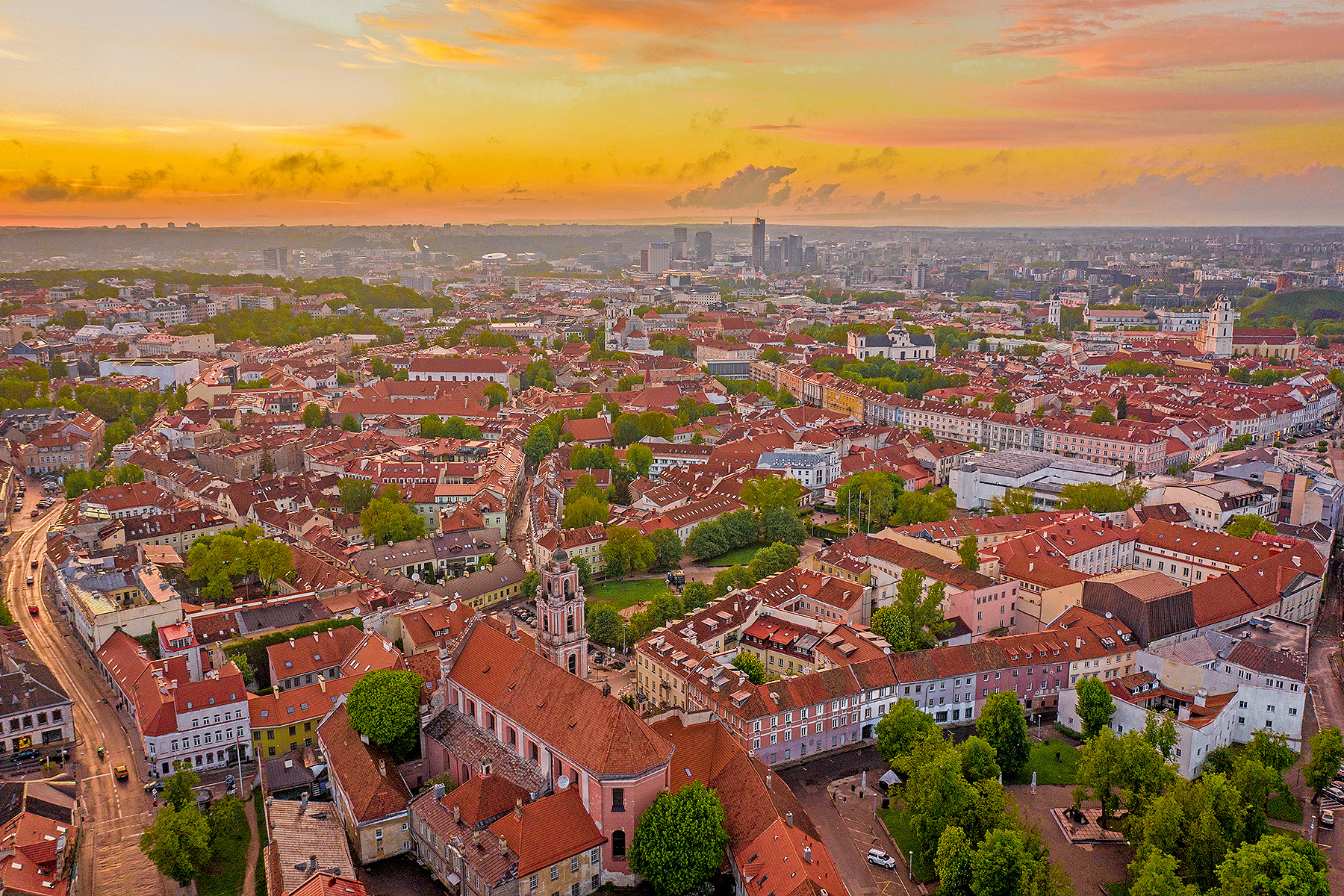
© BigHead, CC BY-SA 4.0 Resized from original. (This derivative is under the same CC BY-SA license.)
World Heritage Research
Discover scientific research and academic studies that deepen our understanding of Vilnius Historic Centre from its history and significance to its conservation, management, and contemporary challenges.
-
The HuT Virtual Field Visits in Demonstrator 4 (Vilnius, Lithuania)
Virtual Field Visits (VFVs) for Vilnius, Lithuania, offer an innovative approach to studying urban flood risks in UNESCO-listed historic centers. These digital tools analyze preconditions and spring runoff flood events, providing a scalable model for other European cities. By leveraging high-resolution data and interactive visualizations, researchers can assess vulnerabilities in the Neris River valley's urban fabric—one of Eastern Europe's best-preserved medieval Old Towns. This study bridges gap between conservation and climate resilience, demonstrating how VFVs enhance risk assessment without physical site disturbance.
Stankūnavičius, G., Kapilovaitė, J., & Skorupskas, R. (2026). The HuT Virtual Field Visits in Demonstrator 4 (Vilnius, Lithuania). Zenodo. https://doi.org/10.5281/ZENODO.18916373
View Publication Record | Read Publication -
Development of Orientation Skills in Second Grade: Experiences of Participants in the Educational Process
An orienteering hike for second-grade students in Vilnius Old Town successfully developed their orientation skills, including navigation, spatial thinking, and map reading. The activity, designed during a teaching practice, engaged 11 stations with exercises that enhanced attentiveness, teamwork, and environmental connection while maintaining optimal time management. Analysis of worksheets and student reflections highlighted the hike's effectiveness in fostering historical, cultural, and natural awareness. However, future implementations should refine exercise formulation for clarity and provide structured resources to ensure equal participation opportunities.
Teresevičiūtė, A. (2026). DEVELOPMENT OF ORIENTATION SKILLS IN SECOND GRADE: EXPERIENCES OF PARTICIPANTS IN THE EDUCATIONAL PROCESS. Natural Science Education in a Comprehensive School (NSECS), 32(1), 123. https://doi.org/10.48127/gu/26.32.123
View Publication Record | Read Publication -
‘To entirely recreate its authenticity’: the transition in Lithuanian urban conservation in the 1980s–1990s
The inscription of the Vilnius Historic Centre onto the UNESCO World Heritage List in 1994 marked a pivotal moment, symbolizing international recognition of Lithuania's urban heritage and its re-established independence. This study reveals how Soviet-era conservation practices, despite their flaws—such as ineffective implementation and methodological principles like 'sanation' that undermined authenticity—were paradoxically validated post-independence. The research explores the transition from centralized Soviet approaches to emerging civic rights and romantic reconstruction ideas, highlighting the interplay between heritage conservation, national identity, and global recognition. By analyzing the 1987 Vilnius Old Town Regeneration Project, this work provides a nuanced understanding of how heritage practices shape post-Soviet landscapes.
Janušauskaitė, V. (2026). ‘To entirely recreate its authenticity’: the transition in Lithuanian urban conservation in the 1980s–1990s. Built Heritage, 10(1). https://doi.org/10.1186/s43238-026-00289-1
View Publication Record | Read Publication -
The earliest development of the Vilnius Franciscan Church and monastery area
Recent archaeological excavations, including those conducted in 2023, have provided new insights into the chronology and earliest development of the Vilnius Franciscan Church and monastery area. This study challenges previous broad dating estimates, which ranged from the early 14th to the beginning of the 15th century, by integrating radiocarbon dating, analysis of archaeobotanical remains, and architectural research. The findings suggest a more precise timeline for human activity in this territory, contributing significantly to our understanding of the evolution of Vilnius' Catholic community and its urban landscape during the late Middle Ages.
Kaplūnaitė, I., Jonaitis, R., Indrulėnaitė-Šimanauskienė, V., & Veževičienė, V. (2025). Ankstyviausia Vilniaus pranciškonų bažnyčios ir vienuolyno teritorijos raida. Archaeologia Lituana, 25, 156–176. https://doi.org/10.15388/archlit.2024.25.6
View Publication Record | Read Publication -
Preserving and Creating Urban Heritage in 20th-Century Lithuania
A significant shift in Lithuanian urban heritage protection occurred during the second half of the 20th century, transitioning from preserving historical sites to recognizing Soviet modernism as cultural heritage. The study highlights how post-1956 reconstruction efforts in Vilnius established a dual-tiered protection system and institutional framework, achieving both local and international recognition by the mid-1980s. However, the collapse of the Soviet state in the 1990s posed challenges, forcing a transition from state-controlled regeneration to private property regulations while questioning the long-term success of these efforts.
Janušauskaitė, V. (2025). Preserving and Creating Urban Heritage in 20th-Century Lithuania. Architecture in the Baltic States, 29–46. https://doi.org/10.4324/9781003345671-4
View Publication Record | Read Publication -
Imperialization of street names as part of the cultural appropriation of urban space in late imperial Vilnius
Late imperial Vilnius saw a systematic yet largely unsuccessful attempt by the tsarist elite to 'imperialize' its urban landscape, particularly through street names, as part of broader cultural appropriation efforts. This study reveals that despite intense state-led interventions—aimed at countering Polish influence—the local public resisted these changes, clinging to traditional place-names. The research combines critical place-name studies with the 'imperial turn,' demonstrating how imperial power dynamics shaped urban space in borderland towns, with Vilnius serving as a key case study of failed cultural assimilation.
Staliūnas, D. (2025). Imperialization of street names as part of the cultural appropriation of urban space in late imperial Vilnius. Urban History, 1–15. https://doi.org/10.1017/s0963926825100576
View Publication Record | Read Publication -
Obraz dziedzictwa litewskiego w mikronarracjach Polaków – spojrzenie turystyczne
Polish tourists' micro-narratives on Tripadvisor reveal a nuanced image of Lithuanian heritage, shaped by experiences at Vilnius Old Town, Gediminas Castle Tower, and Užypis. The study identifies key themes in cultural tourism narratives, highlighting how visitors perceive and construct the significance of these sites. By analyzing 180-word reviews through a three-phase travel model, researchers uncovered patterns in tourist perceptions, contributing to understanding the co-creation of heritage imagery in digital spaces.
Plichta, P. (2025). The Image of Lithuanian Heritage in Polish Micro-narratives: a Tourist Perspective. Bibliotekarz Podlaski Ogólnopolskie Naukowe Pismo Bibliotekoznawcze I Bibliologiczne, 69(4), 255–272. https://doi.org/10.36770/bp.1103
View Publication Record | Read Publication