World Heritage Identification Number: 1178
World Heritage since: 2005
Category: Cultural Heritage
WHE Type: Infrastructure & Industry
Transboundary Heritage: No
Endangered Heritage: No
Country: 🇨🇱 Chile
Continent: Americas
UNESCO World Region: Latin America and the Caribbean
Map
Humberstone and Santa Laura Saltpeter Works: A Testimony to Industrial Pioneers and Cultural Resilience
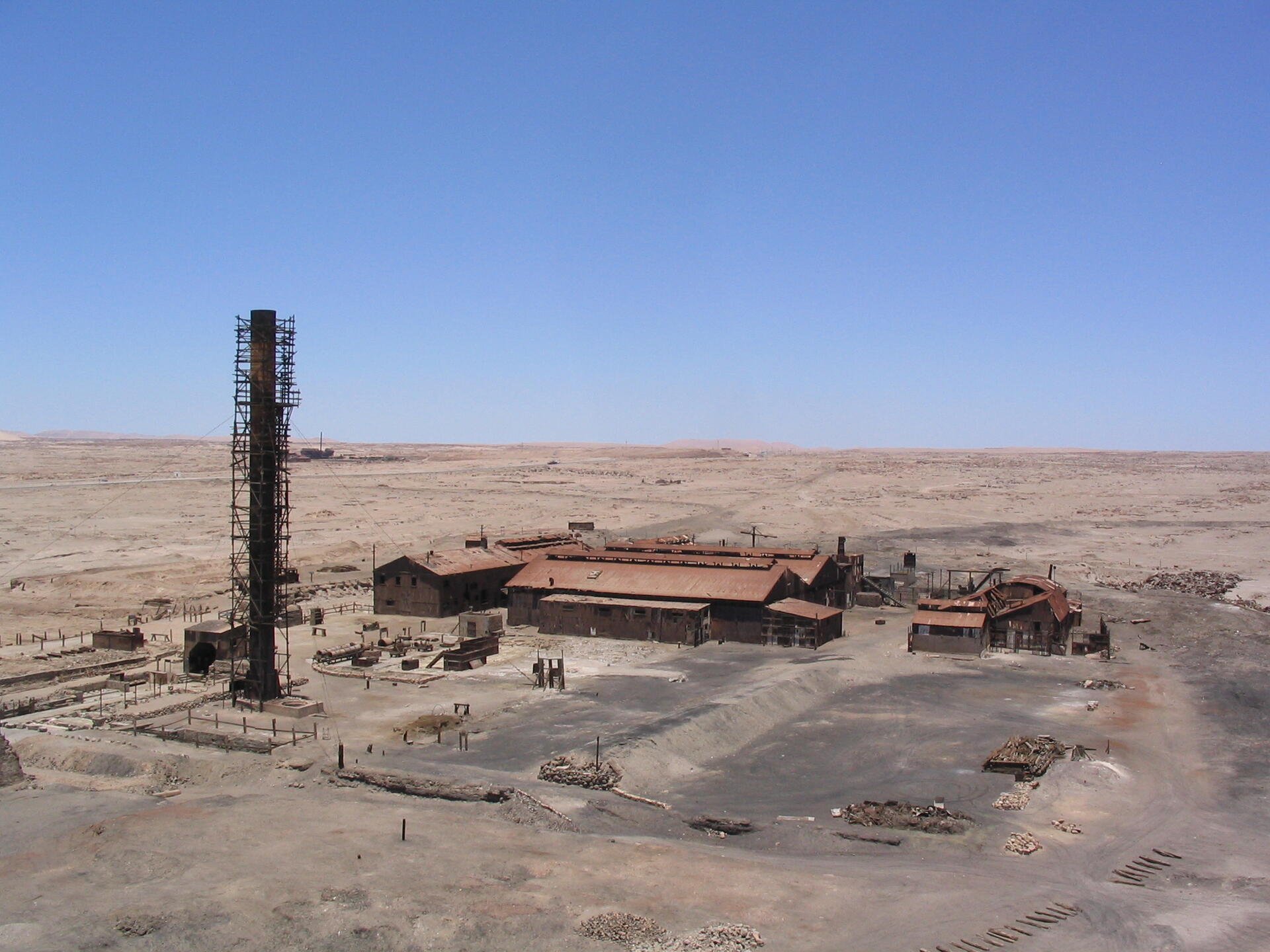
The Humberstone and Santa Laura Saltpeter Works, situated in the arid Atacama Desert of northern Chile, stand as a remarkable testament to human ingenuity, cultural resilience, and the indomitable spirit of industrial pioneers. Inscribed as a UNESCO World Heritage Site in 2005, these two former saltpeter refineries offer a unique insight into the historical significance of saltpeter mining in Chile and the distinctive pampinos culture that emerged during the late 19th century.
More to come…UNESCO Description of the World Heritage Site
Humberstone and Santa Laura works contain over 200 former saltpeter works where workers from Chile, Peru and Bolivia lived in company towns and forged a distinctive communal pampinos culture. That culture is manifest in their rich language, creativity, and solidarity, and, above all, in their pioneering struggle for social justice, which had a profound impact on social history. Situated in the remote Pampas, one of the driest deserts on Earth, thousands of pampinos lived and worked in this hostile environment for over 60 years, from 1880, to process the largest deposit of saltpeter in the world, producing the fertilizer sodium nitrate that was to transform agricultural lands in North and South America, and in Europe, and produce great wealth for Chile. Because of the vulnerability of the structures and the impact of a recent earthquake, the site was also placed on the List of World Heritage in Danger to help mobilize resources for its conservation.
UNESCO Justification of the World Heritage Site
Criterion (ii): The development of the saltpeter industry reflects the combined knowledge, skills, technology, and financial investment of a diverse community of people who were brought together from around South America, and from Europe. The saltpeter industry became a huge cultural exchange complex where ideas were quickly absorbed and exploited. The two works represent this process.
Criterion (iii): The saltpeter mines and their associated company towns developed into an extensive and very distinct urban community with its own language, organisation, customs, and creative expressions, as well as displaying technical entrepreneurship. The two nominated works represent this distinctive culture.
Criterion (iv): The saltpeter mines in the north of Chile together became the largest producers of natural saltpeter in the world, transforming the Pampa and indirectly the agricultural lands that benefited from the fertilisers the works produced. The two works represent this transformation process.
Encyclopedia Record: Humberstone and Santa Laura Saltpeter Works
Humberstone and Santa Laura Saltpeter Works are two former saltpeter refineries located in northern Chile. They were declared a UNESCO World Heritage Site in 2005, as a testament to the historical importance of saltpeter mining in Chile and the culture and social agenda that developed around it in the late 19th century. The works were placed on the World Heritage List in Danger that same year, due to the fragility of the derelict buildings, but was removed in 2019.Additional Site Details
Area: 573.48 hectares
Number of Components: 1
(iii) — Unique or exceptional testimony to a cultural tradition
(iv) — Outstanding example of a type of building or landscape
Coordinates: -20.20582 , -69.79406
Image
© rewbs.soal, CC BY-SA 2.0 Resized from original. (This derivative is under the same CC BY-SA license.)