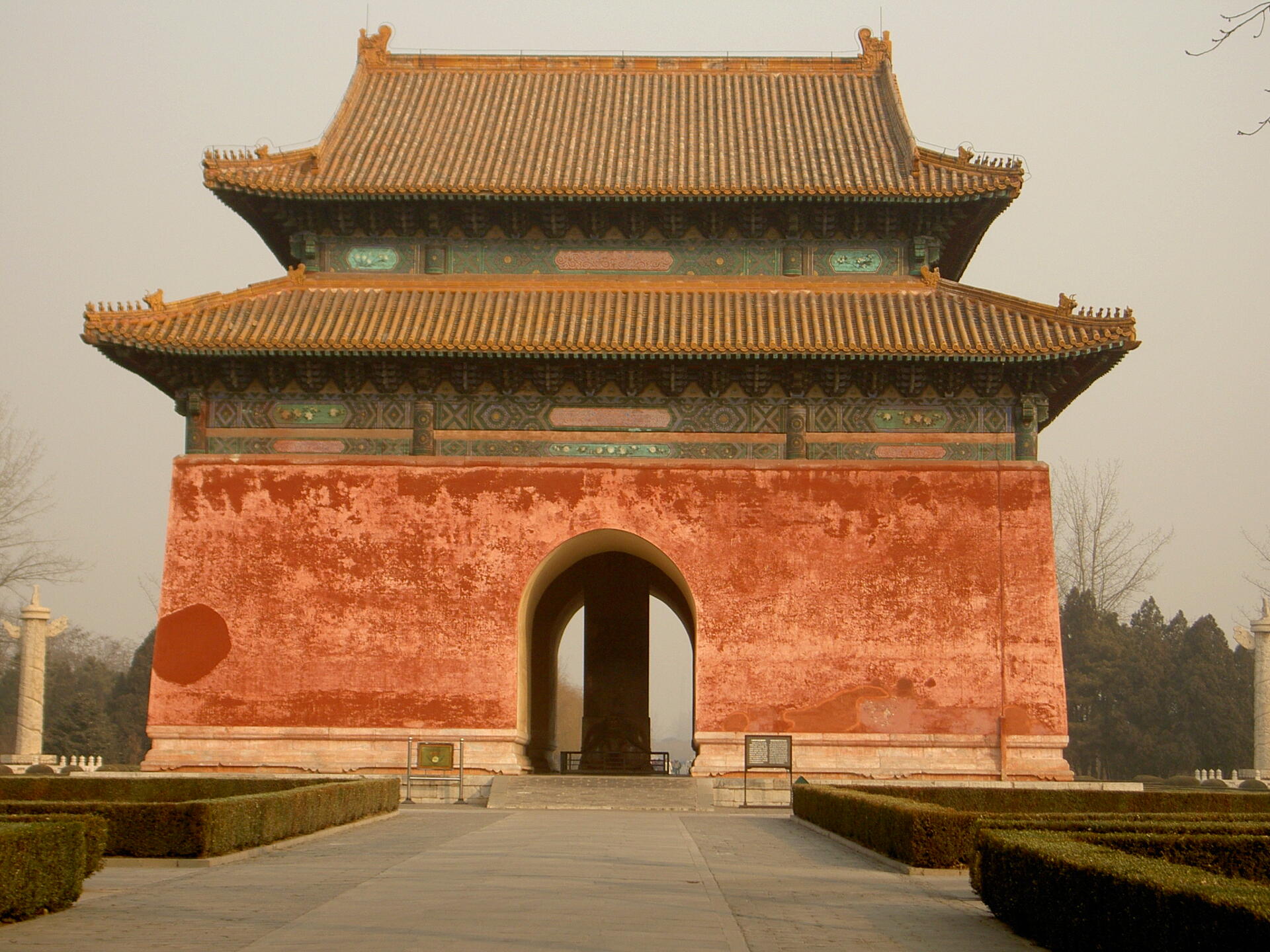
World Heritage Identification Number: 1004
World Heritage since: 2000
Category: Cultural Heritage
WHE Type: Archaeological Sites
Transboundary Heritage: No
Endangered Heritage: No
Country: 🇨🇳 China
Continent: Asia
UNESCO World Region: Asia and the Pacific
Map
Imperial Tombs of the Ming and Qing Dynasties: A Legacy of Ancestral Worship and Architectural Evolution
The Imperial Tombs of the Ming and Qing Dynasties, inscribed as a UNESCO World Heritage Site in 2000, offers a unique insight into the architectural evolution, ancestral worship practices, and cultural heritage of China. This designation encompasses various tombs and burial complexes that span across two significant periods in Chinese history: the Ming (1368-1644) and the Qing (1644-1912).
More to come…UNESCO Description of the World Heritage Site
It represents the addition of three Imperial Tombs of the Qing Dynasty in Liaoning to the Ming tombs inscribed in 2000 and 2003. The Three Imperial Tombs of the Qing Dynasty in Liaoning Province include the Yongling Tomb, the Fuling Tomb, and the Zhaoling Tomb, all built in the 17th century. Constructed for the founding emperors of the Qing Dynasty and their ancestors, the tombs follow the precepts of traditional Chinese geomancy and fengshui theory. They feature rich decoration of stone statues and carvings and tiles with dragon motifs, illustrating the development of the funerary architecture of the Qing Dynasty. The three tomb complexes, and their numerous edifices, combine traditions inherited from previous dynasties and new features of Manchu civilization.
UNESCO Justification of the World Heritage Site
Criterion(i): The harmonious integration of remarkable architectural groups in a natural environment chosen to meet the criteria of geomancy (Fengshui) makes the Ming and Qing Imperial Tombs masterpieces of human creative genius.
Criterion(ii): The tombs represent a phase of development, where the previous traditions are integrated into the forms of the Ming and Qing Dynasties, also becoming the basis for the subsequent development.
Criterion(iii): The imperial mausolea are outstanding testimony to a cultural and architectural tradition that for over five hundred years dominated this part of the world.
Criterion(iv): The architectures of the Imperial Tombs integrated into the natural environment perfectly, making up a unique ensemble of cultural landscapes. They are the exceptional examples of the ancient imperial tombs of China.
Criterion(vi): The Ming and Qing Tombs are dazzling illustrations of the beliefs, world view, and geomantic theories of Fengshui prevalent in feudal China. They have served as burial edifices for illustrious personages and as the theatre for major events that have marked the history of China.
Encyclopedia Record: Imperial Tombs of the Ming and Qing Dynasties
Imperial Tombs of the Ming and Qing Dynasties is the designation under which the UNESCO has included several tombs and burial complexes in the list of World Heritage Sites. These tombs date from the Ming and Qing dynasties of China.Additional Site Details
Area: 3,434.94 hectares
Number of Components: 14
(ii) — Significant interchange of human values
(iii) — Unique or exceptional testimony to a cultural tradition
(iv) — Outstanding example of a type of building or landscape
(vi) — Directly associated with events or living traditions
Coordinates: 41.70722222 , 124.7938889