World Heritage Identification Number: 439
World Heritage since: 1987
Category: Cultural Heritage
WHE Type: Buildings & Architectural Ensembles
Transboundary Heritage: No
Endangered Heritage: No
Country: 🇨🇳 China
Continent: Asia
UNESCO World Region: Asia and the Pacific
Map
Imperial Palaces of the Ming and Qing Dynasties in Beijing and Shenyang: A Testament to Chinese History and Culture
The Imperial Palaces of the Ming and Qing Dynasties in Beijing and Shenyang are two significant architectural complexes that offer a unique insight into the rich history and culture of China. The Forbidden City in Beijing was inscribed as a UNESCO World Heritage Site in 1987, with the Shenyang Imperial Palace added as an extension in 2004. These palaces serve as priceless testimonies to Chinese civilization, spanning the Ming and Qing dynasties from 1416 to 1911.
The Forbidden City in Beijing, the seat of supreme power during this period, is the most renowned of the two imperial palaces. Constructed between 1406 and 1420 during the reign of Emperor Yongle of the Ming Dynasty, the Forbidden City covers approximately 720,000 square meters (about 180 acres) and contains nearly 10,000 rooms. These rooms contain an extensive collection of furniture, works of art, and artifacts that provide valuable insights into the lifestyle, beliefs, and artistic tastes of the emperors and their courtiers. The Forbidden City's landscaped gardens, with their lakes, pavilions, courtyards, and decorative water features, further enhance its beauty and historical significance.
In contrast, the Imperial Palace of the Qing Dynasty in Shenyang was built beginning in 1625 during the reign of Nurhaci, the founder of the Later Jin state, and was continued by his successors. The palace was expanded over time, with the final major construction completed in 1783 during the reign of Emperor Qianlong. The palace complex consists of 114 buildings, including an impressive library, which houses a vast collection of ancient books and manuscripts. The palace in Shenyang served as the administrative center for the early Qing rulers before the capital was moved to Beijing. After the move, the Shenyang palace became an auxiliary imperial residence.
The Shenyang Imperial Palace is particularly noteworthy for its architectural style, which reflects the cultural fusion between the Manchu rulers and Han Chinese traditions. The palace's design combines elements of traditional Chinese architecture, such as wooden structures and courtyard layouts, with features associated with Manchu and other northern ethnic traditions, including distinctive spatial arrangements and symbolic forms. This unique blend of architectural styles provides a fascinating glimpse into the cultural exchange that occurred during the Qing Dynasty.
Both the Forbidden City in Beijing and the Imperial Palace in Shenyang are living museums that preserve and showcase the rich history and culture of China. They offer visitors a chance to walk in the footsteps of emperors, officials, scholars, and artists who shaped China's history for centuries. By visiting these palaces, one can gain a deeper understanding of the political, social, and cultural developments that took place during the Ming and Qing dynasties.
In modern times, the Forbidden City—now the Palace Museum—attractsattracts millions of visitors each year — averaging around 15–17 million annually before the pandemic and reaching up to about 19 million in recent reports — with daily entrance limited to around 80,000 to protect the site. In recent years, the Shenyang Imperial Palace has also seen growing visitor numbers, setting new records with more than 5 million visits in a single year. The palaces’ extremely high visitor numbers further reflect their global cultural importance and enduring appeal.
In summary, the Imperial Palaces of the Ming and Qing Dynasties in Beijing and Shenyang are invaluable treasures that offer a unique perspective on Chinese history and culture. Their intricate designs, vast collections of artifacts, and well-preserved architectural spaces make them must-visit destinations for anyone interested in learning more about China’s past. As UNESCO World Heritage Sites, these palaces serve as a reminder of the importance of preserving shared cultural heritage for future generations.
UNESCO Description of the World Heritage Site
Seat of supreme power for over five centuries (1416-1911), the Forbidden City in Beijing, with its landscaped gardens and many buildings (whose nearly 10,000 rooms contain furniture and works of art), constitutes a priceless testimony to Chinese civilization during the Ming and Qing dynasties. The Imperial Palace of the Qing Dynasty in Shenyang consists of 114 buildings constructed between 1625–26 and 1783. It contains an important library and testifies to the foundation of the last dynasty that ruled China, before it expanded its power to the centre of the country and moved the capital to Beijing. This palace then became auxiliary to the Imperial Palace in Beijing. This remarkable architectural edifice offers important historical testimony to the history of the Qing Dynasty and to the cultural traditions of the Manchu and other tribes in the north of China.
UNESCO Justification of the World Heritage Site
Criterion (i): The Imperial Palaces represent masterpieces in the development of imperial palace architecture in China.
Criterion (ii): The architecture of the Imperial Palace complexes, particularly in Shenyang, exhibits an important interchange of influences of traditional architecture and Chinese palace architecture particularly in the 17th and 18th centuries.
Criterion (iii): The Imperial Palaces bear exceptional testimony to Chinese civilisation at the time of the Ming and Qing dynasties, being true reserves of landscapes, architecture, furnishings and objects of art, as well as carrying exceptional evidence of the living traditions and the customs of Shamanism practised by the Manchu people for centuries.
Criterion (iv): The Imperial Palaces provide outstanding examples of the greatest palatial architectural ensembles in China. They illustrate the grandeur of the imperial institution from the Qing Dynasty to the earlier Ming and Yuan dynasties, as well as Manchu traditions, and present evidence on the evolution of this architecture in the 17th and 18th centuries.
Encyclopedia Record: Imperial Palaces of the Ming and Qing Dynasties in Beijing and Shenyang
Imperial Palaces of the Ming and Qing Dynasties in Beijing and Shenyang may refer to:Forbidden City in Beijing Mukden Palace in ShenyangAdditional Site Details
Area: 84.96 hectares
Number of Components: 2
(ii) — Significant interchange of human values
(iii) — Unique or exceptional testimony to a cultural tradition
(iv) — Outstanding example of a type of building or landscape
Coordinates: 41.79416667 , 123.4469444
Image
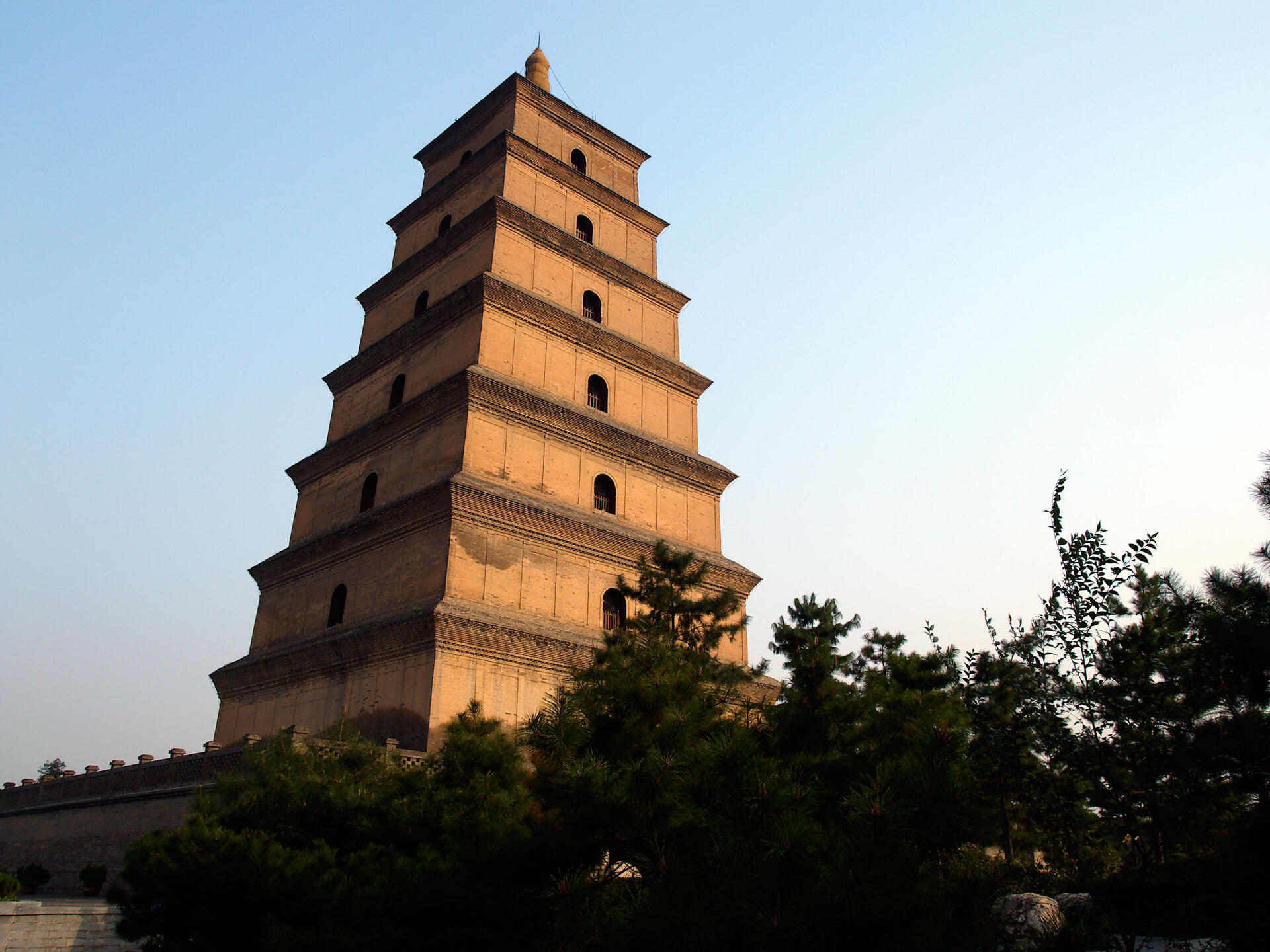
© Alex Kwok, CC BY-SA 3.0 Resized from original. (This derivative is under the same CC BY-SA license.)
World Heritage Research
Discover scientific research and academic studies that deepen our understanding of Imperial Palaces of the Ming and Qing Dynasties in Beijing and Shenyang from its history and significance to its conservation, management, and contemporary challenges.
-
Analysis of an Ancient Architectural Painting from the Jiangxue Palace in the Imperial Museum, Beijing, China
A groundbreaking analysis of ancient architectural paintings from the Jiangxue Palace, part of Beijing's UNESCO-listed Imperial Museum, reveals intricate multi-layered structures using pigments like emerald green and lead white. The study employed advanced techniques such as ultra-depth three-dimensional microscopy and Raman spectroscopy to uncover the composition of pigments, binders (tung oil), and fillers (flour) in the plaster base, along with the underlying red minium foundation. These findings significantly advance our understanding of Ming and Qing dynasty painting techniques, providing critical insights for the preservation and restoration of this world cultural heritage site.
Fu, P., Teri, G., Li, J., Huo, Y., Yang, H., & Li, Y. (2020). Analysis of an Ancient Architectural Painting from the Jiangxue Palace in the Imperial Museum, Beijing, China. Analytical Letters, 54(4), 684–697. https://doi.org/10.1080/00032719.2020.1778014
View Publication Record | Read Publication -
Back to the Roots: The Imperial City of Shenyang as a Symbol of the Manchu Ethnic Identity of the Qing Dynasty
The Shenyang Imperial City, inscribed as part of the UNESCO World Heritage Site 'Imperial Palaces of the Ming and Qing Dynasties' alongside Beijing's Forbidden City, stands out for its unique reflection of Manchu culture and identity. Unlike the Forbidden City, which symbolizes centralized power under the Ming and Qing dynasties, Shenyang Palace embodies the origins and evolution of the Manchu ethnic identity, particularly through its pre-1644 architecture and later additions during Qianlong's reign. This study reveals how the palace serves as a tangible symbol of both the Manchus' devotion to their ancestors and their gradual sinicization, merging distinct cultural and institutional systems. The research draws on primary sources such as Qing shilu (清實錄) and Manwen laodang (滿文老檔), providing unprecedented insights into Qing history before Beijing's conquest. By analyzing these architectural and historical layers, the study underscores Shenyang Palace's dual significance: as a testament to Manchu heritage and a bridge between Manchu and Chinese cultures.
Sepe, A. (2011). Back to the Roots: The Imperial City of Shenyang as a Symbol of the Manchu Ethnic Identity of the Qing Dynasty. Ming Qing Yanjiu, 16(01), 129–176. https://doi.org/10.1163/24684791-01601006
View Publication Record | Read Publication