World Heritage Identification Number: 1653
World Heritage since: 2021
Category: Natural Heritage
WHE Type: Protected Areas & National Parks
Transboundary Heritage: No
Endangered Heritage: No
Country: 🇬🇦 Gabon
Continent: Africa
UNESCO World Region: Africa
Map
Ivindo National Park: A Biodiverse Gem in Central Africa
Ivindo National Park, located in east-central Gabon, is a testament to the rich biodiversity and natural beauty found within Central Africa. Established in 2002, this expansive protected area covers nearly 300,000 hectares, making it one of the largest national parks in Gabon. The park straddles the border between the Ogooué-Ivindo and Ogooué-Lolo provinces, offering a diverse range of landscapes and habitats that support an impressive array of plant and animal life.
More to come…UNESCO Description of the World Heritage Site
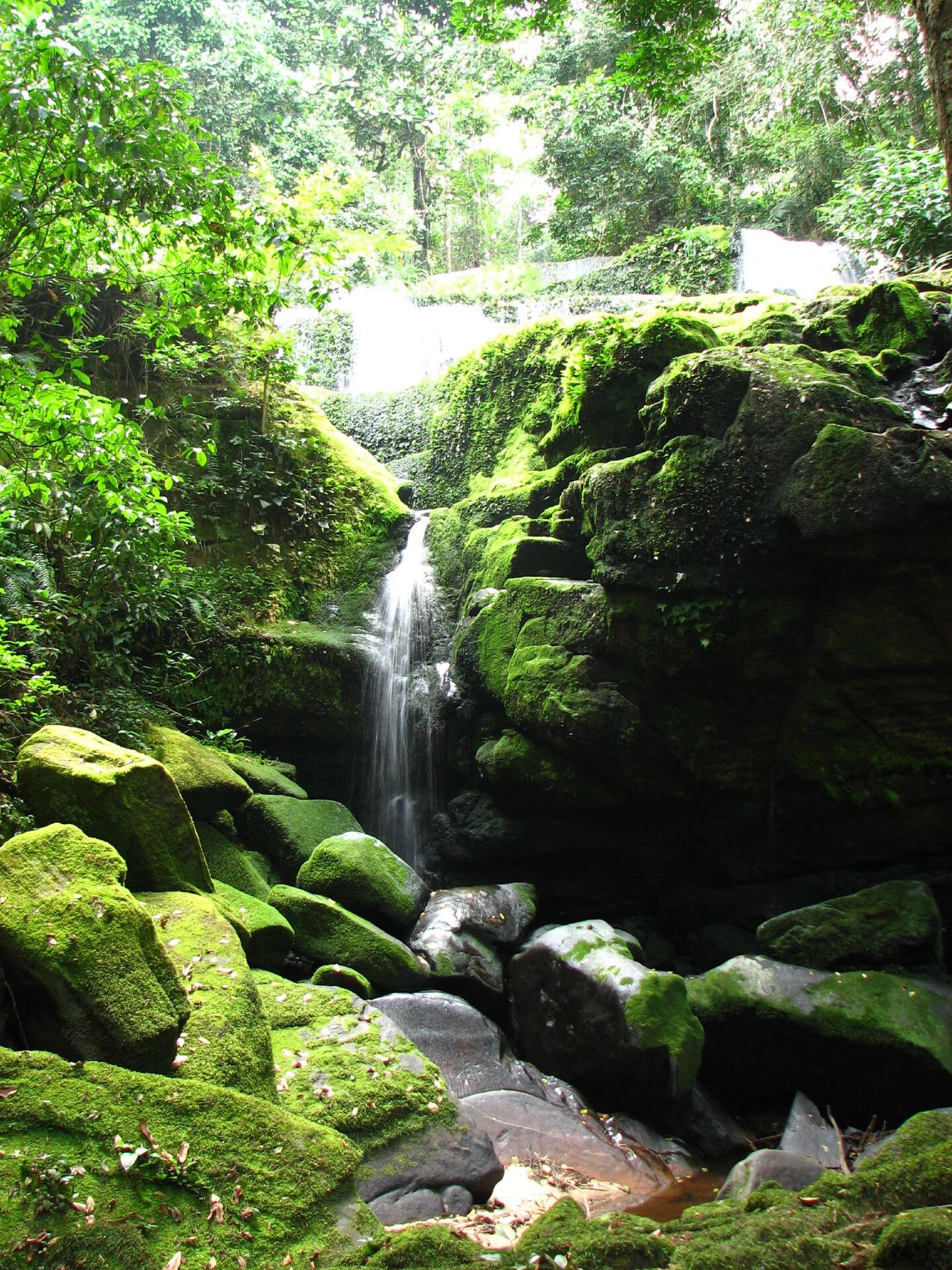
Situated on the equator in northern Gabon the largely pristine site encompasses an area of almost 300,000 ha crossed by a network of picturesque blackwater rivers. It features rapids and waterfalls bordered by intact rainforest, which make for a landscape of great aesthetic value. The site’s aquatic habitats harbour endemic freshwater fish species, 13 of which are threatened, and at least seven species of Podostemaceae riverweeds, with probable micro-endemic aquatic flora at each waterfall. Many fish species in the property are yet to be described and parts of the site have hardly been investigated. Critically Endangered Slender-snouted Crocodiles (Mecistops cataphractus) find shelter in Ivindo National Park which also boasts biogeographically unique Caesalpinioideae old-growth forests of high conservation value, supporting, for instance, a very high diversity of butterflies alongside threatened flagship mammals and avian fauna such as the Critically Endangered Forest Elephant (Loxodonta cyclotis), Western Lowland Gorilla (Gorilla gorilla), the Endangered Chimpanzee (Pan troglodytes) and Grey Parrot (Psittacus erithacus) as well as the Vulnerable Grey-necked Rockfowl (Picathartes oreas), Mandrill (Mandrillus sphinx), Leopard (Panthera pardus), and African Golden Cat (Caracal aurata), and three species of Pangolin (Manidae spp.).
UNESCO Justification of the World Heritage Site
Criterion (ix): Ivindo National Park combines large areas of intact climatical Caesalpinioideae forests and undisturbed river ecosystems. The property has exceptional value due to its great diversity of forest formations, the presence of large areas of very old Caesalpinioideae forests, and monodominant Julbernardia pellegriniana or Eurypetalum batesii forests, all of which are unique in Lower Guinea and throughout all of central Africa. Covering nearly 300,000 ha of this forest ecosystem and surrounded by a buffer zone of over 182,000 ha, the property can be considered exceptional, providing enough space for evolutionary processes to continue undisturbed. The very old Caesalpinioideae forests represent a characteristic stage of forest evolution in Central Africa but have disappeared elsewhere in Lower Guinea. They do not occur elsewhere in the Guinean-Congolese region because the high diversity of Caesalpinioideae is unique to Lower Guinea. This forest ecosystem is also representative of the Lower Guinean or Atlantic forests of the Gabonese interior highlands, and more particularly of the Ivindo Landscape Area which very likely forms a separate and very rich phytogeographical entity within Lower Guinea. The great diversity of the Caesalpinioideae forests of the inner plateau is also reflected in the fact that, at the site level, the forests of the western edge differ, by a proportion of 60%, from those of the eastern edge. The presence of the Langoué Baï and grassy meadows identical to those of the inselbergs, contribute very largely to the uniqueness of the region. This intact forest ecosystem helps preserve the integrity of the black waters of the Ivindo which are home to a swarm of some fifteen species of fish of the genus Paramormyrops (Mormyridae) – the only swarm of species found in rivers worldwide belonging to this family. It is one of the world's best examples of speciation in open waters in which the speciation process takes place at a very high rate.
Criterion (x): The rivers of the property are home to ichthyofauna of global importance and characterized by exceptional endemism, an extremely diversified flora and habitats of critical importance for the conservation of mammals, birds and amphibians. The intact forest ecosystem of Ivindo National Park and the Ivindo Landscape Area, with its diversity of habitats and, especially, its very old Caesalpinioideae forests, unique in west-central Africa and the entire Guinean-Congolese domain, is home to 161 plant species of high conservation value, 129 species endemic to Gabon and 35 species endemic to Ivindo. Ivindo National Park alone is home to 81 plant and 39 animal threatened species, including the Western Lowland Gorilla (Gorilla gorilla), the Chimpanzee (Pan troglodytes), the Forest Elephant (Loxodonta cyclotis), the Gray Parrot (Psittacus erithacus), and the Slender-snouted Crocodile (Mecistops cataphractus). In terms of zoology, this ecosystem has 126 species of mammals, including seven species of primates endemic to Lower Guinea. In addition, the Forest Elephant population is relatively large and includes many males with very large tusks, which is becoming very rare in much of Central Africa. Ivindo National Park avifauna includes 190 (68%) of the 278 forest species native to the Guinean-Congolese region and five of the six species endemic to Lower Guinea. The entomofauna includes 528 species of diurnal butterflies (probably 800-1000) many of which appear to be restricted to very old-growth Caesalpinioideae forests. Regarding the Kongou Falls, they are home to seven species of Podostemaceae, very specialized, rare and very vulnerable plants that are everywhere threatened by the construction of dams and the regulation of rivers. These seven species represent both 44% of the Podostemaceae flora of Gabon and the four known genera of the country. Ivindo is also home to 45 species of fish endemic to Lower Guinea, 13 of which are endemic to Gabon. The Ivindo River is home to 16 fish exclusively native to it, and to a particular wealth of Cyprinodontiformes and Mormyridae, with very specialized and fragile species of the genus Ivindomyrus, named after the Ivindo River. A dozen species of slightly electric fish of the genus Paramormyrops (Mormyridae) form swarms of freshwater fish that are globally rare.
Encyclopedia Record: Ivindo National Park
Ivindo National Park is a national park in east-central Gabon in Central Africa, straddling the border of the Ogooué-Ivindo and Ogooué-Lolo provinces. Its creation was announced in August 2002 by then-President Omar Bongo at the Earth Summit in Johannesburg, along with Gabon's 12 other terrestrial national parks. Most famous for the spectacular Kongou and Mingouli waterfalls of the Ivindo River, known as the “wonders of Ivindo”, the park also includes the Ipassa Makokou Biosphere Reserve and Langoué Baï, one of the 5 most important forest clearings in Central Africa. The park was designated as a UNESCO UNESCO World Heritage Site in 2021 for its outstanding biodiversity and relatively intact tropical forest ecosystem.Additional Site Details
Area: 298,758 hectares
Number of Components: 1
(x) — Contains most important habitats for biodiversity
Coordinates: 0.113 , 12.648
IUCN World Heritage Outlook
The 2025 Conservation Outlook on Ivindo National Park reports the following assessment:
Source: International Union for Conservation of Nature (IUCN) · View assessment
World Heritage Research
Discover scientific research and academic studies that deepen our understanding of Ivindo National Park from its history and significance to its conservation, management, and contemporary challenges.
-
Linking crop availability, forest elephant visitation and perceptions of human–elephant interactions in villages bordering Ivindo National Park, Gabon
A study reveals that forest elephant visits to rural villages near Gabon's Ivindo National Park are strongly linked to local crop availability, though this pattern varies among individuals. Using GPS tracking data from two elephants and surveys of 101 farmers across seven villages, researchers found a positive correlation between crop planting/harvesting cycles and elephant visitation, driven primarily by one individual. Local perceptions of elephant behavior aligned with empirical data, with crops (53%) and logging (39%) cited as key attractants. Farmers proposed solutions like government intervention (32%), lethal removal (30%), or compensation (22%). The findings highlight the complexity of predicting human-elephant interactions and underscore the need for targeted research in high-conflict zones, while also exploring the feasibility of proposed mitigation strategies.
Mbamy, W., Beirne, C., Froese, G. Z. L., Obiang Ebanega, M., & Poulsen, J. R. (2023). Linking crop availability, forest elephant visitation and perceptions of human–elephant interactions in villages bordering Ivindo National Park, Gabon. Oryx, 58(2), 261–268. https://doi.org/10.1017/s0030605323000704
View Publication Record | Read Publication -
Tenebrionidae (Coleoptera) from Ivindo National Park in Gabon, Central Africa, with descriptions of four new species
A recent study of Tenebrionidae beetles from Ivindo National Park, Gabon, identifies four new species: Enicmosoma ivindoense, Platydema telnovi, Diaclina gabonica, and Uloma gabonica. The research, which analyzed 72 species across three subfamilies (excluding Alleculinae and Lagriini), highlights the biodiversity of this UNESCO-listed park. Challenges in definitive identification persist due to the lack of comprehensive taxonomic revisions for some genera. This discovery underscores the importance of Ivindo National Park as a hotspot for beetle diversity, contributing valuable data for conservation efforts.
Schawaller, W., & Bellersheim, A. (2022). Tenebrionidae (Coleoptera) from Ivindo National Park in Gabon, Central Africa, with descriptions of four new species. Integrative Systematics: Stuttgart Contributions to Natural History, 5(1). https://doi.org/10.18476/2022.740108
View Publication Record | Read Publication -
Species Composition and Diurnal Activity Rhythm of Tabanids (Diptera: Tabanidae) at the Ivindo National Park and Its Environs
A study conducted at Ivindo National Park (INP) and surrounding areas revealed significant differences in tabanid species composition and diurnal activity between secondary forest and anthropized environments. Tabanids, particularly those of the genus Tabanus, were more abundant in the forest (7.12 per trap/day) compared to village-town sites (0.77 per trap/day), with a peak activity period between 12-14H in INP and 14-16H in anthropized areas, dominated by females. Eleven species of Tabanus were recorded at INP, with T. taeniola being the most prevalent (57.76%), alongside two species of Chrysops and one of Haematopota, which were exclusively found in the park. In contrast, village-town sites hosted five Tabanus species, with T. ricardae dominating (73.91%). The study highlights the ecological differences in tabanid populations between protected and human-altered landscapes.
Joseph-Marie, A. O., Lendzele, S. S., Roland, Z. K. C., Franck, M., Aubin, K. A., Mintsa, R., Lydie, A.-Y. G., Bertrand, M., & Mavoungou, J. F. (2019). Species Composition and Diurnal Activity Rhythm of Tabanids (Diptera: Tabanidae) at the Ivindo National Park and Its Environs. Asian Journal of Research in Zoology, 1–7. https://doi.org/10.9734/ajriz/2019/v2i230062
View Publication Record | Read Publication -
Potamonautes nheenae, a new species of freshwater crab from Gabon, Central Africa, with a description of the first known male of Erimetopus brazzae (A. Milne-Edwards, 1886) from the Democratic Republic of the Congo, Central Africa (Brachyura: Potamoidea: Potamonautidae)
A new species of freshwater crab, Potamonautes nheenae, has been discovered in Ivindo National Park, Gabon. This crab is distinguished by unique morphological traits, including its male first gonopod, anterior sternum, mouthparts, and major cheliped, setting it apart from other species in the region. It is closely related to Potamonautes paecilei from the Lower Congo River basin. Additionally, the study provides the first detailed illustration of a male specimen of Erimetopus brazzae, a rare freshwater crab species from the Democratic Republic of the Congo, since its original description in 1886.
CUMBERLIDGE, N. (2017). Potamonautes nheenae, a new species of freshwater crab from Gabon, Central Africa, with a description of the first known male of Erimetopus brazzae (A. Milne-Edwards, 1886) from the Democratic Republic of the Congo, Central Africa (Brachyura: Potamoidea: Potamonautidae). Zootaxa, 4286(2). https://doi.org/10.11646/zootaxa.4286.2.6
View Publication Record | Read Publication -
Repartition Des Glossines Dans La Province De L’ogooue Ivindo Ancien Foyer De Trypanosomose Humaine Africaine
A recent study reveals that the Ogooué Ivindo province in Gabon, historically a focal region for Human African Trypanosomosis (HAT), remains infested with tsetse flies, major vectors of the disease. The research identified seven species of Glossina, with Glossina palpalis palpalis being the most abundant at 46%, followed by Glossina fusca congolensis and Glossina nashi. The study employed Vavoua and Nzi traps across four distinct habitats: Ivindo National Park, Zadié Village, Forest of Zadié, and Momba clearing, capturing a total of 2383 flies. These findings underscore the ongoing risk of HAT transmission in the region, emphasizing the need for further monitoring to assess its epidemiological significance on human health.
Roland, Z. K. C., Ornella, M. N., Donald, M. I., Franck, M., Shango, M., François, M. J., & Bertrand, M. (2016). Repartition Des Glossines Dans La Province De L’ogooue Ivindo Ancien Foyer De Trypanosomose Humaine Africaine. European Scientific Journal, ESJ, 12(12), 281. https://doi.org/10.19044/esj.2016.v12n12p281
View Publication Record | Read Publication -
Distribution and abundance of hematophagous flies (Glossinidae,Stomoxys, and Tabanidae) in two national parks of Gabon
A seasonal inventory of hematophagous flies in Ivindo and Moukalaba-Doudou National Parks, Gabon, revealed distinct habitat preferences among three fly groups: Glossinidae, Stomoxys, and Tabanidae. Glossinidae, the most abundant group (60% of captures), thrived in primary forests and research camps, while Stomoxys (28%) were more prevalent in secondary forests and village borders in Ivindo Park, or savannahs in Moukalaba-Doudou Park. Tabanidae showed no clear habitat preference. This study highlights the ecological differentiation of these fly populations, which could inform pathogen transmission risk management in ecotourism development.
Bitome Essono, P. Y., Dechaume-Moncharmont, F.-X., Mavoungou, J., Obiang Mba, R., Duvallet, G., & Bretagnolle, F. (2015). Distribution and abundance of hematophagous flies (Glossinidae,Stomoxys, and Tabanidae) in two national parks of Gabon. Parasite, 22, 23. https://doi.org/10.1051/parasite/2015023
View Publication Record | Read Publication -
Inventory of potential vectors of trypanosoma and infection rate of the Tsetse fly in the National Park of Ivindo, Gabon
A study conducted in Gabon's Ivindo National Park has revealed that tsetse flies, potential vectors of trypanosomiasis, are infected with Trypanosoma parasites. This finding underscores the risk of human and animal trypanosomiasis infection within the park. The research involved an inventory of tsetse fly species and an assessment of their infection rates. Conducted by a team from Gabon, the study highlights the importance of monitoring vector-borne diseases in protected areas to mitigate public health risks.
Mbang, N., Mavoungou, J., Mawili-Mboumba, D., Zinga, K., Bouyou-Akotet, M., & M’batchi, B. (2015). Inventory of potential vectors of trypanosoma and infection rate of the Tsetse fly in the National Park of Ivindo, Gabon. African Health Sciences, 15(3), 762. https://doi.org/10.4314/ahs.v15i3.9
View Publication Record | Read Publication -
Trade of the most popular Indigenous fruits and nuts, threats and opportunities for their sustainable management around the Ivindo National Park (INP), Gabon
A study on the trade of indigenous fruits and nuts around Ivindo National Park (INP), Gabon, reveals that Coula edulis, Irvingia gabonensis, and Dacryodes buettneri are the most sold species, with I. gabonensis fetching the highest prices and serving as a significant income source for sellers. Despite their importance, sellers acknowledge resource decline driven by logging, climate change, and unsustainable harvesting practices. The research, based on semi-structured interviews with 79 market sellers near INP, highlights the need for innovative mechanisms to regulate demand and sustainably manage these resources. It also underscores the role of social factors like marital status and ethnicity in trade participation and suggests further studies on quota-based harvesting approaches.
Christian, M. Y., & Kasumi, I. (2015). Trade of the most popular Indigenous fruits and nuts, threats and opportunities for their sustainable management around the Ivindo National Park (INP), Gabon. International Journal of Biodiversity and Conservation, 7(2), 85–102. https://doi.org/10.5897/ijbc2014.0747
View Publication Record | Read Publication -
Large-scale automatic acoustic monitoring of African forest elephants' calls in the terrestrial acoustic recordings
An automatic detection system for African forest elephants' rumble calls, developed and tested using 432 hours of acoustic recordings from eight locations in Gabon, achieved a true positive rate of 79.19% with just 5.70 false positives per hour. The system's F1-score reached 0.77 when a high score threshold was applied, demonstrating its effectiveness in processing large-scale acoustic data. Applied to a dataset spanning 420 days over three years from Ivindo National Park, the system revealed distinct seasonal and daily patterns of call activity, as well as temporal variations, offering valuable insights into the communication behavior of these elusive animals.
Shiu, Y., Wrege, P. H., Keen, S., & Rowland, E. D. (2014). Large-scale automatic acoustic monitoring of African forest elephants’ calls in the terrestrial acoustic recordings. The Journal of the Acoustical Society of America, 135(4_Supplement), 2334. https://doi.org/10.1121/1.4877660
View Publication Record | Read Publication -
Regulation of usages and dependency on indigenous fruits (IFs) for livelihoods sustenance of rural households: A case study of the Ivindo National Park (INP), Gabon
A comprehensive study of the Ivindo National Park (INP) in Gabon reveals that indigenous fruits (IFs) play a crucial role in the livelihoods of rural households, serving as both a food source and income generator. The research, involving 152 households near the park and 100 farther away, found that nearly all participants (99.2%) harvested six fruit species, with Coula edulis, Dacriodes buettneri, and Irvingia gabonensis being the most popular due to their higher market prices. The study highlights significant variations in usage trends based on ethnic group, distance from the park, and residential period, emphasizing the need for flexible regulations to balance resource conservation with rural livelihoods.
Mikolo, Y. C., & Kasumi, I. T. O. (2014). Regulation of usages and dependency on indigenous fruits (IFs) for livelihoods sustenance of rural households: A case study of the Ivindo National Park (INP), Gabon. Journal of Ecology and the Natural Environment, 6(10), 349–362. https://doi.org/10.5897/jene2014.0467
View Publication Record | Read Publication