
World Heritage Identification Number: 1380
World Heritage since: 2012
Category: Natural Heritage
WHE Type: Natural Landscapes & Geographic Features
Transboundary Heritage: Yes
Endangered Heritage: No
Country: Cameroon, Central African Republic, Congo
Continent: Africa
UNESCO World Region: Africa
Map
Sangha Trinational: A Biodiverse Haven in the Heart of Central Africa
The Sangha Trinational, a vast expanse of pristine rainforest straddling the borders of Cameroon, Central African Republic (CAR), and the Republic of Congo, stands as a testament to the remarkable biodiversity and unique biological communities found within the humid tropical forests of Central Africa. This tri-national conservation area, covering approximately 750,000 hectares, was inscribed as a UNESCO World Heritage Site in 2012 due to its exceptional biodiversity and the preservation of ecological and evolutionary processes on a grand scale.
More to come…UNESCO Description of the World Heritage Site
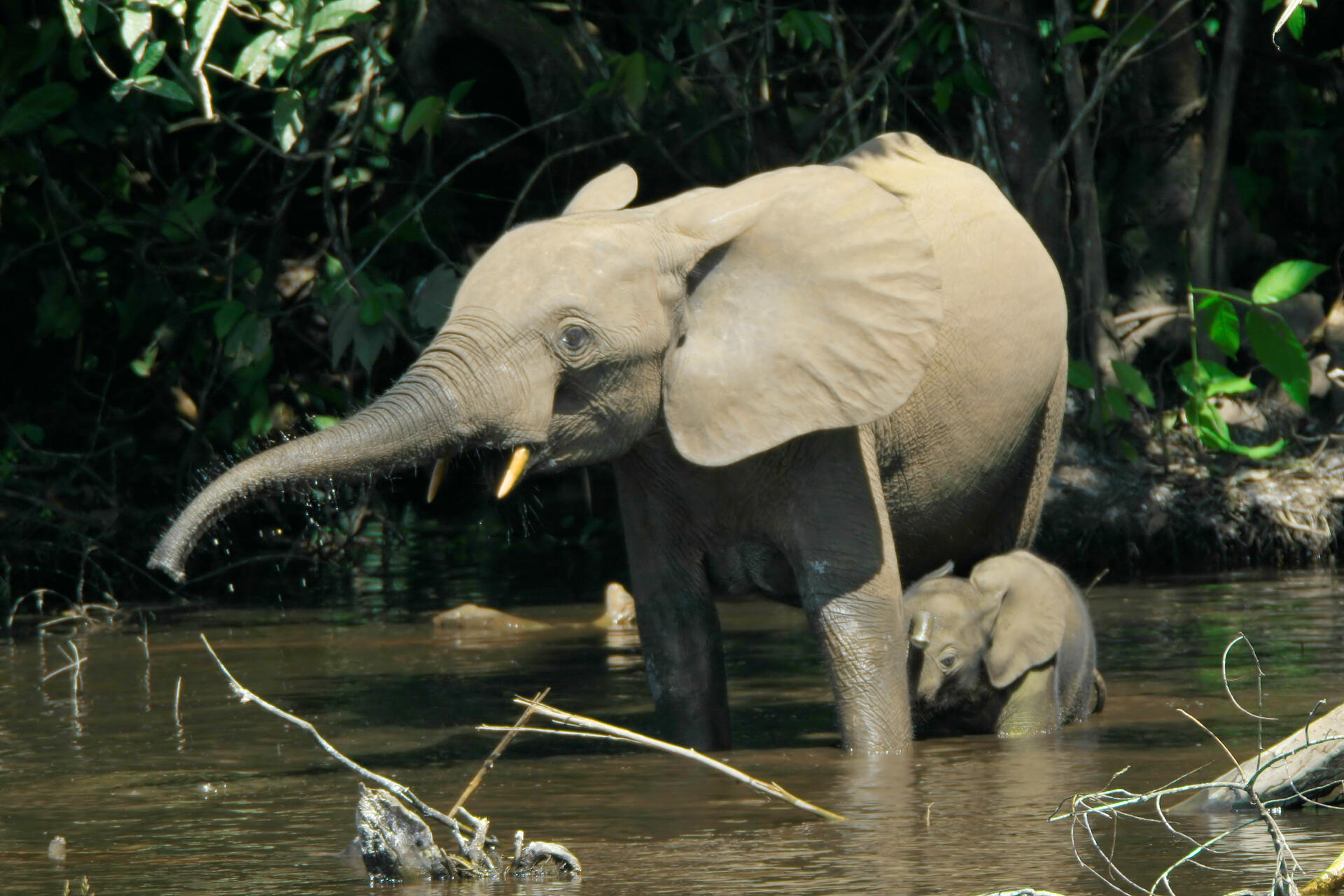
Situated in the north-western Congo Basin, where Cameroon, Central African Republic and Congo meet, the site encompasses three contiguous national parks totalling around 750,000 ha. Much of the site is unaffected by human activity and features a wide range of humid tropical forest ecosystems with rich flora and fauna, including Nile crocodiles and goliath tigerfish, a large predator. Forest clearings support herbaceous species and Sangha is home to considerable populations of forest elephants, critically endangered western lowland gorilla, and endangered chimpanzee. The site’s environment has preserved the continuation of ecological and evolutionary processes on a huge scale and great biodiversity, including many endangered animal species.
UNESCO Justification of the World Heritage Site
Criterion (ix): The property is characterised by its large size, further supported by the very large buffer zone, minimal disturbance over long periods and intactness thereby enabling the continuation of ecological and evolutionary processes at a huge scale. This includes the continuous presence of viable populations and natural densities of wildlife, including top predators and large mammals which are often affected by hunting and poaching elsewhere. There is a fully connected mosaic of very diverse habitats, including numerous types of ecologically remarkable forest clearings attracting major wildlife aggregations and countless plant species otherwise not found in the forest landscape. Unlike many other forest protected areas, the property is not a remaining fragment but continues to be part of a much larger intact and landscape with good conservation prospects. This is increasingly rare and significant at a global scale.
Criterion (x): The property represents a wide spectrum of the species-rich humid tropical forests in Central Africa’s Congo Basin, and provides protection for a range of endangered species. The flora is enriched by species occurring exclusively in the many types of forest clearings. TNS protects a large number of tree species which are heavily commercially exploited elsewhere, such as the critically endangered Mukulungu. In addition to viable populations of forest elephants, significant populations of the critically endangered Western Lowland Gorilla and the endangered Chimpanzee occur both in and around the property, together with several endangered antelope species, such as the Sitatunga and the emblematic Bongo.
Encyclopedia Record: Sangha Trinational
Sangha Trinational is a forest divided between the nations of Central African Republic, Cameroon and Republic of the Congo. It was added as a UNESCO World Heritage Site in 2012 because of its outstanding biodiversity and unique biological communities. The site includes 3 contiguous national parks within the humid tropical forests of Central Africa: Nouabalé-Ndoki National Park in Congo, Lobéké National Park in Cameroon, and Dzanga-Ndoki National Park in Central African Republic. The large size of the site and the relatively limited amount of deforestation within the three parks has allowed populations of vulnerable species such as African forest elephants, gorillas, sitatunga, and chimpanzees to thrive. In addition, populations of critically endangered plant species such as Mukulungu are protected within the site's borders.Additional Site Details
Area: 746,309 hectares
Number of Components: 3
(x) — Contains most important habitats for biodiversity
Coordinates: 2.6094444444 , 16.5541666667
IUCN World Heritage Outlook
The 2025 Conservation Outlook on Sangha Trinational reports the following assessment:
Source: International Union for Conservation of Nature (IUCN) · View assessment
World Heritage Research
Discover scientific research and academic studies that deepen our understanding of Sangha Trinational from its history and significance to its conservation, management, and contemporary challenges.
-
Outbreaks of human respiratory syncytial virus in wild gorillas highlight the importance of prevention measures and integrated surveillance for risk mitigation
Researchers documented three outbreaks of respiratory disease in human-habituated western lowland gorillas within the Sangha Trinational Protected Area Network, identifying human respiratory syncytial virus (HRSV) as the causative agent. Genomic analyses revealed two distinct viral types, indicating independent introductions rather than intergroup transmission. All symptomatic individuals recovered, underscoring the effectiveness of stringent prevention measures and integrated surveillance. The study highlights the need for continued vigilance in great ape research sites and emphasizes the broader implications for public health in neighboring human communities. This work supports the evolving One Health approach, which integrates conservation efforts with human health initiatives to mitigate risks and preserve biodiversity.
Jochum, M. J. S., Singa-Niatou, F. S., Sanz, C., Brogan, S., Löhrich, T., Neba, T. F., Leendertz, F. H., Morgan, D., & Patrono, L. V. (2026). Outbreaks of human respiratory syncytial virus in wild gorillas highlight the importance of prevention measures and integrated surveillance for risk mitigation. One Health, 22, 101376. https://doi.org/10.1016/j.onehlt.2026.101376
View Publication Record | Read Publication -
Tomomingi blicki Wesołowska, Russell-Smith & Danflous, 2026, sp. nov.
A new spider species, Tomomingi blicki, has been discovered within the UNESCO World Heritage Site of Sangha Trinational. This arachnid is distinguished by its unique male embolus shape and female epigyne with deeply sclerotized atria, setting it apart from related species like T. keinoi. The discovery was made through detailed morphological analysis of specimens collected from tree-holes in the understory of the Central African Republic's Dzanga-Sangha Special Reserve and Dzanga-Ndoki National Park. The species is named in honor of Theo Blick, a prominent German arachnologist contributing to the World Spiders Catalog.
Wesołowska, W., Russell-Smith, A., & Danflous, S. (2026). Tomomingi blicki Wesołowska, Russell-Smith & Danflous, 2026, sp. nov. Zenodo. https://doi.org/10.5281/ZENODO.19166049
View Publication Record | Read Publication -
Identification Keys to the Woody Lianas of Apocynaceae from the Sangha Trinational, Central Africa
A comprehensive identification guide to the woody lianas of Apocynaceae, encompassing 16 genera and 46 species from the Sangha Trinational in Central Africa, has been developed. This guide provides vegetative keys, genus and species descriptions, along with illustrations of key diagnostic characters, offering a critical tool for botanists and researchers studying this ecologically significant family. The study aims to facilitate accurate identification and classification, supporting conservation efforts and biodiversity research in the region.
Dwyer, E., Bayo, M., Ndolo Ebika, S., Forrest, L., & Harris, D. (2026). IDENTIFICATION KEYS TO THE WOODY LIANAS OF APOCYNACEAE FROM THE SANGHA TRINATIONAL, CENTRAL AFRICA. Edinburgh Journal of Botany, 83, 1–29. https://doi.org/10.24823/ejb.2026.2109
View Publication Record | Read Publication -
Mapping of Monodominant Gilbertiodendron dewevrei Forest Across the Western Congo Basin Using Sentinel-2 Imagery
A novel approach using Sentinel-2 imagery successfully mapped monodominant Gilbertiodendron dewevrei forest within the Sangha Trinational, achieving 83% accuracy. This method distinguished G. dewevrei from spectrally similar mixed forests by leveraging spectral, vegetation, and textural indices, with gray level co-occurrence matrix (GLCM) metrics proving critical due to the species' homogeneous canopy texture. The study demonstrates that freely available Sentinel-2 data can effectively classify distinct tropical forest types when combined with high-quality ground reference datasets, offering a promising tool for conservation monitoring in complex rainforest mosaics.
Heimpel, E., Harris, D. J., Mamboueni, J., Morgan, D., Sanz, C., & Ahrends, A. (2025). Mapping of Monodominant Gilbertiodendron dewevrei Forest Across the Western Congo Basin Using Sentinel-2 Imagery. Remote Sensing, 17(9), 1639. https://doi.org/10.3390/rs17091639
View Publication Record | Read Publication -
Floristic and structural distinctness of monodominant Gilbertiodendron dewevrei forest in the western Congo Basin
Monodominant Gilbertiodendron dewevrei forest in the western Congo Basin is both structurally and floristically distinct from adjacent mixed terre firme forests, with significant implications for conservation planning and carbon stock calculations. This study reveals that G. dewevrei forests exhibit lower stem density but a higher proportion of larger trees (>70 cm), suggesting greater carbon storage potential. Additionally, 56 vascular plant species are uniquely associated with these monodominant stands, further underscoring their ecological uniqueness. Researchers analyzed plot inventories and herbarium specimens from the Sangha Trinational to compare structural attributes (e.g., stem density, basal area) and species composition between forest types. The findings highlight the need to treat G. dewevrei forests separately in conservation strategies and carbon modeling efforts.
Heimpel, E., Ahrends, A., Dexter, K. G., Hall, J. S., Mamboueni, J., Medjibe, V. P., Morgan, D., Sanz, C., & Harris, D. J. (2024). Floristic and structural distinctness of monodominant Gilbertiodendron dewevrei forest in the western Congo Basin. Plant Ecology and Evolution, 157(1), 55–74. https://doi.org/10.5091/plecevo.111539
View Publication Record | Read Publication -
Regional cooperation for the conservation of biodiversity in the Congo Basin forests: Feedback on actions carried out in the TRIDOM-TNS landscapes
Over 20% of threatened species have transboundary ranges, highlighting the necessity for cross-border conservation efforts. In the Congo Basin forests—home to 10,000 plant species and iconic wildlife like forest elephants and gorillas—regional cooperation has become pivotal. This study evaluates actions in two priority landscapes: TRIDOM (Trinational Dja-Odzala-Minkébé) and TNS (Trinational Sangha), which together host critical populations of endangered species. The research employs a landscape conservation approach, analyzing the effectiveness of transnational management strategies. With four UNESCO World Heritage sites within these areas, the findings underscore the importance of coordinated efforts to protect biodiversity across political boundaries.
Resende, T. C., & Meikengang, A. G. (2023). Regional cooperation for the conservation of biodiversity in the Congo Basin forests: Feedback on actions carried out in the TRIDOM-TNS landscapes. Managing Transnational UNESCO World Heritage Sites in Africa, 135–145. https://doi.org/10.1007/978-3-030-80910-2_12
View Publication Record | Read Publication -
The Sangha Trinational: An example of cross-border biodiversity management in Central Africa
The Sangha Trinational (TNS) stands as a pioneering cross-border biodiversity management initiative in Central Africa, established in 2000 following the Yaoundé Declaration. This collaborative effort between Cameroon, the Central African Republic, and the Republic of Congo has successfully implemented multiple regulatory frameworks to address key challenges such as poaching and transboundary movement of personnel and tourists. Key milestones include the signing of memoranda on anti-poaching efforts (2002), free movement of TNS personnel (2005), and the establishment of an Anti-Poaching Brigade (2009). The initiative underscores the potential for cross-border cooperation in conserving biodiversity, demonstrating a model for future UNESCO World Heritage Sites management. Recent memoranda on tourist movement and scientific collaboration further solidify its role as a regional leader in sustainable conservation strategies.
Goué, A. M., & Kana, R. (2023). The Sangha Trinational: An example of cross-border biodiversity management in Central Africa. Managing Transnational UNESCO World Heritage Sites in Africa, 69–81. https://doi.org/10.1007/978-3-030-80910-2_7
View Publication Record | Read Publication