World Heritage Identification Number: 593
World Heritage since: 1996
Category: Cultural Heritage
WHE Type: Archaeological Sites
Transboundary Heritage: No
Endangered Heritage: No
Country: 🇮🇩 Indonesia
Continent: Asia
UNESCO World Region: Asia and the Pacific
Map
The Sangiran Early Man Site: A Key Location in Human Evolution Studies
The Sangiran Early Man Site, located in Central Java, Indonesia, holds significant importance in the study of human evolution. This archaeological excavation site has been instrumental in the discovery of numerous hominid fossils, making it one of the most crucial locations worldwide in this field of research.
More to come…UNESCO Description of the World Heritage Site
Excavations here from 1936 to 1941 led to the discovery of the first hominid fossil at this site. Later, 50 fossils of Meganthropus palaeo and Pithecanthropus erectus/Homo erectus were found – half of all the world's known hominid fossils. Inhabited for the past one and a half million years, Sangiran is one of the key sites for the understanding of human evolution.
UNESCO Justification of the World Heritage Site
Criterion (iii): This property is one of the key sites for the understanding of human evolution that admirably illustrates the development of Homo sapiens sapiens, over two million years from the Lower Pleistocene to the present through the outstanding fossils (human and animal) and artefactual material that it has produced.
Criterion (vi): The property is displaying many aspects of very long-term human physical and cultural evolution in an environmental context. It will continue to be so and remain dynamically informative.
Encyclopedia Record: Sangiran
Sangiran is an archaeological excavation site in Java in Indonesia. According to a UNESCO report (1995) "Sangiran is recognized by scientists to be one of the most important sites in the world for studying fossil man, ranking alongside Zhoukoudian (China), Willandra Lakes (Australia), Olduvai Gorge (Tanzania), and Sterkfontein, and more fruitful in finds than any of these."Additional Site Details
Area: 5,600 hectares
Number of Components: 1
(vi) — Directly associated with events or living traditions
Coordinates: -7.4 , 110.8166667
Image
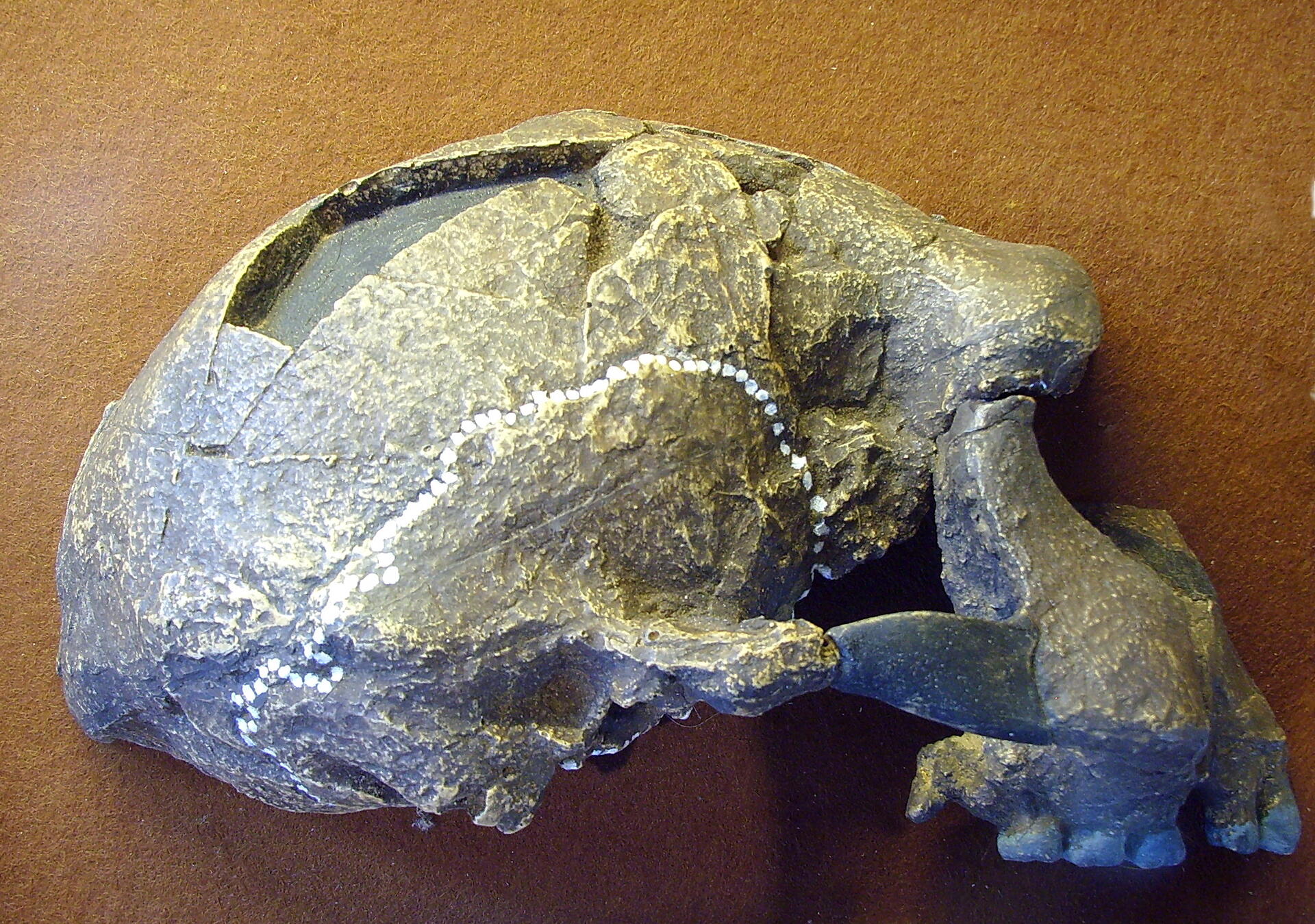
© Gerbil, CC BY-SA 3.0 Resized from original. (This derivative is under the same CC BY-SA license.)
World Heritage Research
Discover scientific research and academic studies that deepen our understanding of Sangiran Early Man Site from its history and significance to its conservation, management, and contemporary challenges.
-
Collection of The Sangiran Early Men Site Museum and Cultural Heritage Unit as a Learning Resource for Evolution Materials in Indonesian High School Curriculum
The Sangiran Early Man Site Museum, housing 115 biological collections with 65 directly relevant to evolutionary material, emerges as a valuable educational resource for Indonesian high school biology curricula. This study demonstrates that the museum's diverse fossil and artifact collection aligns well with the learning needs of senior secondary students (Class XII SMA or equivalent), providing authentic, hands-on materials to support evolution education. The research employed an exploratory approach, mapping both student learning requirements and the museum's holdings to identify correspondences. Findings suggest strong potential for integrating Sangiran's collections into classroom teaching, enhancing the delivery of evolutionary concepts through tangible, locally significant examples.
Aini, N., Handziko, R. C., & Rosyidah, M. Y. (2024). Collection of The Sangiran Early Men Site Museum and Cultural Heritage Unit as a Learning Resource for Evolution Materials in Indonesian High School Curriculum. Journal of Biology Education, 7(1), 26. https://doi.org/10.21043/jobe.v7i1.22506
View Publication Record | Read Publication -
Exploration of the Sangiran early man site as source and media on teaching the evolution
The Sangiran Early Man Site offers significant potential as both a source of scientific knowledge and an educational tool for teaching evolution. This study highlights its role in fostering a deeper understanding of human origins among students, particularly in the context of Indonesian education. The research employs a mixed-methods approach, combining fieldwork at Sangiran with pedagogical analysis to assess the site's effectiveness as a learning resource. Findings suggest that integrating the site into educational curricula can enhance student engagement and comprehension of evolutionary concepts, bridging gaps between scientific research and classroom teaching.
Astuti, W. P., Suranto, & Ramli, M. (2023). Exploration of the Sangiran early man site as source and media on teaching the evolution. THE 3RD INTERNATIONAL CONFERENCE ON SCIENCE, MATHEMATICS, ENVIRONMENT, AND EDUCATION: Flexibility in Research and Innovation on Science, Mathematics, Environment, and Education for Sustainable Development, 2540, 20021. https://doi.org/10.1063/5.0108382
View Publication Record | Read Publication -
Penta-Helix Collaboration Model in Community Development (Batik Making in Sangiran)
A collaborative penta-helix model, integrating government, academia, private sector, community, and media, has been proposed to enhance batik production in Sangiran, a UNESCO World Heritage Site renowned for its historical significance. This approach aims to maximize the potential of local batik makers by incorporating unique Sangiran motifs, thereby boosting economic welfare while preserving cultural heritage. The study employs qualitative participatory action research to demonstrate how such cross-stakeholder collaboration can drive sustainable development and align with the Sustainable Development Goals (SDGs). By leveraging the site's rich historical narrative in batik design, this model offers a blueprint for balancing economic growth with cultural preservation in heritage-rich regions.
Simanjuntak, T. R., Yanuartha, R. A., Sukmi, S. N., & Hergianasari, P. (2023). Penta-Helix Collaboration Model in Community Development (Batik Making in Sangiran). International Journal of Multicultural and Multireligious Understanding, 10(10), 120. https://doi.org/10.18415/ijmmu.v10i10.5103
View Publication Record | Read Publication -
Application of Fossil and Artefact Collection in The Human Reservation Center Sangiran of Sragen Krikilan Cluster Based on Android
A mobile informative system, 'Application of the Introduction of Fossil and Artefact Collection in the Preservation Center of Early Man Sangiran Site Cluster Krikilan Based on Android,' has been developed to address the dissemination challenges at the UNESCO World Heritage Site, Sangiran. This system leverages fossil and artefact collections from the Sangiran Early Man Museum to educate about the site's significant value in human evolution, culture, early fauna, and environments. The application, designed exclusively for Android devices, serves as an introductory tool for the Preservation Center but is currently limited to this platform, excluding iOS and desktop compatibility.
Susena, E., Pamungkas, C., & Khotimah, N. (2021). Application of Fossil and Artefact Collection in The Human Reservation Center Sangiran of Sragen Krikilan Cluster Based on Android. Jurnal AKSI (Akuntansi Dan Sistem Informasi), 5(1). https://doi.org/10.32486/aksi.v5i1.40
View Publication Record | Read Publication -
Strategi Pengembangan Situs Manusia Purba Sangiran sebagai Daya Tarik Wisata Budaya
Sangiran Early Man Site holds significant potential for cultural tourism but faces challenges in optimal management and visitor engagement. A SWOT analysis reveals that its strengths lie in the uniqueness of its prehistoric fossil collections, including millions-year-old human fossils, which are crucial for understanding Indonesia's ancient history. However, weaknesses such as fossil theft and legal gaps under Republic Act No. 11 (2010) hinder its development. Opportunities exist due to its strategic location and cultural significance, while challenges include community awareness and enforcement of heritage protection laws. The study advocates for the formation of an Awareness Group to drive sustainable tourism development, emphasizing the need for legal sanctions and community involvement to maximize Sangiran's tourism potential.
Mulyantari, E. (2021). Strategi Pengembangan Situs Manusia Purba Sangiran sebagai Daya Tarik Wisata Budaya. Media Wisata, 14(1). https://doi.org/10.36276/mws.v14i1.245
View Publication Record | Read Publication -
Visitors’ motivation and perception on Sangiran Early Man Museum, Krikilan Cluster
A survey of 533 visitors to the Sangiran Early Man Museum, Krikilan Cluster, reveals key motivations and perceptions that shape tourist satisfaction—a critical indicator for heritage tourism success. The study identifies how destination attributes influence visitor experience, providing actionable insights for museum management to enhance preservation, development, and positioning as a priority tourist destination in Indonesia.
Oktarisa, T. L., Prihatiningtias, A. L., Prabawa, T. S., & Susilowati, L. (2021). Visitors’ motivation and perception on Sangiran Early Man Museum, Krikilan Cluster. Berkala Arkeologi, 41(1), 109–128. https://doi.org/10.30883/jba.v41i1.570
View Publication Record | Read Publication -
An Evaluation of Valuable Lands towards Landslide Susceptibility at Heritage Site, Sangiran, Central Java, Indonesia
The Sangiran Early Man Site, a UNESCO World Heritage Site in Central Java, Indonesia, faces persistent landslide threats despite its geological and evolutionary significance. A study using the weights-of-evidence method identified five susceptibility classes—very low, low, moderate, high, and very high—and validated them through field surveys. Key findings include the absence of landslides in very-low susceptible areas, small landslides in low-susceptible zones, and a mix of large but non-risky or risky landslides in highly to very highly susceptible regions. Among 19 valuable lands prioritized for protection, some (e.g., Priority 13) fall into the low susceptibility class, while others (e.g., Priorities 2–4, 9–11) are classified as high risk, highlighting the heterogeneous vulnerability of this heritage site.
Afifah, S., Putra, A. U., Christianawati, A., Prastika, K. P., Thoban, M. I., Lukafiardi, R., Siahaan, S. E., Widyanarko, U., & Hizbaron, D. R. (2020). An Evaluation of Valuable Lands towards Landslide Susceptibility at Heritage Site, Sangiran, Central Java, Indonesia. IOP Conference Series: Earth and Environmental Science, 412(1), 12019. https://doi.org/10.1088/1755-1315/412/1/012019
View Publication Record | Read Publication -
The Diversity of Ray-finned Fishes (Actinopterygii) in Plio-Pleistocene Java
A new study identifies at least eight species of ray-finned fishes (Actinopterygii) from Plio-Pleistocene deposits in Java, revealing the island's ancient aquatic ecosystems. These fossils, belonging to three orders—Siluriformes, Perciformes, and Cypriniformes—suggest that Java transitioned from a marine environment to a lowland river system with mangrove swamps and estuaries during this period. The research also highlights the distinct paleoenvironment of the ancient Bandung lake site, characterized by calm waters and riparian vegetation. The study employed comparative anatomical methods using modern specimens and fossil collections from multiple institutions in Indonesia.
Yudha, D. S., Prabowo, M. A., Suriyanto, R. A., & Barianto, D. H. (2020). The Diversity of Ray-finned Fishes (Actinopterygii) in Plio-Pleistocene Java. Journal of Tropical Biodiversity and Biotechnology, 5(2), 149. https://doi.org/10.22146/jtbb.43694
View Publication Record | Read Publication -
Integrating Sangiran Early Man Site Museum to Project-Based Learning in Science Course: The-Earth Materials
A study integrating the Sangiran Early Man Site Museum with project-based learning (PBL) in a science course on earth materials demonstrated that PBL effectively enhances research skills, teamwork, and group discussions among junior high school students. However, challenges were noted in independent learning, scientific approach adoption, and project report presentation. The research used mixed methods, including questionnaires and interviews, to assess student responses. Conducted with 28 seventh-grade students in Karanganyar, Central Java, the study also highlighted PBL's potential as a tool for teaching local wisdom, offering insights into educational strategies that balance engagement with skill development.
Liskasari, R., Soeparmi, S., & Karyanto, P. (2018). Integrating Sangiran Early Man Site Museum to Project-Based Learning in Science Course: The-Earth Materials. Journal of Education and Learning (EduLearn), 12(4), 669–675. https://doi.org/10.11591/edulearn.v12i4.9142
View Publication Record | Read Publication -
The diversity of sharks fossils in Plio-Pleistocene of Java, Indonesia
Research at the Sangiran Early Man Site reveals that 11 genera of sharks inhabited the Java Sea during the Plio-Pleistocene epoch (2.8 to 1.8 million years ago). This ancient marine environment, characterized by lagoons and coastal swamps, preserved diverse shark teeth fossils with distinct morphological shapes. The study employed morphological comparison and Principal Component Analysis (PCA) to identify these genera using modern shark teeth collections from the Research Centre for Oceanography - LIPI in Jakarta. By comparing fossilized teeth from Sangiran Museum, BPSMPS Karanganyar, and UGM Yogyakarta with contemporary specimens, researchers reconstructed shark diversity during this transitional period.
Yudha, D. S., Ramadhani, R., Suriyanto, R. A., & Novian, M. I. (2018). The diversity of sharks fossils in Plio-Pleistocene of Java, Indonesia. AIP Conference Proceedings, 2002, 20013. https://doi.org/10.1063/1.5050109
View Publication Record | Read Publication -
Temuan Gerabah Dl Grogolan Wetan, Sebuah Bukti Penghunian Situs Sangiran Pasca Plestosene (Pottery from Grogol Wetan Site, Sangiran Settlement Post Pleistocene)
Archaeological evidence from the Sangiran Early Man Site reveals post-Pleistocene human activity, challenging the site's traditional perception as solely a prehistoric settlement. Pottery fragments discovered by the Indonesian National Center for Archaeological Research (2013) and the Sangiran Conservation Office (2015) suggest a farming community. Analysis identified a pot and a water-drawing tool, indicating agricultural practices likely dating to the post-Pleistocene period. This study provides critical insights into the transition from early human settlements to more complex societal structures in the region.
Sari, M. A. P. (2017). TEMUAN GERABAH Dl GROGOLAN WETAN, SEBUAH BUKTI PENGHUNIAN SITUS SANGIRAN PASCA PLESTOSEN (Pottery from Grogol Wetan Site, Sangiran Settlement Post Pleistocene). Jurnal Penelitian Arkeologi Papua Dan Papua Barat, 8(1). https://doi.org/10.24832/papua.v8i1.13
View Publication Record | Read Publication -
Tipologi Pintu Rumah Tradisional Dusun Pucung, Situs Manusia Purba Sangiran
A typology of six traditional door designs was identified in Pucung Village, part of the Sangiran Early Man Site, a UNESCO World Heritage area. These doors vary in number (one, three, or five) and material (bamboo, wood, or wood-glass), each with distinct cultural significance. The study employed quantitative and qualitative methods, including field surveys, literature reviews, and theoretical analysis, to classify door elements based on general characteristics, redrawing, grouping, and categorization. This research contributes to the understanding of architectural heritage in conserved areas by providing a systematic framework for analyzing traditional designs.
Faisal, G., & Roychansyah, M. S. (2014). TIPOLOGI PINTU RUMAH TRADISIONAL DUSUN PUCUNG, SITUS MANUSIA PURBA SANGIRAN. Langkau Betang: Jurnal Arsitektur, 1(2), 65–73. https://doi.org/10.26418/lantang.v1i2.18801
View Publication Record | Read Publication