World Heritage Identification Number: 608
World Heritage since: 1991
Category: Natural Heritage
WHE Type: Protected Areas & National Parks
Transboundary Heritage: No
Endangered Heritage: No
Country: 🇮🇩 Indonesia
Continent: Asia
UNESCO World Region: Asia and the Pacific
Map
Ujung Kulon National Park: A Unique Haven for Endangered Species and Natural Wonders
Ujung Kulon National Park, inscribed as a UNESCO World Heritage Site in 1991, is a remarkable treasure trove of biodiversity and geological wonders nestled in the far southwest corner of Java, Indonesia. The park spans across the Ujung Kulon peninsula, several offshore islands, and encompasses the natural reserve of Krakatoa, which was once part of the park but is now recognized as a separate protected area, the Pulau Anak Krakatau Marine Nature Reserve.
More to come…UNESCO Description of the World Heritage Site
This national park, located in the extreme south-western tip of Java on the Sunda shelf, includes the Ujung Kulon peninsula and several offshore islands and encompasses the natural reserve of Krakatoa. In addition to its natural beauty and geological interest – particularly for the study of inland volcanoes – it contains the largest remaining area of lowland rainforests in the Java plain. Several species of endangered plants and animals can be found there, the Javan rhinoceros being the most seriously under threat.
UNESCO Justification of the World Heritage Site
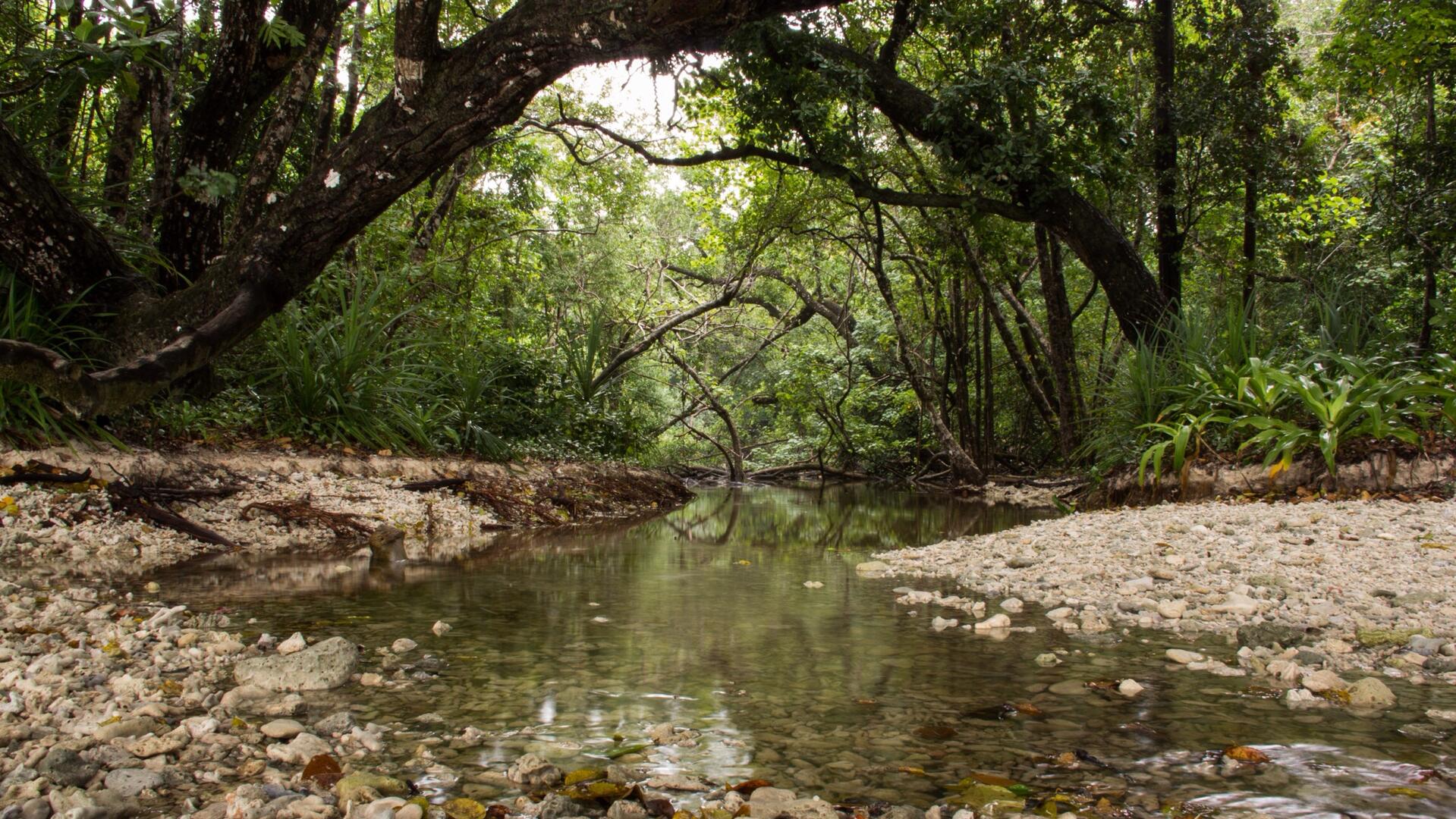
Criterion (vii) : Krakatau is one of natural world’s best-known examples of recent island volcanism and the property with its forests, coastline and islands is a natural lanscape of high scenic attaction. The physical feature of Krakatau Island combined with the surrounding sea, natural vegetation, succesion of vegetation and volcanic activities combine to form a lanscape of exceptional beauty. In addition, the combination of natural vegetation of the lowlands, tropical rainforests, grass lands, beach forests, mangrove forests and coral reefs within the property, are of exceptional magnificence. The property includes the Ujung Kulon peninsula and several offshore islands that demonstate on-going evolutionary processes, especially following the dramatic Krakatau eruption in 1883.
Criterion (x) : Containing the most extensive remaining stand of lowland rainforest on Java, a habitat that has virtually disappeared elsewhere on the island and is under severe pressure elsewhere in Indonesia and Southeast Asia, the peninsula of Ujung Kulon provides invaluable habitat critical for the survival of a number of threatened plant and animal species, most notably the endangered Javan Rhino (Rhinoceros sondaicus). The Javan rhino is not known to occur in the wild anywhere else on earth and Ujung Kulon is believed to sustain the last viable natural population, estimated at approximately 60 individuals. Efforts to protect the Javan rhino’s remaining habitat and individuals have become a symbol for protection of rainforest of worldwide significance, adding to the international importance of the management and preservation of the Ujung Kulon ecosystem.The property also provides a valuable refuge for 29 other species of mammals; nine of which are on the IUCN red list with three species considered endangered and including leopard (Panthera pardus), the endemic Javan gibbon (Mylobates moloch) and Javan leaf monkey (Presbytis comata). Avifauna recorded within the property includes 270 species while two species of crocodile, the endangered false gharial (Tomistoma schlegelii) and the vulnerable estuarine crocodile (Crocodylus porosus) are included in the reptile and amphibian species recorded for the property. In addition to the rich fauna 57 species of rare plants have also been recorded.
Encyclopedia Record: Ujung Kulon National Park
Ujung Kulon National Park is a national park at the westernmost tip of Java, located in Sumur District of Pandeglang Regency, part of Banten province in Indonesia. It once included the volcanic island group of Krakatoa in Lampung province, although current maps has suggested the Krakatoa island group as its own protected area, the Pulau Anak Krakatau Marine Nature Reserve.Additional Site Details
Area: 78,525 hectares
Number of Components: 5
(x) — Contains most important habitats for biodiversity
Coordinates: -6.75 , 105.3333333
IUCN World Heritage Outlook
The 2025 Conservation Outlook on Ujung Kulon National Park reports the following assessment:
Source: International Union for Conservation of Nature (IUCN) · View assessment
World Heritage Research
Discover scientific research and academic studies that deepen our understanding of Ujung Kulon National Park from its history and significance to its conservation, management, and contemporary challenges.
-
Identification of Endoparasites in Javan Banteng (Bos javanicus javanicus) in Ujung Kulon National Park (UKNP)
A study on Javan banteng (Bos javanicus javanicus) in Ujung Kulon National Park (UKNP) identified five endoparasite types with significant infection levels, including Ascarid (1,050 EPG), Strongyloides (1,600 EPG), Paramphistomum (50 EPG), and Eimeria (550 OPG). These findings highlight the prevalence of parasitic infections in this critically endangered species, with Strongyloides showing the highest infection intensity. The research used microscopic methods—flotation, sedimentation, native, and McMaster techniques—to analyze fecal samples at IPB University's Protozoology Laboratory. Such high infection levels may pose a threat to banteng health, warranting further investigation into their ecological and conservation implications.
Handayani, Agustin, M., Nugraha, A. B., & Primayanti, T. (2026). Identification of Endoparasites in Javan Banteng (Bos javanicus javanicus) in Ujung Kulon National Park (UKNP). Al-Kauniyah: Jurnal Biologi, 19(2), 298–308. https://doi.org/10.15408/kauniyah.v19i2.46487
View Publication Record | Read Publication -
The Effectiveness of Legal Protection for Sustainable Tourism in Ujung Kulon National Park
Legal protection in Ujung Kulon National Park effectively supports sustainable tourism by integrating conservation legislation, coordinated enforcement, and zoned management, though ecological restoration and equitable benefit distribution remain underdeveloped. This study advances conservation governance by applying Soekanto's theory of legal effectiveness alongside the effectiveness and justice framework, revealing that legal success extends beyond enforcement to include socioeconomic equity and ecosystem recovery. Unlike prior research focusing solely on compliance or management, this work highlights the need for holistic evaluation in protected areas. It provides actionable insights for policymakers aiming to balance biodiversity conservation with tourism sustainability.
Maulana, M. F., & Jinhui, K. (2026). The Effectiveness of Legal Protection for Sustainable Tourism in Ujung Kulon National Park Journal of Law and Resilient Future, 1(1), 18–38. https://doi.org/10.62503/jlrf.1.1.18-38
View Publication Record | Read Publication -
Species richness and nest entrance characteristics of stingless bees (Hymenoptera: Apidae: Meliponini) in Ujung Kulon National Park, Banten, Indonesia
A study conducted in Ujung Kulon National Park, Indonesiareveals the species richness and nest entrance characteristics of stingless bees (Hymenoptera: Apidae: Meliponini). Researchers identified 163 colonies belonging to four species: Tetragonula laeviceps, Tetragonula fuscobalteata, Heterotrigona itama, and Lepidotrigona terminata. L. terminata was the most dominant (44%), while T. laeviceps followed closely at 41%. Nesting sites varied significantly, with T. laeviceps showing adaptability by using residential cavities, bamboo, tree holes, and abandoned ant nests, whereas T. fuscobalteata preferred rock holes and tree cavities. The study highlights the unique nest entrance characteristics of these species, contributing new distribution records for stingless bees in this protected area.
MIHARJA, J., ATMOWIDI, T., PRIAWANDIPUTRA, W., PERWITASARI, D., & KAHONO, S. (2025). Species richness and nest entrance characteristics of stingless bees (Hymenoptera: Apidae: Meliponini) in Ujung Kulon National Park, Banten, Indonesia. Biodiversitas Journal of Biological Diversity, 25(12). https://doi.org/10.13057/biodiv/d251233
View Publication Record | Read Publication -
New Distribution Record of Tetrigona apicalis (Smith, 1857) (Hymenoptera: Apidae: Meliponini) in Ujung Kulon National Park, Indonesia
Researchers have documented the first occurrence of the stingless bee species Tetrigona apicalis (Apidae: Meliponini) within Ujung Kulon National Park (UKNP), a UNESCO-listed Natural World Heritage Site in western Java, Indonesia. This discovery expands the known distribution of the species on Java Island, contributing critical data for conservation efforts. The colony was found at 883 meters above sea level in Mount Honje's forest, with nests located in tree cavities of Tiliaceae, exhibiting irregular entrances measuring 3.2 cm (longitudinal) and 5.7 cm (vertical) in diameter. Locally known as 'teuwel meunyan,' the bees are associated with traditional incense rituals due to their aromatic scent. The study provides morphological and morphometric details of the species, offering insights for sustainable utilization and future research.
Miharja, J., Atmowidi, T., Priawandiputra, W., Perwitasari, D., & Kahono, S. (2025). New Distribution Record of Tetrigona apicalis (Smith, 1857) (Hymenoptera: Apidae: Meliponini) in Ujung Kulon National Park, Indonesia. HAYATI Journal of Biosciences, 33(1), 1–7. https://doi.org/10.4308/hjb.33.1.1-7
View Publication Record | Read Publication -
The Presence and Infection Rate of Strongyloides sp. in Banteng (Bos javanicus) in Ujung Kulon National Park (UKNP)
Researchers have identified a moderate infection rate of Strongyloides sp. in banteng (Bos javanicus) within Ujung Kulon National Park, with egg counts reaching 1600 per gram of feces. This finding suggests an active parasite life cycle that could lead to mild to moderate physiological disturbances in the host. The study employed native, sedimentation, and flotation methods to analyze fecal samples, revealing oval-shaped eggs measuring approximately 54×41 µm. Environmental conditions, particularly high humidity, were noted as potential contributors to reinfection risks in wildlife habitats. The results underscore the need for continuous monitoring, environmental management, and parasite control measures in conservation areas like Ujung Kulon National Park.
Handayani, H., Agustin, M., & Nugraha, A. B. (2025). The Presence and Infection Rate of Strongyloides sp. in Banteng (Bos javanicus) in Ujung Kulon National Park (UKNP). Journal of BioSustainability, 2(2), 83–92. https://doi.org/10.17509/jobs.v2i2.92528
View Publication Record | Read Publication -
Potential Carbon Accumulation Rate in the Sediment Mangroves at Ujung Kulon National Park, Banten, Indonesia
A study on Ujung Kulon National Park's mangroves reveals that carbon accumulation rates (CAR) vary significantly across different sediment zones, with interior areas showing the highest CAR (31.94 ± 3.6 g C m−2 yr−1) despite having the lowest carbon stock. Conversely, mudflats exhibit the highest carbon stock (169.6 Mg C ha−1) but the lowest CAR (17.03 ± 5.21 g C m−2 yr−1). These findings suggest that sedimentation rates play a crucial role in shaping CAR variations, highlighting the complex dynamics of blue carbon storage in mangrove ecosystems. The research analyzed carbon stock and sediment accumulation rate across three zones—interior, fringe, and mudflat—to derive these insights.
Shintianata, D., Patria, M. P., Lubis, A. A., & Sugiharto, U. (2024). Potential Carbon Accumulation Rate in the Sediment Mangroves at Ujung Kulon National Park, Banten, Indonesia. IOP Conference Series: Earth and Environmental Science, 1291(1), 12010. https://doi.org/10.1088/1755-1315/1291/1/012010
View Publication Record | Read Publication -
Diversity of Gastropods in The Mangrove Forest Area of Ujung Kulon National Park
A study on gastropod diversity in Ujung Kulon National Park's mangrove forests revealed 20 species from seven families, with medium diversity levels. Station 1 exhibited the highest diversity index (2.03), while Station 3 had the lowest (1.56). The average gastropod abundance was 273 individuals per square meter. Sampling employed line transect and purposive methods under low tide conditions across three stations, each with five 1x1 m² plots spaced 10 meters apart. Conducted in May-June 2021, the research analyzed diversity, dominance, evenness, and abundance indices to assess gastropod distribution and richness in this coastal ecosystem.
Widyasari, S. F., Wahyuni, I., & Usman, U. (2024). Diversity of Gastropods in The Mangrove Forest Area of Ujung Kulon National Park. Berkala Sainstek, 12(2), 64. https://doi.org/10.19184/bst.v12i2.34174
View Publication Record | Read Publication