World Heritage Identification Number: 260
World Heritage since: 1983
Category: Natural Heritage
WHE Type: Protected Areas & National Parks
Transboundary Heritage: No
Endangered Heritage: No
Country: 🇪🇨 Ecuador
Continent: Americas
UNESCO World Region: Latin America and the Caribbean
Map
Sangay National Park: A Biodiverse Haven in Ecuador
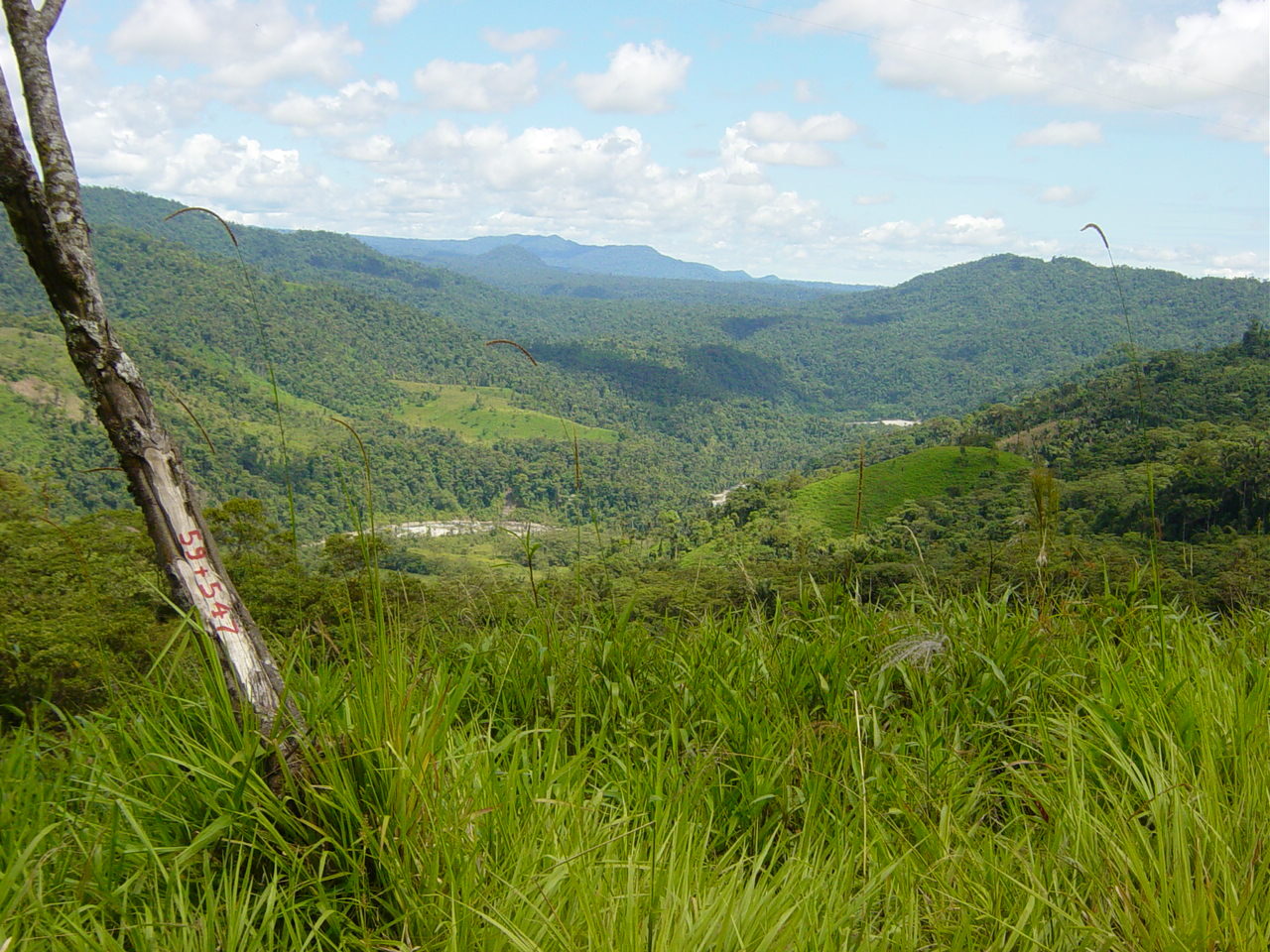
Sangay National Park, inscribed as a UNESCO World Heritage Site in 1983, is a testament to the rich biodiversity and breathtaking landscapes found within Ecuador. Spanning across five provinces - Morona-Santiago, Chimborazo, Tungurahua, Cañar, and Azuay - this expansive protected area showcases an extraordinary array of ecosystems, from tropical rainforests to glacial peaks, creating a mesmerizing contrast that captivates visitors and researchers alike.
More to come…UNESCO Description of the World Heritage Site
With its outstanding natural beauty and two active volcanoes, the park illustrates the entire spectrum of ecosystems, ranging from tropical rainforests to glaciers, with striking contrasts between the snowcapped peaks and the forests of the plains. Its isolation has encouraged the survival of indigenous species such as the mountain tapir and the Andean condor.
UNESCO Justification of the World Heritage Site
Criterion (vii): The Sangay National Park contains one of the world’s most complex series of ecological habitats. With an altitudinal range extending from 900 to 5,319 metres above sea level, the park includes three volcanoes: Tungurahua (5,016m), Sangay (5,230m), and Altar (5,319m). These volcanoes have a superlative aesthetic beauty, including a rare combination of grasslands, rainforests and many other fragile habitats. The property includes a vast system of wetlands with 327 lakes, covering a surface of 31.5 km2, which protect and generate environmental services of local, national and regional importance. The park also contains one of the largest areas of páramo (a montane grassland vegetation) occurring in Ecuador.
Criterion (viii): Sangay (a perfect cone-shaped volcano) is notable globally for its long period of continuous activity. The area exhibits a rugged topography with deep, steep-sided valleys, abundant cliffs and many rocky jagged peaks. A number of large rivers, draining eastwards into the Amazon Basin, are characterized by fast and dramatic variations in water level. Run-off is extremely rapid due to high rainfall and steep slopes. Erosion is a constant danger, although controlled by thick forest vegetation. Numerous waterfalls occur, especially in the hanging valleys of the glacial zone along the eastern edge of the Cordillera.
Criterion (ix): The presence of an active volcano means that primary succession is a continual process which influences species composition in a number of special ecosystems in the park, including rainforest, cloud forest, grasslands and moorlands (páramos). For example, many plant species in the páramo, in particular bunch grasses and cushion plants, have adapted to cold weather conditions and have evolved specialised structures for water capture. These areas also provide an excellent example of ongoing succession, where volcanic ash creates fertile soil and new habitats for plant colonization. Although the flora is poorly known, at least 3,000 species are expected to occur in the park and, given the special conditions, probably exhibit a high degree of endemism. At the same time the associated fauna, including a large number of birds and insects, is also expected to be unique. The park comprises two Endemic Bird Areas, the Central Andean páramo (home to some 11 bird species of restricted range), and the Ecuador-Peru East Andes (home to 17 restricted-range species). It is important to note that the high diversity of ecosystems and different vegetation types in the park increases the likelihood of evolutionary changes.
Criterion (x): Natural vegetation has been well conserved and covers around 84.5% of the entire park. With its different ecosystems, the park has the best and least disturbed assemblage of native species in the region. At least 3,000 species of flowering plants are expected to occur in the park and recent reports describe 107 mammal, 430 bird, 33 amphibian, 14 reptile and 17 fish species. Perhaps the highest profile animal is the endangered Mountain Tapir, for which the Sangay Park represents one of its last refuges. The park is also one of the three protected areas with the largest populations of Spectacled Bear, classified as vulnerable. Other emblematic species include the Andean Condor, Andean Cock-of-the-rock, Jaguar and Giant Anteater, classified as vulnerable because its populations are declining in many parts of its range. The Lowland Tapir, another vulnerable rainforest species, only survives in undisturbed areas.
Encyclopedia Record: Sangay National Park
Sangay National Park is a national park located in the Morona-Santiago, Chimborazo, Tungurahua, Cañar, and Azuay provinces of Ecuador. The park contains two active volcanoes, one extinct volcano El Altar. Protecting a range of elevations from 900 to 5,319 meters above sea level, Sangay National Park contains a wide variety of habitats, including glaciers, volcanic landscapes, tropical rainforests, cloud forests, wetlands, grasslands, and one of the largest regions of páramo in Ecuador. 327 lakes feed into a vast wetland system covering 31.5 square kilometers (12.2 sq mi).Additional Site Details
Area: 271,925 hectares
Number of Components: 1
(viii) — Outstanding example representing major earth stages
(ix) — Outstanding example representing ecological and biological processes
(x) — Contains most important habitats for biodiversity
Coordinates: -1.83333 , -78.33333
IUCN World Heritage Outlook
The 2025 Conservation Outlook on Sangay National Park reports the following assessment:
Source: International Union for Conservation of Nature (IUCN) · View assessment
Image
© Unknown, CC BY-SA 3.0 Resized from original. (This derivative is under the same CC BY-SA license.)