World Heritage Identification Number: 663
World Heritage since: 1993
Category: Natural Heritage
WHE Type: Natural Landscapes & Geographic Features
Transboundary Heritage: No
Endangered Heritage: No
Country: 🇯🇵 Japan
Continent: Asia
UNESCO World Region: Asia and the Pacific
Map
Exploring the Enchanting Landscape of Shirakami-Sanchi: A Journey into Japan's Last Virgin Forest
The Shirakami-Sanchi, nestled within the rugged mountains of northern Honshu, stands as a testament to the untouched beauty of nature that once blanketed the hills and slopes of Japan. Inscribed as a UNESCO World Heritage Site in 1993, this remote wilderness area offers a unique glimpse into the last vestiges of the cool-temperate forest of Siebold's beech trees that once dominated the landscape.
More to come…UNESCO Description of the World Heritage Site
Situated in the mountains of northern Honshu, this trackless site includes the last virgin remains of the cool-temperate forest of Siebold's beech trees that once covered the hills and mountain slopes of northern Japan. The black bear, the serow and 87 species of birds can be found in this forest.
UNESCO Justification of the World Heritage Site
Criterion (ix): Shirakami-Sanchi is dominated by beech accompanied by diverse vegetation that escaped simplification during the earths’ glacial stages by shifting its distribution towards the south, resulting in a virtually undisturbed, pristine climax wilderness forest. The property covers approximately one third of the Shirakami mountain range and comprises a maze of steep sided hills and summits. The undisturbed wilderness condition of the area is wild and rare in eastern Asia with no other protected area in Japan containing a large unmodified beech forest like that found in the property. The extent of its pristine forest without extrinsic development sets the property apart in densely populated, long-inhabited Japan and across Asia. The property is the last and best relic of the cool-temperate beech forests that once covered northern Japan. A member of the genus dominant in cool-temperate forests in the northern hemisphere, Siebold’s beech (Fagus crenata) comprises the mono-specific canopy and the forest contains the main species of the ecosystem including black woodpecker (Dryocopus martius), Japanese serow (Capricornis crispus), Japanese black bear (Ursus thibetanus japonicas), Japanese macaque (Macaca fuscata) and dwarf bamboo (Sasa kurilensis). The forest ecosystem reflects the history of global climate changes and the heavy-snow environment, and is an outstanding example of ongoing processes in the development and succession of communities of plants together with the animal groups that depend on them. The property is thus very important for studies on terrestrial cool-temperate ecology, particularly on Eurasian beech forest ecosystem processes, and for long-term monitoring of the climate and vegetation changes.
Encyclopedia Record: Shirakami-Sanchi
The Shirakami Mountains (White God Mountains) (Japanese: 白神山地, Hepburn: Shirakami-Sanchi) are a UNESCO World Heritage Site wilderness area in the Tōhoku region of northern Honshū, Japan. This mountainous area includes the last virgin forest of Japanese beech which once covered most of northern Japan. The area straddles both Akita and Aomori Prefectures, with three-fourths of it in Aomori Prefecture. Of the entire 130,000-hectare (500 sq mi) area, a tract covering 16,971-hectare (65.53 sq mi) was included in the list of World Heritage Sites in 1993. Fauna found in the area includes Japanese black bear, the Japanese serow, Japanese macaque and 87 species of birds. The Shirakami-Sanchi was one of the first sites entered on the World Heritage List in Japan, along with Yakushima, Himeji Castle, and Buddhist Monuments in the Hōryū-ji Area in 1993. Permission is needed from Forest Management to enter the heart of the Shirakami-Sanchi.Additional Site Details
Area: 16,971 hectares
Number of Components: 1
Coordinates: 40.4525 , 140.1155555556
IUCN World Heritage Outlook
The 2025 Conservation Outlook on Shirakami-Sanchi reports the following assessment:
Source: International Union for Conservation of Nature (IUCN) · View assessment
Image
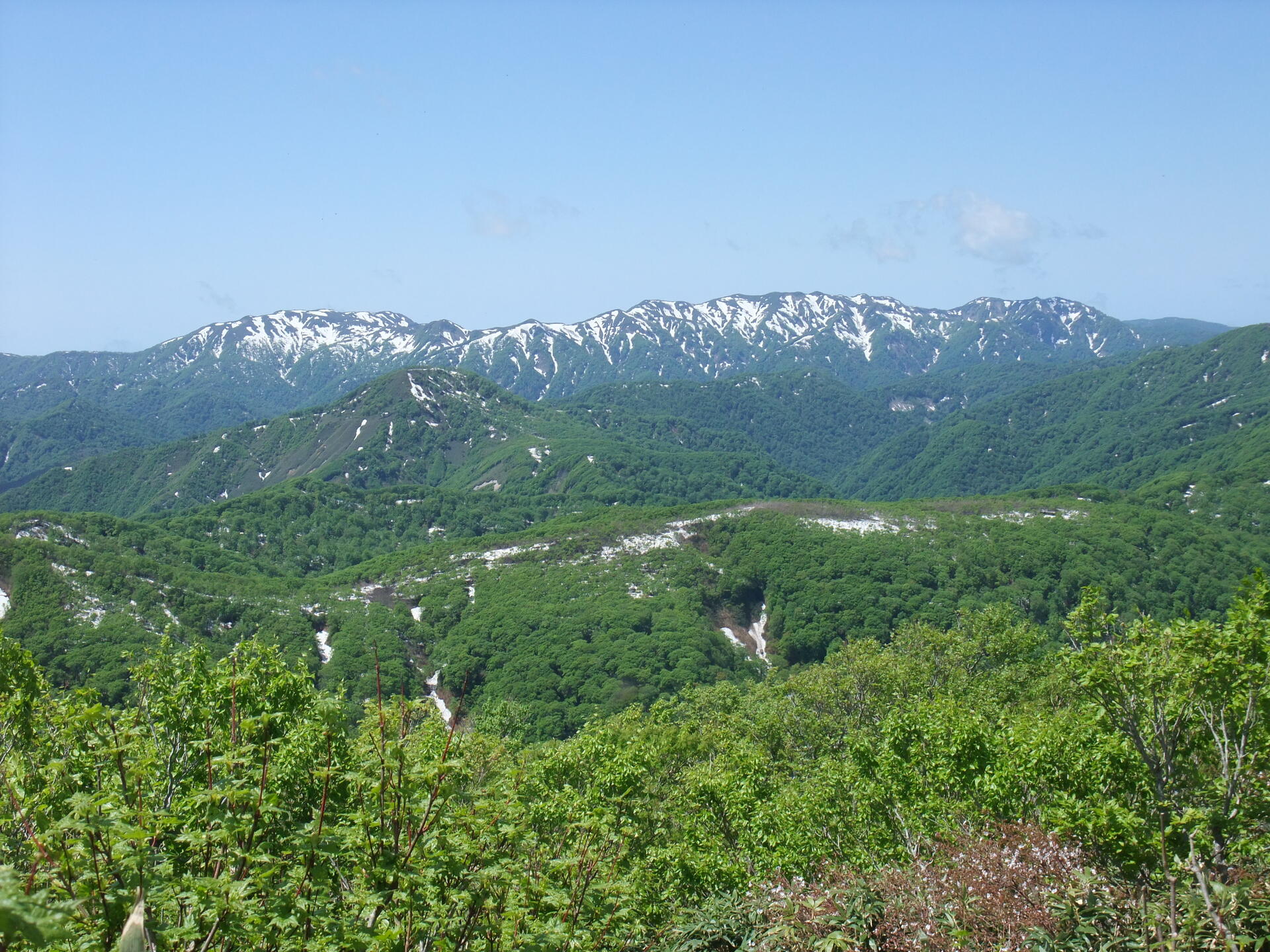
© らんで, CC BY-SA 3.0 Resized from original. (This derivative is under the same CC BY-SA license.)
World Heritage Research
Discover scientific research and academic studies that deepen our understanding of Shirakami-Sanchi from its history and significance to its conservation, management, and contemporary challenges.
-
Challenges for world natural heritage protection through coordinating a variety of values
Balancing global and local values is critical for the effective protection of UNESCO World Heritage Sites, as demonstrated by case studies from Ha Long Bay (Vietnam), the Galapagos Islands, and Shirakami-Sanchi in Japan. The study reveals that while international frameworks like the World Heritage Convention provide a standard for 'outstanding universal value,' they often clash with local stakeholders' values, leading to conflicts. It highlights the need for coordination among diverse interests—including those of local communities—to foster mutual understanding and create new shared values. This approach is essential to overcome challenges arising from global standards imposing changes on the ground while respecting local perspectives.
Kazunobu, S. (2022). Challenges for world natural heritage protection through coordinating a variety of values. International Journal of Biodiversity and Conservation, 14(1), 53–64. https://doi.org/10.5897/ijbc2021.1527
View Publication Record | Read Publication -
Culm dynamics of dwarf bamboo (Sasa kurilensis Makino & Shibata) in relation to forest canopy conditions in beech forests
Dwarf bamboo (Sasa kurilensis) culms in Shirakami-Sanchi's beech forests can survive up to 20 years, with their dynamics significantly influenced by forest canopy conditions. The study found that culm density and biomass varied widely across plots, often responding abruptly to changes like gap formation. Notably, S. kurilensis thrives under closed canopies (dark conditions), as evidenced by an inverse relationship between canopy closure and culm density in 2001, which weakened by 2019. This suggests that understanding bamboo population dynamics requires closer attention to environmental instability and variations in forest structure.
Itabashi, T., Akada, S., Ishida, K., Ishibashi, S., Ohno, M., Matsui, K., Watanabe, Y., Nakashizuka, T., & Makita, A. (2023). Culm dynamics of dwarf bamboo (Sasa kurilensis Makino & Shibata) in relation to forest canopy conditions in beech forests. Advances in Bamboo Science, 2, 100013. https://doi.org/10.1016/j.bamboo.2022.100013
View Publication Record | Read Publication -
Preservation and preemption in Japan’s Shirakami Sanchi World Heritage Area
Japan's Shirakami-Sanchi World Heritage Area demonstrates how ecological preservation can be achieved through expanded civic engagement, though at the cost of marginalizing traditional forest users. This study highlights a successful case where the construction of a forest road in the 1980s threatened the ancient beech forest's integrity, leading to enhanced governmental commitment to conservation and public involvement. The research combines literature reviews, interviews with key stakeholders, and field observations to explore the balance between ecosystem protection, civic participation, cultural heritage, and administrative efficiency. Findings underscore the challenges of inclusive protected-area management, offering valuable insights for researchers and practitioners in park management.
Mason, R. J. (2015). Preservation and preemption in Japan’s Shirakami Sanchi World Heritage Area. Management of Environmental Quality: An International Journal, 26(3), 448–465. https://doi.org/10.1108/meq-11-2014-0159
View Publication Record | Read Publication -
Integrated Plant Record (IPR) Vegetation Analysis Applied to Modern Vegetation in South China and Japan
Modern vegetation analysis using the Integrated Plant Record (IPR) technique reveals distinct underrepresentation of zonal herbs in fossil records, challenging traditional classification methods. The study, conducted across South China and Japan—including UNESCO World Heritage Sites like Shirakami-Sanchi—validates key zonal woody angiosperm groups but identifies a need for refined ecotone definitions and broader herb diversity inclusion. Findings suggest higher zonal herb diversity in broad-leaved deciduous forests compared to evergreen counterparts, aligning with Neogene European records. This research enhances understanding of vegetation dynamics by refining IPR analysis, offering new insights into fossil-based reconstructions.
TEODORIDIS, V., KOVAR-EDER, J., & MAZOUCH, P. (2011). INTEGRATED PLANT RECORD (IPR) VEGETATION ANALYSIS APPLIED TO MODERN VEGETATION IN SOUTH CHINA AND JAPAN. Palaios, 26(10), 623–638. https://doi.org/10.2110/palo.2010.p10-149r
View Publication Record | Read Publication