World Heritage Identification Number: 1193
World Heritage since: 2005
Category: Natural Heritage
WHE Type: Protected Areas & National Parks
Transboundary Heritage: No
Endangered Heritage: No
Country: 🇯🇵 Japan
Continent: Asia
UNESCO World Region: Asia and the Pacific
Map
Shiretoko: A Unique Ecosystem at the Edge of the Earth
The Shiretoko Peninsula, situated in the northeastern corner of Hokkaido, Japan's largest island, stands as a testament to the intricate interplay between marine and terrestrial ecosystems. Inscribed as a UNESCO World Heritage Site in 2005, this remote and pristine region offers a unique glimpse into the rich biodiversity that thrives at the edge of the Earth.
More to come…UNESCO Description of the World Heritage Site
Shiretoko Peninsula is located in the north-east of Hokkaido, the northernmost island of Japan. The site includes the land from the central part of the peninsula to its tip (Shiretoko Cape) and the surrounding marine area. It provides an outstanding example of the interaction of marine and terrestrial ecosystems as well as extraordinary ecosystem productivity, largely influenced by the formation of seasonal sea ice at the lowest latitude in the northern hemisphere. It has particular importance for a number of marine and terrestrial species, some of them endangered and endemic, such as Blackiston’s fish owl and the Viola kitamiana plant. The site is globally important for threatened seabirds and migratory birds, a number of salmonid species, and for marine mammals including Steller’s sea lion and some cetacean species.
UNESCO Justification of the World Heritage Site
Criterion (ix): Shiretoko provides an outstanding example of the interaction of marine and terrestrial ecosystems as well as extraordinary ecosystem productivity, largely influenced by the formation of seasonal sea ice at the lowest latitude in the northern hemisphere, occurring earlier here than in other sea ice areas.Illustrating ecological processes, phytoplankton blooms develop on the nutrients supplied by the melting sea ice and from the deep ocean, entering the system through circulation of currents. The food webs starting from the phytoplankton blooms involve fish, birds and mammals, and form dynamic ecosystems over ocean, rivers and forests.
Criterion (x): Shiretoko has particular importance for a number of marine and terrestrial species. Combining northern species from the continent and southern species from Honshu, the property supports a range of animal species. These include a number of endangered and endemic species, such as the Blackiston’s Fish owl and the plant species Viola kitamiana. The property has one of the highest recorded densities of brown bear populations in the world. The property has significance as a habitat for globally threatened sea birds and is a globally important area for migratory birds. Shiretoko is also globally important for a number of salmonid species, encompassing habitat in many small watersheds and supporting several species of Pacific salmonids, including White spotted charr, masu salmon, chum salmon and pink salmon. Those watersheds have specific importance as it is the southernmost habitat in the world for the sea run of the Dolly varden. The property is a seasonal habitat for a number of marine mammals including the Steller’s sea lion, Spotted Seal, Killer Whale, Minke Whale, Sperm Whale, Dall’s Porpoise and the endangered Fin Whale.
Encyclopedia Record: Shiretoko Peninsula
The Shiretoko Peninsula is located on the easternmost portion of the Japanese island of Hokkaido, protruding into the Sea of Okhotsk. It is separated from Kunashiri Island by the Nemuro Strait. The name Shiretoko is derived from the Ainu word sir etok, meaning "the end of the Earth" or "the place where the Earth protrudes". The towns of Rausu and Shari are found on the peninsula.Additional Site Details
Area: 71,100 hectares
Number of Components: 1
(x) — Contains most important habitats for biodiversity
Coordinates: 43.94944 , 144.96583
IUCN World Heritage Outlook
The 2025 Conservation Outlook on Shiretoko reports the following assessment:
Source: International Union for Conservation of Nature (IUCN) · View assessment
Image
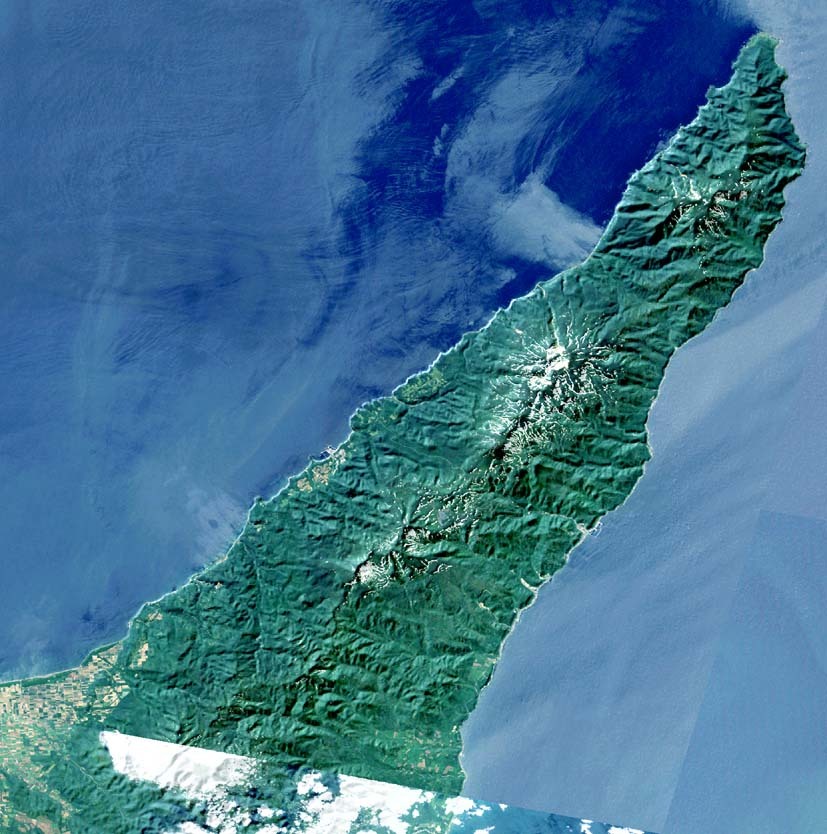
っ, Public domain
World Heritage Research
Discover scientific research and academic studies that deepen our understanding of Shiretoko from its history and significance to its conservation, management, and contemporary challenges.
-
Diel and monthly activity pattern of brown bears and sika deer in the Shiretoko Peninsula, Hokkaido, Japan
Brown bears and sika deer on Japan's Shiretoko Peninsula exhibit distinct diel activity patterns influenced by seasonal behaviors, reproductive motivations, and environmental factors. Unlike European brown bears, those in Shiretoko show a diurnal/crepuscular pattern, with increased activity during autumnal hyperphagia, particularly among adult females and sub-adults. Protected areas further enhance diurnality, suggesting human activities and competitive interactions play significant roles. Sika deer, meanwhile, maintain a crepuscular pattern with minimal variation across months or sex-age classes, though male activity peaks during the autumn copulation period. The study employed camera-trap surveys over five months in 2019, capturing 7,530 observations to analyze these patterns, offering critical insights for wildlife conservation and management.
KAWAMURA, K., JIMBO, M., ADACHI, K., SHIRANE, Y., NAKANISHI, M., UMEMURA, Y., ISHINAZAKA, T., UNO, H., SASHIKA, M., TSUBOTA, T., & SHIMOZURU, M. (2022). Diel and monthly activity pattern of brown bears and sika deer in the Shiretoko Peninsula, Hokkaido, Japan. Journal of Veterinary Medical Science, 84(8), 1146–1156. https://doi.org/10.1292/jvms.21-0665
View Publication Record | Read Publication -
Identifying effective tree planting schemes to restore forest carbon and biodiversity in Shiretoko National Park, Japan
Tree planting in Shiretoko National Park, Japan, can effectively restore both forest carbon and biodiversity when done with high density (2,500+ trees/ha) and species richness (>4 species), regardless of distance from natural seed sources. Simulation modeling revealed that such planting scenarios achieve over 50% of the restoration success of intact forests within 33 years for both goals. Conversely, low-species planting or reliance on distant natural regeneration significantly delays biodiversity recovery.
Kobayashi, Y., Seidl, R., Rammer, W., Suzuki, K. F., & Mori, A. S. (2022). Identifying effective tree planting schemes to restore forest carbon and biodiversity in Shiretoko National Park, Japan. Restoration Ecology, 31(1). Portico. https://doi.org/10.1111/rec.13681
View Publication Record | Read Publication -
Dining from the coast to the summit: Salmon and pine nuts determine the summer body condition of female brown bears on the Shiretoko Peninsula
Female brown bears on the Shiretoko Peninsula experience seasonal fluctuations in body condition, primarily driven by their access to high-lipid pine nuts and high-protein salmon. A six-year study (2012–2018) found that while body condition declined until late August, it began to recover in September when salmon consumption peaked. Years with higher intake of both pine nuts and salmon saw earlier recovery in body condition. Additionally, females with offspring had poorer body condition than solitary ones, especially during low-salmon years. The research used scat analysis (2,079 samples) and photographic measurements (1,226 images from 12 bears) to quantify diet and body condition, revealing the critical role of these unique coastal and subalpine foods in bear survival and reproduction.
Shirane, Y., Jimbo, M., Yamanaka, M., Nakanishi, M., Mori, F., Ishinazaka, T., Sashika, M., Tsubota, T., & Shimozuru, M. (2021). Dining from the coast to the summit: Salmon and pine nuts determine the summer body condition of female brown bears on the Shiretoko Peninsula. Ecology and Evolution, 11(10), 5204–5219. Portico. https://doi.org/10.1002/ece3.7410
View Publication Record | Read Publication -
Incidence of Multiple Paternity and Inbreeding in High-Density Brown Bear Populations on the Shiretoko Peninsula, Hokkaido, Japan
A study on the Shiretoko Peninsula, Japan, reveals that approximately 15% of brown bear litters result from multiple paternity, comparable to rates observed in Scandinavian populations despite differences in population density and litter size. The research also identified low but notable instances of inbreeding, including cases involving father-daughter matings (2.7%), maternal half-siblings (0.5%), and paternal half-siblings (1.8%). No evidence was found for mother-son or full-sibling matings. These findings suggest that male-biased dispersal plays a crucial role in limiting close inbreeding, offering insights into the genetic dynamics of high-density brown bear populations. The study genotyped 837 individuals at 21 microsatellite loci and analyzed parentage across 70-82 litters to derive these conclusions.
Shimozuru, M., Shirane, Y., Tsuruga, H., Yamanaka, M., Nakanishi, M., Ishinazaka, T., Kasai, S., Nose, T., Masuda, Y., Fujimoto, Y., Mano, T., & Tsubota, T. (2019). Incidence of Multiple Paternity and Inbreeding in High-Density Brown Bear Populations on the Shiretoko Peninsula, Hokkaido, Japan. Journal of Heredity, 110(3), 321–331. https://doi.org/10.1093/jhered/esz002
View Publication Record | Read Publication -
Reproductive parameters and cub survival of brown bears in the Rusha area of the Shiretoko Peninsula, Hokkaido, Japan
Brown bears (Ursus arctos yesoensis) in the Rusha area of Shiretoko, Hokkaido, Japan, exhibit among the highest reproductive rates globally, with females producing 0.70 to 0.76 young per year. A long-term study (2006–2016) tracking 15 philopatric females revealed key parameters: mean age of first reproduction at 5.3 years, litter sizes averaging 1.76 cubs, and inter-birth intervals of 2.43 to 2.53 years. Cub survival rates (60–73%) peaked in mortality during summer (July–August), likely due to nutritional stress. These findings align with global trends but highlight Shiretoko's unique demographic dynamics, offering critical insights for conservation strategies.
Shimozuru, M., Yamanaka, M., Nakanishi, M., Moriwaki, J., Mori, F., Tsujino, M., Shirane, Y., Ishinazaka, T., Kasai, S., Nose, T., Masuda, Y., & Tsubota, T. (2017). Reproductive parameters and cub survival of brown bears in the Rusha area of the Shiretoko Peninsula, Hokkaido, Japan. Plos One, 12(4), e0176251. https://doi.org/10.1371/journal.pone.0176251
View Publication Record | Read Publication -
Adaptation to climate-change effects on fisheries in the Shiretoko World Natural Heritage area, Japan
Climate change is significantly impacting fisheries in the Shiretoko World Natural Heritage area, Japan, with observed effects including reduced seasonal sea ice and shifts in fishing grounds. The study highlights the need for integrated policy measures and cross-sector coordination to adapt to these changes, emphasizing the importance of large-scale marine ecosystem (LME) research and monitoring. It also suggests that cultural elements, such as those promoted by the World Heritage programme, could contribute to developing a new, peaceful societal framework based on LME principles.
Makino, M., & Sakurai, Y. (2012). Adaptation to climate-change effects on fisheries in the Shiretoko World Natural Heritage area, Japan. ICES Journal of Marine Science, 69(7), 1134–1140. https://doi.org/10.1093/icesjms/fss098
View Publication Record | Read Publication -
Evaluation of nutrient flux from Shiretoko into the ocean using MRI-GCM
Researchers found that rainfall intensity, particularly its standard deviation, significantly controls nutrient flux from Shiretoko's inland areas to the coast. This discovery highlights a key factor influencing coastal ecological systems. To estimate future nutrient supply, the study used bias-corrected data from the Meteorological Research Institute Global Climate Model (MRI-GCM), which aligns well with observed rainfall data. A synthetic generation technique produced hourly rainfall data, crucial for assessing nutrient dynamics in Shiretoko's river basins. The findings suggest that nonlinearity in rainfall intensity strengthens its impact on nutrient flux, providing critical insights for understanding coastal nutrient cycles.
Nakayama, K., Abuliz, A., Nakaegawa, T., & Maruya, Y. (2011). Evaluation of nutrient flux from Shiretoko into the ocean using MRI-GCM. Hydrological Research Letters, 5, 47–51. https://doi.org/10.3178/hrl.5.47
View Publication Record | Read Publication