
World Heritage Identification Number: 1345
World Heritage since: 2010
Category: Cultural Heritage
WHE Type: Religious Sites & Sacred Architecture
Transboundary Heritage: No
Endangered Heritage: No
Country: 🇮🇷 Iran (Islamic Republic of)
Continent: Asia
UNESCO World Region: Asia and the Pacific
Map
Sheikh Safi al-din Khānegāh and Shrine Ensemble in Ardabil: A Rare Ensemble of Medieval Islamic Architecture
The Sheikh Safi al-din Khānegāh and Shrine Ensemble in Ardabil, Iran, is a unique and significant example of medieval Islamic architecture. This complex, built between the 16th and 18th centuries, serves as a spiritual retreat center in the Sufi tradition and has been recognized as a UNESCO World Heritage Site since 2010.
More to come…UNESCO Description of the World Heritage Site
Built between the beginning of the 16th century and the end of the 18th century, this place of spiritual retreat in the Sufi tradition uses Iranian traditional architectural forms to maximize use of available space to accommodate a variety of functions (including a library, a mosque, a school, mausolea, a cistern, a hospital, kitchens, a bakery, and some offices). It incorporates a route to reach the shrine of the Sheikh divided into seven segments, which mirror the seven stages of Sufi mysticism, separated by eight gates, which represent the eight attitudes of Sufism. The ensemble includes well-preserved and richly ornamented facades and interiors, with a remarkable collection of antique artefacts. It constitutes a rare ensemble of elements of medieval Islamic architecture.
UNESCO Justification of the World Heritage Site
Criterion (i): The conception of the entire ensemble layout, the proportions of the internal and external spaces and of the buildings, their design and refined decoration, together with the climax created by the sequenced path to Sheikh Safi al-Din’s shrine, all combined, have concurred to create a unique complex in which aesthetics and spirituality are in a harmonious dialogue.
Criterion (ii): The architectural spaces and features of the nominated property have integrated influences of the Ilkhānid and Timurid periods with the religious message of Sufism and the taste for exquisite ornamentation and interior spaciousness, thus giving rise to fresh architectural and artistic forms.
Criterion (iv): The Sheikh Safi al-Din ensemble is a prototype and an outstanding example of a 16th century religious complex, combined with social, charitable, cultural, and educational functions, which contains all the significant elements that since came to characterize Safavid architecture and became a prototype for other khānegāh and shrines.
Encyclopedia Record: Sheikh Safi al-Din Khānegāh and Shrine Ensemble
Sheikh Safi al-Din Khānegāh and Shrine Ensemble is a Sufi khānegāh and shrine complex that contains the tomb of Sheikh Safi-ad-Din Ardabili. It is located in the city of Ardabil, in the province of Ardabil, Iran. In 2010, the religious funerary complex was added to the UNESCO World Heritage List. The mausoleum was added to the Iran National Heritage List on 6 January 1932 and is administered by the Cultural Heritage, Handicrafts and Tourism Organization of Iran.Additional Site Details
Area: 2.1353 hectares
Number of Components: 1
(ii) — Significant interchange of human values
(iv) — Outstanding example of a type of building or landscape
Coordinates: 38.2486111111 , 48.2913888889
Image
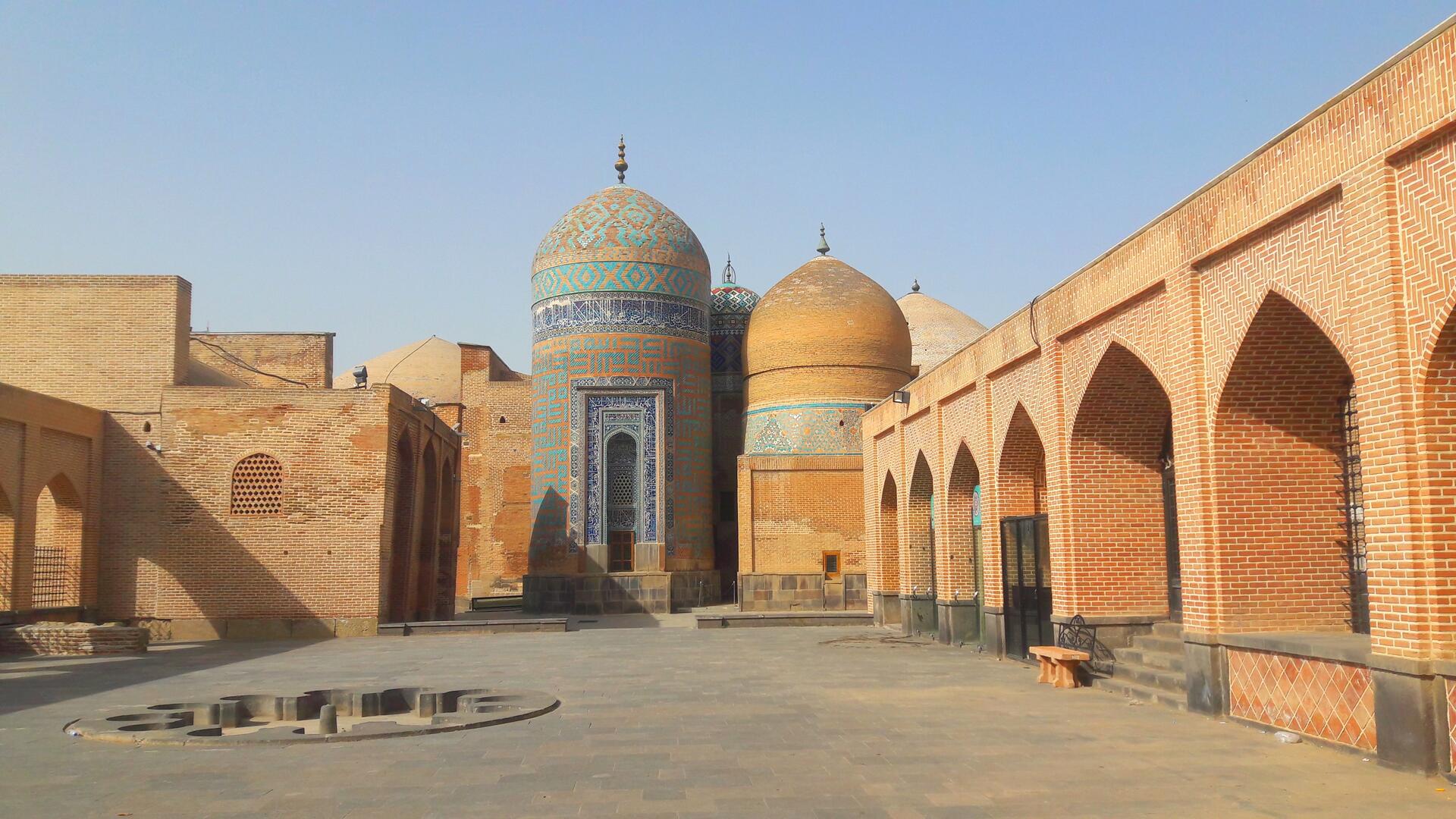
© MAF70, CC BY-SA 4.0 Resized from original. (This derivative is under the same CC BY-SA license.)
World Heritage Research
Discover scientific research and academic studies that deepen our understanding of Sheikh Safi al-din Khānegāh and Shrine Ensemble in Ardabil from its history and significance to its conservation, management, and contemporary challenges.
-
Gen Z social media storytelling in heritage tourism: the Sheikh Safi UNESCO World Heritage Site
Generation Z visitors to the Sheikh Safi al-Din Khānegāh and Shrine Ensemble, a UNESCO World Heritage Site in Ardabil, Iran, are actively shaping social media storytelling around cultural heritage tourism. Their narratives focus on local tales, visual aesthetics, sensory experiences, and sociocultural dimensions, often shared digitally. This study, using thematic analysis of 20 interviews, identified four global themes—local narratives, visual experiences, sensory experiences, and sociocultural experiences—that highlight Gen Z’s engagement with heritage sites. The findings suggest that integrating social media storytelling can enhance tourism experiences and foster deeper connections with cultural heritage among this generation.
Zarandian, N., & Madani, J. (2026). Gen Z social media storytelling in heritage tourism: the Sheikh Safi UNESCO World Heritage Site. Journal of Tourism and Cultural Change, 24(1), 91–116. https://doi.org/10.1080/14766825.2026.2619777
View Publication Record | Read Publication -
Comparative Study of Symbolic Motifs of Peacock and Simurgh in Selected Historical Monuments of the Safavid Period in Ardabil and Isfahan Cities (Iran)
A comparative analysis of peacock and Simurgh motifs in Safavid-era monuments reveals distinct symbolic interpretations between Ardabil and Isfahan. In Ardabil, these motifs—predominantly found in interior and exterior spaces—embody deep mysticism, divine union, and inner purity, reflecting themes of spirituality and transcendence. Conversely, in Isfahan, the same motifs appear mostly on facades and gates, symbolizing guidance toward heaven and protection against evil. Simurgh motifs in Ardabil suggest unity in plurality and divinity, while in Isfahan they represent human attempts to overcome conflicting soul concepts rooted in Zoroastrian dualism. The study employed fieldwork, content analysis, and historical documentation to uncover these regional variations, offering insights into the cultural and religious evolution of Safavid architectural symbolism.
ESMİ, R., & SHAHBAZİ SHİRAN, H. (2022). Comparative Study of Symbolic Motifs of Peacock and Simurgh in Selected Historical Monuments of the Safavid Period in Ardabil and Isfahan Cities (Iran). Gazi University Journal of Science, 35(3), 776–791. https://doi.org/10.35378/gujs.730885
View Publication Record | Read Publication -
Safavid architecture
Safavid architectural patronage was uniquely focused on the expansion and refurbishment of Shi‘i shrines, particularly around the burial site of Sheykh Safi al-Din in Ardabil, rather than grand congregational mosques. Unlike predecessors, Safavid shahs were interred within sanctified precincts, often near revered figures, with Shah Esma‘il being the sole exception—buried in a tomb tower adjacent to his ancestor, commissioned by his wife Tajlu Khanom between 1524 and 1529. This shift reflects the dynasty's complex relationship with authority, as royal investment in mosques was limited due to challenges in legitimizing their rule. The study examines these patterns through historical analysis of architectural projects, highlighting Safavid preferences for shrine expansions over mosque construction.
Babaie, S. (2021). Safavid architecture. The Safavid World, 507–536. https://doi.org/10.4324/9781003170822-31
View Publication Record | Read Publication -
The Study of the Principles of Philosophy of Islamic Art
Islamic art, traditionally studied through art history and sociology, can be more deeply understood by integrating principles of Islamic philosophy and Sufism. This approach reveals that the sanctity of Islamic art stems not only from the Quran but also from philosophical and mystical doctrines that shaped its creation. The study applies concepts such as imagination, color, and calligraphy to analyze the Sheikh Safi al-din Khānegāh and Shrine Ensemble in Ardabil, Iran, demonstrating how these principles enrich interpretation. By examining the ensemble through a philosophical lens, the research uncovers nuanced meanings that conventional methods may overlook.
Hasti, S. (2020). The Study of the Principles of Philosophy of Islamic Art. RUDN Journal of Philosophy, 24(1), 23–38. https://doi.org/10.22363/2313-2302-2020-24-1-23-38
View Publication Record | Read Publication
