World Heritage Identification Number: 1076
World Heritage since: 2007
Category: Cultural Heritage
WHE Type: Archaeological Sites
Transboundary Heritage: No
Endangered Heritage: No
Country: 🇦🇿 Azerbaijan
Continent: Asia
UNESCO World Region: Europe and North America
Map
Gobustan Rock Art Cultural Landscape: A Window into Prehistory
The Gobustan Rock Art Cultural Landscape, inscribed as a UNESCO World Heritage Site in 2007, offers a unique glimpse into the rich cultural history of Azerbaijan. This remarkable site, located approximately 70 kilometers southwest of Baku, spans over 537 hectares within the larger protected Gobustan Reservation.
More to come…UNESCO Description of the World Heritage Site
Gobustan Rock Art Cultural Landscape covers three areas of a plateau of rocky boulders rising out of the semi-desert of central Azerbaijan, with an outstanding collection of more than 6,000 rock engravings bearing testimony to 40,000 years of rock art. The site also features the remains of inhabited caves, settlements and burials, all reflecting an intensive human use by the inhabitants of the area during the wet period that followed the last Ice Age, from the Upper Paleolithic to the Middle Ages. The site, which covers an area of 537 ha, is part of the larger protected Gobustan Reservation.
UNESCO Justification of the World Heritage Site
Criterion (iii): The rock engravings are an exceptional testimony to a way of life that has disappeared in the way they represent so graphically activities connected with hunting and fishing at a time when the climate and vegetation of the area were warmer and wetter than today. The most remote and undisturbed landscapes are the Jinghirdag Moutain-Yazylytepe hill and Kichikdash Mountain. These areas need to be fully protected in order to ensure they keep their authenticity. The most visited site, Boyukdash, has more disturbances in the form of installations such as a prison and stone quarry, which should be managed as part of the Management Plan. The knowledge of the site does not extend evenly across the whole rock art reservation. It would be desirable for a large-scale survey of the wider environment to be carried out to ensure the extent of protection needed to ensure the overall integrity of the rock art corpus. The legal protective measures for the property are adequate. There is a need to complete the documentation, put in place active conservation measures and improve the technical competence of staff to carry out necessary urgent conservation work.
Encyclopedia Record: Gobustan State Historical and Cultural Reserve
Gobustan State Historical and Cultural Reserve is a protected historic and natural site in Azerbaijan, located about 70 kilometres (43 mi) southwest of Baku, near the settlement of Gobustan. It was established to preserve the region’s prehistoric rock carvings, mud volcanoes, and natural musical stones.Additional Site Details
Area: 537.22 hectares
Number of Components: 3
Coordinates: 40.125 , 49.375
Image
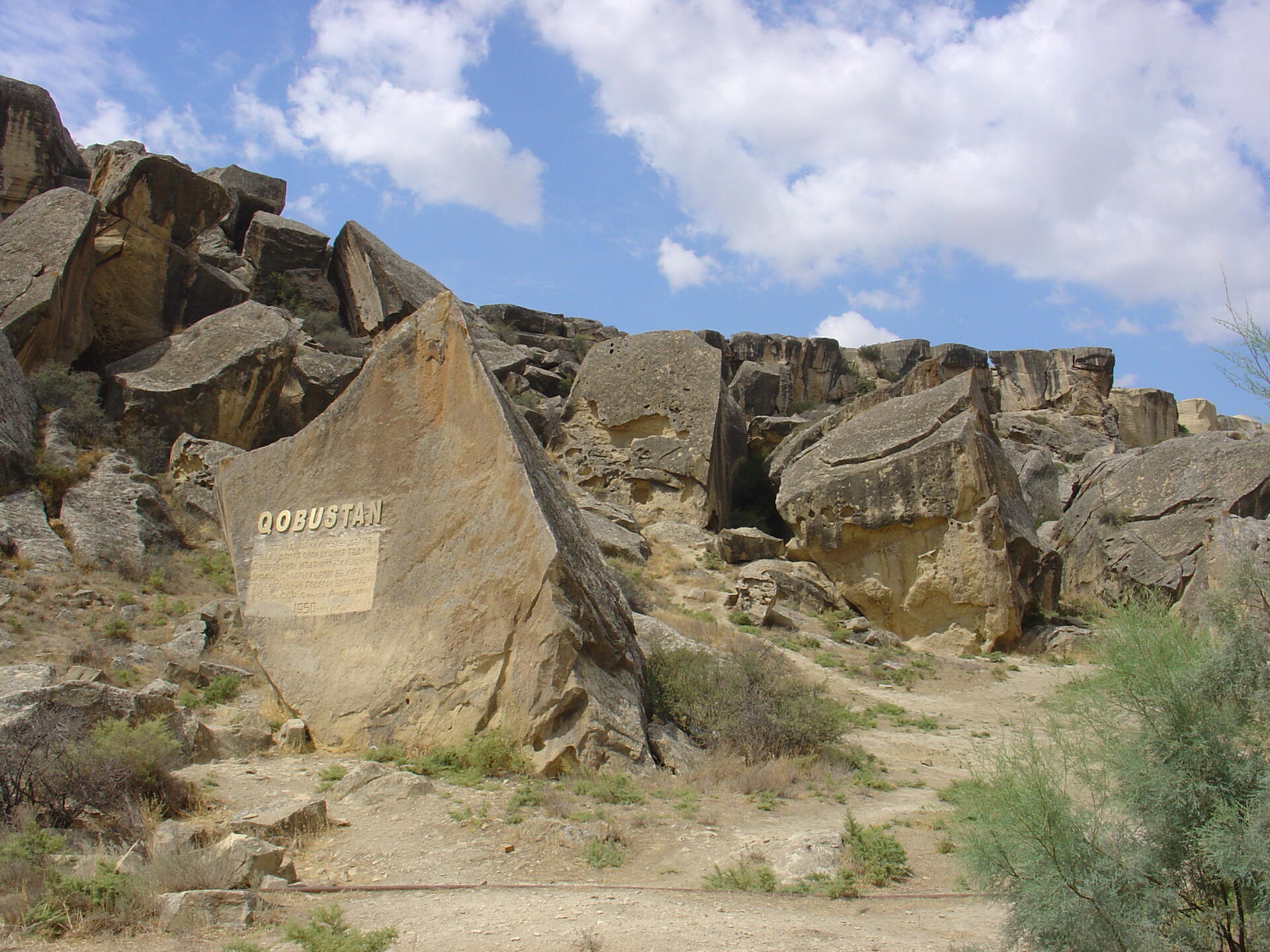
No machine-readable author provided. KristianEllisWood assumed (based on copyright claims)., Public domain