World Heritage Identification Number: 438
World Heritage since: 1987
Category: Cultural Heritage
WHE Type: Buildings & Architectural Ensembles
Transboundary Heritage: No
Endangered Heritage: No
Country: 🇨🇳 China
Continent: Asia
UNESCO World Region: Asia and the Pacific
Map
The Great Wall: A Historical and Architectural Marvel
The Great Wall of China, a testament to human ingenuity and perseverance, stands as one of the most iconic structures in history. This extensive network of fortifications stretches over 21,196 kilometers (13,171 miles) across northern China, making it the longest wall in the world, and marking a monumental chapter in the country's rich history.
The origins of the Great Wall can be traced back to the 7th century BC, during the Warring States Period. Various independent states constructed individual walls for defense purposes against invading tribes from the northern steppes, such as the Xiongnu. However, it was not until the unification of China under Emperor Qin Shi Huang in 221 BC that these separate walls linked into a unified system. This early version of the Great Wall was primarily made of tamped earth, not the stone and brick construction we associate with the wall today, and it was not one continuous, unbroken wall.
In the subsequent centuries, numerous dynasties contributed to the construction, expansion, and maintenance of the Great Wall. Notably, the Han Dynasty (206 BC–220 AD) significantly extended the wall's length, while the Tang Dynasty (618–907 AD) did not need to build significant new wall sections, and construction largely ceased, as its military expansion had pushed the borders north of the wall. However, it was during the Ming Dynasty (1368–1644) that the majority of the existing Great Wall was built.
Following the collapse of the Yuan Dynasty – which had been founded by the Mongols under Kublai Khan – the Ming Dynasty sought to defend China from the potential resurgence of Mongol power and other threats from the north. The wall's design incorporated watchtowers, troop barracks, and supply depots, making it a formidable military structure. The Ming Dynasty's wall reached its maximum extent during this period, spanning approximately 8,850 km (5,500 miles) including trenches and natural defensive barriers such as hills and rivers.
The Great Wall's architectural significance lies not just in its size, but also in its intricate design. The wall consists of a series of parallel walls, interspersed with watchtowers at regular intervals. These towers served as observation posts, allowing soldiers to spot approaching enemies and signal alarms along the length of the wall. Additionally, the wall incorporates natural features such as mountains and rivers, blending seamlessly into the landscape.
Beyond its military and strategic importance, the Great Wall holds immense cultural and symbolic value for the Chinese people. It represents the indomitable spirit of the Chinese nation, their resilience in the face of adversity, and their determination to protect their homeland. Today, the Great Wall stands as a UNESCO World Heritage Site, attracting millions of tourists each year who marvel at this architectural marvel.
Today, the Great Wall of China is more than just a physical barrier; it is a symbol of China's rich history, cultural identity, and engineering prowess. Its construction spanned centuries, involving countless laborers and resources, yet it remains a testament to the enduring spirit of the Chinese people. As we stand in awe of this monumental structure, we cannot help but appreciate the tenacity and vision of those who built it, safeguarding their land and shaping the course of history.
UNESCO Description of the World Heritage Site
In c. 220 B.C., under Qin Shi Huang, sections of earlier fortifications were joined together to form a united defence system against invasions from the north. Construction continued up to the Ming dynasty (1368–1644), when the Great Wall became the world's largest military structure. Its historic and strategic importance is matched only by its architectural significance.
UNESCO Justification of the World Heritage Site
Criterion (i): The Great Wall of the Ming is, not only because of the ambitious character of the undertaking but also the perfection of its construction, an absolute masterpiece. The only work built by human hands on this planet that can be seen from the moon, the Wall constitutes, on the vast scale of a continent, a perfect example of architecture integrated into the landscape.
Criterion (ii): During the Chunqiu period, the Chinese imposed their models of construction and organization of space in building the defence works along the northern frontier. The spread of Sinicism was accentuated by the population transfers necessitated by the Great Wall.
Criterion (iii): That the Great Wall bear exceptional testimony to the civilizations of ancient China is illustrated as much by the rammed-earth sections of fortifications dating from the Western Han that are conserved in the Gansu province as by the admirable and universally acclaimed masonry of the Ming period.
Criterion (iv): This complex and diachronic cultural property is an outstanding and unique example of a military architectural ensemble which served a single strategic purpose for 2000 years, but whose construction history illustrates successive advances in defence techniques and adaptation to changing political contexts.
Criterion (vi): The Great Wall has an incomparable symbolic significance in the history of China. Its purpose was to protect China from outside aggression, but also to preserve its culture from the customs of foreign barbarians. Because its construction implied suffering, it is one of the essential references in Chinese literature, being found in works like the Soldier's Ballad of Tch'en Lin (c. 200 A.D.) or the poems of Tu Fu (712-770) and the popular novels of the Ming period.
Encyclopedia Record: Great Wall of China
The Great Wall of China is a series of fortifications in China. They were built across the historical northern borders of ancient Chinese states and Imperial China as protection against various nomadic groups from the Eurasian Steppe. The first walls date to the 7th century BC; these were joined together in the Qin dynasty. Successive dynasties expanded the wall system; the best-known sections were built by the Ming dynasty (1368–1644).Additional Site Details
Area: 2,151.55 hectares
Number of Components: 3
(ii) — Significant interchange of human values
(iii) — Unique or exceptional testimony to a cultural tradition
(iv) — Outstanding example of a type of building or landscape
(vi) — Directly associated with events or living traditions
Coordinates: 40.41667 , 116.08333
Image
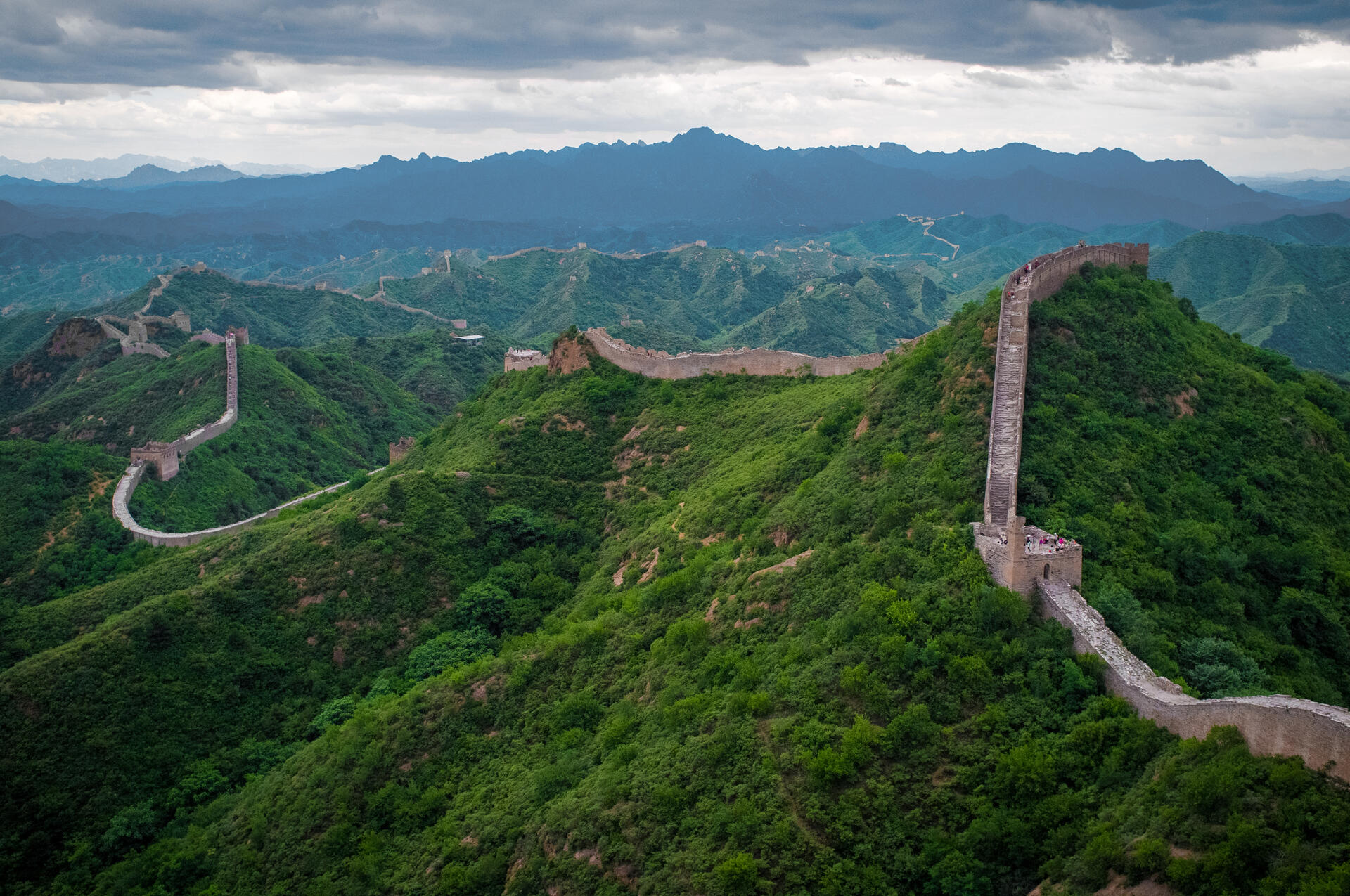
Velatrix, CC0
World Heritage Research
Discover scientific research and academic studies that deepen our understanding of The Great Wall from its history and significance to its conservation, management, and contemporary challenges.
-
Temporal and spatial distribution characteristics of the Ming Great Wall
The Ming Great Wall, a monumental engineering achievement and military defense structure, exhibits distinct temporal and spatial distribution patterns shaped by warfare with Mongolia. Research combining historical textual analysis, site surveys, and GIS database analysis identifies five construction phases (1368–1620), revealing that defensive facilities like forts and passes were prioritized before continuous wall construction. The study highlights two major construction climaxes during the Chenghua to Zhengde (1465–1521) and Jiajing (1522–1566) periods, culminating in the completion of the entire wall line by 1620. These findings provide critical insights for preserving the integrity and authenticity of this UNESCO World Heritage Site, contributing to cultural heritage conservation.
Yang, Y., Zhang, Y., & Li, Y. (2024). Temporal and spatial distribution characteristics of the Ming Great Wall. Heritage Science, 12(1). https://doi.org/10.1186/s40494-024-01198-1
View Publication Record | Read Publication -
Identifying Landscape Character for Large Linear Heritage: A Case Study of the Ming Great Wall in Ji-Town, China
A comprehensive landscape characterization of the Ming Great Wall (M-GW) in Ji-Town, China, reveals eight distinct landscape character types and 47 sub-areas, spanning approximately 8650.7 km². This study introduces a hierarchical method combining digital and manual approaches to delineate key visual, cultural, and natural attributes of the M-GW, addressing fragmentation issues caused by traditional protection methods and unregulated tourism. The findings provide critical insights for planning the National Cultural Park and offer a sustainable management framework for large linear heritage sites like the Great Wall.
Zhao, S., Yang, D., & Gao, C. (2023). Identifying Landscape Character for Large Linear Heritage: A Case Study of the Ming Great Wall in Ji-Town, China. Sustainability, 15(3), 2615. https://doi.org/10.3390/su15032615
View Publication Record | Read Publication -
Non-destructive testing research on the surface damage faced by the Shanhaiguan Great Wall based on machine learning
A machine learning approach significantly enhances the detection of surface damage on the Shanhaiguan Great Wall, a UNESCO-listed Ming Dynasty structure. By applying the YOLOv4 model to analyze gray brick surfaces, researchers achieved a 0.17% increase in accuracy over traditional methods, identifying four types of damage—chalking, plants, ubiquinol, and cracking—without manual intervention or destructive testing. This innovation accelerates monitoring, reduces labor costs, and enables timely repairs while preserving the historical integrity of ancient brick walls.
Li, Q., Zheng, L., Chen, Y., Yan, L., Li, Y., & Zhao, J. (2023). Non-destructive testing research on the surface damage faced by the Shanhaiguan Great Wall based on machine learning. Frontiers in Earth Science, 11. https://doi.org/10.3389/feart.2023.1225585
View Publication Record | Read Publication -
Quantitative evaluation of plants on top surface of the Great Wall in Dazhuangke using the analytical hierarchy process
A quantitative evaluation of plant species on the Dazhuangke section of the Great Wall reveals that 45 species or categories significantly impact the structure, with 'Disruptive Effects' being the most critical factor. Using the Analytic Hierarchy Process and expert Delphi method, researchers identified 13 key indices across three constraint layers to assess plant-induced damage. The study found that 'Impact on the Near Side Wall' is the highest-weighted element in the evaluation model, guiding preservation recommendations categorized into Grade I ('Preservation'), Grade II ('Partial Preservation'), and Grade III ('Removal'). This approach provides a scientific basis for balancing heritage protection with plant management strategies.
Pan, J., Xu, N., Tang, Y., Cheng, M., Zhang, L., Wang, B., & Lan, J. (2023). Quantitative evaluation of plants on top surface of the Great Wall in Dazhuangke using the analytical hierarchy process. Heritage Science, 11(1). https://doi.org/10.1186/s40494-023-01025-z
View Publication Record | Read Publication -
Assessment of Sustainable Development Suitability in Linear Cultural Heritage—A Case of Beijing Great Wall Cultural Belt
A comprehensive assessment of sustainable development suitability (SDS) for the Beijing Great Wall Cultural Belt reveals significant regional disparities, with Yanqing, Huairou, Miyun, Pinggu, and Changping districts showing high SDS scores, while Mentougou lags. The study, employing a 15-indicator index system and spatial autocorrelation analysis, identified that 96 out of 169 valley units have practical advantages, with over half exhibiting comprehensive development potential across ecological, socio-economic, and cultural dimensions. Notably, the Badaling Cluster faces sustainability challenges due to its high ecological carrying capacity demands. These findings align with existing planning objectives for the Beijing Great Wall National Cultural Park, underscoring the applicability of this indicator framework and analytical method to similar contexts.
He, D., Hu, J., & Zhang, J. (2023). Assessment of Sustainable Development Suitability in Linear Cultural Heritage—A Case of Beijing Great Wall Cultural Belt. Land, 12(9), 1761. https://doi.org/10.3390/land12091761
View Publication Record | Read Publication -
Biocrusts protect the Great Wall of China from erosion
Biocrusts significantly enhance the mechanical stability and reduce erosion of the Great Wall of China, covering 67% of studied sections. These biological soil crusts decrease porosity, water-holding capacity, erodibility, and salinity by 2 to 48%, while increasing compressive strength, penetration resistance, shear strength, and aggregate stability by 37 to 321%. The protective effects depend on biocrust features, climatic conditions, and structure types. This study highlights the critical role of biocrusts as a nature-based solution for preserving this monumental heritage from erosion.
Cao, Y., Bowker, M. A., Delgado-Baquerizo, M., & Xiao, B. (2023). Biocrusts protect the Great Wall of China from erosion. Science Advances, 9(49). https://doi.org/10.1126/sciadv.adk5892
View Publication Record | Read Publication -
Types of lime binders in mortars used for the construction of the Ming Great Wall of China and their importance for the development of a conservation strategy
Research on the Ming Great Wall reveals that dolomitic lime, a high-strength binder with low porosity, was predominantly used in its construction around Beijing and Hebei provinces. This finding challenges the current conservation principle of preserving the wall as a ruin, suggesting instead that calcium-rich lime binders should be employed for conservation or restoration to mitigate damage caused by reactions between dolomitic lime mortars and air pollutants. The study analyzed chemical and mineralogical compositions of original mortars, identifying aggregate-free textures in both dolomitic and calcium-rich lime mortars. Additionally, it proposes natural hydraulic lime and pozzolana-gauged binders as more compatible alternatives for structural consolidation.
Dettmering, T., & Dai, S. (2022). Types of lime binders in mortars used for the construction of the Ming Great Wall of China and their importance for the development of a conservation strategy. Built Heritage, 6(1). https://doi.org/10.1186/s43238-022-00047-z
View Publication Record | Read Publication