World Heritage Identification Number: 256
World Heritage since: 1983
Category: Natural Heritage
WHE Type: Protected Areas & National Parks
Transboundary Heritage: No
Endangered Heritage: No
Country: 🇨🇦 Canada
Continent: Americas
UNESCO World Region: Europe and North America
Map
Wood Buffalo National Park: A Canadian Treasure
The expansive Wood Buffalo National Park, spanning over 44,807 square kilometers in the northern central region of Canada, stands as a testament to the country's commitment to preserving its unique and diverse wildlife and landscapes. Established in 1922, this vast protected area is the largest national park in Canada and the second-largest in the world, surpassed only by the Greenland National Park.
More to come…UNESCO Description of the World Heritage Site
Situated on the plains in the north-central region of Canada, the park (which covers 44,807 km2) is home to North America's largest population of wild bison. It is also the natural nesting place of the whooping crane. Another of the park's attractions is the world's largest inland delta, located at the mouth of the Peace and Athabasca rivers.
UNESCO Justification of the World Heritage Site
Criterion (vii): The great concentrations of migratory wildlife are of world importance and the rare and superlative natural phenomena include a large inland delta, salt plains and gypsum karst that are equally internationally significant.
Criterion (ix): Wood Buffalo National Park is the most ecologically complete and largest example of the entire Great Plains-Boreal grassland ecosystem of North America, the only place where the predator-prey relationship between wolves and wood bison has continued, unbroken, over time.
Criterion (x): Wood Buffalo National Park contains the only breeding habitat in the world for the whooping crane, an endangered species brought back from the brink of extinction through careful management of the small number of breeding pairs in the park. The park’s size (4.5 million ha), complete ecosystems and protection are essential for in-situ conservation of the whooping crane.
Encyclopedia Record: Wood Buffalo National Park
Wood Buffalo National Park is the largest national park of Canada at 44,741 km2 (17,275 sq mi). It is in northeastern Alberta and the southern Northwest Territories. Larger in area than Switzerland, it is the second-largest national park in the world. The park was established in 1922 to protect the world's largest herd of free-roaming wood bison. They became hybridized after the introduction of plains bison. The population is currently estimated at 3,000. It is one of two known nesting sites of whooping cranes.Additional Site Details
Area: 4,480,000 hectares
Number of Components: 1
(ix) — Outstanding example representing ecological and biological processes
(x) — Contains most important habitats for biodiversity
Coordinates: 59.35833333 , -112.2933333
IUCN World Heritage Outlook
The 2025 Conservation Outlook on Wood Buffalo National Park reports the following assessment:
Source: International Union for Conservation of Nature (IUCN) · View assessment
Image
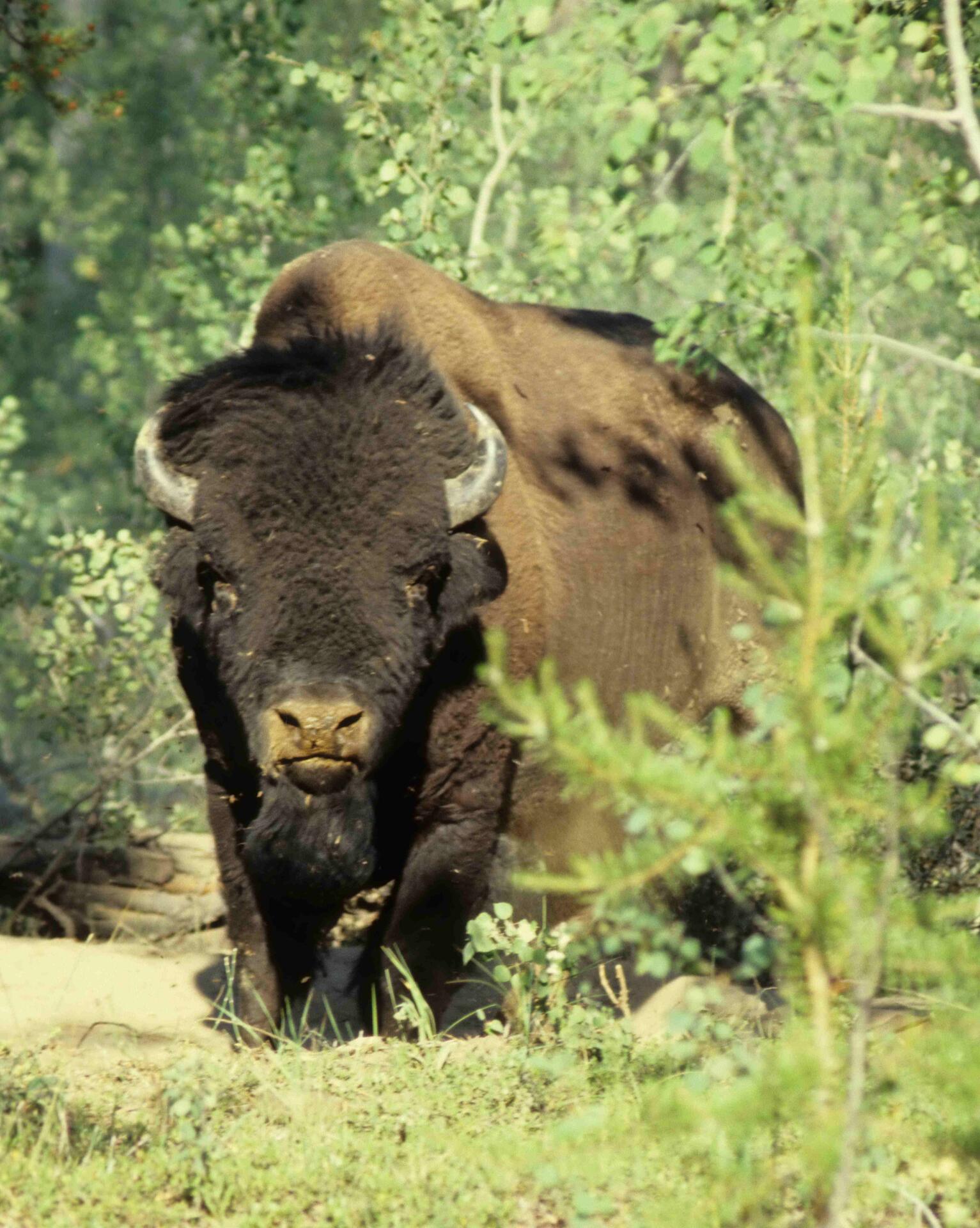
© No machine-readable author provided. Ansgar Walk assumed (based on copyright claims)., CC BY-SA 2.5 Resized from original. (This derivative is under the same CC BY-SA license.)
World Heritage Research
Discover scientific research and academic studies that deepen our understanding of Wood Buffalo National Park from its history and significance to its conservation, management, and contemporary challenges.
-
Community-based eDNA metabarcoding for monitoring fish biodiversity and food webs in the Peace-Athabasca Delta
A pilot study using community-based eDNA metabarcoding in the Peace-Athabasca Delta (PAD) successfully detected 15 fish species, including key dietary components of Lake Whitefish, demonstrating the potential of molecular tools to enhance biodiversity monitoring and food web assessments. The research, conducted in collaboration with Indigenous Governments, Parks Canada, and GEN-FISH, employed two mitochondrial markers (COI and 12S) to analyze eDNA samples collected across 15 locations. While COI provided broader taxonomic coverage, detecting birds, mammals, and invertebrates, 12S offered greater specificity for fish. The findings highlight the readiness of these molecular techniques to support the Integrated Research and Monitoring Program's assessment of PAD health, addressing critical knowledge gaps in fish diversity and distribution within this UNESCO World Heritage Site.
Milián-García, Y., Giroux, P., Docker, M., Khan, A., Jeffries, K. M., Lindsay, K., Gray, Q., Voyageur, M., Maclean, B., Bampfylde, C., Pyne, C., & Hanner, R. H. (2026). Community-based eDNA metabarcoding for monitoring fish biodiversity and food webs in the Peace-Athabasca Delta. PeerJ, 14, e21341. Portico. https://doi.org/10.7717/peerj.21341
View Publication Record | Read Publication -
Orally administered live BCG and heat-inactivated Mycobacterium bovis protect bison against experimental bovine tuberculosis
Oral administration of live BCG and heat-inactivated Mycobacterium bovis (HIMB) effectively protects wood bison against bovine tuberculosis (BTB), with BCG providing superior protection. The study, conducted in Wood Buffalo National Park (WBNP), demonstrated that both vaccines reduced lung lesions and M. bovis burden, while BCG-treated bison showed fewer adverse effects and lower tuberculin sensitivity, making it a promising Differentiating Infected from Vaccinated Animals (DIVA) vaccine candidate. Researchers aerosol-challenged young bison with virulent M. bovis to confirm BTB establishment before assessing vaccine efficacy in a homologous prime-boost regimen. This breakthrough offers a potential solution for controlling BTB in this ecologically and culturally significant species, mitigating risks to wildlife, livestock, and human health.
Niroula, N., Ghodasara, P., Marreros, N., Fuller, B., Sanderson, H., Zriba, S., Walker, S., Shury, T. K., & Chen, J. M. (2025). Orally administered live BCG and heat-inactivated Mycobacterium bovis protect bison against experimental bovine tuberculosis. Scientific Reports, 15(1). https://doi.org/10.1038/s41598-025-88176-0
View Publication Record | Read Publication -
Optimization and validation of ELISAs for interferon-gamma determination in bison
Two commercial ELISAs, Mabtech bovine Flex and Pro kits, were successfully optimized and partially validated for detecting interferon-gamma (IFNγ) in bison, offering a sensitive and reliable method to diagnose bovine tuberculosis caused by Mycobacterium bovis. The assays demonstrated linear responses to both recombinant bovine and endogenous bison IFNγ across a range of 1–125 pg/mL, with high linearity (R² = 0.99), good recovery, fair reproducibility, and a low limit of quantification at 1 pg/mL. These findings provide a flexible diagnostic tool for monitoring M. bovis infection in wood bison, a threatened species within Wood Buffalo National Park, potentially mitigating zoonotic risks and supporting conservation efforts.
Chileshe, J., Shury, T., & Chen, J. M. (2025). Optimization and validation of ELISAs for interferon-gamma determination in bison. Journal of Veterinary Diagnostic Investigation, 37(5), 764–770. https://doi.org/10.1177/10406387251344567
View Publication Record | Read Publication -
The fight for climate at the World Heritage Committee: a case study
Litigation within the World Heritage Committee can drive significant legislative, political, and social changes, as demonstrated by the case of Wood Buffalo National Park. This study reveals that strategic legal actions at the international level have tangible impacts on climate-related policies and protections. Employing a case study approach, researchers analyzed key actors—plaintiffs, defendants, and decision-making bodies—and their claims, including factual, material law, and procedural developments. The findings confirm an initial hypothesis that such litigation serves as a powerful catalyst for broader environmental reforms.
Fiorezzi, I. T. (2025). The fight for climate at the World Heritage Committee: a case study. https://doi.org/10.11606/9788553062126
View Publication Record | Read Publication -
A luta pelo clima no Comitê do Patrimônio Mundial: um estudo de caso
A study of litigation within the World Heritage Committee reveals a significant connection between heritage site disputes and climate change advocacy, exemplified by the case of Wood Buffalo National Park. The research demonstrates that strategic legal action can drive legislative, policy, and social transformations, underscoring its potential as a tool for climate justice. Employing a case-study methodology, the analysis examines key actors—plaintiffs, defendants, and decision-makers—as well as the claims' substance and outcomes. Initial hypotheses were confirmed, highlighting how litigation in this context can serve as a catalyst for broader environmental change.
Fiorezzi, I. T. (2025). A luta pelo clima no Comitê do Patrimônio Mundial: um estudo de caso. https://doi.org/10.11606/9788553062133
View Publication Record | Read Publication -
Centring Water in Impact Assessment: Reconsidering Environmental and Cultural Flows in Development Decision-Making in Canada
A novel framework for integrating environmental and cultural flows into impact assessments could significantly enhance water protection in development projects. This study proposes the 'three Cs'—advisory councils, regional data assessment, and consensus-building—to embed ecosystem and rights-based needs in decision-making processes. While current Canadian practices often focus on habitat and fish, this approach expands to include Indigenous rights and cumulative water withdrawals, drawing from successful cases like the Wolastoq Ecological Limits of Hydrological Alteration and Wood Buffalo National Park assessments. The findings suggest that adopting such frameworks could lead to more comprehensive water protection in development projects.
Bergbusch, N. T., Lo, M., St-Hilaire, A., Gibson, R. B., Jardine, T. D., Leonard, K., & Courtenay, S. C. (2025). Centring Water in Impact Assessment: Reconsidering Environmental and Cultural Flows in Development Decision-Making in Canada. Environmental Management, 75(8), 2010–2030. https://doi.org/10.1007/s00267-025-02194-2
View Publication Record | Read Publication -
Ice Jam Flooding of the Drying Peace-Athabasca Delta: Hindsight on the Accuracy of the Traditional Knowledge and Historical Flood Record
A reassessment of the Peace-Athabasca Delta's (PAD) historical flood record, compiled in 1995 using traditional knowledge and historical data, reveals that while major ice-jam floods—critical for recharging wetlands—are reliably documented, minor events may be overestimated. Recent advances in hydrometric monitoring and climatic analysis, along with eyewitness accounts dating back to the early 1900s, support the accuracy of major flood events but cast doubt on the reliability of smaller, inferred floods. This study underscores the ecological significance of the PAD, a UNESCO-listed Ramsar wetland within Wood Buffalo National Park, and its vulnerability to drying trends, informing future park management strategies.
Beltaos, S. (2025). Ice Jam Flooding of the Drying Peace-Athabasca Delta: Hindsight on the Accuracy of the Traditional Knowledge and Historical Flood Record. Environments, 12(10), 376. https://doi.org/10.3390/environments12100376
View Publication Record | Read Publication