World Heritage Identification Number: 304
World Heritage since: 1984
Category: Natural Heritage
WHE Type: Protected Areas & National Parks
Transboundary Heritage: No
Endangered Heritage: No
Country: 🇨🇦 Canada
Continent: Americas
UNESCO World Region: Europe and North America
Map
Canadian Rocky Mountain Parks: A Natural Treasure of North America
The Canadian Rocky Mountain Parks, inscribed as a UNESCO World Heritage Site in 1984, present a breathtaking panorama of natural wonders that span across the provinces of Alberta and British Columbia in western Canada. This expansive network of protected areas encompasses four national parks – Banff, Jasper, Kootenay, and Yoho – along with three provincial parks – Mount Robson, Mount Assiniboine, and Hamber.
Long before the establishment of these protected areas, Indigenous peoples lived, traveled, hunted, and maintained deep cultural connections throughout these mountain landscapes. The valleys and passes of the Rockies served as important cultural and trade corridors, and the region remains profoundly significant to many First Nations communities today. Parks Canada now works in collaboration with First Nations including the Siksika (Blackfoot), Stoney Nakoda, Ktunaxa, and Secwépemc to integrate Indigenous knowledge, languages, and perspectives into park stewardship and interpretation.
The Canadian Rockies, with their towering mountain peaks, vast glaciers, pristine lakes, thundering waterfalls, deep canyons, and intricate limestone caves, offer a visually stunning landscape that has captivated visitors since time immemorial. Among these natural marvels, Mount Robson, at 3,954 meters (12,972 feet), stands as the highest peak in the Canadian Rockies and the tallest mountain within the park system.
One of the most significant attractions within the Canadian Rocky Mountain Parks lies beneath the surface – the Burgess Shale fossil site. This remarkable location boasts an exceptional collection of fossilized remains from the Cambrian period, approximately 508 million years ago. These fossils provide valuable insights into the early evolution of life on Earth, particularly the development of complex marine organisms such as trilobites, brachiopods, and worm-like creatures.
The Canadian Rocky Mountain Parks support a rich diversity of wildlife emblematic of the North American wilderness. Grizzly and black bears roam forested slopes, elk and moose graze in valley meadows, and bighorn sheep and mountain goats navigate steep alpine terrain. Wolves, cougars, and lynx also inhabit these protected ecosystems, underscoring the ecological importance of maintaining large, connected wilderness areas.
The creation of Banff National Park in 1885 marked the beginning of Canada’s national park system and reflected a growing recognition of the need to preserve areas of exceptional natural beauty. At the same time, historians acknowledge that the establishment of the early parks in the late nineteenth century coincided with restrictions on traditional Indigenous land use and, in some cases, the displacement of Indigenous communities from their ancestral territories.
Today, each park within the Canadian Rocky Mountain Parks offers unique experiences for visitors seeking adventure, relaxation, or education. In Banff National Park, the picturesque town of Banff serves as a gateway to numerous outdoor activities like hiking, skiing, and wildlife viewing. Nearby attractions include the Vermilion Lakes and the striking Peyto Lake along the Icefields Parkway. The Banff Upper Hot Springs offer a chance to unwind amid the rugged beauty of the mountains.
Jasper National Park, home to the majestic Athabasca Glacier and the dramatic Maligne Canyon, provides opportunities for guided ice walks, canoeing, and scenic drives through expansive valleys framed by snow-capped peaks. Yoho National Park showcases the awe-inspiring Takakkaw Falls, the serene Emerald Lake, and the Natural Bridge spanning the Kicking Horse River. The nearby Spiral Tunnels, a remarkable feat of railway engineering, demonstrate human ingenuity amid the grandeur of the Rockies.
Kootenay National Park features striking landscapes such as Marble Canyon, along with diverse ecosystems ranging from glacial valleys to hot springs. Mount Assiniboine Provincial Park offers unparalleled views of its iconic pyramid-shaped peak and surrounding alpine scenery, while Hamber Provincial Park, though less accessible, promises solitude and true wilderness experiences for those willing to venture off the beaten path.
In summary, the Canadian Rocky Mountain Parks stand as a testament to the rich natural heritage of North America. With their diverse landscapes, abundant wildlife, and historical fossil sites, these parks offer something for everyone who seeks to connect with nature and appreciate the beauty of our planet. As we continue to protect and preserve these treasures, future generations will have the opportunity to marvel at the same wonders that have inspired countless travelers throughout history.
UNESCO Description of the World Heritage Site
The contiguous national parks of Banff, Jasper, Kootenay and Yoho, as well as the Mount Robson, Mount Assiniboine and Hamber provincial parks, studded with mountain peaks, glaciers, lakes, waterfalls, canyons and limestone caves, form a striking mountain landscape. The Burgess Shale fossil site, well known for its fossil remains of soft-bodied marine animals, is also found there.
UNESCO Justification of the World Heritage Site
Criterion (vii): The seven parks of the Canadian Rockies form a striking mountain landscape. With rugged mountain peaks, ice fields, and glaciers, alpine meadows, lakes, waterfalls, extensive karst cave systems, thermal springs and deeply incised canyons, the Canadian Rocky Mountain Parks possess exceptional natural beauty, attracting millions of visitors annually.
Criterion (viii): The Burgess Shale is one of the most significant fossil areas in the world. Exquisitely preserved fossils record a diverse, abundant marine community dominated by soft-bodied organisms. Originating soon after the rapid unfolding of animal life about 540 million years ago, the Burgess Shale fossils provide key evidence of the history and early evolution of most animal groups known today, and yield a more complete view of life in the sea than any other site for that time period. The seven parks of the Canadian Rockies are a classic representation of significant and on-going glacial processes along the continental divide on highly faulted, folded and uplifted sedimentary rocks.
Encyclopedia Record: Canadian Rocky Mountain Parks World Heritage Site
The Canadian Rocky Mountain Parks World Heritage Site consists of seven contiguous parks including four national parks and three British Columbia provincial parks.Additional Site Details
Area: 2,360,000 hectares
Number of Components: 1
(viii) — Outstanding example representing major earth stages
Coordinates: 51.42472222 , -116.4797222
IUCN World Heritage Outlook
The 2025 Conservation Outlook on Canadian Rocky Mountain Parks reports the following assessment:
Source: International Union for Conservation of Nature (IUCN) · View assessment
Image
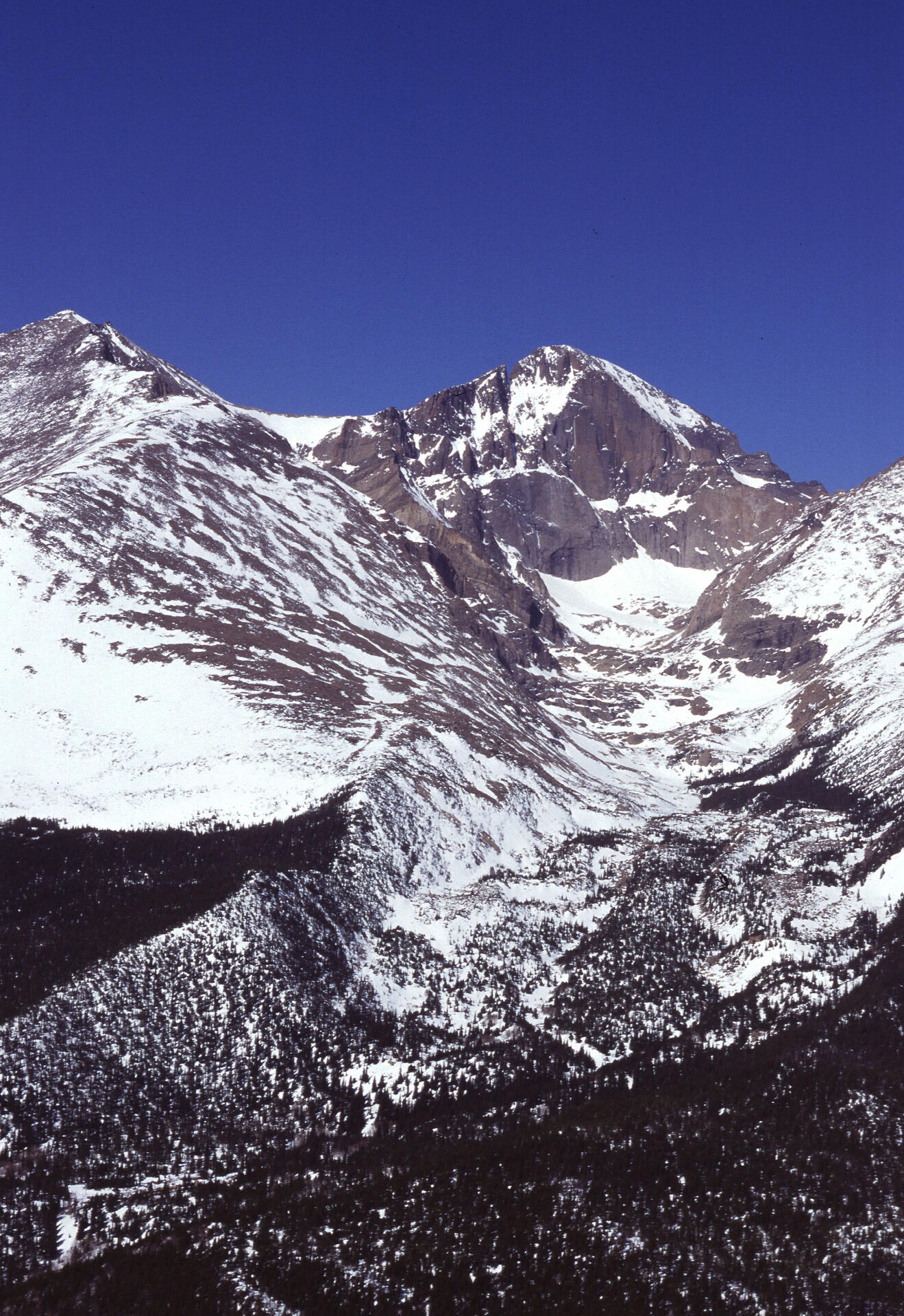
Photo by Scott Bauer., Public domain
World Heritage Research
Discover scientific research and academic studies that deepen our understanding of Canadian Rocky Mountain Parks from its history and significance to its conservation, management, and contemporary challenges.
-
A Pain in the Butt: The Association Between Endo-Parasite Diversity and Horn Growth in Rocky Mountain Bighorn Sheep
A counterintuitive link between parasite diversity and horn growth in male bighorn sheep challenges established theories of sexual selection. Researchers found that young Rocky Mountain bighorn sheep (Ovis canadensis canadensis) with higher gastrointestinal and lungworm parasite species richness exhibited faster annual horn growth, contrary to expectations. The study, conducted in Sheep River Provincial Park, Alberta, analyzed fecal samples from individually marked males over two years, measuring parasite egg and oocyst counts alongside horn growth metrics. While adult and older males showed no significant relationship between parasite diversity and horn growth, young males appeared to prioritize resource allocation toward horn development, potentially at the expense of immune function or parasite resistance. This finding contradicts the traditional 'parasite-mediated sexual selection' hypothesis, which suggests that elaborate traits like horns signal robust health and parasite resistance.
Henry, T. C., Rijal, S., Alves, J., Neuhaus, P., Kutz, S., & Ruckstuhl, K. E. (2025). A Pain in the Butt: The Association Between Endo-Parasite Diversity and Horn Growth in Rocky Mountain Bighorn Sheep. Pathogens, 14(7), 623. https://doi.org/10.3390/pathogens14070623
View Publication Record | Read Publication -
Changing grizzly bear space use and functional connectivity in response to human disturbance in the southern Canadian Rocky Mountains
Human disturbance, including roads and settlements, significantly alters grizzly bear movement and functional connectivity in the southern Canadian Rocky Mountains. Research using integrated step-selection functions (iSSF) on 109 GPS-collared bears revealed that bears avoid highways but are attracted to low-forage areas alongside them, such as in Banff National Park and Kananaskis. Females tend to avoid towns during spring and summer, while males are more likely to traverse them. Future scenarios with increased mining and settlements predict further declines in connectivity, exacerbating existing losses. The study advances conservation strategies by incorporating individual-level variation into population simulations, providing actionable insights for transboundary management and protection of this UNESCO World Heritage Site.
Palm, E. C., Apps, C. D., Avgar, T., Dickie, M., McLellan, B. N., Northrup, J. M., Sawaya, M. A., Turner, J. W., Whittington, J., Landguth, E. L., Zeller, K. A., & Lamb, C. T. (2025). Changing grizzly bear space use and functional connectivity in response to human disturbance in the southern Canadian Rocky Mountains. Conservation Science and Practice, 7(8). Portico. https://doi.org/10.1111/csp2.70088
View Publication Record | Read Publication -
Institutional Barriers to Climate Change Adaptation for Mountain Guides in the Canadian Rockies
Two-thirds of mountain guides in the Canadian Rockies report that recent revisions to Parks Canada's National Park Guided Business Licence (NPGBL) program have unintentionally reduced their adaptability while increasing administrative burdens, undermining the efficacy and equity of climate change adaptation efforts. The study, which combined semistructured interviews with 30 guides, policy analysis, and key informant interviews with seven stakeholders, identified that the revised regulatory framework and implementation mechanisms hinder adaptive capacity. Findings suggest that fostering horizontal and vertical social capital—integrating local knowledge holders like mountain guides into decision-making processes—could mitigate these institutional barriers. This research provides actionable insights for land managers and guiding organizations globally, where guiding professions face dual pressures from climatic and institutional changes.
Hanly, K., & McDowell, G. (2025). Institutional Barriers to Climate Change Adaptation for Mountain Guides in the Canadian Rockies. Mountain Research and Development, 46(1). https://doi.org/10.1659/mrd.2025.00015
View Publication Record | Read Publication -
Climate Sensitivities of National Parks in the Rocky Mountains
Climate change is significantly altering the landscape and resources of national parks within the Rocky Mountains, with impacts expected to intensify. This report highlights how changes in climate drivers—such as temperature shifts and extreme weather events—are affecting natural resources, cultural heritage, visitor experiences, and infrastructure across these parks. By analyzing regional-scale data from southern Colorado to the Montana–Canadian border, researchers have identified key sensitivities that could guide adaptive management strategies. The study provides projections for future climate trends, offering actionable insights for park conservation efforts.
LoPresti, A., Gross, J., Carr, W., Arena, G., & Nydick, K. (2025). Climate Sensitivities of National Parks in the Rocky Mountains (, Ed.). National Park Service. https://doi.org/10.36967/2315986
View Publication Record | Read Publication -
Exploring impacts of COVID-19 on spatial and temporal patterns of visitors to Canadian Rocky Mountain National Parks from social media big data
COVID-19 significantly altered visitor patterns in Canada's Rocky Mountain National Parks, with peri-pandemic tourists favoring remote areas and showing increased exploration of less accessible regions. A geographically weighted regression (GWR) model revealed that proximity to trails was a key determinant of visitor density, highlighting spatial imbalances in tourism distribution. The study leveraged social media big data for spatiotemporal analysis, offering a novel approach to understand tourism dynamics. These findings provide critical insights for park management, enabling more efficient resource allocation and balanced visitor distribution to meet conservation and recreational objectives.
Geng, D. C., Li, A., Zhang, J., Harshaw, H. W., Gaston, C., Wu, W., & Wang, G. (2024). Exploring impacts of COVID-19 on spatial and temporal patterns of visitors to Canadian Rocky Mountain National Parks from social media big data. Journal of Forestry Research, 35(1). https://doi.org/10.1007/s11676-024-01720-y
View Publication Record | Read Publication -
Everyone scavenges: From pole to equator, nature's recyclers perform a widespread and largely unheralded service
A groundbreaking study in Kluane, Yukonreveals that scavenging is far more widespread and ecologically significant than previously recognized. Researchers documented 24 species, including Canada jays, common ravens, red squirrels, and golden eagles, feeding on snowshoe hare carcasses, challenging the notion that only traditional scavengers like wolverines or vultures play this role. The study used camera traps to observe scavenging behavior across seasons, finding that winter persistence of carcasses supports a higher diversity of scavengers due to slower decomposition. The research underscores the critical but often overlooked role of scavenging in nutrient recycling and food web dynamics, with implications for ecosystems globally. It also highlights the importance of keystone species like snowshoe hares in sustaining scavenger communities.
Dybas, C. L. (2024). Everyone scavenges: From pole to equator, nature’s recyclers perform a widespread and largely unheralded service. BioScience, 74(8), 500–506. https://doi.org/10.1093/biosci/biae030
View Publication Record | Read Publication -
Effects of a severe wildfire on a bat community in the Canadian Rocky Mountains
A severe wildfire in Waterton Lakes National Park, part of the Canadian Rocky Mountain Parks UNESCO World Heritage Site, had mixed effects on bat communities. While 40 kHz Myotis bats showed increased activity in burned areas post-fire, suggesting a shift to more favorable foraging conditions, other species like the big brown bat and silver-haired bat experienced declines, particularly in unburned areas. Hoary bats were consistently negatively affected across all sites. The study used acoustic detectors over six years (three pre-fire and three post-fire) to monitor bat activity, revealing species-specific responses likely driven by changes in foraging opportunities and prey availability. These findings highlight the complex impacts of wildfires on biodiversity and underscore the need for further research to understand long-term resilience in the face of climate change.
Low, E., Florko, K., Mahoney, H., & Barclay, R. (2024). Effects of a severe wildfire on a bat community in the Canadian Rocky Mountains. Forest Ecology and Management, 563, 121983. https://doi.org/10.1016/j.foreco.2024.121983
View Publication Record | Read Publication