World Heritage Identification Number: 151
World Heritage since: 1981
Category: Natural Heritage
WHE Type: Protected Areas & National Parks
Transboundary Heritage: No
Endangered Heritage: No
Country: 🇺🇸 United States of America
Continent: Americas
UNESCO World Region: Europe and North America
Map
Diversity Unveiled: Exploring the Ecosystems of Olympic National Park
Olympic National Park, a UNESCO World Heritage Site since 1981, showcases the remarkable diversity of ecosystems within a single geographical area. Situated in the northwestern corner of Washington State in the United States, this expansive park offers visitors an unparalleled opportunity to witness the harmonious coexistence of glacier-capped peaks, lush rainforests, and a pristine coastline.
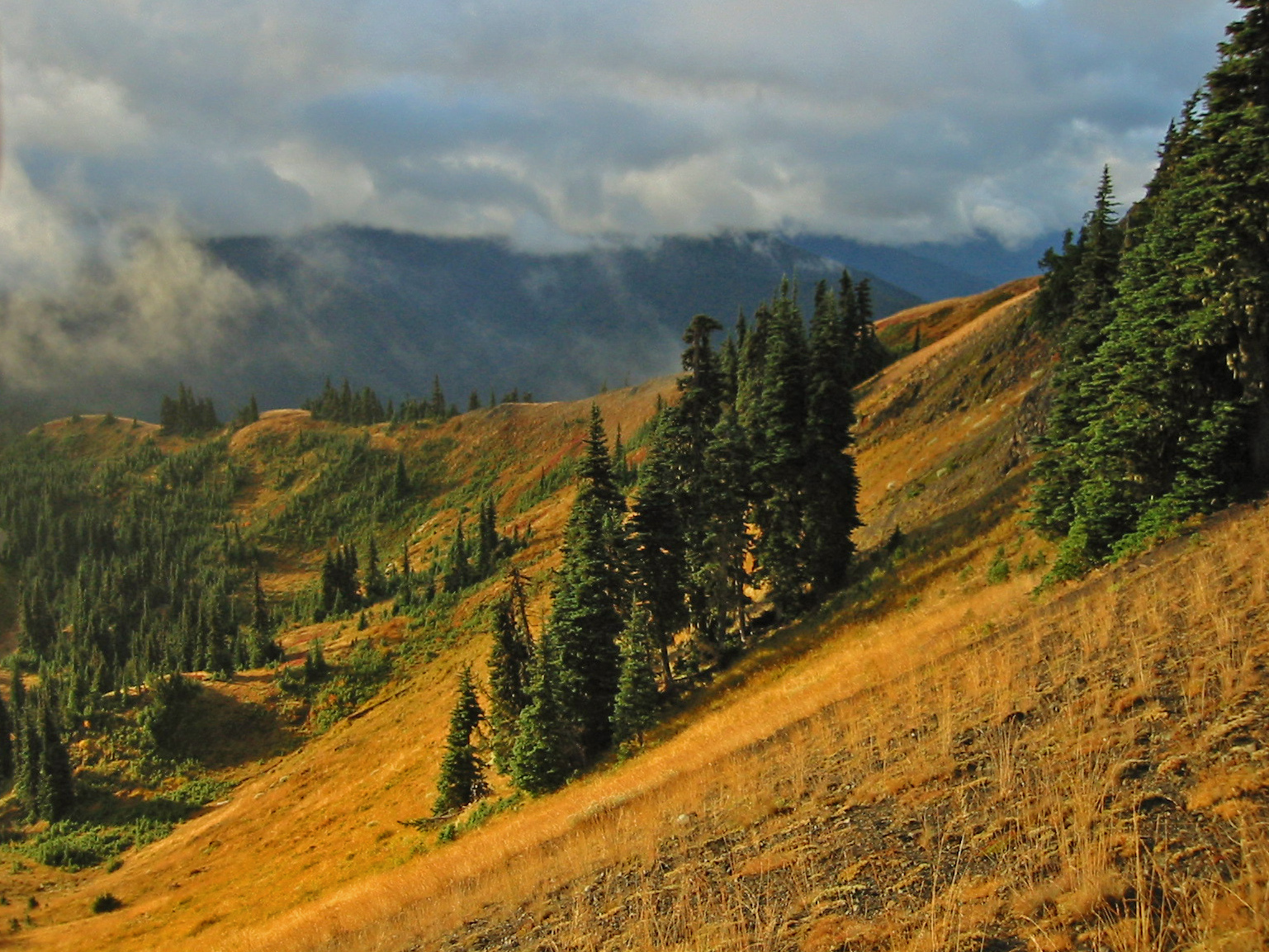
The park’s most striking feature is its mountainous region, home to the Olympic Mountains. These majestic peaks, adorned with snow and ice, provide a breathtaking backdrop to the surrounding landscapes. Interspersed among these towering summits are extensive alpine meadows, teeming with wildflowers during the summer months. The high-altitude environment supports unique flora and fauna, such as the endemic Olympic marmot and iconic species including Roosevelt elk and black bears.
A key aspect of Olympic National Park lies in its extensive old-growth forest, particularly the temperate rainforest found on the park's western side. This region contains one of the best-preserved examples of intact and protected temperate rainforest in the Pacific Northwest. The dense canopy of towering trees creates a verdant, misty environment that sustains a diverse array of plant and animal life. Notable inhabitants include the critically endangered northern spotted owl, the elusive marbled murrelet, and the vibrant banana slug.
Twelve major river systems flow through the Olympic Mountains, providing vital habitats for numerous aquatic species. Among these, the salmon and steelhead trout stand out as iconic residents. Their migratory journeys from freshwater streams to the open ocean and back again are integral to the health and nutrient cycles of the park’s ecosystems.
The park’s coastal region stretches for approximately 117 kilometers (73 miles), forming one of the longest undeveloped coastlines in the contiguous United States. This rugged shoreline features dramatic cliffs, sea stacks, secluded coves, and sandy beaches. The coast is also home to a variety of marine life, including gray whales, sea otters, and harbor seals. Visitors can explore the coastline via hiking trails or guided boat excursions, taking in the dramatic scenery and abundant wildlife.
While designated as a natural World Heritage Site for its ecological importance and outstanding natural phenomena, Olympic National Park is also the ancestral homeland of eight indigenous tribes, including the Makah, Quileute, Hoh, Quinault, Jamestown S’Klallam, Port Gamble S’Klallam, Skokomish, and Lower Elwha Klallam. For millennia, these communities have maintained a profound spiritual, cultural, and subsistence relationship with the land and its resources.
In summary, Olympic National Park offers a captivating glimpse into the intricate balance between various ecosystems. From the snow-capped peaks to the lush rainforests and the wild Pacific coast, each region plays a crucial role in maintaining the park's overall biodiversity. By preserving this unique landscape, Olympic National Park serves as a testament to the beauty and complexity of our planet's natural world.
UNESCO Description of the World Heritage Site
Located in the north-west of Washington State, Olympic National Park is renowned for the diversity of its ecosystems. Glacier-clad peaks interspersed with extensive alpine meadows are surrounded by an extensive old growth forest, among which is the best example of intact and protected temperate rainforest in the Pacific Northwest. Eleven major river systems drain the Olympic mountains, offering some of the best habitat for anadromous fish species in the country. The park also includes 100 km of wilderness coastline, the longest undeveloped coast in the contiguous United States, and is rich in native and endemic animal and plant species, including critical populations of the endangered northern spotted owl, marbled murrelet and bull trout.
UNESCO Justification of the World Heritage Site
Criterion (vii): Olympic National Park is of remarkable beauty, and is the largest protected area in the temperate region of the world that includes in one complex ecosystems from ocean edge through temperate rainforest, alpine meadows and glaciated mountain peaks. It contains one of the world’s largest stands of virgin temperate rainforest, and includes many of the largest coniferous tree species on earth.
Criterion (ix): The park’s varied topography from seashore to glacier, affected by high rainfall, has produced complex and varied vegetation zones, providing habitats of unmatched diversity on the Pacific coast. The coastal Olympic rainforest reaches its maximum development within the property and has a living standing biomass which may be the highest anywhere in the world. The park’s isolation has allowed the development of endemic wildlife, subspecies of trout, varieties of plants and unique fur coloration in mammals, indications of a separate course of evolution.
Encyclopedia Record: Olympic National Park
Olympic National Park is a national park of the United States located in Washington, on the Olympic Peninsula. The park has four regions: the Pacific coastline, alpine areas, the west-side temperate rainforest, and the forests of the drier east side. Within the park there are three distinct ecosystems, including subalpine forest and wildflower meadow, temperate forest, and the rugged Pacific coast.Additional Site Details
Area: 369,659.8 hectares
Number of Components: 2
(ix) — Outstanding example representing ecological and biological processes
Coordinates: 47.74833333 , -123.4488889
IUCN World Heritage Outlook
The 2025 Conservation Outlook on Olympic National Park reports the following assessment:
Source: International Union for Conservation of Nature (IUCN) · View assessment
World Heritage Research
Discover scientific research and academic studies that deepen our understanding of Olympic National Park from its history and significance to its conservation, management, and contemporary challenges.
-
Olympic National Park Consensus Determination of Eligibility: Sol Duc Road (ineligible)
A consensus determination of eligibility (cDOE) concluded that Sol Duc Road, located within Olympic National Park, is ineligible for listing on the National Register of Historic Places (NRHP). This decision, signed by the Acting Park Superintendent and supported by the Washington State Historic Preservation Office, evaluates whether the property meets NRHP criteria under Section 106 of the National Historic Preservation Act. The process involved a collaborative assessment by federal decision-makers, State Historic Preservation Officers (SHPOs), Federal Preservation Officers (FPOs), Tribal Historic Preservation Officers (THPOs), and other consulting parties. Additionally, two buildings (OLYM 1155 and 1156) and one site (Sol Duc RV Park) were evaluated and also deemed ineligible for NRHP listing.
Avery, C., & Matsov, A. (2025). Olympic National Park Consensus Determination of Eligibility: Sol Duc Road (ineligible) (, Ed.). National Park Service. https://doi.org/10.36967/2310377
View Publication Record | Read Publication -
Exploring spatial patterns of overflights at Olympic National Park
A study of Olympic National Park (OLYM) revealed distinct spatial patterns of overflights, with the highest density occurring between 0–500 ft above ground level (AGL), particularly along flight corridors and near Port Angeles. Using ADS-B data from three locations over 525 days, researchers identified seasonal variations in low-level flights below 10,500 ft MSL, noting a concentration of flights around Port Angeles at lower altitudes (0–6,000 ft). The analysis also mapped overflights by air tour operators, which largely adhered to recommended routes, and those intersecting with the Olympic Military Operations Area (MOA). These findings provide critical insights for park management and future research on aviation impacts in protected areas.
Gurung, B., Hutchinson, J., Peterson, B., Beeco, J., Anderson, S., & Joyce, D. (2024). Exploring spatial patterns of overflights at Olympic National Park (, Ed.). National Park Service. https://doi.org/10.36967/2304991
View Publication Record | Read Publication -
Elk monitoring in Mount Rainier and Olympic national parks: 2008 ‒ 2017 synthesis report
A decade-long study (2008–2017) reveals that elk populations in Mount Rainier National Park's North Rainier TCA increased at a mean annual rate of 3.9% despite seasonal and weather variability, while the South Rainier TCA showed no significant trend. Researchers developed refined aerial-bias-correction models using double-observer sightability trials (148 radio-collared and 1,653 non-radio groups) to adjust raw counts for detection biases tied to group size, vegetation density, lighting, and movement—improving accuracy across both parks. The study also identified shifts in elk distribution and population composition, with mean densities of 3.5 and 5.3 elk/km² in the North and South TCAs, respectively. These findings underscore the importance of standardized monitoring protocols for long-term wildlife conservation efforts.
Jenkins, K., Lubow, B., Happe, P., Braun, K., Boetsch, J., Baccus, W., Chestnut, T., Vales, D., Moeller, B., Tirhi, M., Holman, E., & Griffin, P. (2021). Elk monitoring in Mount Rainier and Olympic national parks: 2008 ‒ 2017 synthesis report (, Ed.). National Park Service. https://doi.org/10.36967/nrr-2286864
View Publication Record | Read Publication -
Revised vegetation classification for Mount Rainier, North Cascades, and Olympic national parks: Project summary report
A comprehensive revised vegetation classification for Mount Rainier, North Cascades, and Olympic national parks has been developed, incorporating over 10 years of field data. This classification identifies 321 plant associations within 99 alliances, including 54 upland associations now part of the U.S. National Vegetation Classification (USNVC). The study used advanced statistical analyses to validate and refine vegetation types, revealing previously undescribed communities and revising or archiving others. The work builds on earlier research by Crawford et al. (2009) and integrates data from multiple sources, providing an up-to-date framework for understanding the ecological diversity of these UNESCO World Heritage Sites.
Ramm-Granberg, T., Rocchio, F., Copass, C., Brunner, R., & Nielsen, E. (2021). Revised vegetation classification for Mount Rainier, North Cascades, and Olympic national parks: Project summary report (, Ed.). National Park Service. https://doi.org/10.36967/nrr-2284511
View Publication Record | Read Publication -
Establishment and Survival of Subalpine Fir (Abies lasiocarpa) in Meadows of Olympic National Park, Washington
A 27-year study on subalpine fir (Abies lasiocarpa) establishment and survival in Olympic National Park's meadows reveals critical insights into climate change impacts. The research, conducted on south-facing tall sedge communities—unlike the more commonly studied north-facing heath-shrub types—found that sapling mortality was highest during early stages, stabilizing after a decade. Weather conditions, particularly high temperatures and drought, directly influenced seedling mortality during germination and establishment, while established sapling survival depended indirectly on weather via growth effects. Growth rates were enhanced by longer growing seasons and warmer minimum temperatures, with slow-growing saplings showing higher mortality risk. Most survivors thrived in lichen (Trapeliopsis granulosa) and Vaccinium deliciosum communities. The study highlights that while microsite conditions like snow depth matter, landscape position—such as north versus south aspect—plays a dominant role in determining meadow resilience to climate warming.
Woodward, A., & Soll, J. A. (2021). Establishment and Survival of Subalpine Fir (Abies lasiocarpa) in Meadows of Olympic National Park, Washington. Northwest Science, 94(3-4). https://doi.org/10.3955/046.094.0304
View Publication Record | Read Publication -
Olympic National Park vegetation classification and mapping project report
A comprehensive vegetation classification and mapping project for Olympic National Park reveals that coniferous forests, dominated by silver fir (Abies amabilis), cover four-fifths of the park, with upper montane and subalpine forests surrounding Mount Olympus. Wet lowland forests occupy 14% of the park, primarily on the west side, while drier lowland forests are found on the north and east sides. Broadleaf and mixed forests, shrub-dominated vegetation, and herbaceous vegetation each cover less than 5%. The study used an inductive modeling approach with random forests machine learning, incorporating data from plots collected between 2005 and 2019, satellite imagery, lidar data, elevation models, and climate normals. The resulting map includes 43 natural vegetated classes, seven mostly unvegetated natural classes, and four classes representing burned areas or anthropogenic disturbance.
Nielsen, E., Copass, C., Brunner, R., & Wise, L. (2021). Olympic National Park vegetation classification and mapping project report (, Ed.). National Park Service. https://doi.org/10.36967/nrr-2286420
View Publication Record | Read Publication -
Geomorphology of coastal Olympic National Park
Olympic National Park's coastal region, surveyed from 2012 to 2016, reveals a dynamic and unique geomorphology shaped by the interplay of glaciation, tectonic activity, and coastal processes. The study identified 802 distinct landforms, including rare tombolos, numerous sea stacks, and 74 sand beaches, with glacial landforms such as moraines being the most extensive. Active tectonics and high wave energy have influenced this coastline, resulting in the absence of long barrier islands or deltas typically found elsewhere. The coast is divided into three distinct sections, each characterized by unique foreshore landforms associated with backshore and tectonic conditions. Glacial deposits are prevalent in the northernmost section, while the central section features intensely weathered bedrock prone to slumping, and the southern section dominates with long sandy beaches. Coastal bluffs, composed of 37% bedrock and 41% glacial drift, exhibit significant weathering and landslides due to wave undercutting and high rainfall. The study highlights the complex interaction of geological processes that have shaped this unique coastal landscape.
Riedel, J., Sarrantonio, S., & Dorsch, S. (2021). Geomorphology of coastal Olympic National Park (, Ed.). National Park Service. https://doi.org/10.36967/nrr-2286564
View Publication Record | Read Publication