World Heritage Identification Number: 1610
World Heritage since: 2019
Category: Cultural Heritage
WHE Type: Infrastructure & Industry
Transboundary Heritage: No
Endangered Heritage: No
Country: 🇮🇩 Indonesia
Continent: Asia
UNESCO World Region: Asia and the Pacific
Map
Ombilin Coal Mining Heritage of Sawahlunto: A Unique Blend of Tradition and Modernity
The Ombilin Coal Mining Heritage of Sawahlunto, inscribed as a UNESCO World Heritage Site in 2019, offers a fascinating glimpse into the intersection of traditional practices and modern industrialization in the late 19th and early 20th centuries. Situated in the rugged terrain of West Sumatra, Indonesia, this heritage site stands as a testament to the ingenuity and resilience of its creators and the indigenous Minangkabau people who played a crucial role in its development.
More to come…UNESCO Description of the World Heritage Site
Built for the extraction, processing and transport of high-quality coal in an inaccessible region of Sumatra, this industrial site was developed by the Netherlands East Indies’ government in the globally important period of industrialisation from the late 19th to the beginning of the 20th century. The workforce was recruited from the local Minangkabau people and supplemented by Javanese and Chinese contract workers, and convict labourers from Dutch-controlled areas. It comprises the mining site and company town, coal storage facilities at the port of Emmahaven and the railway network linking the mines to the coastal facilities. The Ombilin Coal Mining Heritage was built as an integrated system that enabled the efficient deep-bore extraction, processing, transport and shipment of coal. It is also an outstanding testimony of exchange and fusion between local knowledge and practices and European technology.
UNESCO Justification of the World Heritage Site
Criterion (ii): Ombilin Coal Mining Heritage of Sawahlunto exhibits a significant interchange of mining technology between Europe and its colonies during the second half of the 19th century and early 20th century. This complex technological ensemble was planned and built as a fully-integrated system designed to enable efficient deep-bore extraction, processing, transport and shipment of industrial-quality coal. Its overall design and staged execution shows a systematic and prolonged transfer of engineering knowledge and mining practices intended to develop the mining industry in the Netherlands East Indies. This was further shaped by local knowledge concerning geological formations in the tropical environment, and by local traditional practices.
Criterion (iv): Ombilin Coal Mining Heritage of Sawahlunto is an outstanding example of a technological ensemble designed for maximum efficiency in the extraction of a key, strategic natural resource – in this case industrial grade coal. It illustrates characteristics of the later stage of global industrialisation in the second half of the 19th century and early 20th century, when engineering technologies and complex systems of production gave rise to the globalised economy of industry and commerce. The engineering technologies included deep bore vertical tunneling of mine shafts, mechanical ore washing and sorting, steam locomotion and rack railway, inclined and reverse-arc rail bridge construction, rock-blast railroad tunnels, deep-dredge harbours, and coal storage in climate-controlled silos. These were complemented by the construction of a purpose-built, planned modern mining town of more than 7000 inhabitants complete with all facilities – housing, food service, health, education, spiritual, and recreational – designed to cater to a strictly hierarchical structure of industrialisation and division of labour.
Encyclopedia Record: Ombilin Coal Mine
The Ombilin Coal Mine is a coal mine near Sawahlunto, West Sumatra, Indonesia. It is located in a narrow valley along the Bukit Barisan mountains, among the Polan, Pari, and Mato hills, approximately 70 kilometres (43 mi) northeast of Padang. Coal was discovered in the mid-19th century by Willem Hendrik de Greve, and mining began in the area in 1876. The mine is the oldest coal mining site in Southeast Asia.Additional Site Details
Area: 268.18 hectares
Number of Components: 12
(iv) — Outstanding example of a type of building or landscape
Coordinates: -0.7666255556 , 100.7378833333
Image
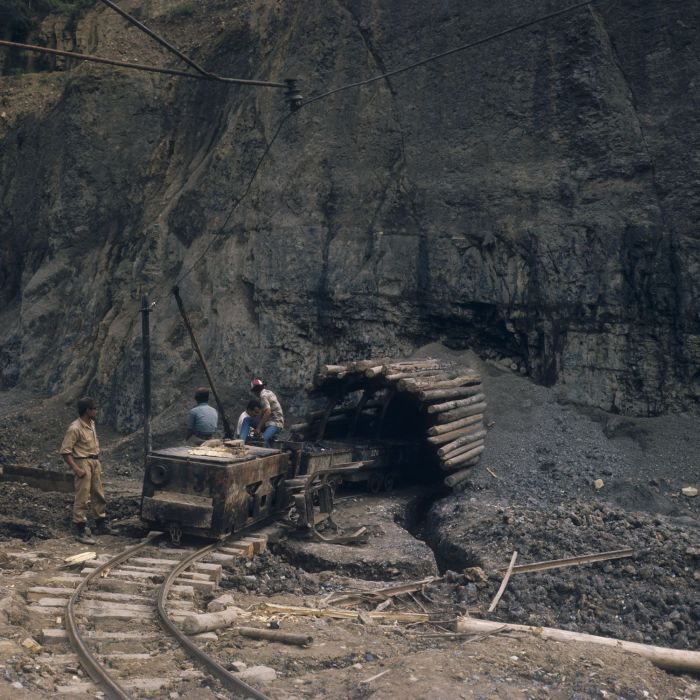
© Boy Lawson, CC BY-SA 3.0 Resized from original. (This derivative is under the same CC BY-SA license.)
World Heritage Research
Discover scientific research and academic studies that deepen our understanding of Ombilin Coal Mining Heritage of Sawahlunto from its history and significance to its conservation, management, and contemporary challenges.
-
Developing a cultural heritage taxonomy for an Indonesian world heritage site
A novel taxonomy, 'Pusako Ombilin,' bridges institutional silos by integrating 445 unique Indonesian terms from diverse sources to unify cultural heritage resources at the UNESCO World Heritage Site, Ombilin Coal Mining Heritage of Sawahlunto (OCMHS). This framework demonstrates that cross-domain resource discovery is achievable through aspectual classification and ontology mapping, offering a standardized system for memory institutions. The study highlights its effectiveness in providing a cohesive overview of heritage materials regardless of origin, addressing gaps in existing knowledge organization systems.
Hendrawan, M. R., Mat Isa, A., & Samsudin, A. Z. H. (2025). Developing a cultural heritage taxonomy for an Indonesian world heritage site. Journal of Documentation, 81(5-6), 1200–1217. https://doi.org/10.1108/jd-03-2025-0063
View Publication Record | Read Publication -
Development of a Cultural Heritage Digital Repository for the Ombilin Coal Mining Heritage of Sawahlunto
Researchers have developed 'Pusako Ombilin,' a digital repository prototype for the UNESCO World Heritage Site, Ombilin Coal Mining Heritage of Sawahlunto (OCMHS). This open-source tool aims to modernize cultural heritage management by integrating data from libraries, archives, and museums (LAMs) into an accessible format. The study employed qualitative methods, including observations, interviews, document analysis, and focus groups, to assess the prototype's potential. While promising, significant challenges remain in optimizing data integration and creating standardized guidebooks. The researchers recommend further development of 'Pusako Ombilin' with a clear implementation guideline to enhance its usability and effectiveness.
Hendrawan, M. R., Mat Isa, A., & Samsudin, A. Z. H. (2025). Development of a Cultural Heritage Digital Repository for the Ombilin Coal Mining Heritage of Sawahlunto. Journal of Information and Knowledge Management, 15(1), 82–97. https://doi.org/10.24191/jikm.v15i1.4540
View Publication Record | Read Publication -
Pemodelan Luas Genangan Banjir Batang Lunto di Wilayah Kota Sawahlunto
Flood modeling of the Batang Lunto River, a UNESCO-listed cultural heritage site in Sawahlunto, West Sumatra, reveals significant flood risk across 125.70 hectares. Using hydrological and hydrodynamic simulations with HEC-Ras 6.3.1 and ArcGIS 10.3, researchers mapped inundation areas for return periods of 2 to 100 years, showing that flood-prone zones could expand from 14.42% (18.12 Ha) at a 2-year return period to over half the area (50.68%, 63.70 Ha) at a 100-year interval. This study provides critical data for disaster mitigation in a region where flooding threatens heritage assets and geopark tourism destinations, offering actionable insights for urban planning and risk management.
Indra, B. A., Daud, D., Andriani, A., & Azra, D. S. (2025). Pemodelan Luas Genangan Banjir Batang Lunto di Wilayah Kota Sawahlunto. Jurnal Talenta Sipil, 8(1), 532. https://doi.org/10.33087/talentasipil.v8i1.848
View Publication Record | Read Publication -
Peran Dinas Kebudayaan Kota Sawahlunto Dalam Pengelolaan Situs Warisan Dunia Ombilin Coal Mining Heritage of Sawahlunto Untuk Mendukung Pariwisata Berkelanjutan
A qualitative, descriptive study reveals that the Sawahlunto Cultural Affairs Office plays a pivotal role as regulator, dynamisator, and facilitator in managing the UNESCO-listed Ombilin Coal Mining Heritage Site to foster sustainable tourism. The research highlights its efforts in preserving cultural heritage while supporting local economic growth. However, challenges such as the absence of a dedicated management body, budget constraints, limited human resources, and low community ownership persist. The study underscores the critical need for stakeholder collaboration to enhance effective, long-term management, ensuring both cultural preservation and sustainable tourism benefits.
Sakinah, M., & Yuliarti. (2025). Peran Dinas Kebudayaan Kota Sawahlunto Dalam Pengelolaan Situs Warisan Dunia Ombilin Coal Mining Heritage of Sawahlunto Untuk Mendukung Pariwisata Berkelanjutan. Jurnal ISO: Jurnal Ilmu Sosial, Politik Dan Humaniora, 5(2), 12. https://doi.org/10.53697/iso.v5i2.2810
View Publication Record | Read Publication -
Metadata Interoperability for Cultural Heritage Digital Repositories: A Case Study in Indonesian World Heritage Site Memory Institutions
A key insight from this study is that metadata interoperability for cultural heritage digital repositories can be effectively achieved through the use of information crosswalks, as demonstrated by the 'Pusako Ombilin' system in Indonesia's UNESCO World Heritage Site, the Ombilin Coal Mining Heritage of Sawahlunto (OCMHS). The research found that mapping fields to standardized metadata schemas like Dublin Core and employing protocols such as the Open Archives Initiative (OAI) for metadata harvesting significantly enhances interoperability. However, challenges persist due to the lack of open-access policies and adequate human resources in OCMHS memory institutions. The study recommends prioritizing external interoperability with union catalogs and implementing open access rules to improve heritage information accessibility. This research highlights the critical role of information professionals in advancing such digital repositories.
Hendrawan, M. R., Isa, A. M., & Samsudin, A. Z. H. (2024). Metadata Interoperability for Cultural Heritage Digital Repositories: A Case Study in Indonesian World Heritage Site Memory Institutions. International Journal of Academic Research in Business and Social Sciences, 14(8). https://doi.org/10.6007/ijarbss/v14-i8/22226
View Publication Record | Read Publication -
World Heritage Sustainability: Ombilin Coal Mining Heritage of Sawahlunto
Ombilin Coal Mining Heritage of Sawahlunto (OCMHS) faces persistent challenges to its sustainability despite its recognized universal value. The site's multi-component technology—encompassing mines, mining towns, railways, and ports—demands integrated preservation efforts. A study highlights unresolved issues such as 16 outstanding notes from the World Heritage secretariat, lack of a formal management body, inadequate budgetary support, and unclear governance responsibilities between regional and central authorities. The research employs historical methods—heuristics, source criticism, interpretation, and historiography—to analyze these problems over four years post-heritage designation. The findings underscore the need for collaborative efforts among governments and stakeholders to harmonize management practices and ensure OCMHS's long-term preservation as a globally significant heritage site.
Riva Mairiska, Zulqayyim, & Nopriyasman. (2024). WORLD HERITAGE SUSTAINABILITY: OMBILIN COAL MINING HERITAGE OF SAWAHLUNTO. Santhet (Jurnal Sejarah Pendidikan Dan Humaniora), 8(1), 1210–1218. https://doi.org/10.36526/santhet.v8i1.3993
View Publication Record | Read Publication -
Community enthusiasm in developing Ombilin coal-mining industrial heritage in Sawahlunto, West Sumatera
Local communities in Sawahlunto, West Sumatera, Indonesia, demonstrate strong enthusiasm for developing Ombilin coal-mining heritage into a sustainable tourism destination. This study reveals that the community actively supports efforts to preserve and revitalize the industrial site, recognizing its potential economic and cultural benefits. Using a mixed-methods approach—combining questionnaires with qualitative data from interviews, observations, and focus group discussions—the research provides insights into community attitudes toward heritage tourism development. The findings underscore the importance of integrating local perspectives in policymaking for sustainable tourism, offering valuable guidance for balancing conservation with economic growth.
Brian, R., Soeswoyo, D. M., Sudirja, J., Arafah, W., Ingkadijaya, R., Brahmantyo, H., Djati, S. P.,. (2023). Community enthusiasm in developing Ombilin coal-mining industrial heritage in Sawahlunto, West Sumatera. International Journal of Applied Sciences in Tourism and Events, 7(1), 37–45. https://doi.org/10.31940/ijaste.v7i1.37-45
View Publication Record | Read Publication -
Initiating Memory Institutions Convergence Through Digital Convergence in Indonesian World Heritage Sites
Digital convergence can effectively initiate the integration of libraries, archives, and museums (LAMs) to enhance cultural heritage information management. A study on the Ombilin Coal Mining Heritage of Sawahlunto (OCMHS), an Indonesian World Heritage Site, demonstrates this through a collaborative project involving Universitas Brawijaya, Indonesia, and Universiti Teknologi MARA, Malaysia. They developed 'The Sawahlunto Memories,' a digital platform using free open-source software (FOSS) and the Software Development Life Cycle (SDLC) cascade development, to standardize LAMs in OCMHS. This approach not only improves access to memory institutions but also sets a best practice for preserving cultural heritage through quick digital technology adoption and effective information management.
Hendrawan, M. R., Isa, A. M., & Samsudin, A. Z. H. (2023). Initiating Memory Institutions Convergence Through Digital Convergence in Indonesian World Heritage Sites. Multidisciplinary Approach to Information Technology in Library and Information Science, 231–251. https://doi.org/10.4018/979-8-3693-2841-5.ch013
View Publication Record | Read Publication -
Quaternary Urban Geology and the Foundation of Heritage Building: Notable Historical Cases in Sawahlunto, Indonesia
Heritage buildings in Sawahlunto, Indonesia, primarily use sedimentary rocks sourced from the Ombilin Basin, reflecting both historical and geological significance. This study reveals that local materials were predominantly used due to their abundance during the Dutch colonial era, contributing to the city's unique urban geological heritage. The research employed mixed methods, including geological mapping and content analysis, to identify rock types, topographic features, and building materials, while also analyzing their distribution and origin. These findings highlight the importance of integrating urban geology into heritage conservation efforts, particularly for UNESCO World Heritage Sites like Sawahlunto.
Hadian, M. S. D., Suganda, B. R., Barkah, M. N., Khadijah, U. L. S., Yuliawati, A. K., Nuryana, S. D., & Ekaputra, D. B. (2023). Quaternary Urban Geology and the Foundation of Heritage Building: Notable Historical Cases in Sawahlunto, Indonesia. IOP Conference Series: Earth and Environmental Science, 1263(1), 12018. https://doi.org/10.1088/1755-1315/1263/1/012018
View Publication Record | Read Publication -
Changing Stages of System Innovation at The Ombilin’s Coal Mines of Sawahlunto: From Ghost Town To World Heritage
A key insight from this study is that the transformation of Sawahlunto's Ombilin coal mines into a UNESCO World Heritage Site was driven by multi-dimensional system innovation, involving government sector reforms, economic development, and socio-political change. The research identifies two critical success factors: strong leadership and effective integration of heritage assets to balance diverse stakeholder interests. This study enriches the understanding of system innovation through historical reconstruction and offers a novel approach to social history by analyzing the path to World Heritage status. It highlights how leadership played a pivotal role in revitalizing heritage assets, contributing to sustainable tourism development.
Erman, E. (2020). Changing Stages of System Innovation at The Ombilin’s Coal Mines of Sawahlunto: From Ghost Town To World Heritage. STI Policy and Management Journal, 5(2). https://doi.org/10.14203/stipm.2020.284
View Publication Record | Read Publication -
Ombilin Coal Mine Site: History and Potential as a Learning Source for the History of the Economy Based on Outdoor Learning
The Ombilin Coal Mining Heritage of Sawahlunto, designated as a UNESCO World Heritage Site, offers significant potential as an outdoor learning resource for the history of economic development. The site, shaped by Dutch colonial projects including coal exploitation, railway construction, and port development, retains notable heritage elements such as the Railway Museum, Goedang Ranseum, Mbah Soero Mine Hole, and the Coal Mining Museum. These remnants serve as tangible historical sources that can enrich educational experiences, particularly in outdoor learning contexts. The study employed a qualitative descriptive approach, utilizing interviews, literature, and newspapers to analyze primary and secondary sources. Challenges in leveraging this site for educational purposes were also identified, highlighting the need for strategic preservation and utilization efforts.
Rosmiati, R., Wahyuni, A., & Syarifuddin, A. (2020). Ombilin Coal Mine Site: History and Potential as a Learning Source for the History of the Economy Based on Outdoor Learning. Budapest International Research and Critics in Linguistics and Education (BirLE) Journal, 3(3), 1343–1352. https://doi.org/10.33258/birle.v3i3.1176
View Publication Record | Read Publication -
Sustainable Conservation of the Coal Mining Town: Ombilin Sawahlunto West Sumatra Indonesia Context
Sawahlunto, a historic coal-mining town in West Sumatra, Indonesia, stands as a testament to Dutch colonial infrastructure from the late 19th century. Its well-preserved railway, mining structures, and harbor have become pivotal for historical tourism, drawing global attention. A qualitative observational study identifies sustainable conservation strategies to maintain its UNESCO World Heritage potential while integrating it into cultural heritage management frameworks. The research proposes a development plan that balances preservation with new functions as a tourism destination, ensuring long-term sustainability.
Cheris, R., Repi, R., & Amalia, D. (2020). Sustainable Conservation of the Coal Mining Town: Ombilin Sawahlunto West Sumatra Indonesia Context. IOP Conference Series: Earth and Environmental Science, 469(1), 12068. https://doi.org/10.1088/1755-1315/469/1/012068
View Publication Record | Read Publication