World Heritage Identification Number: 1152
World Heritage since: 2004
Category: Cultural Heritage
WHE Type: Protected Areas & National Parks
Transboundary Heritage: No
Endangered Heritage: No
Country: 🇮🇸 Iceland
Continent: Europe
UNESCO World Region: Europe and North America
Map
Þingvellir National Park: A Historical and Cultural Landmark in Iceland
Þingvellir National Park, located in southwestern Iceland, is a significant historical and cultural landmark that holds immense importance for the people of Iceland. For nearly 900 years, Þingvellir was the site of the Althing, an open-air assembly representing the entire country, which was established in 930 AD and continued to meet there until 1798. This unique gathering place played a crucial role in shaping Iceland's legal framework and fostering its sense of national identity.
The Althing, which translates to 'assembly fields,' was more than just a legislative body. It was a covenant between free men, a symbol of unity and self-governance. During its annual sessions, which lasted for approximately two weeks each year, the Althing set laws and resolved disputes. These gatherings were not only essential for maintaining social order but also served as opportunities for the exchange of ideas and the strengthening of community bonds.
Although all free men were technically allowed to participate in the Althing, in practice, the wealthiest and most influential chieftains dominated proceedings. Women and thralls (slaves or freedmen) were excluded from holding power or voting. Serious crimes could be punished by execution, and historical sources indicate that Drekkingarhylur (“drowning pool”) within the park was used for capital punishment, particularly for women.
The remnants of the Althing can still be found within the confines of Þingvellir National Park. Fragments of around 50 booths constructed from turf and stone remain, providing a glimpse into the past. Beneath the surface, archaeologists believe that older structures from the 10th century lie hidden. Furthermore, the site showcases evidence of agricultural practices dating back over 1,000 years, offering valuable insights into how the landscape was cultivated and utilized throughout history.
Beyond its historical significance, Þingvellir National Park boasts breathtaking natural beauty. Surrounded by rugged lava fields and nestled between two tectonic plates – the North American and Eurasian plates – the park offers visitors a unique opportunity to witness geological phenomena firsthand. The park's pristine waters, crystal-clear pools, and picturesque waterfalls add to its allure, making it a popular destination for tourists and locals alike.
Þingvellir National Park's rich heritage extends beyond its historical and natural offerings. It has also played a pivotal role in Iceland's literary tradition. The renowned Icelandic sagas often refer to the Althing and its proceedings, highlighting the importance of this site in shaping Iceland's collective memory.
In essence, Þingvellir National Park stands as a testament to Iceland's storied past and enduring cultural traditions. Its historical significance as the site of the Althing, a symbol of unity and self-governance, continues to resonate with the people of Iceland today. Moreover, its stunning natural beauty and rich cultural offerings make it a must-visit destination for anyone seeking to explore the depths of Iceland's history and heritage.
UNESCO Description of the World Heritage Site
Þingvellir (Thingvellir) is the National Park where the Althing, an open-air assembly representing the whole of Iceland, was established in 930 and continued to meet until 1798. Over two weeks a year, the assembly set laws - seen as a covenant between free men - and settled disputes. The Althing has deep historical and symbolic associations for the people of Iceland. The property includes the Þingvellir National Park and the remains of the Althing itself: fragments of around 50 booths built from turf and stone. Remains from the 10th century are thought to be buried underground. The site also includes remains of agricultural use from the 18th and 19th centuries. The park shows evidence of the way the landscape was husbanded over 1,000 years.
UNESCO Justification of the World Heritage Site
Criterion (iii): The Alþing and its hinterland, the Þingvellir National Park, represent, through the remains of the assembly ground, the booths for those who attended, and through landscape evidence of settlement extending back possibly to the time the assembly was established, a unique reflection of medieval Norse/Germanic culture and one that persisted in essence from its foundation in 930 AD until the 18th century.
Criterion (vi): Pride in the strong association of the Alþing to medieval Norse/Germanic governance, known through the 12th century Icelandic sagas and reinforced during the fight for independence in the 19th century, have, together with the powerful natural setting of the assembly grounds, given the site iconic status as a shrine for the national Icelandic identity.
Encyclopedia Record: Þingvellir
Þingvellir was the site of the Alþing, the annual parliament of Iceland from the year 930 until the last session held at Þingvellir in 1798. Since 1881, the parliament has been located within Alþingishúsið in Reykjavík.Additional Site Details
Area: 9,270 hectares
Number of Components: 1
(vi) — Directly associated with events or living traditions
Coordinates: 64.25380556 , -21.03725
Image
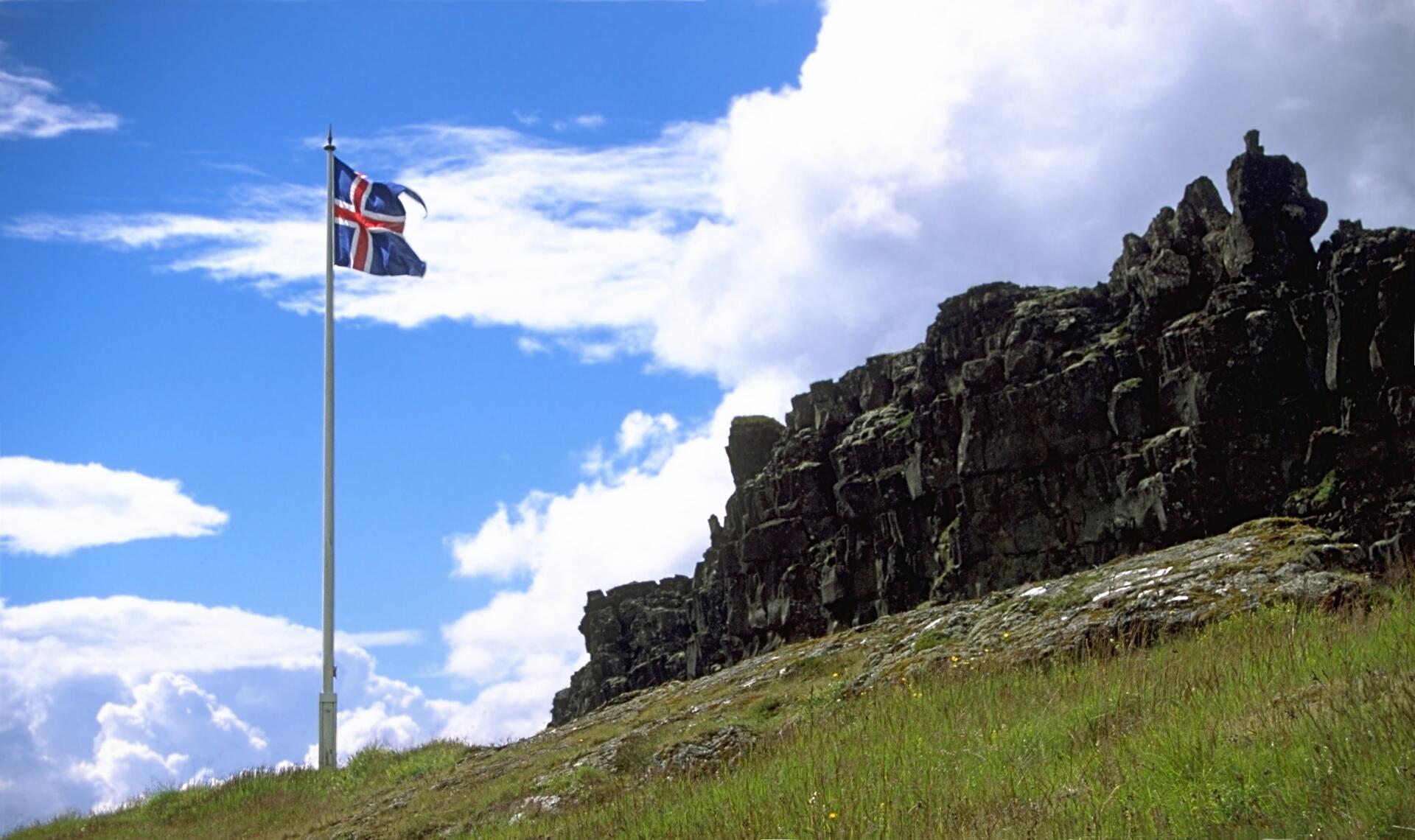
© Andreas Tille, CC BY-SA 4.0 Resized from original. (This derivative is under the same CC BY-SA license.)