World Heritage Identification Number: 1574
World Heritage since: 2021
Category: Natural Heritage
WHE Type: Natural Landscapes & Geographic Features
Transboundary Heritage: No
Endangered Heritage: No
Country: 🇯🇵 Japan
Continent: Asia
UNESCO World Region: Asia and the Pacific
Map
Biodiverse Islands of the Ryukyu Arc: A UNESCO World Heritage Site
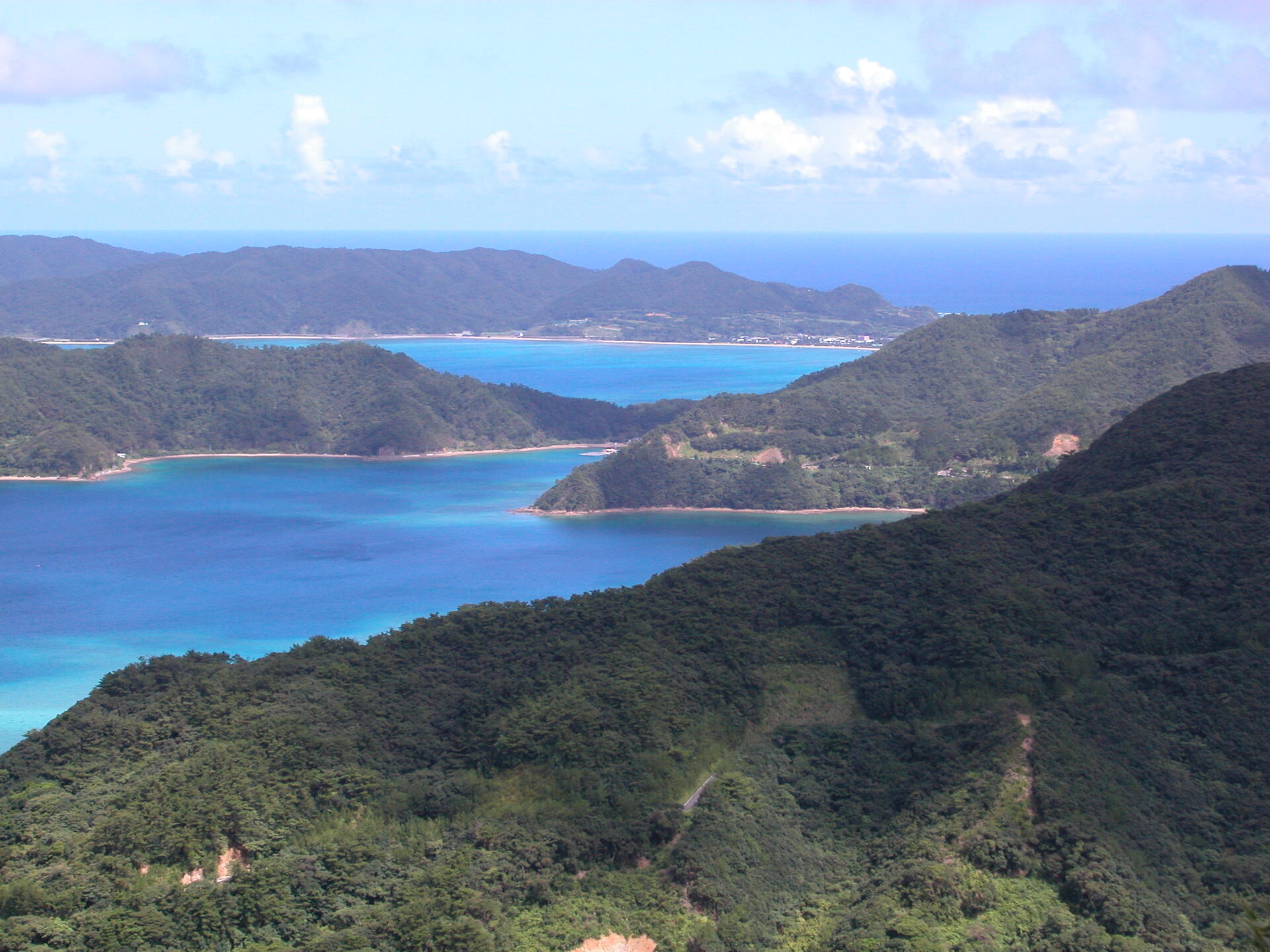
The Ryukyu Arc, a chain of islands situated in the southwest of Japan, is home to a unique and diverse ecosystem that spans across four islands: Amami-Oshima Island, Tokunoshima Island, the northern part of Okinawa Island, and Iriomote Island. This collection of islands, inscribed as a UNESCO World Heritage Site in 2021, encompasses 42,698 hectares of subtropical rainforests and boasts an exceptional biodiversity value.
More to come…UNESCO Description of the World Heritage Site
Encompassing 42,698 hectares of subtropical rainforests on four islands on a chain located in the southwest of Japan, the serial site forms an arc on the boundary of the East China Sea and Philippine Sea whose highest point, Mount Yuwandake on Amami-Oshima Island, rises 694 metres above sea level. Entirely uninhabited by humans, the site has high biodiversity value with a very high percentage of endemic species, many of them globally threatened. The site is home to endemic plants, mammals, birds, reptiles, amphibians, inland water fish and decapod crustaceans, including, for example, the endangered Amami Rabbit (Pentalagus furnessi) and the endangered Ryukyu Long-haired Rat (Diplothrix legata) that represent ancient lineages and have no living relatives anywhere in the world. Five mammal species, three bird species, and three amphibian species in the property have been identified globally as Evolutionarily Distinct and Globally Endangered (EDGE) species. There are also a number of different endemic species confined to each respective island that are not found elsewhere in the property.
UNESCO Justification of the World Heritage Site
Criterion (x): The property contains natural habitats of outstanding importance for in-situ conservation of the unique and diverse biodiversity of the central and southern part of the archipelago in which the property is located. The five component parts constituting the property are located in one of the 200 ecoregions considered most crucial to the conservation of global biodiversity. The subtropical rainforests of the property are the largest remaining in the region and harbour a very rich flora and fauna, boasting at least 1,819 vascular plants, 21 terrestrial mammals, 394 birds, 267 inland water fish, 36 terrestrial reptiles and 21 amphibians. These include approximately 57% of the terrestrial vertebrates of the biodiversity hotspot of Japan, including 44% of species endemic to Japan as well as 36% of Japan’s globally threatened vertebrates. Among species listed on IUCN Red List of Threatened Species are the Amami Rabbit, only found on Amami-Oshima and Tokunoshima Islands and the only species in its genus, with no close relatives anywhere in the world, and the flightless Okinawa Rail, endemic to the Northern part of Okinawa Island. Spiny rats form an endemic genus consisting of three species endemic to each of the respective three islands, and the Iriomote Cat, which only inhabits Iriomote Island. Speciation and endemism are high for many taxa. For example, 188 species of vascular plants and 1,607 insect species are endemic within the four islands of the property. Rates of endemism among terrestrial mammals (62%), terrestrial reptiles (64%), amphibians (86%), and inland water crabs (100%) are also high. Twenty species are identified as Evolutionarily Distinct and Globally Endangered (EDGE) species, including the Okinawa Spiny Rat, Ryukyu Black-Breasted Leaf Turtle, and Kuroiwa’s Ground Gecko.
Encyclopedia Record: Amami-Ōshima Island, Tokunoshima Island, northern part of Okinawa Island, and Iriomote Island
Amami-Ōshima Island, Tokunoshima Island, northern part of Okinawa Island, and Iriomote Island (奄美大島、徳之島、沖縄島北部及び西表島) is a serial UNESCO World Heritage Site consisting of five component parts on four Japanese islands in the Ryukyu Arc. The site was selected in terms of biodiversity for having a diverse ecosystem of plant and animal species that are unique to the region.Additional Site Details
Area: 42,698 hectares
Number of Components: 5
Coordinates: 28.2791666667 , 129.3783333333
IUCN World Heritage Outlook
The 2025 Conservation Outlook on Amami-Oshima Island, Tokunoshima Island, Northern part of Okinawa Island, and Iriomote Island reports the following assessment:
Source: International Union for Conservation of Nature (IUCN) · View assessment