World Heritage Identification Number: 1510
World Heritage since: 2016
Category: Natural Heritage
WHE Type: Natural Landscapes & Geographic Features
Transboundary Heritage: No
Endangered Heritage: No
Country: 🇲🇽 Mexico
Continent: Americas
UNESCO World Region: Latin America and the Caribbean
Map
Archipiélago de Revillagigedo: A Remote Pacific Treasure
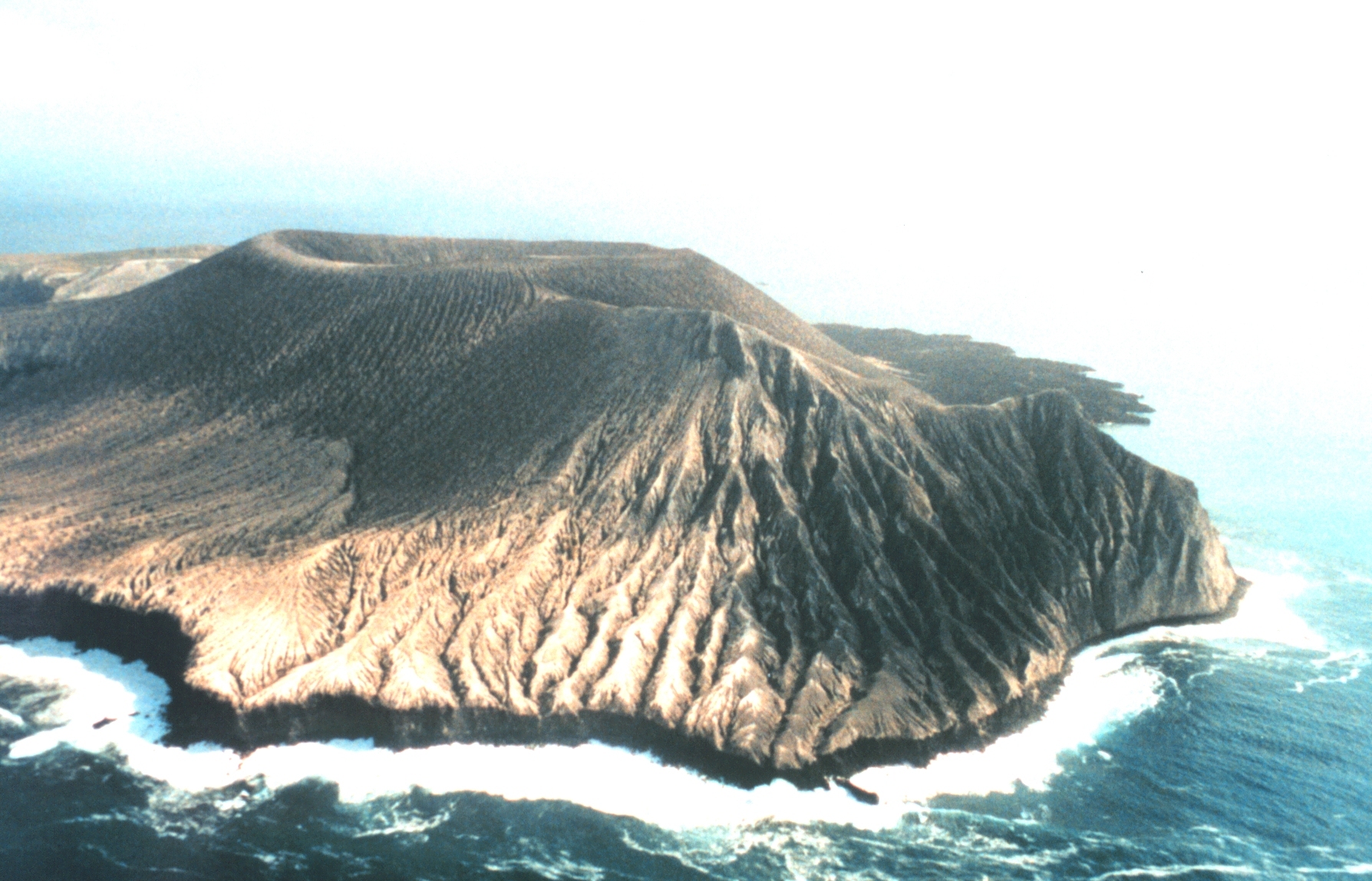
The Archipiélago de Revillagigedo, inscribed as a UNESCO World Heritage Site in 2016, stands as a testament to the extraordinary biodiversity found within its remote Pacific Ocean location. Comprising four volcanic islands—San Benedicto, Socorro, Roca Partida, and Clarión—the archipelago lies approximately 458 kilometers south and southwest of Cabo San Lucas, the southern tip of the Baja California Peninsula, and 698 to 1,092 kilometers west of Manzanillo. Historically linked to the Mexican state of Colima, these islands are now under Mexican federal property and jurisdiction.
More to come…UNESCO Description of the World Heritage Site
Located in the eastern Pacific Ocean, this archipelago is made up of four remote islands and their surrounding waters: San Benedicto, Socorro, Roca Partida and Clarión. This archipelago is part of a submerged mountain range, with the four islands representing the peaks of volcanoes emerging above sea level. The islands provide critical habitat for a range of wildlife and are of particular importance for seabirds. The surrounding waters have a remarkable abundance of large pelagic species, such as manta rays, whales, dolphins and sharks.
UNESCO Justification of the World Heritage Site
Criterion (vii): Both the landscape and seascape of the Archipiélago de Revillagigedo exhibit impressive active volcanos, arches, cliffs, and isolated rock outcrops emerging from the middle of the ocean. The clear surrounding waters create exceptional scenic vistas with large aggregations of fish gathering around the steep walls and seamounts, as well as large pelagic marine species including Giant Manta Rays, whales, dolphins and sharks. One of the most remarkable aspects of the property is the concentration the Giant Manta Rays which aggregate around the islands and interact with divers in a special way that is rarely found anywhere in the world. Furthermore, the property encompasses an underwater seascape with abyssal plains at depths close to 4,000 meters and sheer drops in crystal clear water, all contributing to an awe-inspiring underwater experience. A large population of up to 2,000 Humpback Whales visits the islands. The songs of these majestic cetaceans can be heard during the winter months and while diving, add another sensory dimension to the marine seascape.
Criterion (ix): The Archipiélago de Revillagigedo is located in the northern part of the Tropical East Pacific Province, a transitional zone influenced mainly by the California current but mixed with the warm waters from the North Equatorial Current. This location results in the convergence of a multitude of fauna and flora, and creates a unique set of biological and ecological processes. The isolation and relatively pristine state of these islands has supported evolutionary processes which result in a high degree of endemicity in both the terrestrial as well as marine realms. In the marine realm the waters surrounding these islands are composed of majestic aggregations of sharks, rays, cetaceans, turtles and fish, a number of which are endemic or near-endemic. On land, important evolutionary processes have led to the speciation of 2 endemic lizards, 2 endemic snakes, 4 endemic birds, at least 33 endemic plant species, and innumerable invertebrates. In addition, 11 endemic subspecies of birds have evolved on the islands, indicating the potential for future evolution on these remote and well protected islands.
Criterion (x): The geographic isolation of the Archipiélago de Revillagigedo, shaped by the prevailing oceanographic conditions, results in high marine productivity, rich biodiversity and exceptional levels of endemism, both terrestrial and marine. The islands are the only breeding site for the Townsend’s Shearwater, one of the rarest seabirds in the world. The Archipiélago de Revillagigedo is also home to the endemic Socorro Dove, Socorro Mockingbird, Socorro Wren, Clarion Wren (as well as 11 endemic bird subspecies), 2 lizards, 2 snakes and numerous endemic plants and invertebrates, all of which contribute to the importance of these islands in conserving terrestrial biodiversity. In the marine realm at least 10 reef fish species have been identified as endemic or near-endemic including the spectacular Clarión Angelfish, which can be observed in ‘cleaning stations’ feeding on the ectoparasites of the Giant Manta Rays. These rays, some of them unusually completely black, aggregate in some of the largest numbers known worldwide. The property is a haven for a rich diversity of shark species with up to 20 having been recorded. Up to 2,000 Humpback Whales also migrate through these nutrient rich and productive waters. The islands are also of significant importance to seabirds notably Masked, Blue-footed, Red-footed and Brown Boobies, Red-billed Tropicbirds, Magnificent Frigatebirds and many other species which can be seen soaring around the rocky outcrops where they nest and fish in the sea.
Encyclopedia Record: Revillagigedo Islands
The Revillagigedo Islands or Revillagigedo Archipelago are a group of four volcanic islands in the Pacific Ocean, known for their unique ecosystem. They lie approximately 458 kilometres (285 mi) from Socorro Island south and southwest of Cabo San Lucas, the southern tip of the Baja California Peninsula, and 698 to 1,092 kilometres west of Manzanillo. Historically linked to the Mexican state of Colima, to which they were granted in 1861 to establish a penal colony, the islands are under Mexican federal property and jurisdiction.Additional Site Details
Area: 636,685.4 hectares
Number of Components: 4
(ix) — Outstanding example representing ecological and biological processes
(x) — Contains most important habitats for biodiversity
Coordinates: 18.7880555556 , -110.9752777778
IUCN World Heritage Outlook
The 2025 Conservation Outlook on Archipiélago de Revillagigedo reports the following assessment:
Source: International Union for Conservation of Nature (IUCN) · View assessment
World Heritage Research
Discover scientific research and academic studies that deepen our understanding of Archipiélago de Revillagigedo from its history and significance to its conservation, management, and contemporary challenges.
-
Primer registro morfométrico y de salud de tortuga carey (Eretmochelys imbricata) en el Parque Nacional Archipiélago de Revillagigedo, México
A juvenile hawksbill sea turtle (Eretmochelys imbricata), a critically endangered species, was recorded for the first time in the Revillagigedo Archipelago National Park, Mexico. The discovery underscores Socorro Island as a vital refuge and feeding habitat for this species, which has experienced significant population decline in the Eastern Pacific. Researchers captured, measured, tagged, and conducted a comprehensive health assessment of the turtle, including hematological analysis, blood biometry, clinical biochemistry, and clinicopathological evaluation. Results confirmed the turtle's healthy condition, providing critical insights into its distribution and conservation status. This study highlights the importance of Socorro Island for the preservation of hawksbill sea turtles in the region.
Hernández-Burgos, F. I., Fernández-Sanz, H., Flores-Gasca, L. A., & Reséndiz, E. (2025). First morphometric and health record of hawksbill sea turtle (Eretmochelys imbricata) in Revillagigedo Archipelago National Park, Mexico. Herpetología Mexicana, (10), 13–22. https://doi.org/10.69905/cep4mv09
View Publication Record | Read Publication -
Evidencia de Comportamiento Reproductivo de Tortuga Verde del Pacífico Oriental (Chelonia mydas) en el Parque Nacional Archipiélago de Revillagigedo, México
Researchers document the first photographic evidence of mating behavior in Eastern Pacific green sea turtles (Chelonia mydas) at two sites within Mexico's Revillagigedo Archipelago, Bahía Azufre on Clarión Island and Bahía Vargas Lozano on Socorro Island. This discovery suggests an extended breeding season beyond previously documented nesting peaks. The study, part of a broader effort to establish baseline data for turtle conservation in the region, combines monitoring efforts with health assessments to better understand reproductive patterns and inform protection strategies for this endangered species.
Hernández Burgos, F. I., Fernández-Sanz, H., Flores-Gasca, L. A., & Resendiz, E. (2024). EVIDENCIA DE COMPORTAMIENTO REPRODUCTIVO DE TORTUGA VERDE DEL PACÍFICO ORIENTAL (Chelonia mydas) EN EL PARQUE NACIONAL ARCHIPIÉLAGO DE REVILLAGIGEDO, MÉXICO. Revista Latinoamericana de Herpetología, 7(3). https://doi.org/10.22201/fc.25942158e.2024.3.1081
View Publication Record | Read Publication -
Primer registro del colibrí barba negra (Archilochus alexandri) en Isla Socorro, Archipiélago de Revillagigedo, México
A groundbreaking discovery has been made on Socorro Island, part of Mexico's Revillagigedo Archipelago: the first recorded presence of the Black-chinned Hummingbird (Archilochus alexandri). This finding significantly enriches the island's biodiversity and expands the known distribution range of this species. Researchers identified three hummingbirds during a November 2017 expedition, distinguishing them from smaller migratory species by their body structure and long beaks. One individual was observed feeding on amole flower nectar (Ipomoea triloba) in mixed scrub vegetation, confirming its presence. This record marks the first hummingbird sighting in the archipelago and the first for the Black-chinned Hummingbird on Socorro Island.
Castillo-Huerta, N., Félix Lizárraga, M., & Solís-Carlos, F. (2024). First record of the Black-chinned Hummingbird (Archilochus alexandri) on Socorro Island, Revillagigedo Archipelago, Mexico. Huitzil Revista Mexicana de OrnitologíA, 24(2). https://doi.org/10.28947/hrmo.2023.24.2.717
View Publication Record | Read Publication -
La investigación bioacústica de las aves del Archipiélago de Revillagigedo: un reporte de avance
Bioacoustic research on birds from the Revillagigedo Archipelago reveals distinct vocalization patterns among 12 species, highlighting geographic variations at deme, subspecies, or species levels. The study compares island vocalizations with continental counterparts, documenting significant acoustic events such as female vocalizations in certain species and duets in the Socorro mockingbird. It also explores the potential of bird songs for conservation tasks, including population censuses and sex identification. Spectral analyses were used to characterize these vocalizations, offering insights into behavioral ecology and sexual selection while proposing future research directions for this understudied insular region.
Baptista , L. F., & Martínez Gómez, J. E. (2022). La investigación bioacústica de las aves del Archipiélago de Revillagigedo: un reporte de avance. Huitzil Revista Mexicana de Ornitología, 3(2), 33–41. https://doi.org/10.28947/hrmo.2002.3.2.14
View Publication Record | Read Publication -
Políticas locales para la preservación de un patrimonio global. El Archipiélago de Revillagigedo, Patrimonio Mundial
The Revillagigedo Archipelago, inscribed as a UNESCO World Heritage Site in 2016, faces systemic challenges in its conservation despite ongoing efforts by institutions and governments. The study highlights the critical need for stronger collaboration among public management bodies, academic institutions, and civil society organizations to meet global preservation standards. While local policies and scientific knowledge development aim to protect this unique natural heritage, their effectiveness is hindered by underlying weaknesses in governance and coordination. This research underscores the importance of integrated strategies to address these gaps and ensure the long-term sustainability of the archipelago's biodiversity.
Ramírez Vuelvas, C. (2022). Políticas locales para la preservación de un patrimonio global. El Archipiélago de Revillagigedo, Patrimonio Mundial. Revista PH, 25. https://doi.org/10.33349/2022.107.5169
View Publication Record | Read Publication -
Dieta y ámbito hogareño del gato feral, Felis catus (Carnivora: Felidae) en la Isla Socorro, Archipiélago de Revillagigedo, México
Research on feral cats (Felis catus) in Isla Socorro, part of the UNESCO-listed Revillagigedo Archipelago, reveals critical insights for their eradication to protect local biodiversity. Analysis of stomach contents from 79 cats showed their diet primarily consisted of domestic mice (22.16%), endemic lizards (Urosaurus auriculatus, 15.09%), anthropogenic waste (15.09%), and insects (Orthoptera, 13.20%). Telemetry tracking of four cats using GPS/VHF collars further uncovered significant differences in home range sizes: males averaged 219.10 hectares, while females averaged 118.86 hectares. These findings are pivotal for planning effective eradication efforts, as they inform the required trapping density and bait distribution to minimize environmental impact during ongoing conservation actions.
Ortiz-Alcaraz, A., Arnaud, G., Aguirre-Muñoz, A., Galina Tessaro, P., Méndez-Sánchez, F., & Ortega-Rubio, A. (2018). Dieta y ámbito hogareño del gato feral, Felis catus (Carnivora: Felidae) en la Isla Socorro, Archipiélago de Revillagigedo, México. Acta Zoológica Mexicana (N.S.), 33(3), 482–489. https://doi.org/10.21829/azm.2017.3331149
View Publication Record | Read Publication -
First record of the dinoflagellate Prorocentrum panamense (Prorocentrales, dinophyceae) in the Mexican Pacific from the Archipiélago de Revillagigedo
Scientists document the first occurrence of the toxic dinoflagellate Prorocentrum panamense in Mexican Pacific waters, specifically within the UNESCO-listed Revillagigedo Archipelago. During March 2017 sampling across three islands (at depths of 60–70 m and surface temperatures of 21–23 °C), ten cells were identified via plankton net sampling—a notable finding given the species’ association with harmful algal blooms in other regions. This discovery extends its known range northward along the Pacific coast, raising potential implications for marine ecosystems and coastal communities in the area.
Gárate Lizárraga, I., & González -Armas, R. (2017). First record of the dinoflagellate Prorocentrum panamense (Prorocentrales, dinophyceae) in the Mexican Pacific from the Archipiélago de Revillagigedo. CICIMAR Oceánides, 32(1), 63–66. https://doi.org/10.37543/oceanides.v32i1.197
View Publication Record | Read Publication -
Presencia de la paloma turca (Streptopelia decaocto) en el archipiélago de Revillagigedo, México
A notable finding of the Turkish turtle dove (Streptopelia decaocto) in the Revillagigedo Archipelago, Mexico, was documented for the first time at two islands: Clarión and Socorro. Observations between March and July 2015 revealed adult birds associated with human activity, specifically around a naval base and its vessels. This discovery highlights the species' presence in remote, pristine environments influenced by anthropogenic factors. The study underscores the need for further research to assess the distribution, abundance, and ecological impacts of this invasive species on the archipelago's biodiversity.
González-Zamora, D. A., Angulo-Castellanos, L. F., Hernández-Vázquez, S., Almanza-Rodríguez, H., & Aguilar Nuño, L. A. (2016). Presencia de la paloma turca (Streptopelia decaocto) en el archipiélago de Revillagigedo, México. Huitzil Revista Mexicana de Ornitología, 17(1). https://doi.org/10.28947/hrmo.2016.17.1.228
View Publication Record | Read Publication