
World Heritage Identification Number: 33
World Heritage since: 1979
Category: Natural Heritage
WHE Type: Natural Landscapes & Geographic Features
Transboundary Heritage: Yes
Endangered Heritage: No
Country: Belarus, Poland
Continent: Europe
UNESCO World Region: Europe and North America
Map
Białowieża Forest: A Unique Transboundary World Heritage Site
The Białowieża Forest, situated on the border between Poland and Belarus, is a remarkable testament to the vast primeval forests that once covered the European Plain. Inscribed as a UNESCO World Heritage Site in 1979, this extensive forest complex spans over 141,885 hectares, making it one of the largest remaining fragments of this ancient ecosystem.
Geographically, the Białowieża Forest lies within the drainage basins of both the Baltic Sea and the Black Sea, providing unique opportunities for biodiversity conservation. This transboundary property, shared by two countries, is a haven for a rich array of flora and fauna, many of which are rare or endangered species.
The forest's diverse vegetation includes both coniferous and broadleaved trees, creating a mosaic of habitats that support a wide variety of plant life. Among the notable tree species found here are the the Norway spruce (Picea abies), the common oak (Quercus robur), and the Scots pine (Pinus sylvestris). The understory is equally rich, with a profusion of wildflowers, ferns, and shrubs adding color and texture to the forest floor.
One of the most iconic inhabitants of the Białowieża Forest is the European bison (Bison bonasus), Europe's largest land mammal. With a mass that can exceed one tonne, these shaggy, hump-backed creatures are a symbol of the forest's wildness and resilience. As of 2025, the Białowieża Forest is home to 870 European bison, making it one of the largest populations of this species, which has moved from Vulnerable to Near Threatened thanks to continued conservation efforts.
In addition to the European bison, the Białowieża Forest is home to numerous other mammals, birds, reptiles, and amphibians. Notable among these are the wolf (Canis lupus), the Eurasian lynx (Lynx lynx), the white-tailed eagle (Haliaeetus albicilla), and the common crane (Grus grus). The forest's diverse wildlife is further enriched by its location on the migratory routes of countless bird species, making it a vital stopover for many during their annual migrations.
The Białowieża Forest is not only significant for its biodiversity but also for its cultural and historical value. The forest has been inhabited for centuries, with evidence of human activity dating back to the Stone Age. Today, several villages and settlements still exist within the forest, offering visitors a glimpse into traditional rural life in this unique setting.
To wrap it up, the Białowieża Forest is a truly exceptional World Heritage Site, offering a rare opportunity to experience one of Europe's last remaining primeval forests. Its rich biodiversity, cultural significance, and natural beauty make it a must-visit destination for anyone interested in the natural wonders of our world.
UNESCO Description of the World Heritage Site
The Białowieża Forest World Heritage site, on the border between Poland and Belarus, is an immense range of primary forest including both conifers and broadleaved trees covering a total area of 141,885 hectares. Situated on the watershed of the Baltic Sea and Black Sea, this transboundary property is exceptional for the opportunities it offers for biodiversity conservation. It is home to the largest population of the property’s iconic species, the European bison.
UNESCO Justification of the World Heritage Site
Criterion (ix): Bialowieza Forest conserves a diverse complex of protected forest ecosystems which exemplify the Central European mixed forests terrestrial ecoregion, and a range of associated non-forest habitats, including wet meadows, river valleys and other wetlands. The area has an exceptionally high nature conservation value, including extensive old-growth forests. The large and integral forest area supports complete food webs including viable populations of large mammals and large carnivores (wolf, lynx and otter) amongst other. The richness in dead wood, standing and on the ground, leads to a consequent high diversity of fungi and saproxylic invertebrates. The long tradition of research on the little disturbed forest ecosystem and the numerous publications, including description of new species, also contributes significantly to the values of the nominated property.
Criterion (x): Bialowieza Forest is an irreplaceable area for biodiversity conservation, due in particular to its size, protection status, and substantially undisturbed nature. The property is home to the largest free-roaming population of European Bison, which is the iconic species of this property. However the biodiversity conservation values are extensive, and include protection for 59 mammal species, over 250 bird species, 13 amphibians, 7 reptiles, and over 12,000 invertebrates. The flora is diverse and regionally significant, and the property also is notable for conservation of fungi. Several new species have been described here and many threatened species are still well represented.
Encyclopedia Record: Białowieża Forest
Białowieża Forest is a large forest complex and World Heritage Area straddling the border between Poland and Belarus. It is one of the last and the largest remaining parts of the immense primeval forest that once stretched across the European Plain. The forest is home to more than 800 European bison, Europe's heaviest land animal.Additional Site Details
Area: 141,885 hectares
Number of Components: 2
(x) — Contains most important habitats for biodiversity
Coordinates: 52.7275 , 23.9811111111
IUCN World Heritage Outlook
The 2025 Conservation Outlook on Białowieża Forest reports the following assessment:
Source: International Union for Conservation of Nature (IUCN) · View assessment
Image
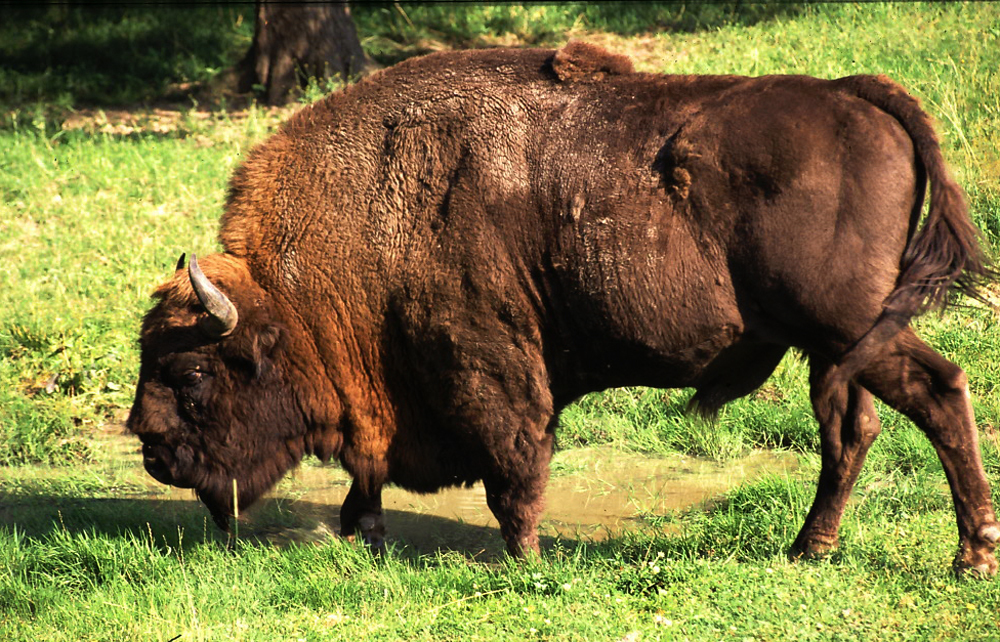
© Henryk Kotowski at English Wikipedia, CC BY-SA 3.0 Resized from original. (This derivative is under the same CC BY-SA license.)
World Heritage Research
Discover scientific research and academic studies that deepen our understanding of Białowieża Forest from its history and significance to its conservation, management, and contemporary challenges.
-
The Białowieża Forest as an example of the resilience of long-term studies in a changing world
Long-term studies (LTS) in the Białowieża Forest, Poland, demonstrate remarkable resilience against sociopolitical and geopolitical changes while providing critical insights into ecosystem dynamics. This research highlights how collaborative teams and dispersed leadership across institutions have sustained LTS continuity for up to nine decades, despite disruptions such as financial, political, and security vulnerabilities. The study reveals the forest's role as a benchmark for ecological restoration and evolutionary processes, offering lessons for global conservation strategies. However, challenges persist in centralizing data archiving and ensuring accessibility. The Białowieża experience underscores the importance of adaptability in LTS to exploit opportunities amid change, serving as a model for similar studies worldwide.
Broughton, R. K., Cholewa, M., Czeszczewik, D., Fuller, R. J., Jaroszewicz, B., Kuijper, D. P. J., Maziarz, M., Mikusiński, G., & Neubauer, G. (2025). The Białowieża Forest as an example of the resilience of long-term studies in a changing world. Biological Conservation, 304, 111045. https://doi.org/10.1016/j.biocon.2025.111045
View Publication Record | Read Publication -
Drought and Suboptimal Habitats Shape Norway Spruce Vulnerability to Bark Beetle Outbreaks in Białowieża Forest, Poland
In Białowieża Forest, Poland, Norway spruce decline is primarily driven by drought and suboptimal habitats, increasing its vulnerability to bark beetle outbreaks. The study found that 75% of spruce-dominated stands in 2015 were in unsuitable habitats, with outbreak years showing significantly lower precipitation, reduced hydro-climatic indices (Selyaninov k), and more negative SPEI-12 values compared to non-outbreak years. Drought acts as both a predisposing and triggering factor for outbreaks, with one-year lag effects observed. The research analyzed spruce share from 1902–2018, habitat suitability, and climate records using hydro-climatic indices and statistical tests (Welch’s t-test, point-biserial correlation). These findings underscore the critical role of habitat suitability and drought in spruce decline, advocating for adaptive management strategies to retain spruce in optimal habitats while transitioning suboptimal stands to more drought-tolerant species.
Kędziora, W., Szyc, K., Silva, J. S., & Wójcik, R. (2025). Drought and Suboptimal Habitats Shape Norway Spruce Vulnerability to Bark Beetle Outbreaks in Białowieża Forest, Poland. Land, 14(10), 2014. https://doi.org/10.3390/land14102014
View Publication Record | Read Publication -
Seasonal patterns of habitat use of resident birds in Białowieża Forest and its links to post-disturbance management
Resident bird species in Białowieża Forest exhibit distinct seasonal habitat preferences, with winter and spring distributions often diverging. A study found no spatial overlap between winter and spring bird diversity hotspots, indicating that resident forest birds do not rely on the same habitats year-round. Post-disturbance management, particularly following European spruce bark beetle outbreaks, further influences these patterns. While the overall wintering community and invertivore arboreal gleaners favored moderately salvage-logged sites, avoiding strongly logged areas, invertivore bark foragers shifted towards both salvage-logged and natural regeneration sites. Species-specific responses were observed, with no universal habitat preference across seasons or disturbance levels. The research underscores the need to consider non-breeding season habitat use when assessing forest bird communities and highlights the importance of maintaining habitat heterogeneity in post-disturbance management.
Michielsen, R. J., Żmihorski, M., Pärt, T., Walesiak, M., & Mikusiński, G. (2024). Seasonal patterns of habitat use of resident birds in Białowieża Forest and its links to post-disturbance management. Forest Ecology and Management, 554, 121669. https://doi.org/10.1016/j.foreco.2023.121669
View Publication Record | Read Publication -
Acoustic indices estimate breeding bird species richness with daily and seasonally variable effectiveness in lowland temperate Białowieża forest
Acoustic indices can effectively estimate breeding bird species richness in temperate forests, but their effectiveness varies daily and seasonally. In the Białowieża Forest, the Bioacoustic Index (BI) proved to be the most reliable predictor of bird species richness, particularly when averaged across surveys or recording points. While BI showed strong correlations with mean species richness, the Acoustic Diversity Index (ADI) better reflected total species richness. Notably, acoustic indices performed better in early spring and before the peak of bird singing activity. This study highlights the potential of acoustic indices as a rapid tool for biodiversity assessment but underscores the need to account for daily and seasonal variations in their effectiveness.
Budka, M., Sokołowska, E., Muszyńska, A., & Staniewicz, A. (2023). Acoustic indices estimate breeding bird species richness with daily and seasonally variable effectiveness in lowland temperate Białowieża forest. Ecological Indicators, 148, 110027. https://doi.org/10.1016/j.ecolind.2023.110027
View Publication Record | Read Publication -
Pioneer tree species accelerate restoration of tree‐related microhabitats in 50‐year‐old reserves of Białowieża Forest, Poland
Pioneer tree species, such as Populus and Betula, accelerate the restoration of tree-related microhabitats (TreMs) more effectively than longer-lived, slower-growing species. A study comparing managed and set-aside stands in Białowieża Forest found that while strict protection did not significantly increase TreM abundance or richness at the stand level after 52 years, pioneer species developed TreMs faster due to their rapid growth and shorter lifespan. This suggests that incorporating these fast-growing trees into forest management strategies could enhance biodiversity conservation by expediting habitat restoration in intensively managed forests.
Spînu, A. P., Mysiak, W., Bauhus, J., Bielak, K., & Niklasson, M. (2023). Pioneer tree species accelerate restoration of tree‐related microhabitats in 50‐year‐old reserves of Białowieża Forest, Poland. Ecology and Evolution, 13(7). Portico. https://doi.org/10.1002/ece3.10238
View Publication Record | Read Publication -
New fungal non-pollen palynomorphs from moss polsters collected from the Białowieża Forest (NE Poland)
Researchers have identified 20 previously undescribed fungal non-pollen palynomorphs (NPPs) preserved in moss polsters within the Białowieża Forest, a highly natural temperate forest complex. These new NPPs, half of which could be linked to specific species or genera, provide valuable ecological indicators for environmental reconstructions. The study analyzed 114 moss samples from diverse forest ecosystems, revealing that moss polsters harbor a wealth of undescribed fungal remains. This discovery underscores the potential of moss polsters as a rich source of ecological data, offering new insights into temperate forest ecosystems and their historical dynamics.
Zimny, M. (2024). New fungal non-pollen palynomorphs from moss polsters collected from the Białowieża Forest (NE Poland). Review of Palaeobotany and Palynology, 321, 105034. https://doi.org/10.1016/j.revpalbo.2023.105034
View Publication Record | Read Publication -
Semantic Segmentation (U-Net) of Archaeological Features in Airborne Laser Scanning—Example of the Białowieża Forest
A U-Net deep learning model successfully achieved semantic segmentation of archaeological, natural, and modern features in the Białowieża Forest using airborne laser scanning (ALS) data. The model demonstrated strong performance, with a Dice-Sorensen coefficient (F1 score) of 0.58 and an Intersect Over Union (IoU) metric of 0.5 after 83 epochs. Notably, the IoU for specific features like ancient field system banks, plots, and burial mounds reached 0.41, 0.62, and 0.62, respectively. This approach offers a promising method for automating the identification of complex archaeological structures in dense forested environments, potentially uncovering previously unknown monuments.
Banasiak, P., Berezowski, P., Zapłata, R., Mielcarek, M., Duraj, K., & Stereńczak, K. (2022). Semantic Segmentation (U-Net) of Archaeological Features in Airborne Laser Scanning—Example of the Białowieża Forest. Remote Sensing, 14(4), 995. https://doi.org/10.3390/rs14040995
View Publication Record | Read Publication