World Heritage Identification Number: 770
World Heritage since: 1996
Category: Cultural Heritage
WHE Type: Infrastructure & Industry
Transboundary Heritage: No
Endangered Heritage: No
Country: 🇫🇷 France
Continent: Europe
UNESCO World Region: Europe and North America
Map
The Engineering Marvel: Canal du Midi - A Link Between the Mediterranean and the Atlantic
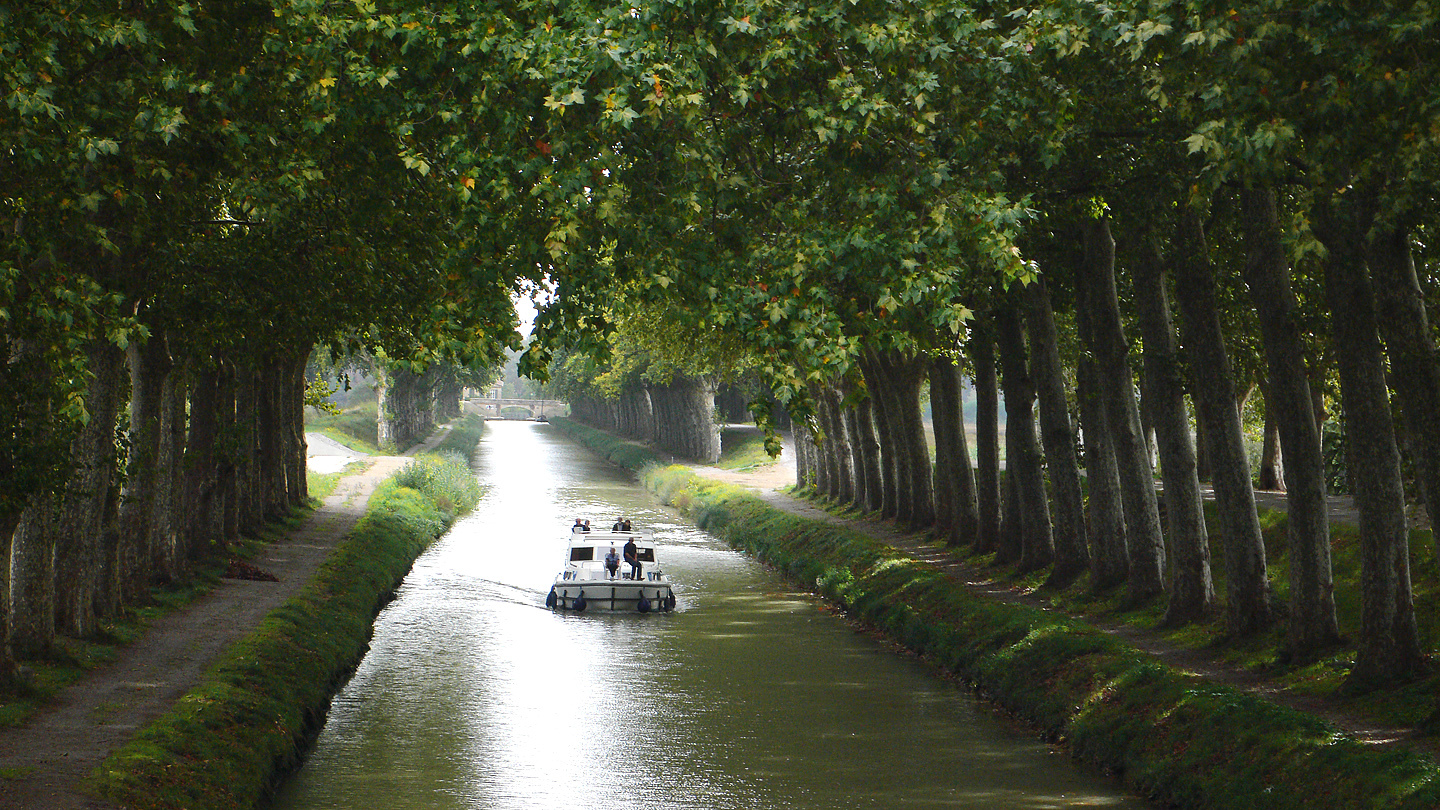
The Canal du Midi, officially known as the Canal Royal en Languedoc until the French Revolution in 1789, stands as a testament to human ingenuity and perseverance. Inscribed as a UNESCO World Heritage Site in 1996, this 360-kilometer network of navigable waterways links the Mediterranean Sea and the Atlantic Ocean, traversing the diverse landscapes of southern France.
More to come…UNESCO Description of the World Heritage Site
This 360-km network of navigable waterways linking the Mediterranean and the Atlantic through 328 structures (locks, aqueducts, bridges, tunnels, etc.) is one of the most remarkable feats of civil engineering in modern times. Built between 1667 and 1694, it paved the way for the Industrial Revolution. The care that its creator, Pierre-Paul Riquet, took in the design and the way it blends with its surroundings turned a technical achievement into a work of art.
UNESCO Justification of the World Heritage Site
Criterion (i): The Canal du Midi is one of the most extraordinary civil engineering achievements of modern times.
Criterion (ii): The Canal du Midi is representative of the technological breakthrough that paved the way for the Industrial Revolution and contemporary technology. In addition, it associates technological innovation with great aesthetic concern in terms of architecture and in terms of man-made landscapes, an approach rarely found elsewhere.
Criterion (iv): The Canal du Midi is notable as the first major summit level canal built to meet a strategic territorial development objective. It represents, par excellence, a significant period of European history, that of river transport through the mastery of hydraulic civil engineering.
Criterion (v): As soon as it was built, the Canal du Midi became the most striking feature of the territory through which it ran, all the more integrated into the environment as it gently modelled the landscape.
Encyclopedia Record: Canal du Midi
The Canal du Midi is a 240 km (150 mi) long canal in Southern France. Originally named the Canal Royal en Languedoc and renamed by French revolutionaries to Canal du Midi in 1789, the canal is considered one of the greatest construction works of the 17th century.Additional Site Details
Area: 2,007 hectares
Number of Components: 1
(ii) — Significant interchange of human values
(iv) — Outstanding example of a type of building or landscape
(vi) — Directly associated with events or living traditions
Coordinates: 43.61138889 , 1.416388889
World Heritage Research
Discover scientific research and academic studies that deepen our understanding of Canal du Midi from its history and significance to its conservation, management, and contemporary challenges.
-
Escenario estético del paisaje y vida del Canal du Midi, Francia
The Canal du Midi exemplifies the transformative power of human ingenuity and its enduring aesthetic and functional significance. Originally built between 1666 and 1681 to connect Toulouse with Sète via 328 engineering structures—locks, aqueducts, bridges, and tunnels—it has evolved from a transport artery into a multifaceted space for tourism, leisure, and urban living. This transformation has not only preserved its natural heritage but also enhanced its aesthetic appeal, fostering a dynamic landscape that nourishes both residents and visitors alike. The study highlights how the Canal du Midi serves as a living testament to the interplay between human design and environmental beauty, reflecting philosophical ideals of art and public space.
Göbel, C. (2025). Escenario estético del paisaje y vida del Canal du Midi, Francia. Estudios: Filosofía, Historia, Letras, 23(153), 155. https://doi.org/10.5347/01856383.0153.000315380
View Publication Record | Read Publication -
L’histoire du Canal du Midi à travers les médailles
Medals issued during the late 17th-century construction of the Canal du Midi, a UNESCO World Heritage Site linking the Atlantic Ocean and Mediterranean Sea via Toulouse, serve as historical artifacts that transcend borders. These medals, produced for local foundations like Sète's port and Toulouse's first lock, alongside official emissions by the Petite Académie under Louis XIV's reign, depict the canal and its ports, offering a visual narrative of this engineering marvel. The study presents these medals, including those from the 18th and 19th centuries, highlighting their role in both local and international historical documentation.
Eisler, W., & Le Brazidec, M.-L. (2023). L’histoire du Canal du Midi à travers les médailles. Patrimoines Du Sud, 17. https://doi.org/10.4000/pds.11734
View Publication Record | Read Publication -
Water Narratives: Exploring the convergence of the Canal du Midi and its coastal landscape
A transformative relationship between the Canal du Midi and its coastal landscape emerges, revealing the canal as both a dynamic infrastructure and a culturally significant feature. This study identifies three key narratives—infrastructural, natural & environmental, and social & cultural—that illustrate how the Canal has evolved and shaped its surroundings, becoming an integral part of France’s southern coastal environment. By employing a landscape narrative framework and illustrative methods, researchers demonstrate that the Canal du Midi transcends conventional problem-solving approaches, offering a holistic perspective on water infrastructure. This approach not only sharpens interpretations but also provides valuable insights for future development, emphasizing preservation and regeneration in harmony with the canal's historical and ecological significance.
Sun, P., Bobbink, I., & Chouairi, A. (2023). Water Narratives: Exploring the convergence of the Canal du Midi and its coastal landscape. Shima: The International Journal of Research into Island Cultures, 17(2). https://doi.org/10.21463/shima.202
View Publication Record | Read Publication -
The Design and Construction of Canal du Midi, an ASCE IHCEL, in Southern France
The Canal du Midi, a 240 km (150 mi) engineering marvel connecting the Mediterranean to the Atlantic, stands as one of Europe's largest pre-modern infrastructure projects. Built between 1666 and 1681 under Louis XIV's reign, it overcame a 190 m (625 ft) elevation change with innovative structures like the St. Ferreol Dam (the second tallest in Europe at the time), Malpas tunnel (the first canal tunnel ever), and a three-gated circular lock facilitating Mediterranean access. Its design, including 328 structures—locks, bridges, and diversion systems—demonstrates advanced 17th-century civil engineering, with features like two-gated basins to regulate water flow. Today, the canal remains a vital tourism hub, handling more traffic than the River Seine and accounting for 1/5 of French river tourism. Recognized as a UNESCO World Heritage Site (1996) and ASCE International Historic Civil Engineering Landmark (2016), it exemplifies enduring innovation in hydraulic engineering.
Comair, G., Rogers, J., & Bulloch, W. P. (2021). The Design and Construction of Canal du Midi, an ASCE IHCEL, in Southern France. World Environmental and Water Resources Congress 2021, 806–816. https://doi.org/10.1061/9780784483466.073
View Publication Record | Read Publication -
The Agency of Water and the Canal du Midi
Hydraulic infrastructures, particularly water management systems, can serve as powerful tools for shaping social relations and mediating power dynamics. The Canal du Midi, a 240-kilometer navigational canal built between 1663 and 1684 in Languedoc, France, exemplifies this phenomenon. Authorized by Louis XIV, the project involved state-led land acquisition from local nobles and significantly altered daily life, including transport, manufacturing, and agricultural practices. The study highlights how water's agential properties—its independent influence on social possibilities—can both facilitate human control through engineering and challenge governance when it defies expectations, such as flooding or evading containment. This dual nature of water underscores its role in legitimizing impersonal rule while also posing challenges to territorial governance.
Mukerji, C. (2021). The Agency of Water and the Canal du Midi. Hydrohumanities: Water Discourse and Environmental Futures, 23–41. https://doi.org/10.1525/luminos.115.d
View Publication Record | Read Publication -
Non-simultaneity in the construction of the Canal du Midi
The construction of the Canal du Midi, a 17th-century French navigational canal renowned for its length and technical sophistication, reveals a pattern of non-simultaneity in work practices that challenges conventional narratives of modernization. This study demonstrates how the canal's development integrated ancient knowledge with contemporary problem-solving, extending well into the 1680s with ongoing repairs. A snapshot of activity from March 1672 highlights the asynchronous nature of cultural and technical practices employed across the project, offering a unique lens to understand innovation in historical infrastructure. The research underscores non-simultaneity as a facilitator of complex, long-term engineering achievements.
Mukerji, C. (2017). Non-simultaneity in the construction of the Canal du Midi. Producing Non-Simultaneity, 3–19. https://doi.org/10.4324/9781315141930-1
View Publication Record | Read Publication -
El turismo fluvial y su cementerio de despojos en los bordes del Canal du Midi
Abandoned recreational boats and barges, many in advanced stages of deterioration, are increasingly common along the Canal du Midi, creating visually disruptive 'cemeteries' of waste. These derelict vessels, often accompanied by oil spills and other environmental debris, mar the scenic integrity of this UNESCO-listed waterway, particularly near landmarks like Agde's circular lock. The study highlights how unregulated tourism and poor waste management contribute to both aesthetic degradation and ecological risks, including fuel contamination from aging boats.
Gil de Arriba, C. (2015). El turismo fluvial y su cementerio de despojos en los bordes del Canal du Midi. Via Tourism Review, 8. https://doi.org/10.4000/viatourism.1591
View Publication Record | Read Publication