World Heritage Identification Number: 1616
World Heritage since: 2021
Category: Natural Heritage
WHE Type: Natural Landscapes & Geographic Features
Transboundary Heritage: No
Endangered Heritage: No
Country: 🇬🇪 Georgia
Continent: Asia
UNESCO World Region: Europe and North America
Map
A Biodiversity Haven: The Colchic Rainforests and Wetlands
The Colchic Rainforests and Wetlands, inscribed by UNESCO in 2021, is a testament to the rich biodiversity found along the eastern coast of the Black Sea in Georgia. This extensive property, spanning over 80 kilometers, encompasses seven distinct components, each showcasing a variety of Colchic ecosystems, ranging from sea level to elevations exceeding 2,500 meters.
More to come…UNESCO Description of the World Heritage Site
The property comprises seven component parts, within an 80km long corridor along the warm-temperate and extremely humid eastern coast of the Black Sea. They provide a series of the most typical Colchic ecosystems at altitudes ranging from sea level to more than 2,500 metres above it. The main ecosystems are ancient deciduous Colchic rainforests and wetlands, percolation bogs and other mire types of the distinct Colchic mire region. The extremely humid broad-leaved rainforests comprise a highly diverse flora and fauna, with very high densities of endemic and relict species, with significant numbers of globally threatened species and relict species, which survived the glacial cycles of the Tertiary. The site is home to approximately 1,100 species of vascular and non-vascular plants, including 44 threatened vascular plan species, and almost 500 species of vertebrates, and a high number of invertebrate species. The site also harbours 19 threatened animal species including sturgeon, notably the critically endangered Colchic Sturgeon. It is a key stopover for many globally threatened birds that migrate through the Batumi bottleneck.
UNESCO Justification of the World Heritage Site
Criterion (ix): The property comprises ancient Colchic rainforests with their characteristic vertical zoning and ecological succession, and wetlands, particularly Colchic mires, with their supporting processes and succession. A unique combination of influences from three mountain ranges to the north, east and south, with the Black Sea to the west, plus high precipitation and a narrow range in seasonal temperature variations results in conditions that have created outstandingly complex and diverse forest structures, peatland accumulations, high levels of endemism and intra species diversity. The Colchic rainforests are highly humid temperate deciduous rainforests, and among the oldest nemoral broad-leaved forests globally. While they are distinguished from other temperate forests by their rich evergreen understoreys, they also display a remarkably dense mosaic of forest types, with 23 forest associations co-existing within an area of only about 200 km2. Together with the Hyrcanian Forests, they are the most important relicts of Arcto-Tertiary forests in western Eurasia. This peculiar and diverse community, which has survived the Pleistocene glacial cycles, includes a multitude of relict and endemic species. It reflects exceptionally constant climatic conditions and is an invaluable example of the manifold long-term evolutionary processes of forest biota over at least 10-15 million years. The extensive paludified areas along the Black Sea coast are a result of evolutionary and ecological processes related to climate variability in an ancient warm-temperate ecoregion continuously vegetated since the Tertiary period. The exceptional character of the mires has led to the recognition of a distinct Colchis mire region. Their percolation bogs are of particular global importance as they do not exist anywhere else in the world. They can be considered the simplest and hence ideal-typical mire, due to almost permanent water supplied exclusively by precipitation. Percolation bogs are essential for the functional understanding of all mires, and hence of terrestrial carbon storage in general.
Criterion (x): The property represents a distinctive area of outstanding biodiversity within the wider Caucasus Global Biodiversity Hotspot, where a rich flora and fauna adapted to warm-temperate and extremely humid climate is concentrated. It belongs to one of the two most important refuge areas of Arcto-Tertiary geoflora in western Eurasia. The property is characterized by a high level of floral and faunal diversity with significant numbers of globally threatened species and relict species, which survived the glacial cycles of the Tertiary. The property is home to approximately 1,100 species of vascular and non-vascular plants, as well as almost 500 species of vertebrates, and a high number of invertebrate species. It hosts an extremely high proportion of endemic species for a non-tropical, non-island region. There are 149 species of plants with a restricted range and almost one third of mammals, amphibians and reptiles are endemic. The contribution of endemic species to amphibians, reptiles and mammals of the region is at 28%. Forty-four globally threatened or near-threatened species of vascular plants, 50 of vertebrates, and 8 of invertebrates have been recorded in the Colchic Rainforests and Wetlands. The property also harbors sturgeon species, including the Colchic Sturgeon, and serves as a key stopover for many globally threatened birds that migrate through the Batumi bottleneck.
Encyclopedia Record: Colchic Rainforests and Wetlands
The Colchic Rainforests and Wetlands is a UNESCO World Heritage Site in Georgia, which comprises parts of the Colchis Lowland along some 80 km (50 mi) of western Georgia's Black Sea coastline. It was inscribed by UNESCO on 26 July 2021, becoming the first site in Georgia to be added to the list for its natural attributes. The site contains a wide array of ancient rainforest and wetland ecosystems, harboring many threatened and endangered species.Additional Site Details
Area: 31,253 hectares
Number of Components: 7
(x) — Contains most important habitats for biodiversity
Coordinates: 41.7022777778 , 41.9512
IUCN World Heritage Outlook
The 2025 Conservation Outlook on Colchic Rainforests and Wetlands reports the following assessment:
Source: International Union for Conservation of Nature (IUCN) · View assessment
Image
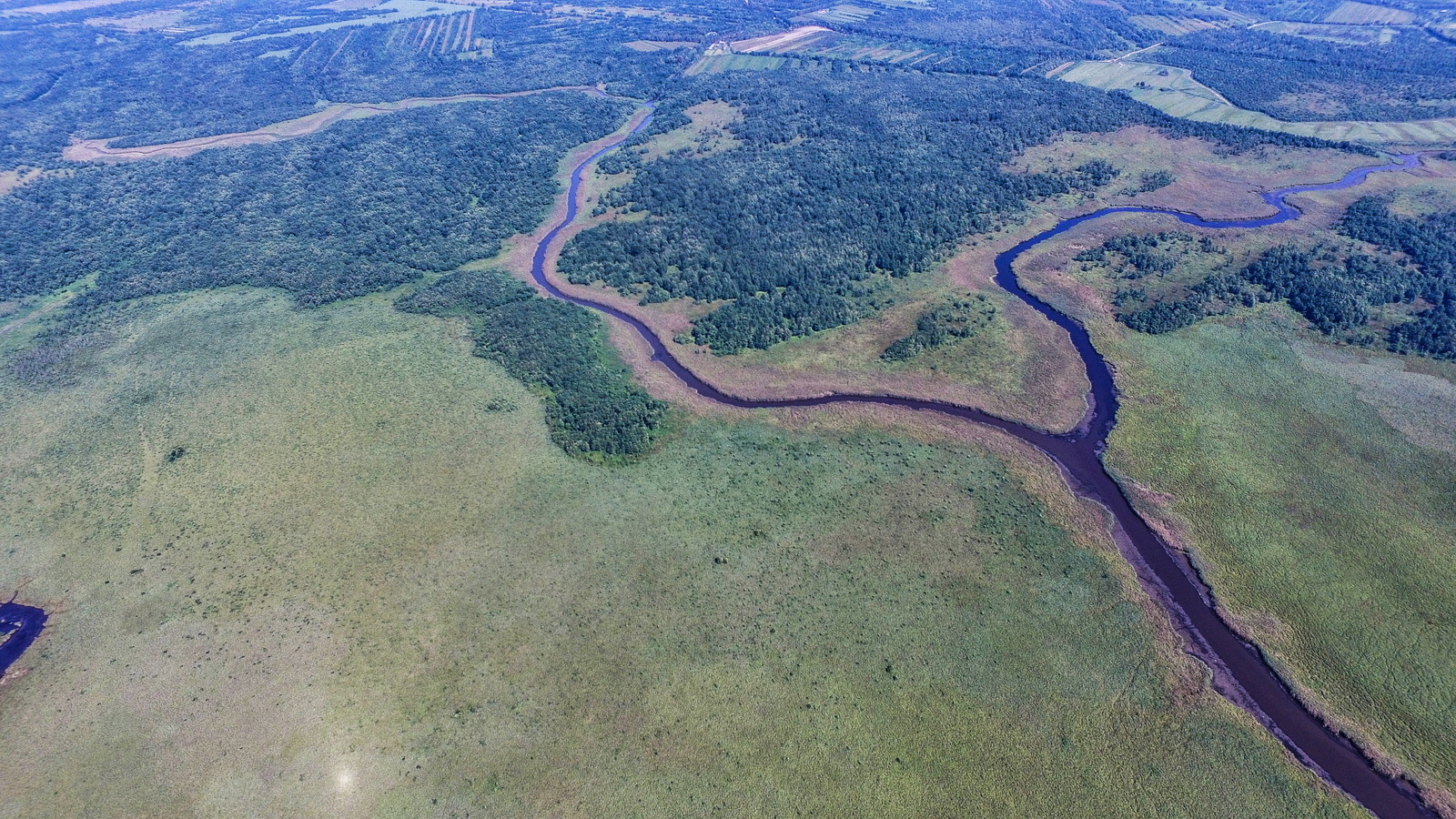
© Paata vardanashvili, CC BY-SA 4.0 Resized from original. (This derivative is under the same CC BY-SA license.)