World Heritage Identification Number: 227
World Heritage since: 1983
Category: Natural Heritage
WHE Type: Protected Areas & National Parks
Transboundary Heritage: No
Endangered Heritage: No
Country: 🇨🇮 Côte d'Ivoire
Continent: Africa
UNESCO World Region: Africa
Map
Comoé National Park: A West African Biodiversity Haven
The Comoé National Park, located in the Zanzan and Savanes districts of north-eastern Ivory Coast, stands as one of the most significant protected areas in West Africa. Inscribed as a UNESCO World Heritage Site in 1983, this expansive reserve spans over 11,500 square kilometers (4,400 sq mi), making it the largest protected area within the region.
More to come…UNESCO Description of the World Heritage Site
One of the largest protected areas in West Africa, this park is characterized by its great plant diversity. Due to the presence of the Comoé river, it contains plants which are normally only found much farther south, such as shrub savannahs and patches of thick rainforest.
UNESCO Justification of the World Heritage Site
Criterion (ix): The property, due to its geographical location and vast area dedicated to the conservation of natural resources, is an ecological unit of particular importance. Its geomorphology comprises wide plains with deep ridges carved by the Comoe River and its tributaries (Bavé, Iringou, Kongo), allowing humid plant growth towards the north and favouring the presence of wildlife in the forest zone. The property also contains green rocky inselbergs in a north-south line, surmounted by rocky ridges that form in the centre and the north, isolated massifs and small chains of 500m to 600m in altitude. Comoé National Park contains a remarkable variety of habitats, notably savannas, wooded savannas, gallery forests, fluvial forests and riparian grasslands providing an outstanding example of transitional habitats from forest to savanna. Currently, the property is one of the rare sanctuaries for a variety of West-African biological species.
Criterion (x): Due to the phytogeographical situation and the crossing of the River Comoé for over 230 kilometres, Comoé National Park teems with a vast variety of animal and plant species. This location in fact makes this property a zone where the areas of division of numerous west-African plant and animal species mingle. The property contains around 620 plant species, 135 species of mammals, (including 11 primates, 11 carnivores and 21 species of artiodactyla), 35 amphibian species and 500 bird species (a little less than 20% of which are inter-African migratory birds and roughly 5% palearctic migratory birds). Several of these bird species enjoy international protection, among which the Denham’s Bustard (Neotis denhami), the yellow casqued hornbill (Ceratogymna elata) and the brown-cheeked hornbill (Bycanistes cylindricus). The property also contains 36 of the 38 species of the biome of the Sudo-Guinean savanna inventoried in the country as well as resident populations of species that have become rare in West Africa, such as the Jabiru Ephippiorhynchus senegalensis. The different waters of the Comoé River and its tributaries are the habitat for 60 species of fish. As concerns reptiles, three species of crocodiles are found in the Park – including the dwarf crocodile (Osteolaemus tetraspis) – which are on the IUCN Red List. The property also contains three other threatened species which are the Chimpanzee, the African wild dog Lycaon pictus and the Elephant Loxodonta africana africana.
Encyclopedia Record: Comoé National Park
The Comoé National Park is a Biosphere Reserve and UNESCO World Heritage Site in the Zanzan and Savanes districts of north-eastern Ivory Coast. It is the largest protected area in West Africa, with an area of 11,500 square kilometers (4,400 sq mi), and ranges from the humid Guinea savanna to the dry Sudanian zone. This steep climatic north–south gradient allows the park to harbor a multitude of habitats with a remarkable diversity of life. Some animal and plant species even find their last sanctuary in some of the different savanna types, gallery forests, riparian grasslands, rock outcrops, or forest islands.Additional Site Details
Area: Not available
Number of Components: 1
(x) — Contains most important habitats for biodiversity
Coordinates: 9 , -4
IUCN World Heritage Outlook
The 2025 Conservation Outlook on Comoé National Park reports the following assessment:
Source: International Union for Conservation of Nature (IUCN) · View assessment
Image
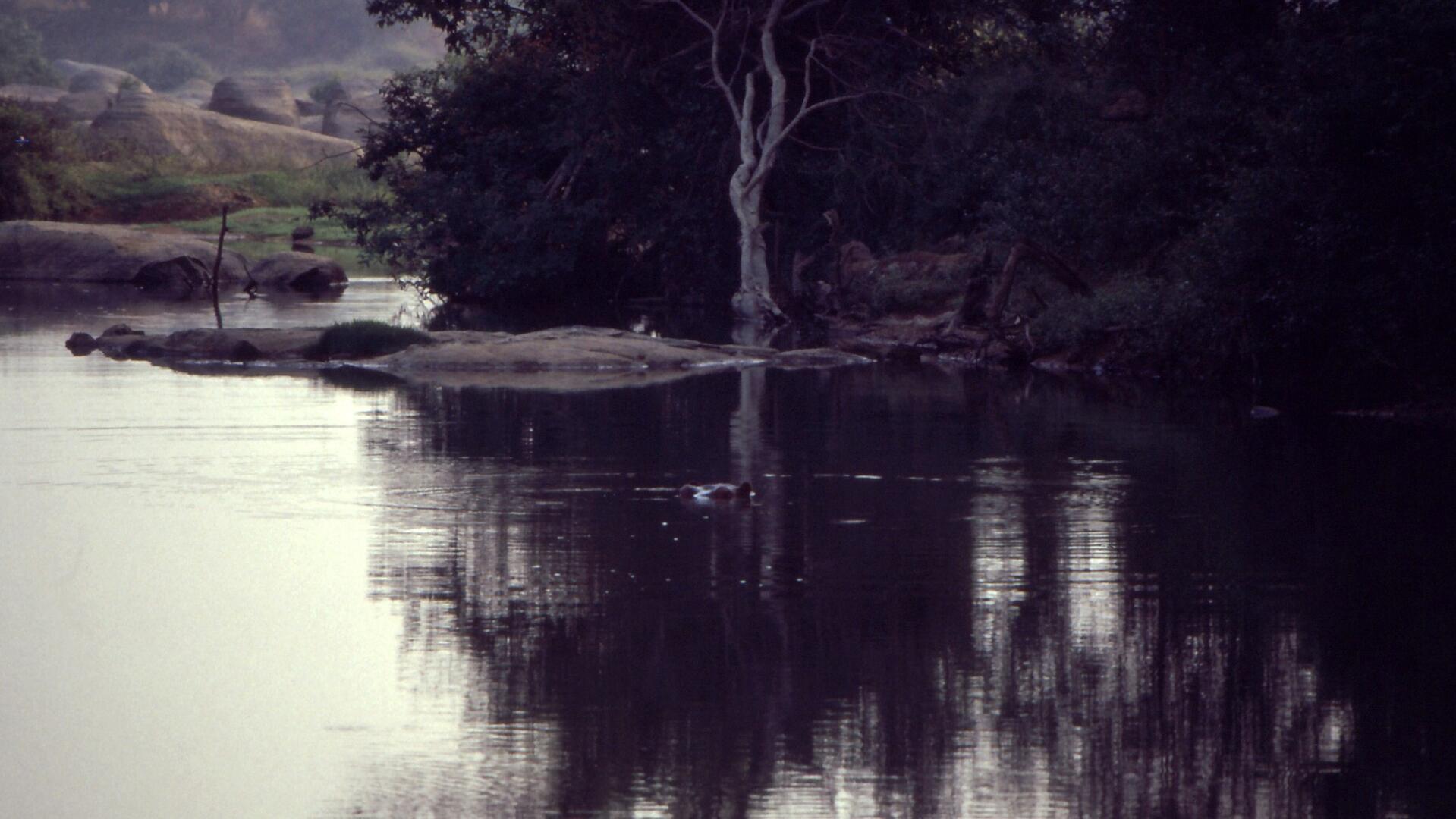
© Albert Backer, CC BY-SA 3.0 Resized from original. (This derivative is under the same CC BY-SA license.)