World Heritage Identification Number: 19
World Heritage since: 1979
Category: Cultural Heritage
WHE Type: Buildings & Architectural Ensembles
Transboundary Heritage: No
Endangered Heritage: No
Country: 🇪🇹 Ethiopia
Continent: Africa
UNESCO World Region: Africa
Map
Fasil Ghebbi: A Unique Fortress-City in the Gondar Region
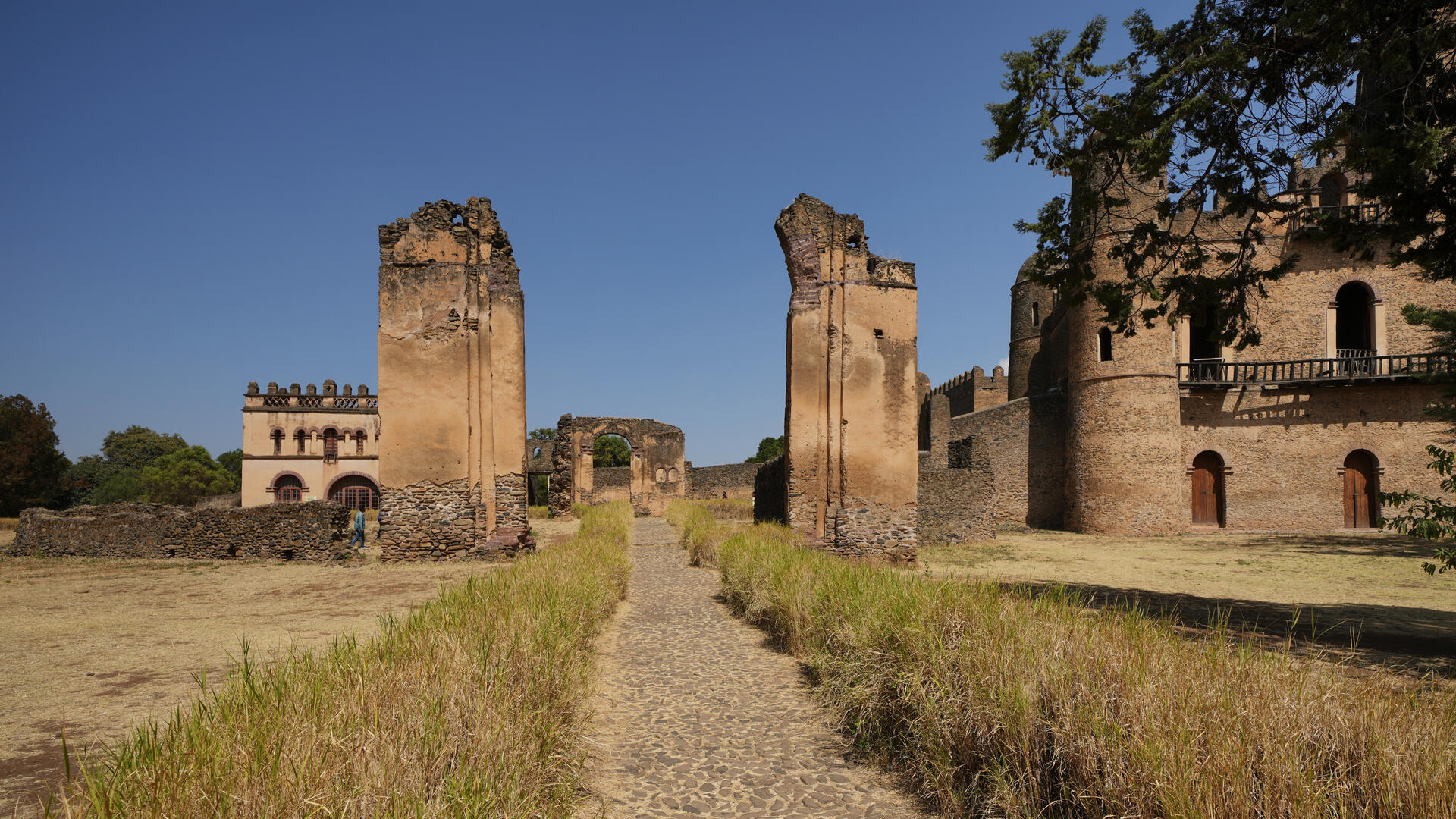
The Fasil Ghebbi, situated in the Gondar Region of Ethiopia, is a remarkable example of a fortress-city that served as the royal residence of the Ethiopian emperors during the 16th and 17th centuries. This architectural marvel, inscribed as a UNESCO World Heritage Site in 1979, offers a captivating blend of various cultural influences, making it a significant historical and architectural landmark.
More to come…UNESCO Description of the World Heritage Site
In the 16th and 17th centuries, the fortress-city of Fasil Ghebbi was the residence of the Ethiopian emperor Fasilides and his successors. Surrounded by a 900-m-long wall, the city contains palaces, churches, monasteries and unique public and private buildings marked by Hindu and Arab influences, subsequently transformed by the Baroque style brought to Gondar by the Jesuit missionaries.
UNESCO Justification of the World Heritage Site
Criterion (ii): The characteristics of the style of “the Gondarian Period” appeared from the beginning of the 17th century in the capital, Gondar, and significantly influenced the development of Ethiopian architecture for over 200 years.
Criterion (iii): Fasil Ghebbi, Qusquam and other sites bear an exceptional testimony of the modern era of Ethiopian civilization on the highlands, north of Lake Tana, from the 16th to 18th centuries.
Encyclopedia Record: Fasil Ghebbi
The Fasil Ghebbi is a fortress located in Gondar, Amhara Region, Ethiopia. It was founded in the 17th century by Emperor Fasilides and was the home of Ethiopian emperors. Its unique architecture shows diverse influences including Portuguese, Hindu, and Arab characteristics. Because of its historical importance and architecture, the fortress was inscribed as a UNESCO World Heritage Site in 1979. Ghebbi is an Amharic word for a compound or enclosure.Additional Site Details
Area: Not available
Number of Components: 1
(iii) — Unique or exceptional testimony to a cultural tradition
Coordinates: 12.607909 , 37.4697
World Heritage Research
Discover scientific research and academic studies that deepen our understanding of Fasil Ghebbi, Gondar Region from its history and significance to its conservation, management, and contemporary challenges.
-
Practices and challenges of visitor management implementation for sustainable tourism development in Fasil Ghebbi, Ethiopia
A study on Fasil Ghebbi, Ethiopia, reveals significant gaps in visitor management practices that hinder sustainable tourism development. Despite its potential as a UNESCO World Heritage Site, the site faces challenges such as low implementation levels, limited stakeholder involvement, insufficient budget and attention, lack of skilled personnel, basic visitor facilities, and negligible responsibility awareness. These issues contribute to poor visitor management, which could otherwise mitigate negative impacts on the site. The research employed a mixed-methods approach, combining surveys with 246 visitors, interviews with six key informants, and observational data. Quantitative data were analyzed using SPSS version 25, while qualitative data were thematically analyzed. The findings underscore the urgent need for improved visitor management strategies to ensure the preservation and sustainable development of Fasil Ghebbi.
Alubel, W. E., Geetachew, M. A., & Asnakew, A. (2021). Practices and challenges of visitor management implementation for sustainable tourism development in Fasil Ghebbi, Ethiopia. Journal of Hospitality Management and Tourism, 12(1), 1–8. https://doi.org/10.5897/jhmt2020.0294
View Publication Record | Read Publication