World Heritage Identification Number: 272
World Heritage since: 1987
Category: Cultural Heritage
WHE Type: Historic Cities & Urban Areas
Transboundary Heritage: No
Endangered Heritage: No
Country: 🇩🇪 Germany
Continent: Europe
UNESCO World Region: Europe and North America
Map
The Hanseatic City of Lübeck: A Medieval Gem in Modern Times
The Hanseatic City of Lübeck, located in the northern German state of Schleswig-Holstein, stands as a testament to the enduring legacy of medieval trade and political power. Founded in the 12th century, Lübeck flourished as the leading city and de facto center of the Hanseatic League, a powerful confederation of merchant guilds and market towns that dominated the economic landscape of northern Europe from the 13th to the 17th centuries. Today, the city retains much of its historical charm while maintaining a vibrant modern character.
Lübeck's rich history is evident in its architectural heritage. The historic old town, shaped largely between the 13th and 16th centuries, showcases an impressive array of patrician residences, public monuments, churches, and salt storehouses. One such monument is the Holstentor, a brick gate built between 1464 and 1478 that serves as the symbol of Lübeck. This iconic structure, with its distinctive towers and ornate carvings, provides a glimpse into the city's past grandeur.
The gate’s cultural significance extends well beyond the city itself. The Holstentor was featured on the reverse of the 50 Deutsche Mark banknote, underscoring its status as a nationally recognized emblem of German history and trade. This recognition was later reaffirmed when the Holstentor appeared on Germany’s €2 commemorative coin for Schleswig-Holstein, issued as part of the Federal States series.
Religious buildings also play a significant role in Lübeck's urban fabric. Among them, the Marienkirche (Church of Our Lady) stands out. Constructed between 1303 and 1350, it is one of the largest brick Gothic churches in the world. Its impressive dimensions and intricate interior details attest to the wealth and influence of the city during the Middle Ages.
Despite suffering extensive damage during World War II, Lübeck's historic core has been meticulously restored, preserving its unique character. The city's commitment to preserving its heritage has earned it recognition as a UNESCO World Heritage Site since 1987.
Beyond its historical significance, Lübeck is a bustling contemporary city with a diverse economy. It continues to serve as a vital hub for maritime commerce, particularly with the Nordic countries. The city's strategic location on the Trave River and the Baltic Sea has contributed to its continued importance in trade and transportation.
In addition to its commercial activities, Lübeck boasts a rich cultural scene. The city hosts numerous festivals and concert series, including major events associated with the Schleswig-Holstein Music Festival and other renowned concert series, which attracts renowned musicians and audiences from around the globe. The city's museums, such as the Museumsquartier St. Annen, the European Hansemuseum, the Buddenbrookhaus, and the Günter Grass House, offer in-depth insights into the city’s history, art, and literary heritage.
In sum, the Hanseatic City of Lübeck offers visitors a captivating blend of medieval charm and modern vibrancy. Its well-preserved historic center, symbolized by the Holstentor, provides a tangible link to the city's illustrious past in its leading role as “Queen” of the Hanseatic League. Meanwhile, its thriving contemporary economy, cultural events, and museums ensure that Lübeck remains a compelling destination for travelers seeking to explore the rich tapestry of northern European history.
UNESCO Description of the World Heritage Site
Lübeck – the former capital and Queen City of the Hanseatic League – was founded in the 12th century and prospered until the 16th century as the major trading centre for northern Europe. It has remained a centre for maritime commerce to this day, particularly with the Nordic countries. Despite the damage it suffered during the Second World War, the basic structure of the old city, consisting mainly of 15th- and 16th-century patrician residences, public monuments (the famous Holstentor brick gate), churches and salt storehouses, remains unaltered.
UNESCO Justification of the World Heritage Site
Criterion (iv): As outstanding examples of types of buildings, the most authentic areas of the Hanseatic City of Lübeck exemplify the power and the historic role of the Hanseatic League.
Encyclopedia Record: Lübeck
Lübeck, officially the Hanseatic City of Lübeck, is a city in Northern Germany. With around 220,000 inhabitants, it is the second-largest city on the German Baltic coast and the second-largest city in the state of Schleswig-Holstein, after its capital of Kiel. It is the 36th-largest city in Germany.Additional Site Details
Area: 81.1 hectares
Number of Components: 3
Coordinates: 53.86667 , 10.69167
Image
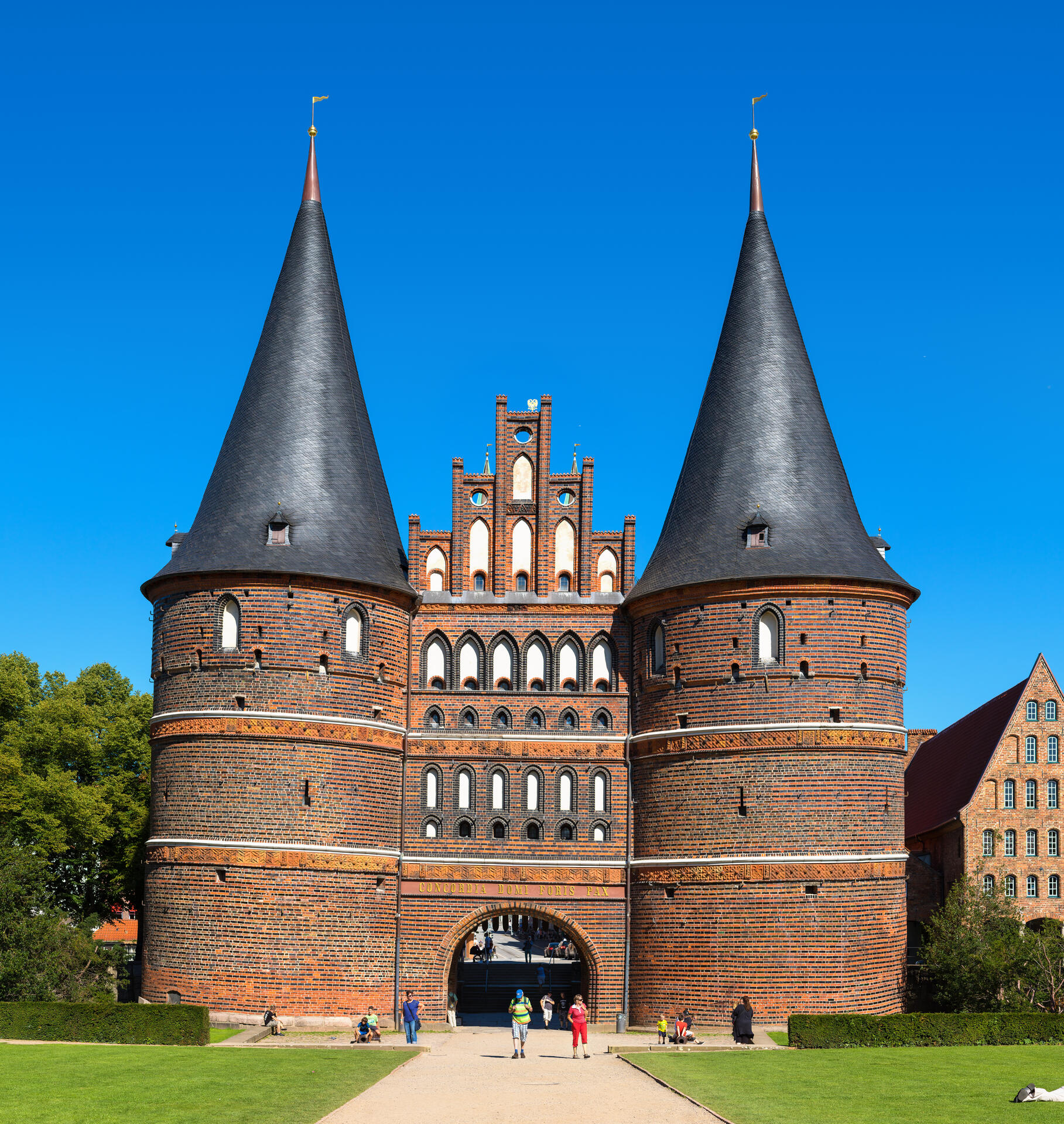
© Christian Wolf (www.c-w-design.de), CC BY-SA 3.0 de Resized from original. (This derivative is under the same CC BY-SA license.)
World Heritage Research
Discover scientific research and academic studies that deepen our understanding of Hanseatic City of Lübeck from its history and significance to its conservation, management, and contemporary challenges.
-
Hanseatic Cities Letters of 1490 from Archive of Hanseatic City of Lubeck in Context of Antwerp Anglo-Hanseatic Negotiations Preparation
Original letters from the late 15th century reveal Lübeck's pivotal role in negotiating Anglo-Hanseatic relations during a period of escalating conflict. Analysis of merchant correspondence between Cologne, Bremen, Münster, Danzig, and Lübeck demonstrates that negotiations extended beyond major trading cities to include those with lesser representation in England, while also highlighting Lübeck's strengthened leadership within the Hanseatic League during crisis. The study contextualizes these documents within broader geopolitical tensions, offering new insights into diplomatic preparations of the 1490s.
Tsvetkova, A. S., Ushakov, A. V.,. (2023). Hanseatic Cities Letters of 1490 from Archive of Hanseatic City of Lubeck in Context of Antwerp Anglo-Hanseatic Negotiations Preparation. Caurus, 2(2), 96–106. https://doi.org/10.34680/caurus-2023-2(2)-96-106
View Publication Record | Read Publication -
The Specifics of the Functioning of Lübeck Law in Narva within the Context of Hanseatic Trade in the 15th to the First Half of the 16th Century
Lübeck law, applied in Narva—a key Hanseatic trade hub—underwent significant evolution during the 15th to mid-16th centuries, adapting to local political and economic demands while integrating foreign legal norms. This study reveals that Narva's judicial system was deliberately tailored to serve the interests of its leadership, blending Lübeck law with customary, seigniorial, and merchant laws. A notable shift occurred in the late 15th century when Narva gained the right to appeal to Lübeck as its supreme authority, replacing Revel. The research highlights how trade dynamics shaped legal pluralism in the Baltic region, offering insights into the interplay between political power and economic interests during this period.
Yakunina, V. A. (2023). The Specifics of the Functioning of Lübeck Law in Narva within the Context of Hanseatic Trade in the 15th to the First Half of the 16th Century. Journal of Frontier Studies, 8(4), 323–346. https://doi.org/10.46539/jfs.v8i4.525
View Publication Record | Read Publication -
A “Russian Staple” In Lübeck’s Trading Strategy At The Early Modern Time
A previously unknown letter from Lübeck to Reval in 1571, discovered in the Tallinn City Archives, reveals the first detailed mention of the 'Russian Staple'—a strategic initiative by the Hanseatic League to expand its trading privileges in Russia. The proposal aimed to shift the Baltic Sea trade center to Russian cities like Ivangorod or Pskov, offering duty-free trade and guaranteed transportation rights under tsarist patronage. While Lübeck initially established a trading post (Lübecker Hof) in Pskov, diplomatic efforts later sought broader expansion during the reigns of Tsars Fedor Ioannovich and Boris Godunov. Though records suggest limited internal discussion within Hanseatic congresses, the strategy hints at Lübeck's ambition to monopolize Russian trade or create its own economic hinterland.
Bessudnova, M. (2021). A “Russian Staple” In Lübeck’s Trading Strategy At The Early Modern Time. European Proceedings of Social and Behavioural Sciences, 859–868. https://doi.org/10.15405/epsbs.2021.05.02.110
View Publication Record | Read Publication -
Understanding Divergent Constructions of Vulnerability and Resilience: Climate Change Discourses in the German Cities of Lübeck and Rostock
Despite sharing similar geographic and climatic conditions, the German coastal cities of Lübeck and Rostock exhibit divergent perceptions of vulnerability and resilience to climate change. This discrepancy is attributed to their distinct historical and socio-economic contexts, with Rostock's past as part of the former GDR and subsequent marginalization influencing local knowledge about climate impacts. The study employs discourse analysis of news articles and expert interviews to reveal these idiosyncratic constructions, suggesting that social constructionism can provide a framework for understanding such differences. Additionally, it underscores the role of shared experiences like social marginalization in shaping climate change narratives.
Christmann, G. B., & Heimann, T. (2017). Understanding Divergent Constructions of Vulnerability and Resilience: Climate Change Discourses in the German Cities of Lübeck and Rostock. International Journal of Mass Emergencies & Disasters, 35(2), 120–143. https://doi.org/10.1177/028072701703500207
View Publication Record | Read Publication -
Local Constructions of Vulnerability and Resilience in the Context of Climate Change. A Comparison of Lübeck and Rostock
Climate change perceptions vary significantly between similar geographical and physical conditions, shaped by cultural and social patterns. This study reveals that while physical aspects influence vulnerability and resilience to climate change, they are predominantly constructed through local discourses. In Lübeck, the strong Hanseatic tradition dominates climate change narratives, whereas in Rostock, the challenges of a transformation society shape these perceptions. The research employs social constructivism and actor-network theory to develop a heuristic model for empirical analysis, demonstrating how local cultural contexts interpret global climate change realities.
Christmann, G., Balgar, K., & Mahlkow, N. (2014). Local Constructions of Vulnerability and Resilience in the Context of Climate Change. A Comparison of Lübeck and Rostock. Social Sciences, 3(1), 142–159. https://doi.org/10.3390/socsci3010142
View Publication Record | Read Publication -
The City of Lübeck and the Internationality of Early Hanseatic Trade
Early Hanseatic trade in the Baltic region reached significant internationalization, with Lübeck playing a pivotal role. This study reveals how the city's strategic position and economic policies facilitated the expansion of long-distance commerce, integrating Northern European markets. By analyzing historical records, archaeological evidence, and trade documents, researchers trace the development of Lübecks infrastructure and its influence on the Hanseatic League's growth. The findings highlight Lübeck's importance in connecting regional economies, shaping medieval European trade networks.
Jahnke, C. (2013). The City of Lübeck and the Internationality of Early Hanseatic Trade. The Hanse in Medieval and Early Modern Europe, 37–58. https://doi.org/10.1163/9789004241930_003
View Publication Record | Read Publication -
Care of the insane in Lübeck during the 17th and 18th centuries
A comprehensive source study of the House of the Poor Insane in Lübeck reveals that its care for the mentally ill evolved from punitive confinement in the 17th century to phases of reform and repression, reflecting broader shifts in psychiatric treatment. The analysis, based on minute-books and account-books, highlights a transition from harsh containment to early medical intervention by the 19th century. Comparisons with other institutions suggest that Lübeck's trajectory was influenced by local governance and societal attitudes, offering insights into the historical development of inpatient care.
Dilling, H., Thomsen, H. P., & Hohagen, F. (2010). Care of the insane in Lübeck during the 17th and 18th centuries. History of Psychiatry, 21(4), 371–386. https://doi.org/10.1177/0957154x09102481
View Publication Record | Read Publication