World Heritage Identification Number: 566
World Heritage since: 1991
Category: Cultural Heritage
WHE Type: Historic Cities & Urban Areas
Transboundary Heritage: No
Endangered Heritage: No
Country: 🇧🇴 Bolivia (Plurinational State of)
Continent: Americas
UNESCO World Region: Latin America and the Caribbean
Map
The Historic City of Sucre: A Blend of European and Indigenous Architecture
The Historic City of Sucre, located in the heart of Bolivia, serves as a unique testament to the harmonious fusion of indigenous and European architectural styles. Established in the early 16th century, this city holds significant historical and cultural value, earning it a place on the UNESCO World Heritage List in 1991.
More to come…UNESCO Description of the World Heritage Site
Sucre, the first capital of Bolivia, was founded by the Spanish in the first half of the 16th century. Its many well-preserved 16th-century religious buildings, such as San Lázaro, San Francisco and Santo Domingo, illustrate the blending of local architectural traditions with styles imported from Europe.
UNESCO Justification of the World Heritage Site
Criterion (iv): The rich heritage of the Historic Centre of the Spanish city of Sucre (La Plata) is an excellent intact and well-preserved illustration of this architectural blending achieved in Latin America through the assimilation of local traditions and styles imported from Europe.
Encyclopedia Record: Sucre
Sucre, officially La Ilustre y Heroica Sucre is the de jure capital city of Bolivia, the capital of the Chuquisaca Department and the sixth most populous city in Bolivia. Located in the south-central part of the country, Sucre lies at an elevation of 2,790 m (9,150 ft), making it the second-highest capital city in the world after Quito. This relatively high altitude gives the city a subtropical highland climate with cool temperatures year-round. Over the centuries, the city has received various names, including La Plata, Charcas, and Chuquisaca. Today, the region is of predominantly Quechua background, with some Aymara communities and influences.Additional Site Details
Area: Not available
Number of Components: 1
Coordinates: -19.04799 , -65.259592
Image
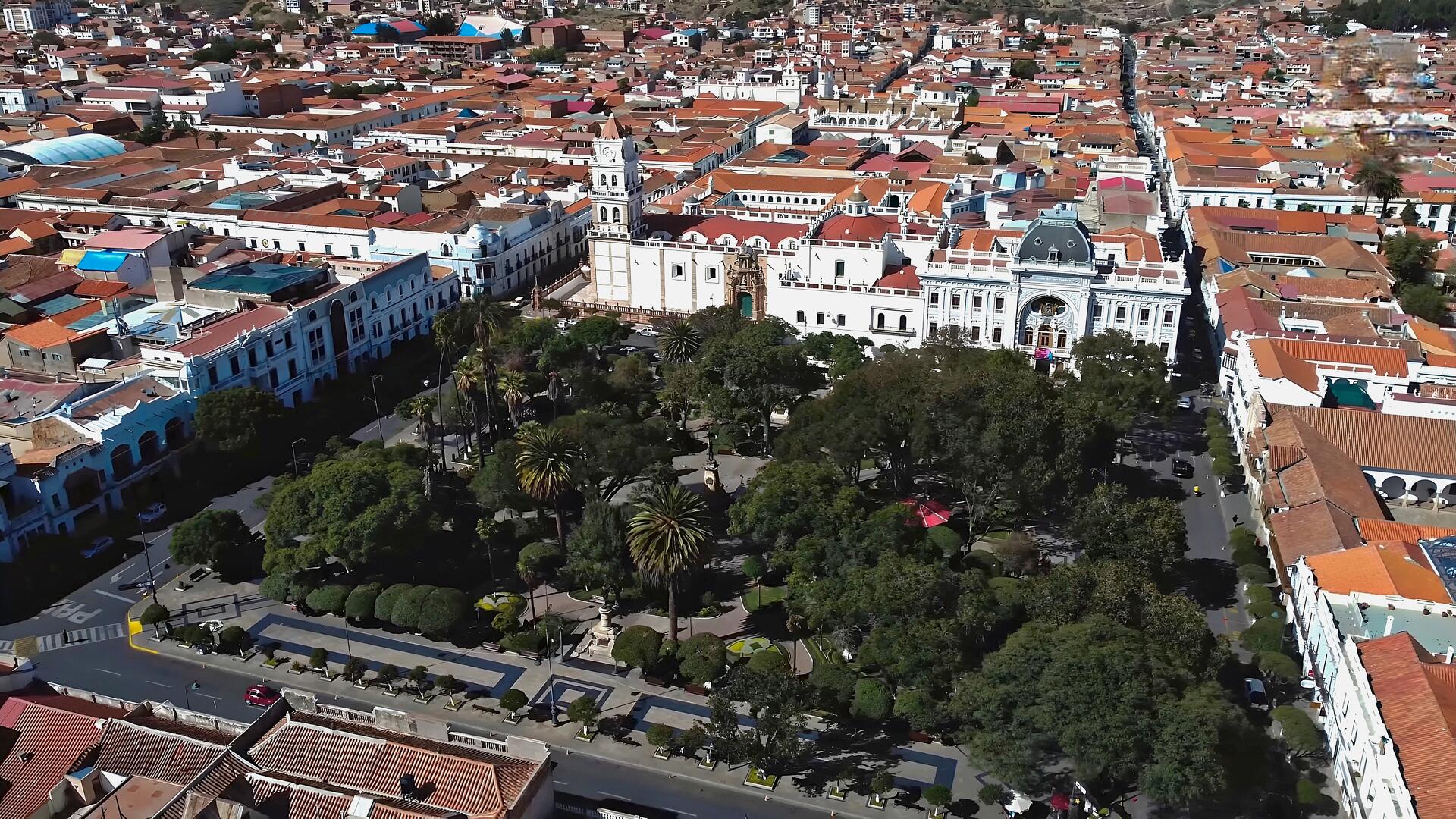
© Parallelepiped09, CC BY-SA 4.0 Resized from original. (This derivative is under the same CC BY-SA license.)
World Heritage Research
Discover scientific research and academic studies that deepen our understanding of Historic City of Sucre from its history and significance to its conservation, management, and contemporary challenges.
-
Cultural Interest and Emotional Perception of Tourists in WHS
A deeper emotional connection and cultural interest among tourists visiting UNESCO World Heritage Sites, such as Sucre's historic city, significantly enhances their satisfaction with the experience. Research identifies four distinct tourist profiles—alternative, cultural, emotional, and heritage—based on their engagement with artistic and monumental heritage. The study underscores the importance of fostering knowledge about these sites to amplify positive perceptions, suggesting that targeted educational initiatives could further enrich visitor experiences.
Pérez Gálvez, J. C., Fuentes Jiménez, P. A., Medina-Viruel, M. J., & González Santa Cruz, F. (2020). Cultural Interest and Emotional Perception of Tourists in WHS. Journal of Quality Assurance in Hospitality & Tourism, 22(3), 345–366. https://doi.org/10.1080/1528008x.2020.1780538
View Publication Record | Read Publication