World Heritage Identification Number: 940
World Heritage since: 2002
Category: Cultural Heritage
WHE Type: Historic Cities & Urban Areas
Transboundary Heritage: No
Endangered Heritage: Yes
Country: 🇸🇷 Suriname
Continent: Americas
UNESCO World Region: Latin America and the Caribbean
Map
The Historic Inner City of Paramaribo: A Fusion of Cultures and Architecture
The Historic Inner City of Paramaribo, located in the heart of Suriname's capital, offers a unique blend of cultural diversity and architectural charm that has earned it a place on the prestigious UNESCO World Heritage List since 2002. This historic center, nestled along the banks of the Suriname River, presents a captivating snapshot of the city's rich history, showcasing the harmonious fusion of Dutch colonial architecture with indigenous building techniques and materials.
More to come…UNESCO Description of the World Heritage Site
Paramaribo is a former Dutch colonial town from the 17th and 18th centuries planted on the northern coast of tropical South America. The original and highly characteristic street plan of the historic centre remains intact. Its buildings illustrate the gradual fusion of Dutch architectural influence with traditional local techniques and materials.
UNESCO Justification of the World Heritage Site
Criterion (ii): Paramaribo is an exceptional example of the gradual fusion of European architecture and construction techniques with indigenous South American materials and crafts to create a new architectural idiom.
Criterion (iv): Paramaribo is a unique example of the contact between the European culture of the Netherlands and the indigenous cultures and environment of South America in the years of intensive colonization of this region in the 16th and 17th centuries.
Encyclopedia Record: Paramaribo
Paramaribo, locally nicknamed Foto, is the capital and largest city of Suriname, located on the banks of the Suriname River in the Paramaribo District. Paramaribo has a population of roughly 252,581 people as of the 2025 estimate, almost half of Suriname's population. The historic inner city of Paramaribo has been a UNESCO World Heritage Site since 2002.Additional Site Details
Area: 30 hectares
Number of Components: 1
(iv) — Outstanding example of a type of building or landscape
Coordinates: 5.82611 , -55.15
Image
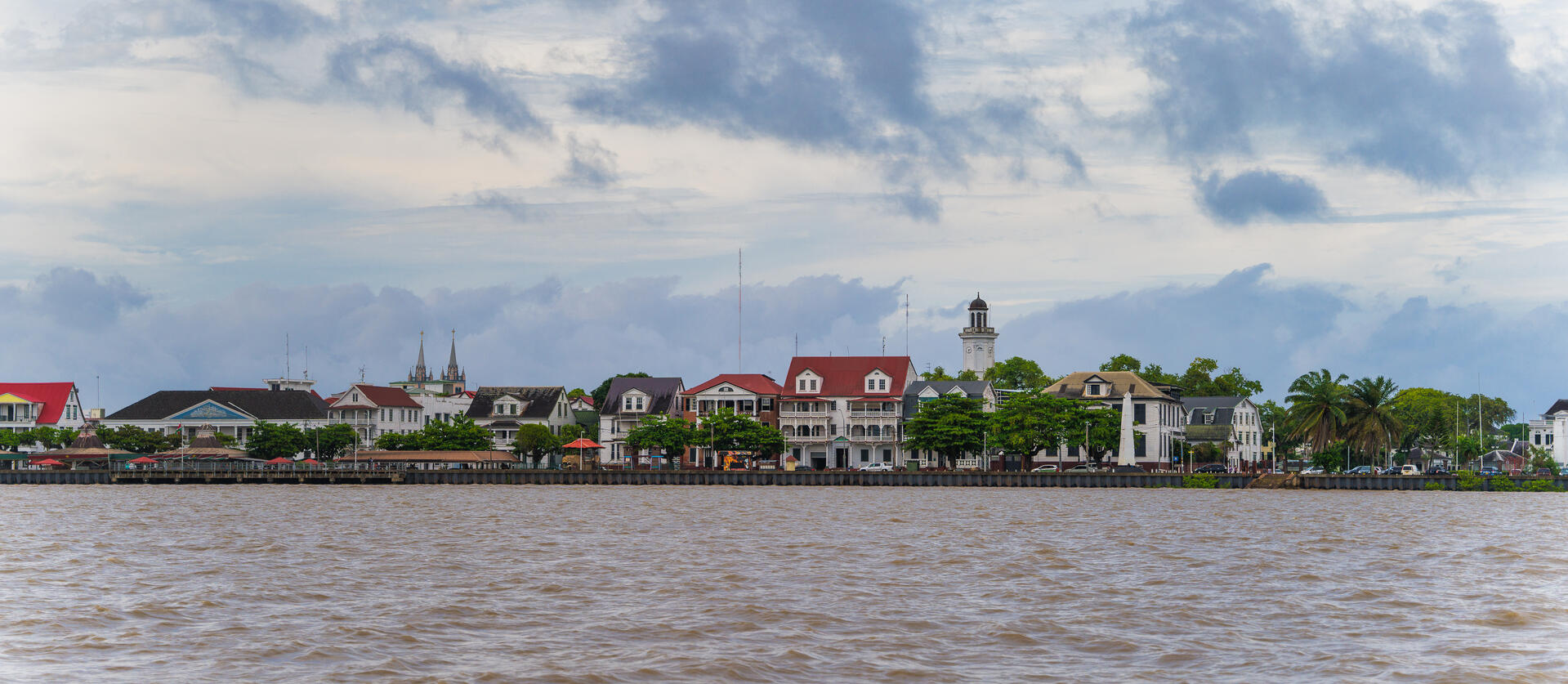
© Rafaeljantz, CC BY-SA 4.0 Resized from original. (This derivative is under the same CC BY-SA license.)
World Heritage Research
Discover scientific research and academic studies that deepen our understanding of Historic Inner City of Paramaribo from its history and significance to its conservation, management, and contemporary challenges.
-
Reimagining Heerenstraat: Active Heritage in Paramaribo’s Historic Inner City
A collaborative workshop, part of the Paramaribo Urban Rehabilitation Program (PURP), identified Heerenstraat as a key site for sustainable revitalization within Paramaribo’s Historic Inner City. The study, involving TU Delft students and local stakeholders, demonstrated that small-scale interventions—focusing on spatial justice, social participation, and urban liveliness—can effectively enhance the street's potential as an iconic destination. Leveraging Paramaribo’s shared colonial history with Amsterdam, the workshop integrated insights from Dutch-Surinamese perspectives and cultural archives to develop a concrete roadmap for a more inclusive, safe, and vibrant public space.
del Hierro, S., de Carvalho Filho, L., & Tjong-Ayong, J. (2020). REIMAGINING HEERENSTRAAT: Active Heritage in Paramaribo’s Historic Inner City. https://doi.org/10.47982/bookrxiv.11
View Publication Record | Read Publication -
Colonial Heritage in Paramaribo, Suriname: Legislation and Senses of Ownership, a Dilemma in Preservation?
Effective preservation of colonial heritage, such as the historic inner city of Paramaribo, Suriname, hinges on resolving complex ownership dilemmas and legal challenges. This study reveals that successful monument preservation policies are intricately linked to legal property rights, legislation enforcement, and stakeholder cooperation—especially in multicultural contexts where colonial structures may be perceived as alien. Despite international recognition of heritage value, Paramaribo's case demonstrates persistent tensions between national policy goals and local realities, including economic priorities and political will. The research employs a mixed-methods approach, analyzing Suriname's legislative framework and field data to assess its effectiveness, highlighting critical gaps in enforcement and stakeholder engagement that hinder preservation efforts.
van Maanen, E., & Ashworth, G. (2013). Colonial Heritage in Paramaribo, Suriname: Legislation and Senses of Ownership, a Dilemma in Preservation? International Journal of Cultural Property, 20(3), 289–310. https://doi.org/10.1017/s0940739113000131
View Publication Record | Read Publication