World Heritage Identification Number: 1680
World Heritage since: 2023
Category: Cultural Heritage
WHE Type: Archaeological Sites
Transboundary Heritage: No
Endangered Heritage: No
Country: 🇸🇷 Suriname
Continent: Americas
UNESCO World Region: Latin America and the Caribbean
Map
Exploring the Historical Significance of the Jodensavanne Archaeological Site: A Glimpse into Early Jewish Colonization Attempts in the New World
The Jodensavanne Archaeological Site, inscribed as a UNESCO World Heritage Site in 2023, offers a unique insight into early Jewish colonization attempts in the New World. Situated on the banks of the Suriname River in northern Suriname, this serial property comprises two main components: the Jodensavanne Settlement and the Cassipora Creek Cemetery.
More to come…UNESCO Description of the World Heritage Site
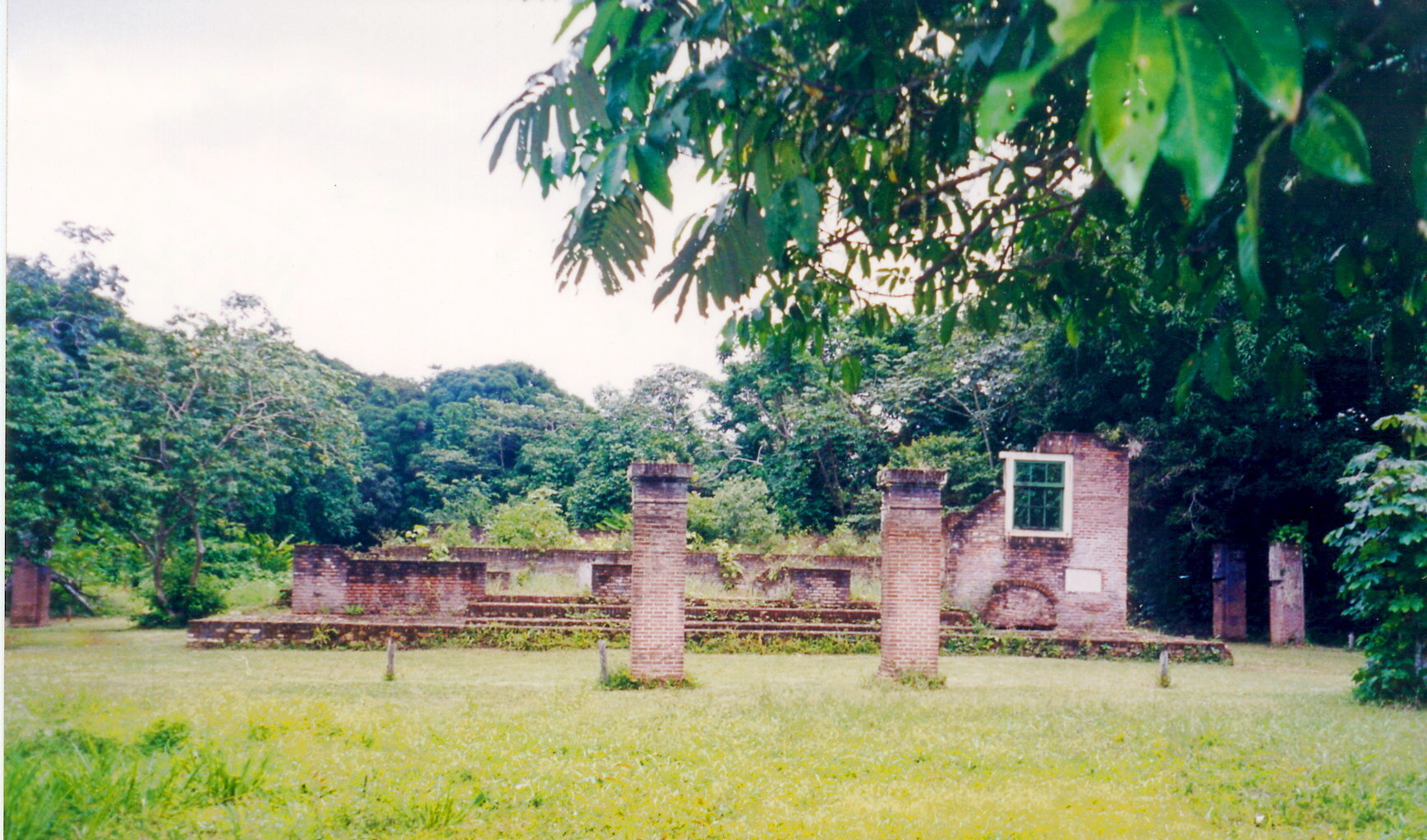
Located on high ground on the densely forested banks of the Suriname River, the Jodensavanne Archaeological Site in northern Suriname is a serial property that illustrates early Jewish colonization attempts in the New World. The Jodensavanne Settlement, founded in the 1680s, includes the ruins of what is believed to be the earliest synagogue of architectural significance in the Americas, along with cemeteries, boat landing areas, and a military post. The Cassipora Creek Cemetery is the remnant of an older settlement founded in the 1650s. Located amidst Indigenous territory, the settlements were inhabited, owned, and governed by Jews who lived there together with free and enslaved persons of African and Indigenous descent. The settlements had the most extensive arrangement of privileges and immunities known in the early modern Jewish world.UNESCO Justification of the World Heritage Site
Criterion (iii): The Jodensavanne Archaeological Site is an exceptional testimony within the Atlantic Sephardic diaspora of a Jewish civilisation that was granted territorial and communal autonomy, a Jewish 'state within a state' that existed from the 17th to the 19th century in a slave society and a frontier zone. The settlement existed in an area adjacent to Indigenous territories, and the Jewish settlers were instrumental in its defence. Several of the material remains in the property are exceptional due to their age (the cemeteries) and their architecture. Furthermore, the archaeological evidence at the settlement and cemeteries points towards differing degrees of coexistence and conflict between cultures and ethnocultural groups, including Jews, Indigenous peoples, enslaved Africans, and European colonists.
Encyclopedia Record: Jodensavanne
Jodensavanne was a Jewish plantation community in Suriname, South America, and was for a time the centre of Jewish life in the colony. It was established in the 1600s by Sephardi Jews and became more developed and wealthy after a group of Jews fleeing persecution in Brazil settled there in the 1660s. It was located in what is now Para District, about 50 km (31 mi) south of the capital Paramaribo, on the Suriname River. Sugarcane plantations were established by forcing Black African people to work as slaves. At its height in around 1700, Jodensavanne was home to roughly 500 plantation owners and 9000 enslaved people. The colony faced regular attacks from Indigenous people, slave revolts, and even raids from the French navy. The community eventually relocated to the capital of Paramaribo. Clearing of grave sites and maintenance of the synagogue ruins has been attempted at various times from the 1940s to the 21st century.Additional Site Details
Area: 24.8 hectares
Number of Components: 2
Coordinates: 5.4311111111 , -54.9826666667
World Heritage Research
Discover scientific research and academic studies that deepen our understanding of Jodensavanne Archaeological Site: Jodensavanne Settlement and Cassipora Creek Cemetery from its history and significance to its conservation, management, and contemporary challenges.
-
Archaeology of Cassipora Creek
Hidden within Suriname's jungle, the Jodensavanne Archaeological Site reveals the remnants of a 17th-century Sephardic Jewish settlement that thrived under Dutch colonial rule. This study uncovers how Jewish colonists, many descendants of Spanish and Portuguese conversos, strategically embraced notions of whiteness to secure their legal standing in colonial society while contributing significantly to European imperial expansion. Through historical, archaeological, and remote sensing data analysis from Cassipora Creek and Jodensavanne, the research sheds light on the complex interplay between Jewish communal identity, citizenship, and racial ideologies during the early modern period. It also highlights the experiences of black and mixed-race Jews within a plantation society, offering a nuanced perspective on their roles in shaping colonial dynamics.
Goldstone, S. (2022). Archaeology of Cassipora Creek. New Florida Journal of Anthropology, 3(1). https://doi.org/10.32473/nfja.v3i1.129866
View Publication Record | Read Publication -
De Jodensavanne. Ontstaan, geschiedenis en behoud van een Joodse site in Suriname
Jodensavanne, located 70 kilometers south of Paramaribo on the right bank of the Suriname River, represents the first and only semi-autonomous Jewish settlement in the New World. Established around 1650, it was the largest Jewish community in the hemisphere at that time, attracting labor forces with privileges such as religious freedom, land ownership, and a separate court system. The site's synagogue ruins stand as the first architecturally significant building in America and one of the oldest, symbolizing the pioneers of American Judaism. By 1832, the community had relocated to Paramaribo, leaving Jodensavanne uninhabited. This study by Gyssels and Sijlbing (2021) examines the challenges faced by this historical site today, focusing on its preservation and memory. The research likely employs historical analysis and archival documentation to shed light on the site's significance and current conservation needs.
Gyssels, K., & Sijlbing, H. (2021). De Jodensavanne. Ontstaan, geschiedenis en behoud van een Joodse site in Suriname. Témoigner. Entre Histoire et Mémoire, 133, 130–138. https://doi.org/10.4000/temoigner.10501
View Publication Record | Read Publication -
Jewish Autonomy in a Slave Society: Suriname in the Atlantic World, 1651–1825 by Aviva Ben-Ur
A groundbreaking study reveals that the Jewish community in Suriname, particularly at Jodensavanne, thrived not as a haven of religious freedom but as a frontier settlement deeply intertwined with colonial slavery. Aviva Ben-Ur challenges the romanticized narrative of Jodensavanne by exposing its reliance on enslaved African labor and its role in advancing imperial interests. The research employs an Atlantic history model to center the voices of enslaved peoples, highlighting their agency and integration into Jewish society through practices like slave concubinage and manumission. This approach corrects previous scholarship that marginalized enslaved Africans, demonstrating how Eurafrican Jews emerged as a distinct class with cultural and institutional independence, reshaping our understanding of Caribbean Jewish history.
Casteel, S. P. (2021). Jewish Autonomy in a Slave Society: Suriname in the Atlantic World, 1651–1825 by Aviva Ben-Ur. American Jewish History, 105(3), 431–433. https://doi.org/10.1353/ajh.2021.0038
View Publication Record | Read Publication -
Remnant Stones: The Jewish Cemeteries and Synagogues of Suriname. Epitaphs , and: Remnant Stones: The Jewish Cemeteries and Synagogues of Suriname. Essays , and: Creole Jews: Negotiating Community in Colonial Suriname (review)
A groundbreaking analysis reveals that Suriname's Jewish cemeteries and synagogues, particularly those in Jodensavanne, serve as 'open air archives' offering profound insights into the religious life, social dynamics, and racial identity of early American Jewish communities. The study challenges traditional historiography by integrating material culture and iconography alongside textual evidence, uncovering a rich visual vocabulary used by Surinamese Jews to convey beliefs, life stories, and status. Through meticulous transcriptions and translations of 1,700 epitaphs spanning six languages (1666–1904) and detailed architectural analysis of four cemeteries and the Kahal Kados Beraha VeSalom synagogue (1685), researchers demonstrate the central role of these sites in shaping early American notions of race, gender, and sexuality. The findings underscore Suriname's significance as a hub for Jewish history, with its community peaking at 1,500 residents—far surpassing North America in the late 18th century.
Leibman, L. (2013). Remnant Stones: The Jewish Cemeteries and Synagogues of Suriname. Epitaphs , and: Remnant Stones: The Jewish Cemeteries and Synagogues of Suriname. Essays , and: Creole Jews: Negotiating Community in Colonial Suriname (review). American Jewish History, 97(1), 85–88. https://doi.org/10.1353/ajh.2011.0021
View Publication Record | Read Publication