World Heritage Identification Number: 417
World Heritage since: 1999
Category: Mixed Cultural Heritage and Natural Heritage
WHE Type: Natural Landscapes & Geographic Features
Transboundary Heritage: No
Endangered Heritage: No
Country: 🇪🇸 Spain
Continent: Europe
UNESCO World Region: Europe and North America
Map
Ibiza, Biodiversity, and Culture: A Unique Blend of Natural Wonders and Historical Richness
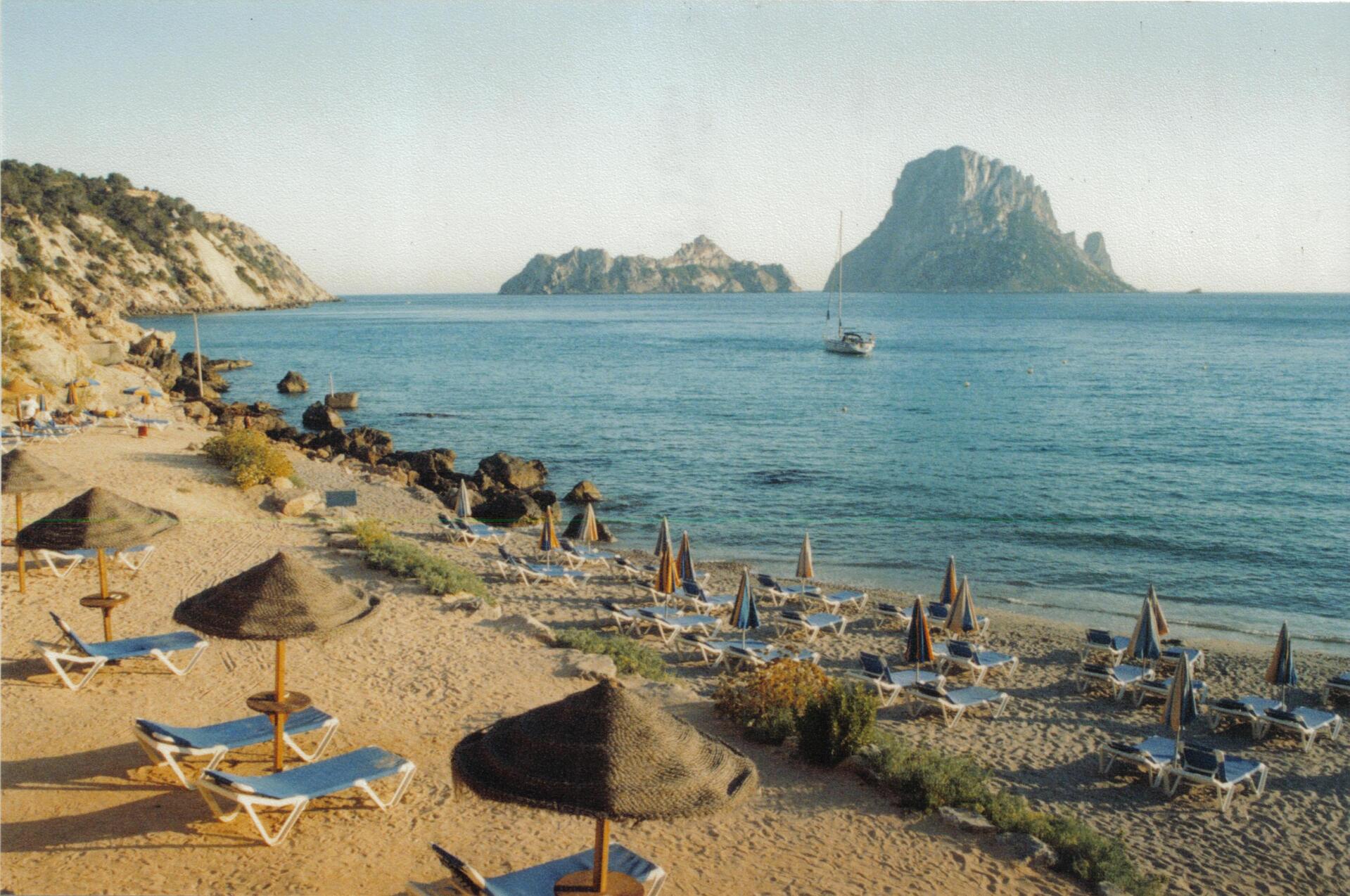
Ibiza, officially known as Illes Balears, is one of the eight autonomous communities of Spain, located in the Mediterranean Sea. This beautiful island, the third-largest among the Balearic Islands, boasts a rich biodiversity and a captivating cultural heritage that have earned it a place on the prestigious UNESCO World Heritage List since 1999.
More to come…UNESCO Description of the World Heritage Site
Ibiza provides an excellent example of the interaction between the marine and coastal ecosystems. The dense prairies of oceanic Posidonia (seagrass), an important endemic species found only in the Mediterranean basin, contain and support a diversity of marine life. Ibiza preserves considerable evidence of its long history. The archaeological sites at Sa Caleta (settlement) and Puig des Molins (necropolis) testify to the important role played by the island in the Mediterranean economy in protohistory, particularly during the Phoenician-Carthaginian period. The fortified Upper Town (Alta Vila) is an outstanding example of Renaissance military architecture; it had a profound influence on the development of fortifications in the Spanish settlements of the New World.
UNESCO Justification of the World Heritage Site
Criterion (ii): The intact 16th century fortifications of Ibiza bear unique witness to the military architecture and engineering and the aesthetics of the Renaissance. This Italian-Spanish model was very influential, especially in the construction and fortification of towns in the New World.
Criterion (iii): The Phoenician ruins of Sa Caleta and the Phoenician-Punic cemetery of Puig des Molins are exceptional evidence of urbanization and social life in the Phoenician colonies of the western Mediterranean. They constitute a unique resource, in terms of volume and importance, of material from the Phoenician and Carthaginian tombs.
Criterion (iv): The Upper Town of Ibiza is an excellent example of a fortified acropolis which preserves in an exceptional way in its walls and in its urban fabric successive imprints of the earliest Phoenician settlements and the Arab and Catalan periods through to the Renaissance bastions. The long process of building the defensive walls has not destroyed the earlier phases or the street pattern but has incorporated them in the ultimate phase.
Criterion (ix): The marine component of this property is characterised by the presence of dense and very well-preserved Posidonia Oceanica (Neptune Grass) meadows and Cushion Coral (or Mediterranean coral) reefs. The Posidonia Oceanica (Neptune Grass) of this site is defined as the best preserved out of the Mediterranean area. The property includes important coastal lagoon and wetland ecosystems as well as halophyte communities, which also support important water bird populations. The evolution of Ibiza’s shoreline is one of the best examples of the influence of Posidonia Oceanica (Neptune Grass) on the interaction of coastal and marine ecosystems.
Criterion (x): The exceptionally dense and well-preserved Posidonia Oceanica (Neptune Grass) meadows support a diverse fauna of invertebrates and fish, and provide important spawning and nursery habitats, including to endemic and threatened species. The coastal and terrestrial parts of the site boast several endemic plant species, including rare and vulnerable species. The property is also home to the most diverse community of Mediterranean Pillow Coral in the Mediterranean, and houses an important community of Mangrove Tunicate, a marine species that is acknowledged to be of value in preventing and combating different kinds of cancer. Some of the property’s component parts are also important for migratory birds.
Encyclopedia Record: Ibiza
Ibiza or Iviza is a Spanish island in the Mediterranean Sea off the eastern coast of the Iberian Peninsula. It is 150 kilometres from the city of Valencia. It is the third largest of the Balearic Islands in area, but the second-largest by population. Its largest settlements are Ibiza Town, Santa Eulària des Riu, and Sant Antoni de Portmany. Its highest point, called Sa Talaiassa, is 475 metres above sea level.Additional Site Details
Area: 9,020.3 hectares
Number of Components: 4
(iii) — Unique or exceptional testimony to a cultural tradition
(iv) — Outstanding example of a type of building or landscape
(ix) — Outstanding example representing ecological and biological processes
(x) — Contains most important habitats for biodiversity
Coordinates: 38.91113889 , 1.435194444
IUCN World Heritage Outlook
The 2025 Conservation Outlook on Ibiza: Biodiversity and Culture reports the following assessment:
Source: International Union for Conservation of Nature (IUCN) · View assessment
World Heritage Research
Discover scientific research and academic studies that deepen our understanding of Ibiza, Biodiversity and Culture from its history and significance to its conservation, management, and contemporary challenges.
-
Risk, Transgression and Substance Use: An Ethnography of Young British Tourists in Ibiza
British youth engage in binge drinking, drug use, and other risk behaviors during their holidays in Ibiza primarily to escape the constraints of work and family life in the UK and as part of constructing their identities. These behaviors are also aggressively endorsed by various aspects of Ibiza's social context. The study, based on ethnographic research including participant observation and 17 focus groups with 97 young people aged 17 to 31, provides a deeper understanding of why these behaviors occur, moving beyond survey data to explore the underlying motivations and social dynamics.
Briggs, D., & Turner, T. (2011). Risk, Transgression and Substance Use: An Ethnography of Young British Tourists in Ibiza. Studies of Transition States and Societies, 3(2), 14–25. https://doi.org/10.58036/STSS.V3I2.76
View Publication Record | Read Publication -
Microgeographic diversity does not drive macroevolutionary divergence in bite force of the Ibiza wall lizard, Podarcis pityusensis
Despite extensive research on microgeographic phenotypic variation, this study reveals that such diversity does not necessarily translate into macroevolutionary divergence. Using the Ibiza wall lizard, Podarcis pityusensis, as a model, researchers analyzed bite force and morphology across 11 populations with varying degrees of evolutionary isolation. Surprisingly, the two major clades of P. pityusensis, isolated for over 100,000 years, showed negligible phenotypic differences in bite force, contradicting expectations. The study also found that environmental selective pressures drive form-function evolution differently by sex: natural selection is more influential on females, while males exhibit both natural and sexual selection influences. This research highlights the complexity of form-function-environment relationships, demonstrating how convergence at greater evolutionary scales can obscure microevolutionary diversity.
Woodgate, S. C., Pérez-Cembranos, A., Pérez-Mellado, V., & Müller, J. (2025). Microgeographic diversity does not drive macroevolutionary divergence in bite force of the Ibiza wall lizard, Podarcis pityusensis. Evolution, 79(10), 2144–2155. https://doi.org/10.1093/evolut/qpaf140
View Publication Record | Read Publication -
Artificial Intelligence and Sustainable Practices in Coastal Marinas: A Comparative Study of Monaco and Ibiza
Artificial intelligence (AI) can significantly reduce the ecological impact of coastal marinas while maintaining economic viability, as demonstrated by a comparative study of Monaco and Ibiza. In Monaco, AI-driven initiatives like the SEA Index® and predictive maintenance led to a 28% drop in CO2 emissions between 2020 and 2025. Meanwhile, Ibiza achieved an 85% landfill diversion rate through AI-assisted waste systems, solar power, and biodiversity conservation efforts. The study categorizes AI tools into supervised learning, anomaly detection, and rule-based systems, assessing their effectiveness using statistical techniques like t-tests and regression R² values. While AI shows promise in reconciling economic imperatives with ecological conservation, challenges such as ethical oversight, regulatory coherence, and replication across regions persist. Practical steps forward include promoting AI-as-a-Service models, piloting regulatory sandboxes, improving access to open-source platforms, and establishing common standards for marine environmental data stewardship.
Ioras, F., & Bandara, I. (2025). Artificial Intelligence and Sustainable Practices in Coastal Marinas: A Comparative Study of Monaco and Ibiza. Sustainability, 17(16), 7404. https://doi.org/10.3390/su17167404
View Publication Record | Read Publication -
The Consolidation Stage of the Tourism Area Life Cycle (TALC) Model: The Case of Ibiza from 1977 to 2000
Ibiza's tourism, renowned for its sun-and-beach appeal and nightlife, entered a consolidation phase from 1977 to 2000, marked by slower demand growth, the first major crisis, and significant administrative interventions. This period, analyzed using the Tourism Area Life Cycle (TALC) model, saw efforts to address oversized accommodation supply, protect untouched environments, modernize outdated offerings, and diversify markets beyond Germany and the UK. The economic downturn of the early 1990s spurred a shift from quantitative to qualitative growth, setting the stage for stagnation and modernization post-2000. The study provides a historical lens on this under-examined phase, highlighting Ibiza's transition from rapid expansion to strategic adaptation in tourism development.
Ramón-Cardona, J., & Sánchez-Fernández, M. D. (2024). The Consolidation Stage of the Tourism Area Life Cycle (TALC) Model: The Case of Ibiza from 1977 to 2000. Tourism and Hospitality, 5(1), 148–159. https://doi.org/10.3390/tourhosp5010010
View Publication Record | Read Publication -
Detection of dengue in German tourists returning from Ibiza, Spain, related to an autochthonous outbreak, August to October 2022
A local dengue transmission event on Ibiza, Spain, was documented for the first time in 2022. The study identified two confirmed and four possible cases among German tourists who traveled to Ibiza between late August and early October 2022. Symptoms appeared shortly after return, with one case confirmed by NS1 antigen and IgM antibodies, while another tested positive for DENV IgM. A probable source case, likely infected in a dengue-endemic country, was traced to the same municipality in Ibiza, suggesting local transmission. The presence of Aedes albopictus, a known dengue vector established on Ibiza since 2014, supported this finding. The study highlights the emerging risk of dengue in non-endemic European regions due to mosquito vectors and travel-related introductions.
García-San-Miguel, L., Giménez-Durán, J., Saravia-Campelli, G., Calvo-Reyes, M. C., Fernández-Martínez, B., Frank, C., Wilking, H., García Janer, R., Miranda, M. Á., Aznar Cano, E., Sierra Moros, M. J., & Riutort, A. N. (2024). Detection of dengue in German tourists returning from Ibiza, Spain, related to an autochthonous outbreak, August to October 2022. Eurosurveillance, 29(14). https://doi.org/10.2807/1560-7917.es.2024.29.14.2300296
View Publication Record | Read Publication -
Tourism as a factor in the preservation of the traditional dances of Ibiza and Formentera
Tourism has played a pivotal role in preserving the traditional peasant dances, known as ball pagès, of Ibiza and Formentera. The study reveals that the integration of these dances into tourist performances during the 1930s boom and subsequent decades ensured their survival amid rapid economic changes. By becoming a staple in nightclubs and hotels, ball pagès not only attracted tourists but also fostered local appreciation and intergenerational transmission, countering threats to its continuity. The research highlights how tourism, initially as a novelty for illustrious visitors, evolved into a cultural safeguard, demonstrating its dual function as both an economic driver and a vehicle for cultural preservation.
Cirer-Costa, J. C. (2024). Tourism as a factor in the preservation of the traditional dances of Ibiza and Formentera. Journal of Heritage Tourism, 19(6), 839–860. https://doi.org/10.1080/1743873x.2024.2353239
View Publication Record | Read Publication -
The impact of TOURISM and seasonality on different types of municipal solid waste (MSW) generation: The case of Ibiza
A significant decline in per capita non-sorted municipal solid waste (MSW) generation has been observed in Ibiza, with a more pronounced reduction among the non-tourist population. This trend, alongside an increase in sorted waste collection, suggests the growing adoption of circular economy practices. The study differentiates waste generation patterns between tourists and locals using the STIRPAT model, revealing that these patterns vary by season, population type, and waste category. While both groups show a decrease in non-sorted waste, sorted waste per capita has risen, indicating improved recycling efforts. These findings underscore the complex interplay of tourism, seasonality, and waste management strategies in shaping sustainability outcomes.
Arbulú, I., Rey-Maquieira, J., & Sastre, F. (2024). The impact of TOURISM and seasonality on different types of municipal solid waste (MSW) generation: The case of Ibiza. Heliyon, 10(13), e33894. https://doi.org/10.1016/j.heliyon.2024.e33894
View Publication Record | Read Publication