World Heritage Identification Number: 1599
World Heritage since: 2019
Category: Cultural Heritage
WHE Type: Archaeological Sites
Transboundary Heritage: No
Endangered Heritage: No
Country: 🇵🇱 Poland
Continent: Europe
UNESCO World Region: Europe and North America
Map
Krzemionki Prehistoric Striped Flint Mining Region: A Unique Testimony of Human History
The Krzemionki Prehistoric Striped Flint Mining Region, inscribed as a UNESCO World Heritage Site in 2019, offers a captivating glimpse into the past, providing valuable insights into prehistoric life, work, and cultural traditions. Situated in the mountainous region of Świętokrzyskie, Poland, this unique ensemble comprises four mining sites that span the Neolithic to the Bronze Age, approximately 3900 to 1600 BCE.
More to come…UNESCO Description of the World Heritage Site
Located in the mountain region of Świętokrzyskie, Krzemionki is an ensemble of four mining sites, dating from the Neolithic to the Bronze Age (about 3900 to 1600 BCE), dedicated to the extraction and processing of striped flint, which was mainly used for axe-making. With its underground mining structures, flint workshops and some 4,000 shafts and pits, the property features one of the most comprehensive prehistoric underground flint extraction and processing systems identified to date. The property provides information about life and work in prehistoric settlements and bears witness to an extinct cultural tradition. It is an exceptional testimony of the importance of the prehistoric period and of flint mining for tool production in human history.UNESCO Justification of the World Heritage Site
Criterion (iii): Krzemionki Prehistoric Striped Flint Mining Region is illustrative of the living and working patterns of settled prehistoric communities that distinguish the Neolithic period from that which preceded it. The serial property bears witness to the economic and social organisation of segments of the Neolithic society, which were linked to the extraction of flint and its use for the production of polished axes. The attributes of the property, including the integral Gawroniec Settlement are further enhanced by the proven distribution of striped-flint axes that have been identified in a radius of over 650 km from the complex – the largest recorded range for prehistoric flint axes which act as significant indicators for prehistoric movements.
Criterion (iv): Krzemionki Prehistoric Striped Flint Mining Region represents an exceptional type of Neolithic mining landscape, bearing witness both to a complex technical and social system and to human adaptation to the conditions of natural resource exploitation that is a landmark in the history of mining. It provides evidence that the prehistoric period brought flint mining to produce tools in the largest known example for the prehistoric exploitation of flint. The serial property illustrates diverse underground prehistoric mining structures comprising open-pit, niche-gallery, gallery, pillar-chamber and chamber mines – and primary workshops, which survive intact in well over 4,000 shafts and pits.
Encyclopedia Record: Krzemionki
Krzemionki, also Krzemionki Opatowskie, is a Neolithic and early Bronze Age complex of flint mines for the extraction of Upper Jurassic (Oxfordian) banded flints located about eight kilometers north-east of the Polish city of Ostrowiec Świętokrzyski. It is one of the largest known complexes of prehistoric flint mines in Europe together with Grime's Graves in England and Spiennes in Belgium.Additional Site Details
Area: 349.2 hectares
Number of Components: 4
(iv) — Outstanding example of a type of building or landscape
Coordinates: 50.9679722222 , 21.5023055556
Image
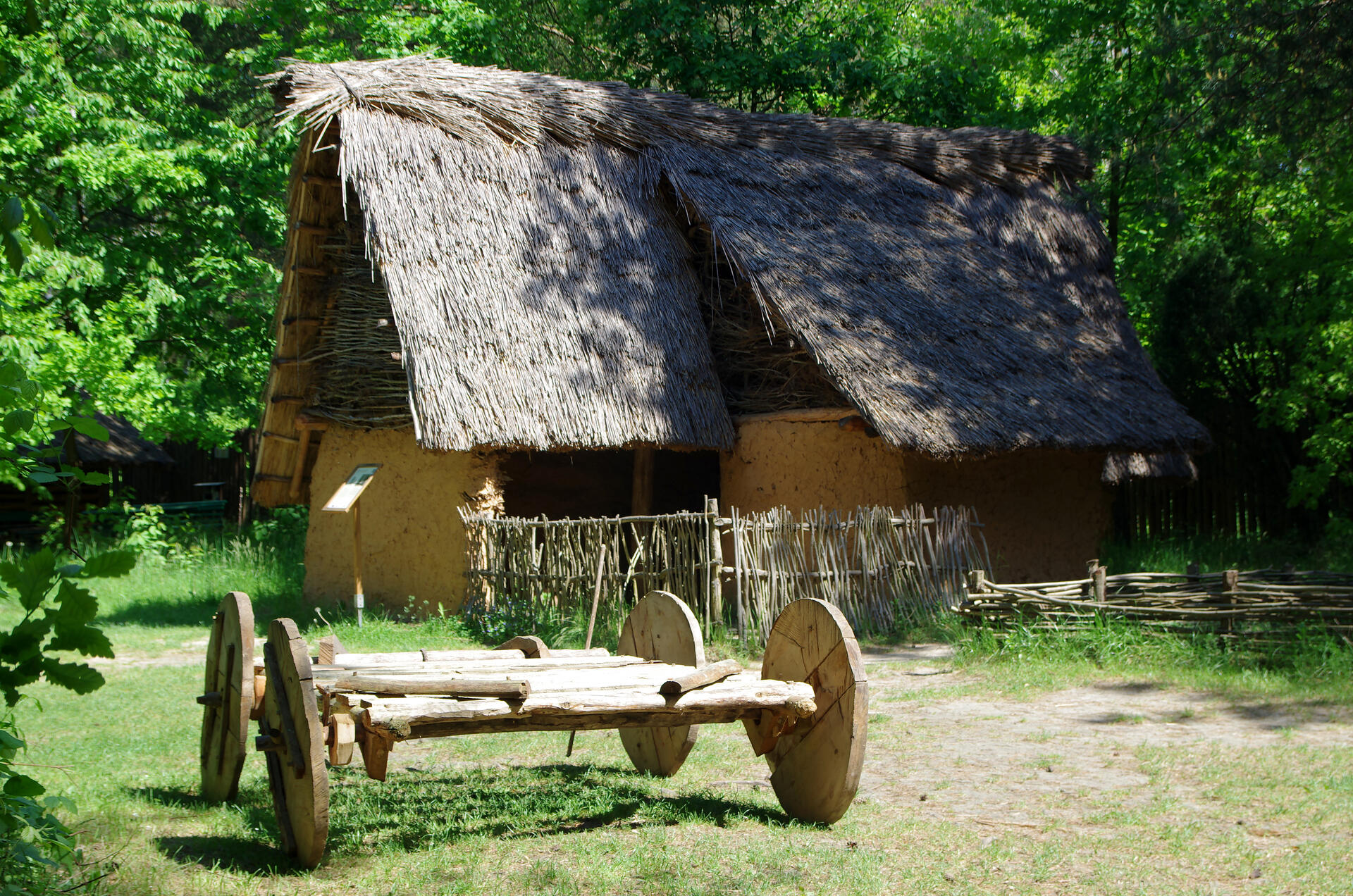
© Jakub Hałun, CC BY-SA 4.0 Resized from original. (This derivative is under the same CC BY-SA license.)
World Heritage Research
Discover scientific research and academic studies that deepen our understanding of Krzemionki Prehistoric Striped Flint Mining Region from its history and significance to its conservation, management, and contemporary challenges.
-
Muzeum Archeologiczne i Rezerwat Krzemionki w badaniach, konserwacji i popularyzacji pradziejowego górnictwa krzemienia w pierwszych dwóch dekadach XXI wieku
The Krzemionki Prehistoric Striped Flint Mining Region, a UNESCO World Heritage Site since 2019, has been the subject of extensive research, conservation, and public engagement by the Historical and Archaeological Museum in Ostrowiec Świętokrzyski. Since taking over its administration in 1978, the museum has conducted wide-scale archaeological studies, including excavations at key sites like the Great Chambers (2003–2004) and Borownia (2017), as well as settlements linked to the Globular Amphora Culture (2006–2011). These efforts culminated in the construction of an underground tourist route, enhancing both preservation and public access. The museum's work also involved conservation projects, scientific conferences, educational programs for over 20,000 children, and the preparation of a successful UNESCO nomination. This two-decade endeavor underscores the site's significance as one of the world's largest prehistoric flint mining regions.
Jedynak, A. (2023). Muzeum Archeologiczne i Rezerwat Krzemionki w badaniach, konserwacji i popularyzacji pradziejowego górnictwa krzemienia w pierwszych dwóch dekadach XXI wieku. Krzemionki. 100 Lat Od Odkrycia, 95–126. https://doi.org/10.33547/setii.4
View Publication Record | Read Publication -
Borownia. Prehistoryczna kopalnia krzemienia pasiastego z Listy Światowego Dziedzictwa
Borownia, part of the UNESCO-listed Krzemionki Prehistoric Striped Flint Mining Region, was identified as a significant early Bronze Age (2300–1600/1500 cal. BC) striped flint mine in central Poland. Radiocarbon dating and archaeological analysis confirmed its intensive exploitation during this period, primarily for crafting bifacial axe blades and adzes. The site's well-preserved landscape, including shafts and mining fields, provides rare insights into prehistoric mining techniques. Researchers suggest that local communities, particularly those from the nearby Mierzanowice settlement (Mierzanowice culture), were responsible for its extraction. Non-destructive studies since 1922, followed by excavations in 2017, supported its World Heritage nomination, which was successful in 2019.
Lech, J. (2020). Borownia. Prehistoryczna kopalnia krzemienia pasiastego z Listy Światowego Dziedzictwa. Przegląd Archeologiczny, 68, 199–276. https://doi.org/10.23858/pa68.2020.010
View Publication Record | Read Publication