World Heritage Identification Number: 1700
World Heritage since: 2023
Category: Cultural Heritage
WHE Type: Archaeological Sites
Transboundary Heritage: No
Endangered Heritage: Yes
Country: 🇾🇪 Yemen
Continent: Asia
UNESCO World Region: Arab States
Map
Landmarks of the Ancient Kingdom of Saba, Marib: A Testimony to Ancient South Arabian Civilization
The Landmarks of the Ancient Kingdom of Saba, Marib, located in the eastern part of modern-day Yemen, offer a unique glimpse into the rich history and architectural achievements of one of the most significant civilizations in ancient South Arabia. Inscribed as a UNESCO World Heritage Site in 2023, these seven archaeological sites provide valuable insights into the Kingdom of Saba, which flourished between the 1st millennium BCE and the arrival of Islam around 630 CE.
More to come…UNESCO Description of the World Heritage Site
The Landmarks of the Ancient Kingdom of Saba, Marib, is a serial property comprising seven archaeological sites that bear witness to the rich Kingdom of Saba and its architectural, aesthetic and technological achievements from the 1st millennium BCE to the arrival of Islam around 630 CE. They bear witness to the complex centralized administration of the Kingdom when it controlled much of the incense route across the Arabian Peninsula, playing a key role in the wider network of cultural exchange fostered by trade with the Mediterranean and East Africa. Located in a semi-arid landscape of valleys, mountains and deserts, the property encompasses the remains of large urban settlements with monumental temples, ramparts and other buildings. The irrigation system of ancient Ma'rib reflects technological prowess in hydrological engineering and agriculture on a scale unparalleled in ancient South Arabia, resulting in the creation of the largest ancient man-made oasis.
UNESCO Justification of the World Heritage Site
Criterion (iii): The Landmarks of the Ancient Kingdom of Saba, with the monumental architecture and the preserved hydraulic structures erected by the Sabaeans, demonstrate high level of technological know-how and engineering skills. They are an exceptional testimony to the affluence of the Kingdom of Saba, which dominated South Arabia in the period between the 8th century BCE to the 3rd century CE as a political and cultural power. They reflect the high socio-political and economic status of the kingdom, which owed its prosperity to control of the incense trade, and its survival in the harsh arid environment of the Arabian Peninsula through the creation of large oases based on a sophisticated irrigation system linked to the Ma’rib dam. The preserved wall inscriptions that document historical events, religious occasions, and administrative decisions offer a glimpse into the main domains of life of the kingdom.
Criterion (iv): The Landmarks of the Ancient Kingdom of Saba with their monumental architecture and diverse technological advances represent an outstanding example of an ensemble that testifies to the cultural tradition of the Kingdom of Saba that served as a central node in the frankincense trade route through the Arabian Peninsula. Flourishing within the semi-arid landscape of valleys, mountains and deserts of South Arabia thanks to a highly advanced irrigation system, the kingdom played a key influential role among neighbouring realms and in the wider network of cultural exchanges at a time when trade routes linked South Arabia with the Mediterranean and East Africa. The dam of the Ma’rib irrigation system, which enabled farming in what is said to be the largest artificial oasis in ancient Arabia, represents the pinnacle of hydrological engineering in the region.
Encyclopedia Record: Landmarks of the Ancient Kingdom of Saba, Marib
The Landmarks of the Ancient Kingdom of Saba, Marib is a serial property consisted of seven archeological sites in Marib Governorate, eastern Yemen. On 25 January 2023, the landmarks have been added by the UNESCO to its World Heritage Site List as they bear witness to the ancient Kingdom of Saba in ancient South Arabia. They were also placed on the List of World Heritage in Danger due to the threats posed by the Yemeni Civil War.Additional Site Details
Area: 375.29 hectares
Number of Components: 7
(iv) — Outstanding example of a type of building or landscape
Coordinates: 15.4268777778 , 45.3352277778
Image
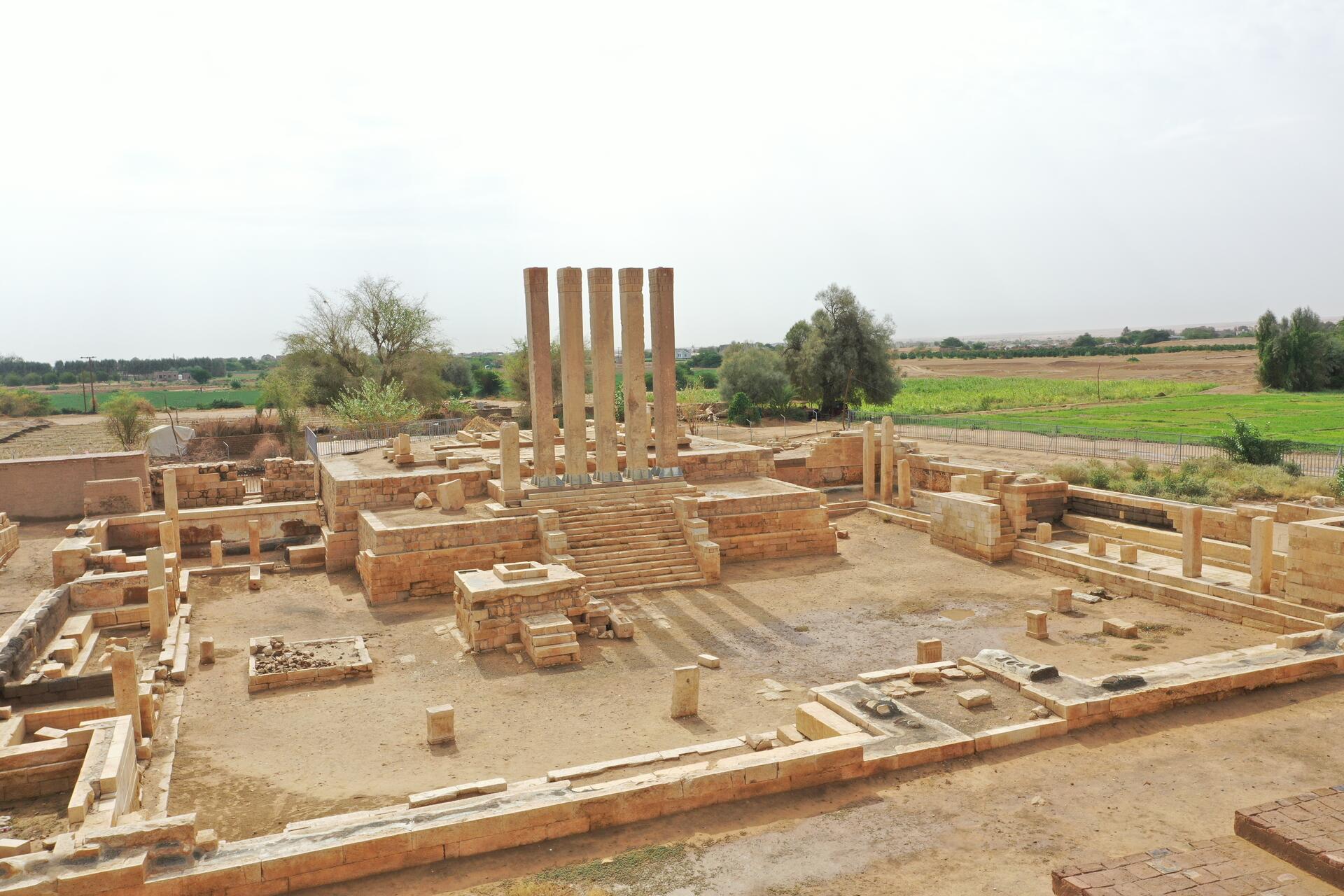
© Ali Mohamed, CC BY-SA 2.0 Resized from original. (This derivative is under the same CC BY-SA license.)