Land of Frankincense


World Heritage Identification Number: 1010

World Heritage since: 2000

Category: Cultural Heritage

WHE Type: Cultural Landscapes

Transboundary Heritage: No

Endangered Heritage: No

Country: 🇴🇲 Oman

Continent: Asia

UNESCO World Region: Arab States

Map

The Land of Frankincense: A Journey Through Ancient Trade Routes

The Land of Frankincense, inscribed as a UNESCO World Heritage Site in 2000, offers a captivating glimpse into the ancient trade routes that once connected the Arabian Peninsula with the wider world. Located in Oman, this site is a testament to the importance of frankincense, a resin extracted from the Boswellia sacra tree, in the economic, cultural, and religious life of civilizations spanning millennia.

More to come…

UNESCO Description of the World Heritage Site

The frankincense trees of Wadi Dawkah and the remains of the caravan oasis of Shisr/Wubar and the affiliated ports of Khor Rori and Al-Baleed vividly illustrate the trade in frankincense that flourished in this region for many centuries, as one of the most important trading activities of the ancient and medieval world.

UNESCO Justification of the World Heritage Site

Criterion (iii) : The group of archaeological sites in Oman represent the production and distribution of frankincense, one of the most important luxury items of trade in the Old World in Antiquity.

Criterion (iv) : The Oasis of Shisr and the entrepots of Khor Rori and Al-Baleed are outstanding examples of medieval fortified settlements in the Persian Gulf region.

Encyclopedia Record: Land of Frankincense

The Land of Frankincense is a site in Oman on the Incense Road. The site includes frankincense trees, Khor Rori and the remains of a caravan oasis, which were crucial to the medieval incense trade.

Read more on Wikipedia

Additional Site Details

Area: 849.88 hectares

Number of Components: 4

UNESCO Criteria: (iii) — Unique or exceptional testimony to a cultural tradition
(iv) — Outstanding example of a type of building or landscape

Coordinates: 18.25333 , 53.64759
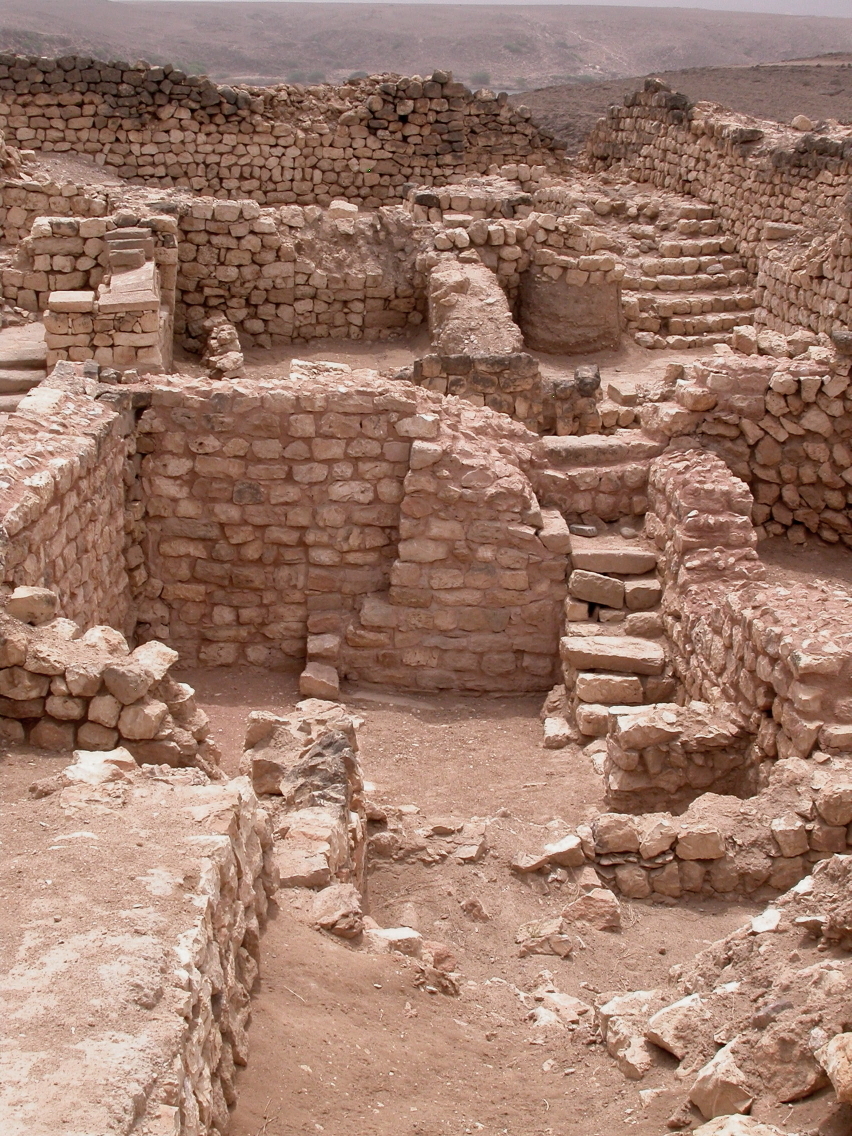
Image

Image of Land of Frankincense

Snickeringshadow, Public domain

World Heritage Research

Discover scientific research and academic studies that deepen our understanding of Land of Frankincense from its history and significance to its conservation, management, and contemporary challenges.

  • The Land of Frankincense: Dhofari Sites as National and World Heritage

    Frankincense has emerged as a defining cultural and economic symbol of Oman, with its significance deeply rooted in the archaeological heritage of Dhofar. This study reveals how strategic promotion during Sultan Qaboos' reign transformed the region from obscurity to a cornerstone of Omani national identity and tourism. The research highlights the pivotal role of archaeological and cultural heritage in shaping modern Oman's perception, leveraging frankincense's historical and economic importance to bolster its global standing as a UNESCO World Heritage Site.

    Lewis, K. (2022). The Land of Frankincense: Dhofari Sites as National and World Heritage. Sultan Qaboos and Modern Oman, 1970-2020, 67–88. https://doi.org/10.3366/edinburgh/9781474493468.003.0004

    View Publication Record | Read Publication
  • The Kambārī  in the Museum of the Frankincense Land, Salalah, Oman

    A rare surviving example of the kambārī, a sewn-plank boat historically used for fishing and lightering in Dhofar, Oman, is documented in detail. This vessel, one of only five known to exist, provides valuable insights into traditional maritime craftsmanship in the region. The study presents an accurate pictorial record and analysis of its construction, contextualizing it within similar vessels found in Oman, South Yemen, and Somalia. By examining this 1980-built kambārī housed at the Museum of the Frankincense Land in Salalah, researchers contribute to the understanding of historical maritime practices in the Frankincense Trail.

    Weismann, N., Dziamski, P., & Haar, L. (2019). The Kambārī in the Museum of the Frankincense Land, Salalah, Oman. International Journal of Nautical Archaeology, 48(2), 342–359. https://doi.org/10.1111/1095-9270.12372

    View Publication Record | Read Publication
  • The ‘Triple R’ Approach on the Restoration of Archaeological Dry Stone City Walls: Procedures and Application to a UNESCO World Heritage Site in Oman

    A novel restoration approach, termed the 'Triple R' method—recognizable, reversible, and respectful—was successfully applied to preserve the archaeological dry stone city walls of Al-Baleed, a UNESCO World Heritage Site in Oman's Land of Frankincense. This innovative technique, adapted to the monsoon-affected climate of the Indian Ocean region, ensured the conservation of the site's original architectural features using locally sourced stones and materials. The method included procedures for consolidating walls, gates, foundations, and sloping surfaces while incorporating simple on-site mechanical tests to assess the safety of restored structures. These efforts facilitated further archaeological excavations, leading to new findings that shed light on the city's evolution from its 9th-century origins over five centuries.

    Sassu, M., Zarins, J., Giresini, L., & Newton, L. (2017). The ‘Triple R’ Approach on the Restoration of Archaeological Dry Stone City Walls: Procedures and Application to a UNESCO World Heritage Site in Oman. Conservation and Management of Archaeological Sites, 19(2), 106–125. https://doi.org/10.1080/13505033.2017.1321358

    View Publication Record | Read Publication

About World Heritage Explorer

World Heritage Explorer is an independent educational project designed to uncover and share the richness of our world’s cultural and natural heritage. Dive into detailed site profiles, immersive imagery, interactive maps, and tools that help you explore UNESCO World Heritage Sites across the globe. Drawing extensively on open data sources, the project delivers authoritative, well-structured information for learners, educators, travelers, and younger explorers alike.

Learn more about the project

Nearby World Heritage Sites

Old Walled City of Shibam
593 km — Yemen
Socotra Archipelago
640 km — Yemen
Archaeological Sites of Bat, Al-Khutm and Al-Ayn
644 km — Oman
Bahla Fort
647 km — Oman
Aflaj Irrigation Systems of Oman
665 km — Oman
Flag of Oman

Oman and the World Heritage Convention

State Party since: October 6, 1981

Status: Acceptance

Mandates to the World Heritage Committee: 1989-1995, 2001-2005, 2019-2023

Total of Mandate Years: 14

Total of Mandates: 3

WHC Electoral Group: V(b) (Arab States)

Learn more about Oman

Weather at the World Heritage Site

Last updated: September 8, 2026

Portions of the page Land of Frankincense are based on data from UNESCO — World Heritage List Dataset and on text from the Wikipedia article Land of Frankincense, licensed under CC BY-SA 4.0. Changes made. Additional original content by World Heritage Explorer (WHE), licensed under CC BY-SA 4.0. WHE is not affiliated with UNESCO or the World Heritage Committee. Legal Notice. Privacy Policy.

Open Data for an Open World