World Heritage Identification Number: 1263
World Heritage since: 2008
Category: Natural Heritage
WHE Type: Protected Areas & National Parks
Transboundary Heritage: No
Endangered Heritage: No
Country: 🇾🇪 Yemen
Continent: Asia
UNESCO World Region: Arab States
Map
Socotra Archipelago: A Biodiverse Island Haven
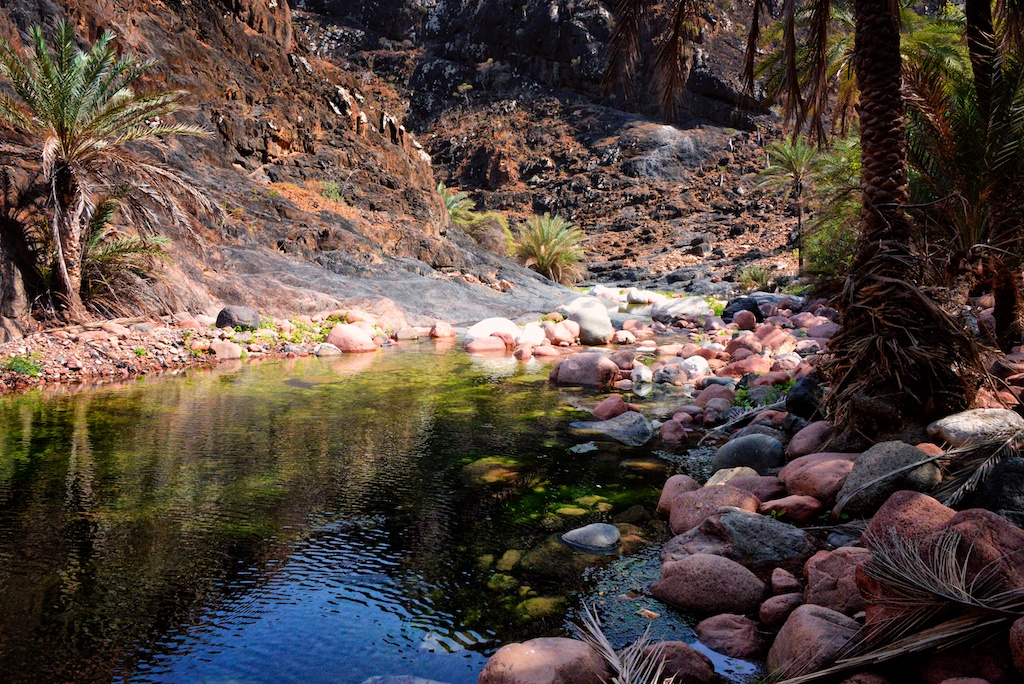
The Socotra Archipelago, a remote collection of islands located in the northeast Indian Ocean, is a unique and captivating destination that offers an unparalleled glimpse into the wonders of Earth's natural diversity. Inscribed as a UNESCO World Heritage Site in 2008, this archipelago is renowned for its exceptional biodiversity, boasting an array of rare and endemic flora and fauna found nowhere else on the planet.
More to come…UNESCO Description of the World Heritage Site
Socotra Archipelago, in the northwest Indian Ocean near the Gulf of Aden, is 250 km long and comprises four islands and two rocky islets which appear as a prolongation of the Horn of Africa. The site is of universal importance because of its biodiversity with rich and distinct flora and fauna: 37% of Socotra’s 825 plant species, 90% of its reptile species and 95% of its land snail species do not occur anywhere else in the world. The site also supports globally significant populations of land and sea birds (192 bird species, 44 of which breed on the islands while 85 are regular migrants), including a number of threatened species. The marine life of Socotra is also very diverse, with 253 species of reef-building corals, 730 species of coastal fish and 300 species of crab, lobster and shrimp.
UNESCO Justification of the World Heritage Site
Criterion (x): Biological diversity and threatened species: Socotra is globally important for biodiversity conservation because of its exceptional level of biodiversity and endemism in many terrestrial and marine groups of organisms. Socotra is particularly important for its diversity of plants and has 825 plant species of which 307 (37%) are endemic. Socotra has high importance for bird species as underlined by the identification by Birdlife International of 22 Important Bird Areas on Socotra. Socotra also supports globally significant populations of other land and sea birds, including a number of threatened species. Extremely high levels of endemism occur in Socotra’s reptiles (34 species, 90% endemism) and land snails (96 species, 95% endemism). The marine life of Socotra is also very diverse, with 253 species of reef-building corals, 730 species of coastal fish and 300 species of crab, lobster and shrimp, and well represented in the property’s marine areas.
Encyclopedia Record: Socotra Governorate
The Socotra Archipelago, officially the Socotra Archipelago Governorate, abbreviated to Socotra Governorate, is one of the governorates of Yemen. It includes a number of islands in the Indian Ocean south of mainland Yemen, the largest of which is Socotra.Additional Site Details
Area: 410,460 hectares
Number of Components: 18
Coordinates: 12.5 , 53.8333333333
IUCN World Heritage Outlook
The 2025 Conservation Outlook on Socotra Archipelago reports the following assessment:
Source: International Union for Conservation of Nature (IUCN) · View assessment
World Heritage Research
Discover scientific research and academic studies that deepen our understanding of Socotra Archipelago from its history and significance to its conservation, management, and contemporary challenges.
-
A quantitative classification of chorotypes for the Socotra Archipelago’s non-endemic plants
The Socotra Archipelago's non-endemic plant flora is structured by distinct chorotypes, with the Xeric Tropical-Subtropical type dominating (13.8%), followed by Paleoarabian-Somali-Masai (10.1%) and Temperate-Subtropical Belt (9.2%). This study used ensemble modeling and clustering to classify species distributions globally and regionally, revealing a biogeographic hinge along the Red Sea-Gulf of Aden rim. Vegetation types showed varying chorological signatures, with endemic-rich woodlands and shrublands exhibiting high specialization while grasslands and halophytic communities displayed more mixed affinities. The research highlights arid corridors and monsoon-related refugia as key drivers of Socotra's flora, bridging classical chorology with quantitative vegetation analysis.
La Montagna, D., Fanelli, G., De Sanctis, M., Farcomeni, A., Maděra, P., Malatesta, L., Van Damme, K., & Attorre, F. (2026). A quantitative classification of chorotypes for the Socotra Archipelago’s non-endemic plants. Vegetation Classification and Survey, 7, 49–63. https://doi.org/10.3897/vcs.176349
View Publication Record | Read Publication -
Shrubs as Nurse Species for Plant Communities in Arid Environments: A Case Study From Socotra Island (Yemen)
Research on Socotra Island reveals that certain shrubs act as nurse species, significantly enhancing plant community resilience and biodiversity in arid environments. The study found that thorny, poisonous, or unpalatable shrubs like Cebatha balfourii, Lycium sokotranum, and Cissus species facilitate higher species richness under their canopies compared to open areas, offering shelter from grazing pressure and improving microhabitat conditions. These nurse shrubs play a crucial role in supporting threatened tree species, such as frankincense (Boswellia spp.) and myrrh (Commiphora spp.), which are vital to Socotra's unique ecosystems. The findings highlight the potential of leveraging nurse plants for ecological restoration and conservation strategies, particularly in degraded landscapes facing environmental stressors like overgrazing and climate extremes.
La Montagna, D., De Sanctis, M., Maděra, P., Van Damme, K., Hamdiah, S., Attorre, F., & Malatesta, L. (2025). Shrubs as Nurse Species for Plant Communities in Arid Environments: A Case Study From Socotra Island (Yemen). Journal of Vegetation Science, 36(2). Portico. https://doi.org/10.1111/jvs.70020
View Publication Record | Read Publication -
Limnogonus poissoni (Hemiptera: Heteroptera: Gerridae): first record from the Socotra Archipelago with descriptions of 3rd, 4th and 5th larval instars
A new record of the Afrotropical pond skater, Limnogonus poissoni, has been documented for the first time in the Socotra Archipelago. This discovery expands the known fauna of aquatic and semi-aquatic true bugs in the region, which previously included nine families and 19 species. The study provides detailed descriptions of the 3rd, 4th, and 5th larval instars of L. poissoni, offering critical comparative insights into its development when contrasted with the nominotypical subgenus Limnogonus sensu stricto. Additionally, the research includes observations on the species' habitat within Socotra Island, contributing to our understanding of its ecological niche in this unique biodiversity hotspot.
KMENT, P., & DAMME, K. V. (2025). Limnogonus poissoni (Hemiptera: Heteroptera: Gerridae): first record from the Socotra Archipelago with descriptions of 3rd, 4th and 5th larval instars. Zootaxa, 5719(4), 579–589. https://doi.org/10.11646/zootaxa.5719.4.6
View Publication Record | Read Publication -
A new species of short unpatterned moray eel (Anguilliformes: Muraenidae) from the northwestern Indian Ocean, including the Socotra Archipelago, with a redescription of Gymnothorax pseudoherrei Böhlke
Researchers have identified a new species of short, unpatterned moray eel, Gymnothorax arabicus, from the northwestern Indian Ocean, including the Socotra Archipelago. This discovery was made through morphological and genetic analysis, distinguishing it from its previously confused counterpart, G. pseudoherrei. Key differences include slightly more vertebrae (114-120 vs. 111-116), dark stripes on the throat and head, and a larger maximum size (ca. 300 mm TL vs. ca. 200 mm TL). Additionally, G. pseudoherrei was redescribed based on specimens from the Maldives to northern Australia. Genetic data from COI mtDNA confirmed that both species form separate genetic lineages, supporting the morphological distinctions.
SMITH, D. G., BOGORODSKY, S. V., DANDAR, J., & ZAJONZ, U. (2024). A new species of short unpatterned moray eel (Anguilliformes: Muraenidae) from the northwestern Indian Ocean, including the Socotra Archipelago, with a redescription of Gymnothorax pseudoherrei Böhlke. Zootaxa, 5477(4), 465–474. https://doi.org/10.11646/zootaxa.5477.4.4
View Publication Record | Read Publication -
Distribution, ecology, and threats assessment of 11 endemic frankincense tree taxa (Boswellia) in the Socotra Archipelago (Yemen)
A comprehensive assessment of 11 endemic frankincense tree taxa (Boswellia) in the Socotra Archipelago reveals that these culturally and economically significant species are under severe threat due to habitat fragmentation, overgrazing, and increasing climate extremes. The study, combining field surveys with unmanned aerial vehicle (UAV) remote sensing, identified 17,253 trees across all taxa, with some species like Boswellia scopulorum facing critical endangerment, surviving in populations of fewer than a hundred individuals. While resin collection poses less immediate risk, natural regeneration is hindered by overgrazing and extreme weather events such as cyclones and droughts. The research updates the conservation status of these taxa, designating seven as endangered and four as critically endangered, while providing actionable recommendations to mitigate threats and guide future protection strategies for both local communities and global biodiversity efforts.
Maděra, P., Vahalík, P., Hamdiah, S., Hušková, K., Sekava, J., Attorre, F., La Montagna, D., De Sanctis, M., Netek, R., Bongers, F., Rivers, M., Šebesta, J., Amar, M., Keybani, S., Shanayeghen, M., & Van Damme, K. (2024). Distribution, ecology, and threats assessment of 11 endemic frankincense tree taxa (Boswellia) in the Socotra Archipelago (Yemen). Plants, People, Planet, 6(6), 1552–1571. Portico. https://doi.org/10.1002/ppp3.10563
View Publication Record | Read Publication -
Sustainable development of Socotra Archipelago. Application and reflexivity
Socotra Archipelago, renowned for its unique biodiversity and remote location, presents both challenges and opportunities for sustainable tourism development. While the archipelago has attracted significant attention from natural scientists studying its endemic species, there is a notable lack of information about the Indigenous Socotri people, their behaviors, traditions, and cultures—key components for successful cultural tourism. This reflective paper applies sustainable development theory to explore how tourism can create future possibilities for the island while considering its ecological and cultural heritage. It highlights the need for balanced approaches that address the concerns of naturalists and environmentalists while fostering responsible tourism practices that benefit both the environment and local communities.
Valek, N. S. (2023). Sustainable development of Socotra Archipelago. Application and reflexivity. Sustainable Development, 31(5), 3318–3327. Portico. https://doi.org/10.1002/sd.2587
View Publication Record | Read Publication -
Climate change effects on the potential distribution of the endemic Commiphora species (Burseraceae) on the island of Socotra
Climate change is expected to significantly alter the distribution of four endemic Commiphora species on Socotra Island, with two species facing potential strong reductions in suitable habitats and upward shifts in elevation. The study used three modeling approaches (GAM, MaxEnt, RandomForest) to assess current and future distributions under CMIP6 climate scenarios, revealing that soil clay content and winter precipitation are key factors for three of the species, while seasonal precipitation and temperature influence another. Projections indicate stability or expansion for two species but severe contraction for Commiphora socotrana and C. planifrons. These findings underscore the urgent need to prioritize conservation efforts to protect Socotra's unique terrestrial ecosystems and endemic tree species.
La Montagna, D., Attorre, F., Hamdiah, S., Maděra, P., Malatesta, L., Vahalík, P., Van Damme, K., & De Sanctis, M. (2023). Climate change effects on the potential distribution of the endemic Commiphora species (Burseraceae) on the island of Socotra. Frontiers in Forests and Global Change, 6. https://doi.org/10.3389/ffgc.2023.1183858
View Publication Record | Read Publication