World Heritage Identification Number: 546
World Heritage since: 1993
Category: Cultural Heritage
WHE Type: Religious Sites & Sacred Architecture
Transboundary Heritage: No
Endangered Heritage: No
Country: 🇩🇪 Germany
Continent: Europe
UNESCO World Region: Europe and North America
Map
Maulbronn Monastery Complex: A Medieval Masterpiece of Architecture and Water Management
The Maulbronn Monastery Complex, situated in the picturesque town of Maulbronn in Baden-Württemberg, Germany, is a remarkable testament to the architectural prowess and innovative engineering capabilities of the Middle Ages. This historic site, which dates back to 1147, has been recognized as a UNESCO World Heritage Site since 1993 due to its exceptional preservation and significant historical importance.
Founded in 1147, the Maulbronn Monastery was initially established by Cistercian monks as an abbey and later evolved into an ecclesiastical state within the Holy Roman Empire. The primary construction of the monastery took place between the 12th and 16th centuries, resulting in a harmonious blend of various architectural styles that showcases the evolution of European design during this period.
At the heart of the complex lies the magnificent monastery church, primarily built in the Transitional Gothic style. This architectural masterpiece, with its soaring arches, intricate stone carvings, and stunning stained glass windows, served not only as a place of worship but also as a powerful symbol of the influence and wealth of the Cistercian order. Its impact on the spread of Gothic architecture throughout northern and central Europe is undeniable, making it a crucial piece in the development of European artistic traditions.
Beyond its architectural significance, the Maulbronn Monastery Complex is renowned for its advanced water management system. Dating back to the Middle Ages, this elaborate network of drains, irrigation canals, and reservoirs allowed the monks to effectively manage their agricultural lands and sustain their community. This ingenious system, which was far ahead of its time, ensured the monastery's self-sufficiency and contributed significantly to its economic prosperity.
Surrounded by fortified walls, the monastery complex offers a glimpse into the daily life of the Cistercian monks. The monks lived in austere conditions, following the strict Cistercian rule, which emphasized manual labor, self-sufficiency, and communal living. Their dedication to these principles allowed them to create a thriving community that endured for centuries.
Today, the Maulbronn Monastery Complex stands as a reminder of the ingenuity, creativity, and resilience of the medieval world. With its exquisite architecture, advanced water management system, and rich history, this UNESCO World Heritage Site continues to captivate visitors from around the globe and inspire new generations to explore the wonders of the past.
UNESCO Description of the World Heritage Site
Founded in 1147, the Cistercian Maulbronn Monastery is considered the most complete and best-preserved medieval monastic complex north of the Alps. Surrounded by fortified walls, the main buildings were constructed between the 12th and 16th centuries. The monastery's church, mainly in Transitional Gothic style, had a major influence in the spread of Gothic architecture over much of northern and central Europe. The water-management system at Maulbronn, with its elaborate network of drains, irrigation canals and reservoirs, is of exceptional interest.
UNESCO Justification of the World Heritage Site
Criterion (ii): The construction of the transitional Romanesque-Gothic church at Maulbronn was of fundamental importance in the dissemination of Gothic architecture over much of northern and central Europe.
Criterion (iv): The Maulbronn Complex is the most complete survival of a Cistercian monastic establishment in Europe, in particular because of the survival of its extensive water-management system of reservoirs, irrigation canals and drains.
Encyclopedia Record: Maulbronn Monastery
Maulbronn Monastery is a former Cistercian abbey and ecclesiastical state in the Holy Roman Empire located at Maulbronn, Baden-Württemberg. The monastery complex, one of the best-preserved in Europe, was named a UNESCO World Heritage Site in 1993.Additional Site Details
Area: 72.45 hectares
Number of Components: 20
(iv) — Outstanding example of a type of building or landscape
Coordinates: 49.00083 , 8.81306
Image
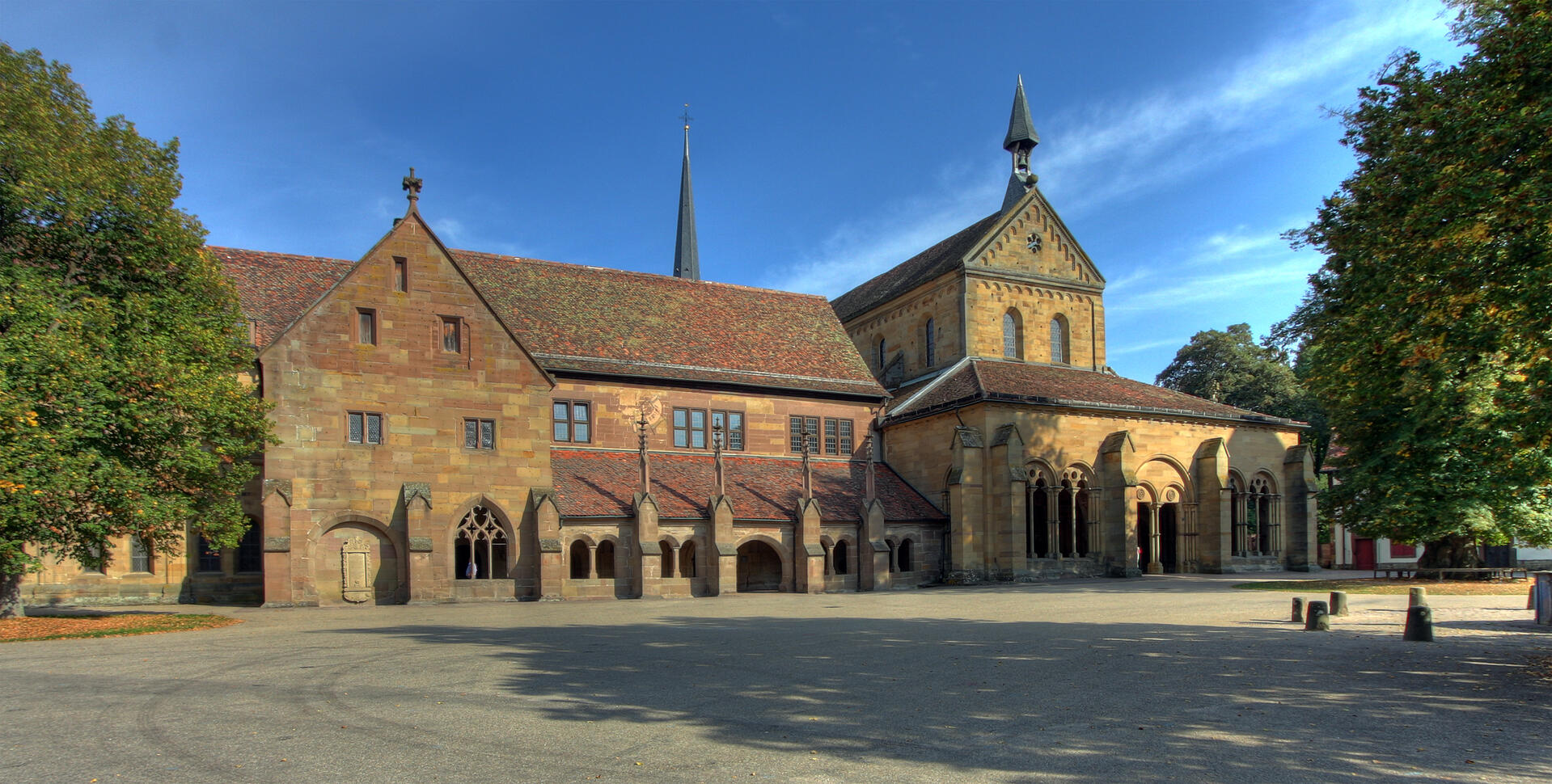
© Elke Wetzig (Elya), CC BY-SA 3.0 Resized from original. (This derivative is under the same CC BY-SA license.)
World Heritage Research
Discover scientific research and academic studies that deepen our understanding of Maulbronn Monastery Complex from its history and significance to its conservation, management, and contemporary challenges.
-
Setup for choir recordings in virtual churches
Researchers have developed a novel setup for choir recordings in virtual recreations of historic churches, specifically focusing on the Maulbronn Monastery Complex and the Maior Ecclesia in Cluny. This approach leverages binaural room impulse responses to simulate real singing conditions within an anechoic environment, allowing singers to perceive reflections via open headphones while being recorded with a headset microphone. The study highlights the influence of room acoustics on both performance and perception of singing, providing insights into how virtual spaces can be used to recreate historic auditory experiences. While the current setup is static, the research also discusses potential improvements and initial steps toward analyzing the recordings, offering a promising method for future studies in sacred sound and space.
Palenda, P., Aspöck, L., Morent, S., & Vorländer, M. (2023). Setup for choir recordings in virtual churches. 2023 Immersive and 3D Audio: From Architecture to Automotive (I3DA), 1–6. https://doi.org/10.1109/i3da57090.2023.10289329
View Publication Record | Read Publication -
Schilfsandstein in SW-Germany – Maulbronn Sandstone (Maulbronner Sandstein)
The Maulbronn Sandstone, a durable Triassic sandstone from Southwest Germany, stands out for its widespread use as a building material in historical structures, including the UNESCO-listed Maulbronn Monastery Complex. This study highlights its two main varieties—yellow-brownish and brown-reddish flamed—and its significance in local architecture, with quarries historically located near Maulbronn. The research emphasizes the sandstone's durability, evident in numerous preserved buildings, and its regional variations under different names like Weil or Pfaffenhofen. By analyzing geological and historical data, the study underscores the stone's role in shaping Southwest Germany's cuesta landscape and cultural heritage.
Ehling, A., & Werner, W. (2021). Schilfsandstein in SW-Germany – Maulbronn Sandstone (Maulbronner Sandstein). Natural Stone and World Heritage, 73–77. https://doi.org/10.1201/9780367823061-16
View Publication Record | Read Publication -
Maulbronn monastery complex (Kloster Maulbronn)
Maulbronn Monastery Complex stands out as one of Europe's most complete and best-preserved medieval monastery complexes, offering a unique blend of architectural styles from Romanesque to late Gothic. Founded by Cistercian monks in 1147 on 145 hectares, the complex developed into a significant economic, social, and political center, becoming a bailiwick of the Holy Roman Empire in 1156. Its homogeneity is partly attributed to the consistent use of regional sandstones, while its architectural brilliance includes masterpieces like the entrance hall to the monastery church, known as 'Paradies,' and the stony part of the circular Brunnenhaus with five tracery windows, built between the 13th and 14th centuries. This study highlights Maulbronn's exceptional preservation and architectural diversity, underscoring its importance as a World Heritage Site.
Ehling, A., & Werner, W. (2021). Maulbronn monastery complex (Kloster Maulbronn). Natural Stone and World Heritage, 50–54. https://doi.org/10.1201/9780367823061-10
View Publication Record | Read Publication -
Evangelische Stundenliturgie in Württemberg
A revised form of the daily repetition of prayers, known as the liturgy of the hours, was retained in old Württemberg monasteries such as Maulbronn after they transitioned into monastic schools. This study analyzes the changes to this liturgical practice using seventeenth-century liturgical books, providing insights into its evolution and adaptation during a significant period of religious and educational transformation.
Odenthal, A. (2020). Evangelische Stundenliturgie in Württemberg. https://doi.org/10.1628/978-3-16-159117-4
View Publication Record | Read Publication