World Heritage Identification Number: 1636
World Heritage since: 2021
Category: Cultural Heritage
WHE Type: Buildings & Architectural Ensembles
Transboundary Heritage: No
Endangered Heritage: No
Country: 🇩🇪 Germany
Continent: Europe
UNESCO World Region: Europe and North America
Map
The ShUM Sites of Speyer, Worms, and Mainz: A Testament to Medieval Jewish Life in Germany
The ShUM Sites of Speyer, Worms, and Mainz, inscribed as a UNESCO World Heritage Site in 2021, offer a unique insight into the rich history of Jewish life in medieval Germany. The acronym ShUM is derived from the Hebrew initials of these three cities: Shpira (Speyer), Warmaisa (Worms), and Magenza (Mainz). These cities were significant centers of Jewish culture, learning, and commerce during the High Middle Ages.
The ShUM sites encompass several key structures that provide tangible evidence of the distinct Ashkenaz customs and settlement patterns that emerged within these communities. One such structure is the Speyer Jewry-Court, which includes the remains of a synagogue, a women's shul, a yeshiva, a courtyard, and an intact underground mikveh. The mikveh, or ritual bath, is particularly noteworthy for its high architectural and building quality, having been preserved remarkably well.
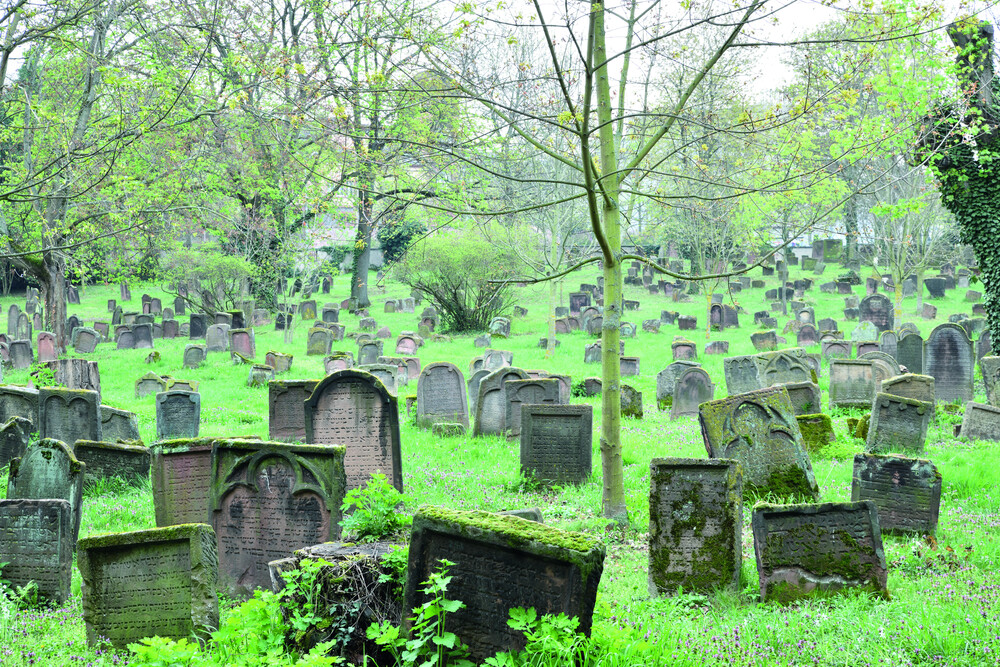
In Worms, the Synagogue Compound houses the post-war reconstruction of a 12th-century synagogue, a 13th-century women's shul, a community hall known as the Rashi House, and a monumental 12th-century mikveh. The Worms Old Jewish Cemetery (Heiliger Sand), located nearby, serves as a poignant testament to the lives of those who lived and worshipped there as the oldest in situ Jewish cemetery in Europe.
The ShUM Sites also encompass the Old Jewish Cemetery of Mainz (Judensand), which originated in the 11th century and preserves evidence of a once-flourishing scholarly community. Although fewer medieval gravestones survive here than in Worms, the site remains an important historical landmark, reflecting the city’s role as a major center of Jewish learning and religious authority.
Jewish presence in the territory of modern Germany can be traced back to late antiquity, while documented Jewish communities in the Rhineland—particularly in Mainz, Worms, and Speyer—are attested from the 10th century onward.
The communities faced profound challenges during the First Crusade in 1096, when massacres and forced conversions devastated Jewish populations across the Rhineland. Nevertheless, Jewish life in the ShUM cities revived in the following centuries, reaching a new period of religious and intellectual vibrancy.
Despite the hardships, the Jewish communities in these cities experienced a period of relative peace and prosperity during the High Middle Ages. Bishops in these cities often protected the Jews, fostering an environment conducive to trade and economic growth. This era was a peak period, but punctuated by violence, for the Jewish communities in these cities.
The mid-14th century brought another crisis: during the Black Death, Jews across Europe were scapegoated and falsely accused of well poisoning. The ShUM communities suffered severe persecution, including violent attacks and expulsions. Many survivors fled eastward to Poland and other regions, contributing to the growth of Jewish life in Eastern Europe and marking the end of the high medieval flourishing of the ShUM cities.
Today, the ShUM Sites of Speyer, Worms, and Mainz stand as a powerful reminder of the vibrant Jewish life that once flourished in these cities. They serve as a testament to the resilience and adaptability of the Jewish people, as well as the important role these communities played in the cultural and economic history of medieval Germany. By preserving these sites, we ensure that their stories continue to be told, and their legacy continues to inspire future generations.
UNESCO Description of the World Heritage Site
Located in the former Imperial cathedral cities of Speyer, Worms and Mainz, in the Upper Rhine Valley, the serial site of Speyer, Worms and Mainz comprise the Speyer Jewry-Court, with the structures of the synagogue and women’s shul (Yiddish for synagogue), the archaeological vestiges of the yeshiva (religious school), the courtyard and the still intact underground mikveh (ritual bath), which has retained its high architectural and building quality. The property also comprises the Worms Synagogue Compound, with its in situ post-war reconstruction of the 12th century synagogue and 13th century women’s shul, the community hall (Rashi House), and the monumental 12th-century mikveh. The series also includes the Old Jewish Cemetery in Worms and the Old Jewish Cemetery in Mainz. The four component sites tangibly reflect the early emergence of distinctive Ashkenaz customs and the development and settlement pattern of the ShUM communities, particularly between the 11th and the 14th centuries. The buildings that constitute the property served as prototypes for later Jewish community and religious buildings as well as cemeteries in Europe. The acronym ShUM stands for the Hebrew initials of Speyer, Worms and Mainz.
UNESCO Justification of the World Heritage Site
Criterion (ii): The ShUM Sites of Speyer, Worms and Mainz are pioneering ensembles of Jewish diasporic community centres and cemeteries from the High Middle Ages. Their form and design influenced Jewish architectural design, ritual buildings and burial culture across Central Europe north of the Alps and northern France and England.
Criterion (iii): The ShUM Sites of Speyer, Worms and Mainz provide a unique and exceptional testimony to the formation of European Jewish cultural tradition and identity. There is no other property with a comparable range of elements that can bear witness to such profound developments in the formation phase of the continuing cultural tradition of Ashkenazic Judaism. Their community centres and cemeteries form an exceptional complex of early religious sites that contributed profoundly to the creation of a distinctive cultural identity.
Criterion (vi): The ShUM Sites of Speyer, Worms and Mainz, as the cradle of Ashkenazic Jewish living tradition, are directly and tangibly associated with a major group of the Jewish diaspora which settled in Europe in the High Middle Ages. There is no other location with a comparable range of Jewish community centres and cemeteries to bear witness to the cultural achievements of Ashkenazic Jews. The ShUM sites were treated as prime places of Jewish identity and of reflection on Jewish-Christian relations. The joint ordinances (Taqqanot ShUM) around 1220 constitute the most comprehensive corpus of Jewish community ordinances from medieval Ashkenaz. The writings of ShUM scholars, poets and community leaders during the 10th to the 13th centuries provide evidence of profound influence at a crucial point at the crossroads of cultural developments in Ashkenazic Judaism. Their writings are still part of Jewish tradition to this day.
Encyclopedia Record: History of the Jews in Germany
The history of the Jews in Germany goes back at least to the year 321 AD, and continued through the Early Middle Ages and High Middle Ages when Jewish immigrants from France founded the Ashkenazi Jewish community. The community survived under Charlemagne, but suffered during the Crusades. Accusations of well poisoning during the Black Death (1346–1353) led to mass slaughter of German Jews, while others fled in large numbers to Poland. The Jewish communities of the cities of Mainz, Speyer and Worms became the center of Jewish life during medieval times. "This was a golden age as area bishops protected the Jews, resulting in increased trade and prosperity."Additional Site Details
Area: 5.56 hectares
Number of Components: 4
(iii) — Unique or exceptional testimony to a cultural tradition
(vi) — Directly associated with events or living traditions
Coordinates: 49.3162111111 , 8.4395388889
Image
© Generaldirektion Kulturelles Erbe Rheinland-Pfalz. Used with permission.